
Where Are They Now: Corsair
The first two posts in this series were about companies that didn’t make it. This one is about a company that did, and then some. If you walk into a store today and look at the gaming aisle, Corsair is probably on a third of it. In 2005, it was a memory company that had just started selling a water cooling kit.
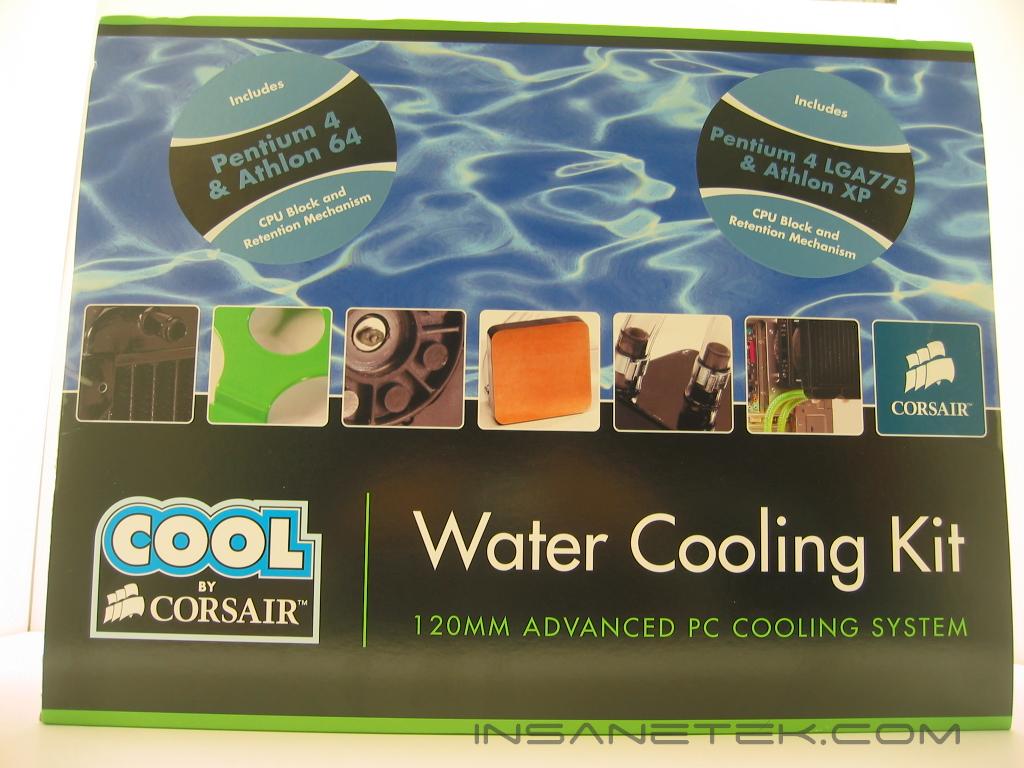
The Corsair COOL, from our 2005 review.
Who they were
Corsair started in California in 1994, and it didn’t start with system memory. Its first products were cache modules for Pentium boards. When Intel moved the cache onto the processor, that business went away, and Corsair moved over to DRAM. By the early 2000s its XMS line was the safe pick for enthusiast memory. Not always the fastest kit on the chart, but the one you could actually find in stock, with a lifetime warranty and black heatspreaders that looked the part.
Our Corsair Xpert review opened with a pretty good summary of the reputation: “Who was the first to make low latency memory? Corsair. Who was the first to use heatspreaders for memory? Corsair. Who was the first to have pretty LED’s for memory? Corsair.” Our reviewer added “If I was wrong about any of the information, please correct me,” which is the most 2005 thing I’ve ever read.
Product spotlight: the generations
2003–2005: XMS and the light show. This is where we came in. The XMS Pro sticks had a row of LEDs along the top that lit up with memory activity, which was useless and wonderful. Then the Xpert took it further with a little LED display on each stick that could show temperatures, voltage or a scrolling message you programmed yourself. It cost too much to get our top award, but it still got a Recommended. Under the hood, the TWINX1024-4400C25 and the 3200XL were serious overclocking memory. We said the 3200XL v1.2 was “a threat to the overclockers’ choice of OCZ or G.Skill,” which tells you where Corsair sat in the pecking order next to OCZ. Later in 2005 came the 2GB kits like the TWINX2048-4000PT and the 3500LLPRO.
2005: DDR2 and the first cooling kit. On the DDR2 side, the PC2-8000UL was, in our words, “the fastest and best DDR2 overclocker we’ve tested thus far,” built on the Micron D9 chips that I’ll get to in the Overclocking Legends series. That same year Corsair tried something outside memory for the first time with the COOL, a water cooling kit in black and green. We weren’t sure about the green. We were sure about the rest, and we said that with “a name like Corsair standing behind this great watercooling kit, enthusiasts out there should definitely pick this up” at under $200. Corsair also got picked as NVIDIA’s first certified SLI-Ready memory at the end of the year.
2006–2009: Dominator, power supplies and cases. The Dominator line arrived in 2006 with tall heatspreaders and the DHX cooling fins, and for a few years it was the memory you put in a build you wanted people to look at. Corsair also started selling power supplies, built by established PSU makers to Corsair’s specs, and the HX series became one of the standard recommendations on the forums. In 2009 came the Obsidian 800D case and the Hydro H50, a sealed water cooler you could install like a heatsink. That was the start of a whole category.
2010–2012: SSDs and closed loops. The H70 followed the H50, and the Dominator GT kept the memory side going on DDR3. Corsair jumped into SSDs too, mostly on SandForce controllers. It wasn’t all smooth. In 2011 Corsair recalled one Force 3 drive because a “significant percentage of these drives do not perform to specifications,” and paid return shipping on every one. In 2012 it rolled out the Neutron series, and in May of that year it registered for an IPO under the ticker CRSR.
What happened
Here’s the part I find interesting. Corsair was in the exact same business as OCZ in 2010: enthusiast memory, power supplies and SSDs. OCZ bet everything on SSDs and went bankrupt. Corsair kept the memory, kept the power supplies, and kept adding things next to them. When one product line had a bad year, the others carried it.
The 2012 IPO didn’t happen. Corsair pulled it, and instead went in a different direction: keyboards, mice and headsets under the Vengeance name, then the K70 and the rest of its gaming lineup. In 2017 a private equity firm bought a majority stake. In 2018 Corsair bought Elgato’s gaming business, the people behind the capture cards and Stream Decks that half of all streamers use. In 2019 it bought SCUF Gaming and Origin PC. In September 2020, eight years after the first try, Corsair finally went public on Nasdaq under that same CRSR ticker.
Where they are now
Corsair is now Corsair Gaming, a public company that makes memory, power supplies, cases, coolers, fans, keyboards, mice, headsets, streaming gear and prebuilt PCs. It bought the enthusiast keyboard shop Drop in 2023 and the sim racing company Fanatec in 2024. It still sells Vengeance and Dominator memory, and if you buy a closed-loop cooler today there’s a decent chance it says Corsair on it.
It’s a long way from a stick of XMS with a row of blinking lights. But it’s a good reminder that the companies that made it through the 2000s weren’t always the most daring ones. They were the ones that didn’t bet the whole company on one product.
Next week: ATI, the company that kept NVIDIA honest.
— Luke