

Corsair XMS TWINX1024-3200XL v1.2 1GB Dual Channel Kit
Introduction
While the latest and greatest from Corsair has been the Xpert DDR and high speed DDR2, a few enthusiasts have reported an interesting find with their regular DDR PC3200XL line of memory. Sure, it doesn’t sport any fancy lights or LED readouts, but the performance behind the memory is fantastic. I’m sure that everyone can recall when Corsair first announced the TCCD based XL memory. Everyone wooed, wowed, and scrambled to find a place to make the purchase. The initial release was labeled v1.1. At that time, no one knew that the PCB would be such a significant factor in terms of high scaling memory speeds. I was able to get my hands on a pair of the older v1.1 XL memory, and boy, did it suck while overclocking. Anything beyond 250MHZ and the memory required a command rate of 2T. It wasn’t until later when OCZ released their TCCD based memory that overclockers began to realize the potential behind the Brainpower PCB. Memory makers began to adopt the Brainpower PCB in a matter of minutes; Brainpower PCB started appearing everywhere. Corsair didn’t hesitate and quickly released the XMS PC4400C25. The memory featured the same TCCD chips and used a Brainpower PCB, but it wasn’t the usual 808 or 815 that we’re accustomed to. I asked Corsair on the specifics, but was not given any information, other than that it was a specially designed Brainpower product. With the use of that “special” Brainpower PCB, the XMS PC4400C25 scaled rather nicely and put Corsair back in the competition for great overclocking memory.
So what’s so special about the v1.2 that we’ve received today? Corsair realized that a good PCB is needed to further increase the headroom during overclocking. They released a newer revision that fixes the problems of v1.1. With a wide variety of memory available incorporating TCCD and a Brainpower PCB, what makes this new Corsair product any better?
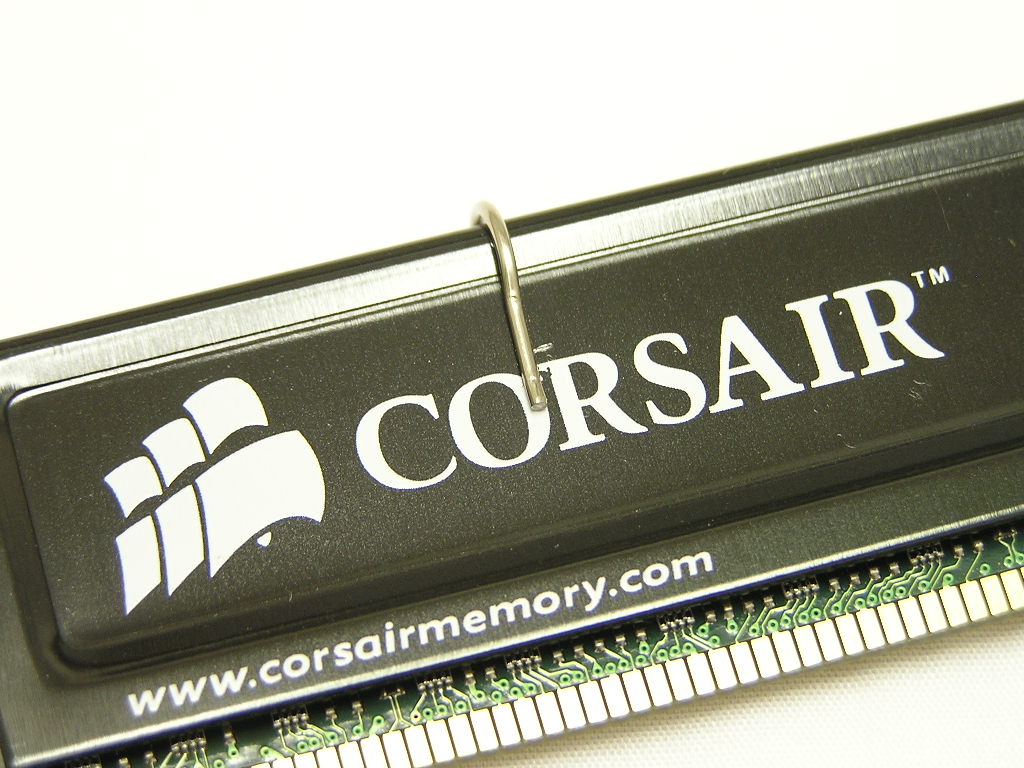
Corsair XMS TWINX1024-3200XL v1.2
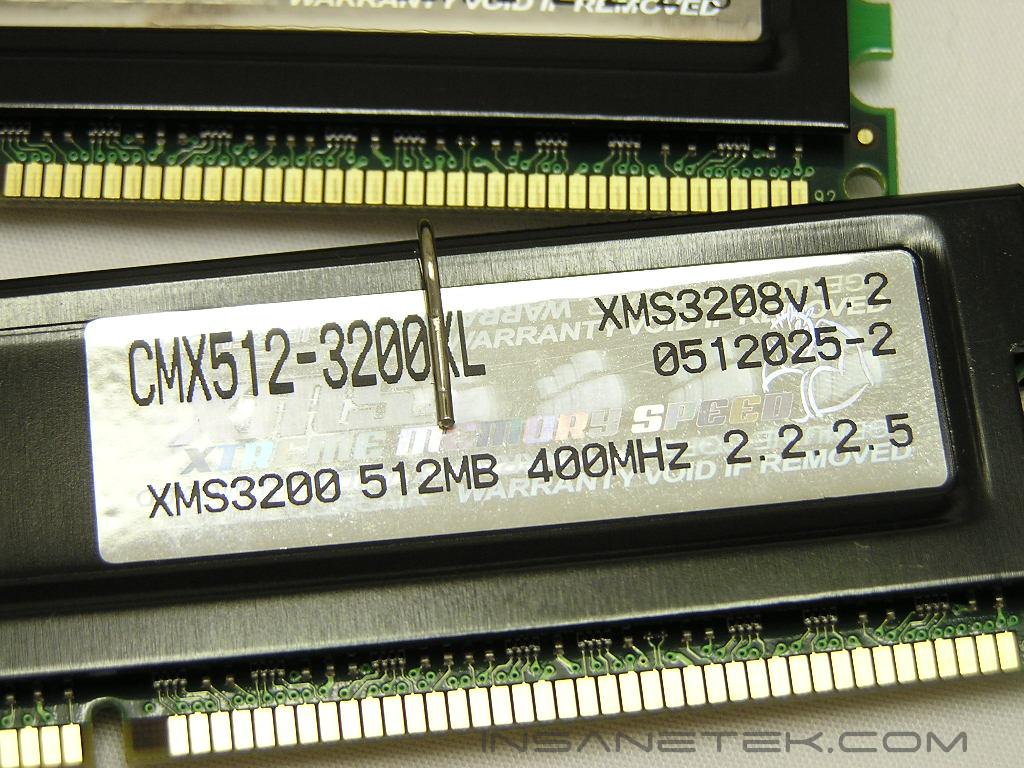
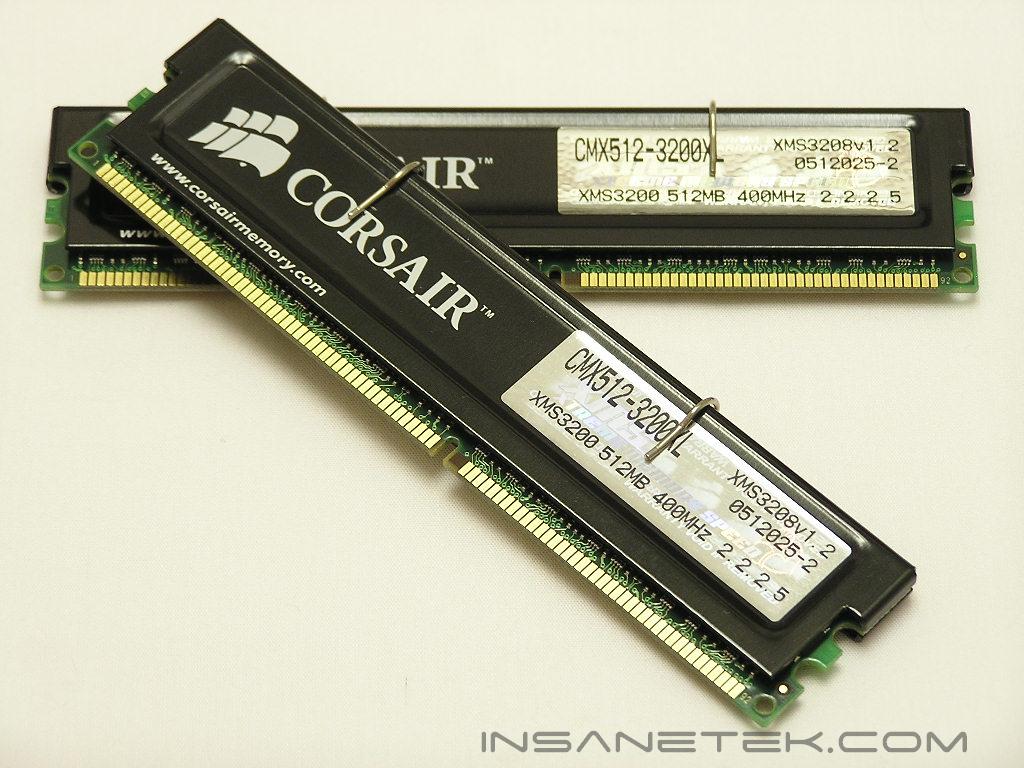
The XMS XL continues Corsair’s traditional look of simple black heatspreaders and a single clip. In my opinion, the black heatspreaders are so much better than the Platinum. The Platinum scratches way too easily. While some many say that this look is outdated, it doesn’t really matter. The memory doesn’t need stylish looks to prove that it packs performance. If enthusiasts want something nice looking and flashy, they have the Pro series and the Xpert memory to choose from.
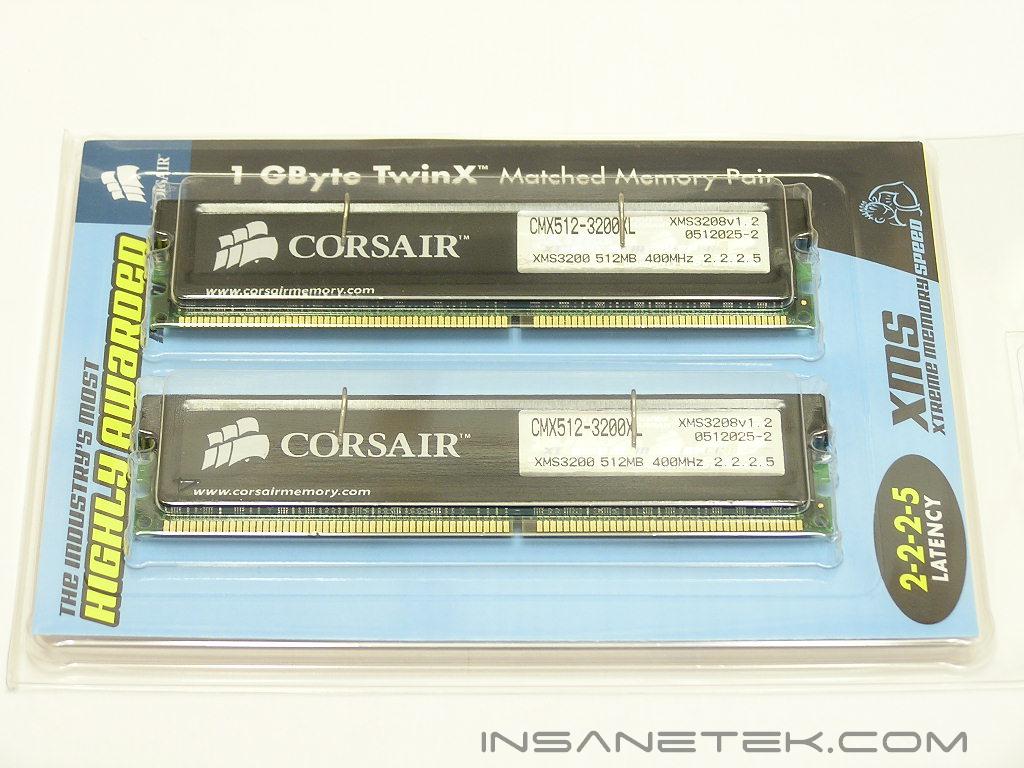
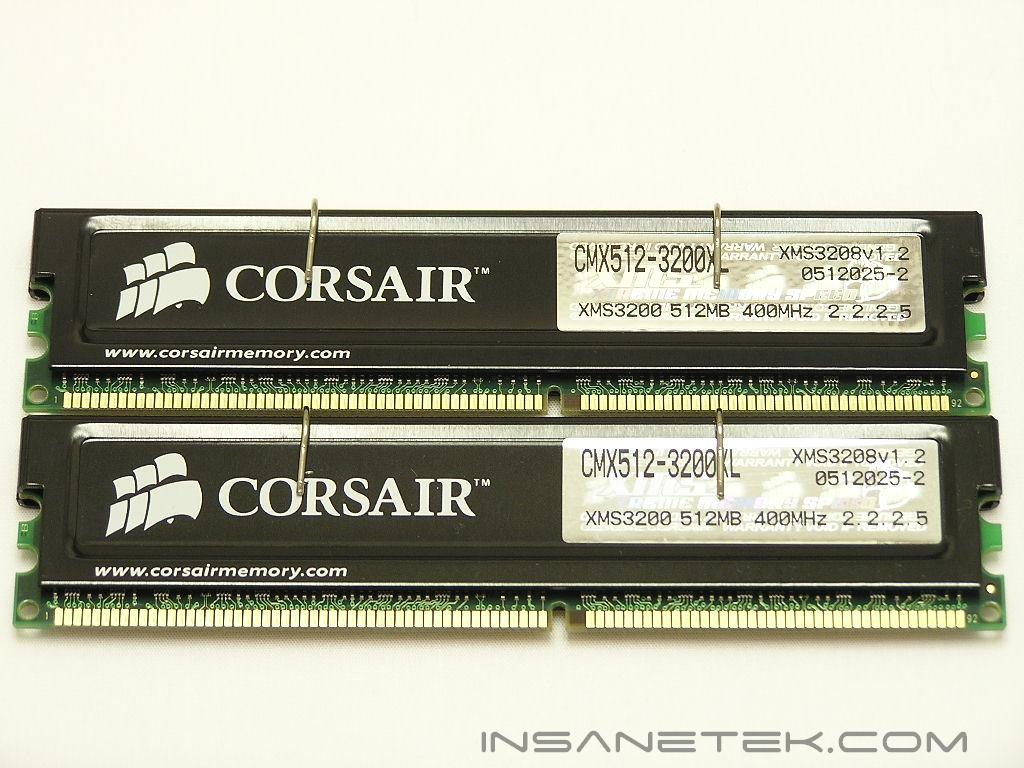
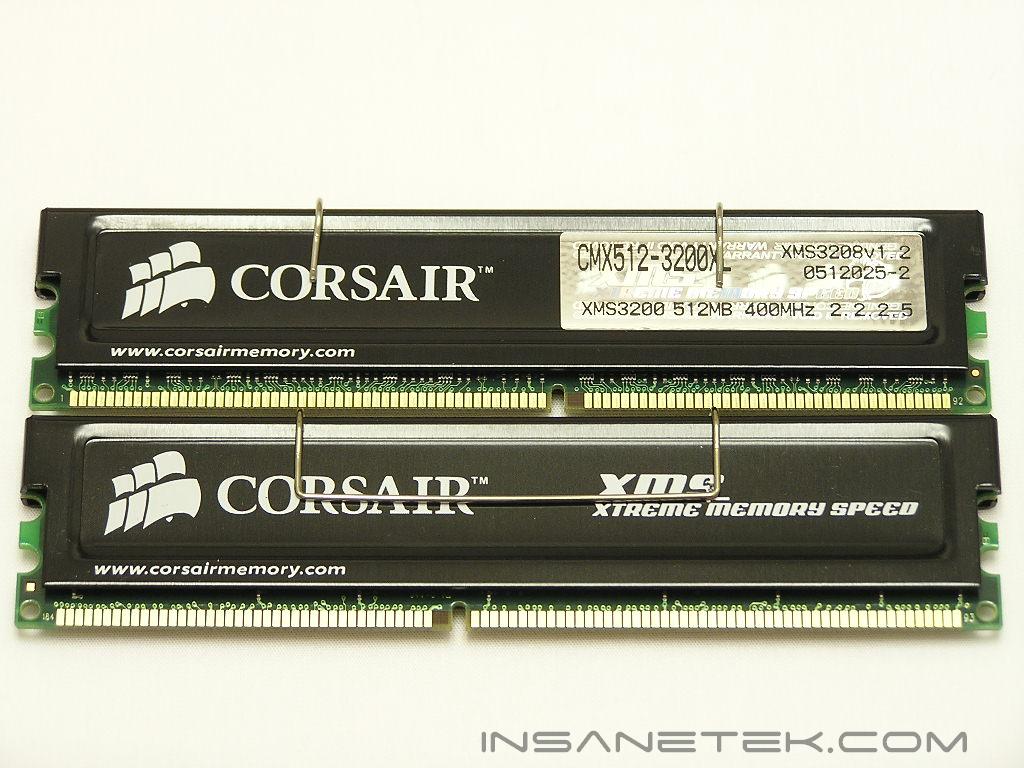
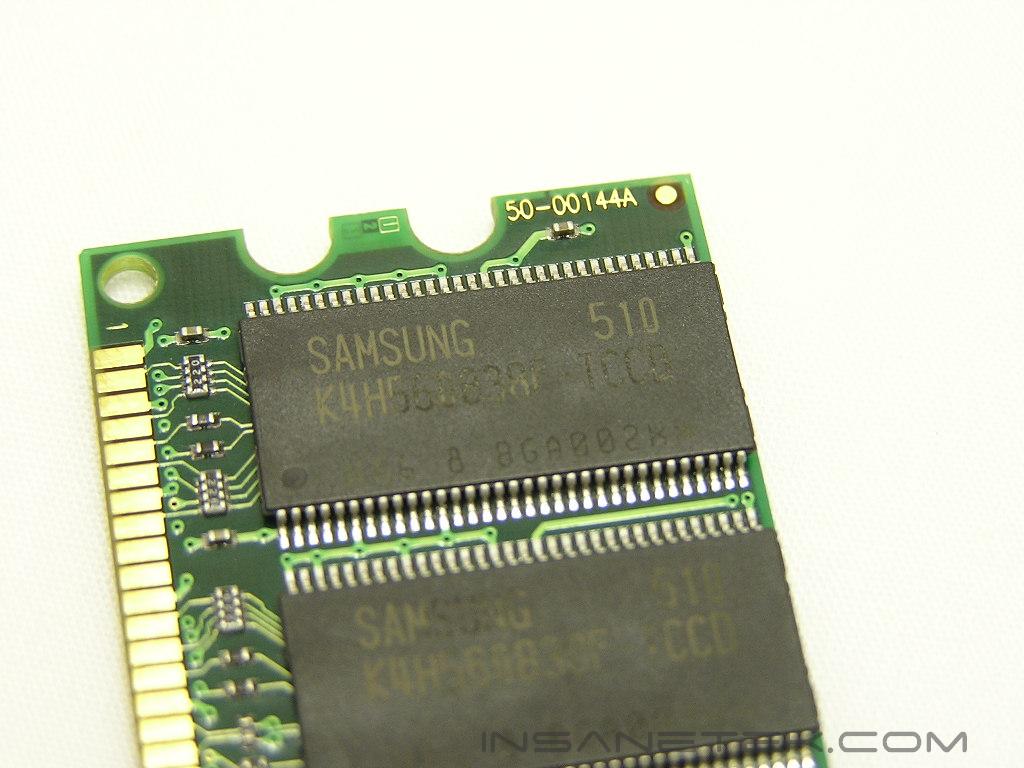
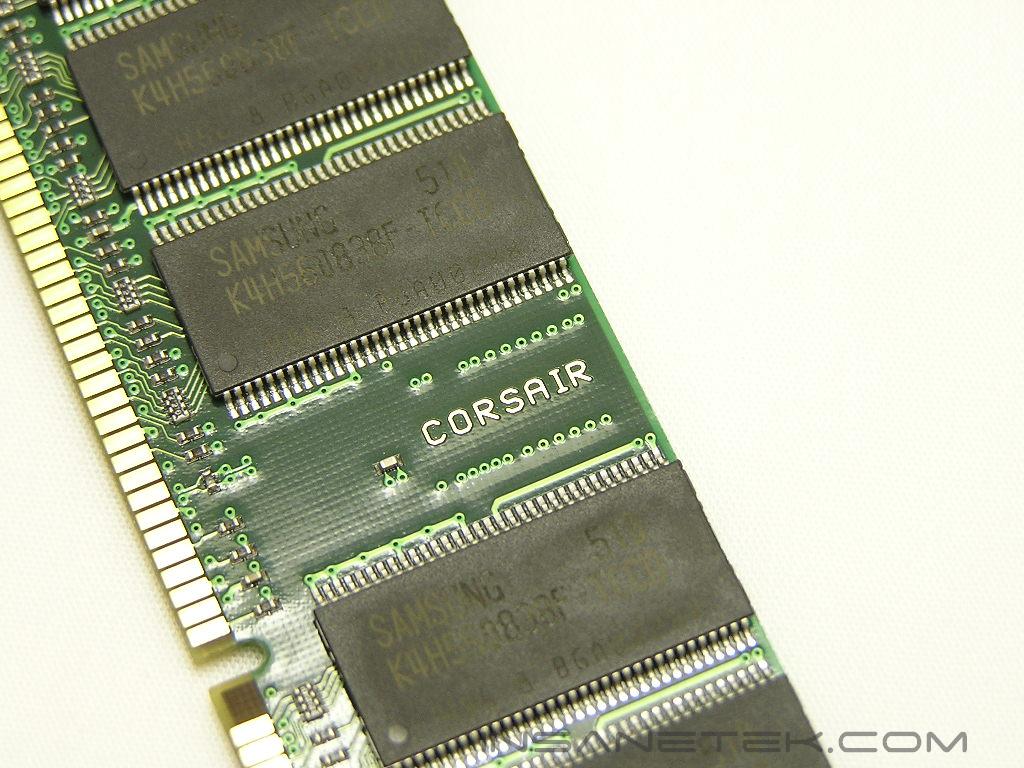
The XMS PC3200XL is rated at 200MHZ and 2-2-2-5 1T timings with a voltage of 2.75v, according to Corsair’s spec sheet. Underneath the heatspreaders are the infamous Samsung TCCD IC’s. Many of you may not know this, but I read somewhere that Corsair had these chips first because Samsung made it for them. Interesting, eh? The best memory maker gets all the latest and greatest. Because the heatspreader on these sticks can be easily removed (at least more easily than the commonly used heatspreaders with two clips), I peeled it off to take a closer look at the “special” Brainpower PCB and TCCD chips. I was surprised that it was much harder to remove than I imagined. The thermal tape they use is ridiculously strong. Remember that tampering with the heatspreader will void your warranty. Corsair and InsaneTek are not responsible for any consequences and won’t be held liable for your actions. The chips used are week 510 TCCD IC’s. Currently, these are the latest TCCD IC’s available. While week 437 is still the renowned king of TCCD IC’s, we’ll see just how good these newer chips are. The OCZ Platinum PC4800 we reviewed had week 507 chips and were wonderful, so maybe the 510 ones will be just as good. One cool thing to note is that Corsair has their name imprinted on the PCB. The PCB has many similarities to Brainpower, but there are many things that make it different, such as the different small resistors.
Test System and Overclocking
Test System:
- AMD Athlon 64 3000+ Winchester
- DFI LANParty UT nF4 Ultra-D
- 2 x 512MB Corsair XMS TIWNX1024-3200XL v1.2
- Nvidia Geforce 6800GT
- Arctic Freezer 64
- Cooler Master Real Power 550W
Overclocking:
Keep in mind that during overclocking, the latencies are as follows: CAS-TRCD-TRP-TRAS
I started off with the memory at 200HTT 2-2-2-5 1T with 2.8v (since the DFI motherboard doesn’t allow 0.05v increments). The memory worked great and everything was smooth. I have to be honest here and say that I immediately shot for the highest overclock with my next try. I was curious as how high these sticks will take me. Surprisingly, with all the voltages from 2.5v-3.0v, 2.7v is the voltage to use. At the highest frequency, the memory ran flawlessly with 2.7v. An increase in voltage will result in Memtest errors. Surprising, isn’t it? Normally, memory can handle more volts and still run fine, but these were picky. 2.7v is what it likes, so 2.7v is what it’ll get. Heat was not an issue here. I have a big fan blowing across my platform to aid with cooling. I just wanted to explain the voltage usage so you won’t go off and wonder why I didn’t use any higher voltages to test for higher overclocks. To continue, I searched for the highest speed with timings of 2-2-2-5. Sadly, it only brought me to 210HTT. It isn’t all that much, considering I’ve seen better, but that’s not where TCCD’s shine. With a loosened TRCD to 3, I reached 225HTT. Again, I’ve seen better results, but this is still not where TCCD’s perform well. With even looser timings of 2-3-3-6, I was able to reach 240HTT. Now this part is great. I’ve never seen such a high overclock with timings of 2-3-3-6. Anyway, proceeding further to timings of 2.5-3-3-7, the Corsair v1.2 reached a great 295HTT. The memory would benchmark perfectly fine at 300HTT, but Memtest would fail in test 8, so it’s not perfectly stable. With a bit looser timings of 2.5-4-3-7, the memory reached the 300HTT ceiling. While many extreme overclockers prefer TCCD offerings from OCZ and G.Skill, simply because they pick out the best IC’s and the best weeks, this Corsair sample goes to show that they’re very well capable of reaching some great overclocks. What’s even better is that it only needs 2.7v. My Centon Advanced PC3200 Low Latency week 437 needs 3.0v in order to run 300HTT+. That difference in voltage can be a significant factor. Not all boards out there can supply more than 3.0v.
Overclocking Results:
- 200HTT 2.0-2-2-5 1T 2.7v
- 210HTT 2.0-2-2-5 1T 2.7v
- 225HTT 2.0-3-2-5 1T 2.7v
- 240HTT 2.0-3-3-6 1T 2.7v
- 295HTT 2.5-3-3-7 1T 2.7v
- 300HTT 2.5-4-3-7 1T 2.7v
Results
A series of memory intensive benchmarks will be run to test the performance of our sample. The other tests will be based on common benchmark programs such as 3DMark and PCMark. Real life performance differences will be tested through current games such as Far Cry and UT2004. Memory bandwidth benchmarks will be based off of SiSoft Sandra and Everest Home Edition. Super PI and PiFast will also be used to test memory performance, as the benchmark benefits largely from FSB increases.
Keep in mind that all following tests are done with an 8x multiplier. My Winchester cannot overclock beyond 9x280 so an 8x multiplier was used throughout all tests to provide proper scaling of performance. CPU multipliers in Athlon 64 processors do impact performance and so the 8x multiplier was used to keep performance as linear as possible.
SiSoft Sandra Memory Bandwidth
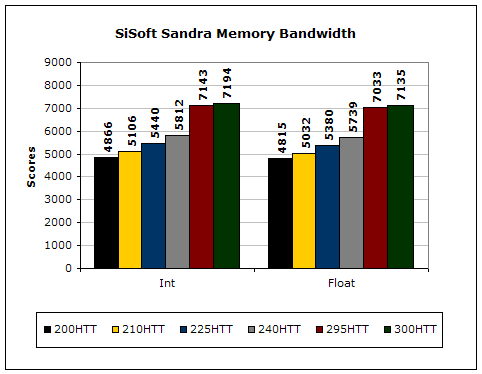
SiSoft Sandra is the most widely used memory bandwidth test. It can tell you the increase in performance from just lowering the latency timings.
Everest Home Edition
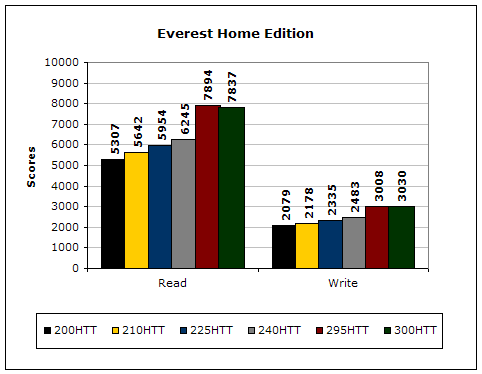
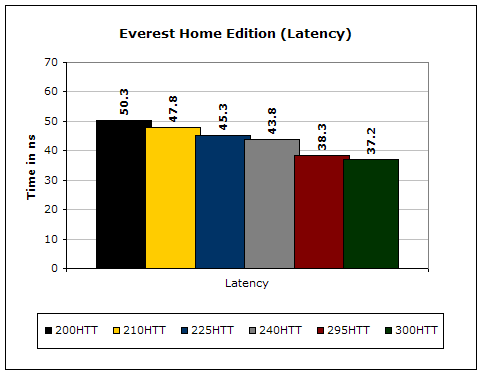
Much like Sandra, Everest Home Edition tests the memory’s ability to read and write data in large chunks. The results show that the lower latencies seem to help just a little with performance.
3DMark2001SE
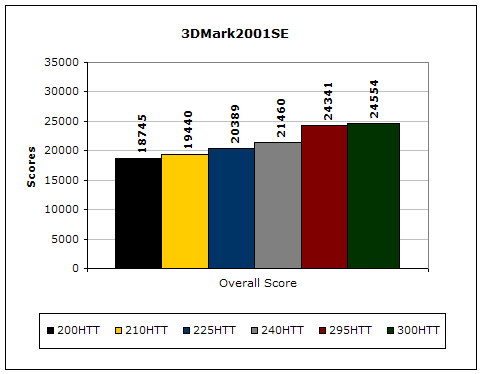
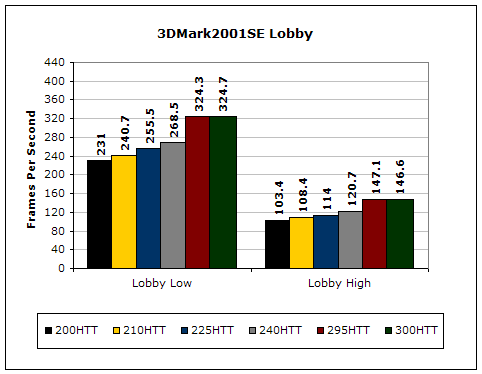
3DMark is probably the overclocker’s favorite benchmark. Unlike 3DMark2003, which stresses mainly the video card, 3DMark2001SE tests all of the system’s main components. Increasing the CPU speed, memory speed, and video card speeds will result in higher results in the final score.
Results Continued
Far Cry
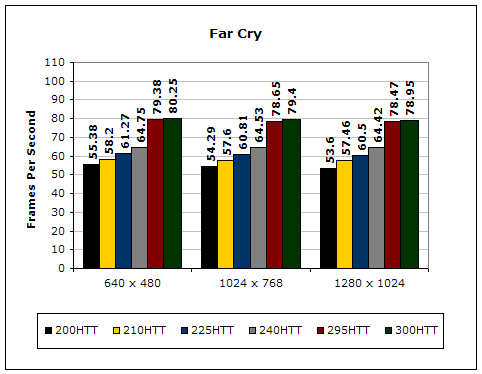
Since Far Cry is a game, the performance results will be very similar to 3dMark2001. I ran the benchmark at 640x480 so the benchmark would not be too GPU dependent. The tests under 1024x768 and 1280x1024 are an approximation of what kind of frames you’ll be getting. While the results are similar to 3dMark2001 in performance, this benchmark will give more significant results because Far Cry is extremely demanding.
Unreal Tournament 2004
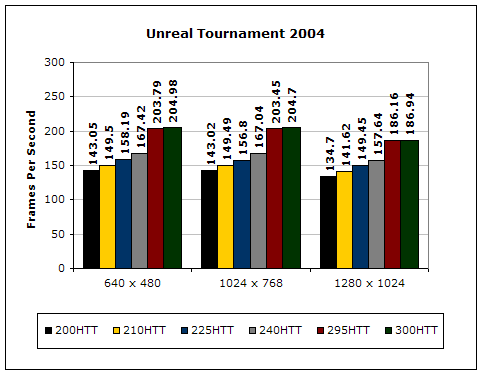
Unreal Tournament is another popular game engine to test overall system performance. Here, we can see the same results as Far Cry and 3dMark2001. Like Far Cry, UT2004 was also run at 640x480 to limit GPU dependency. The other resolutions are to give an approximation of actual gameplay performance.
PCMark2002
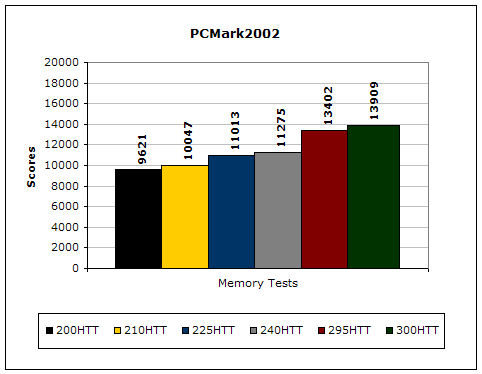
PCMark is another benchmark created by Futuremark. It tests the memory compression and decompression speeds in small to large chunks of data.
Super PI
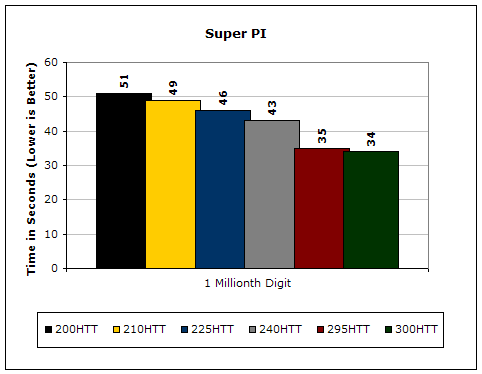
Since the value of PI is an infinite value, Super PI is a speed test to find the digit you’re looking for. In this case, we chose the millionth digit. Super PI benefits greatly from higher FSB as well as low latencies.
PiFast
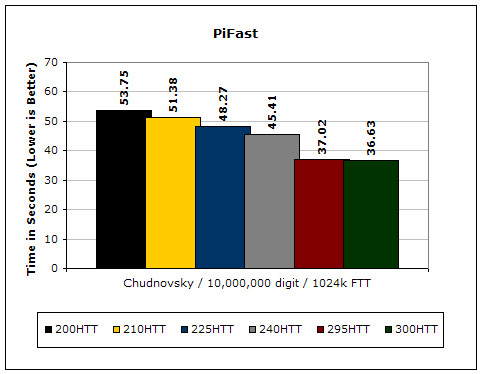
PiFast is similar to Super PI and the results can be greatly affected by a slight adjustment to the memory megahertz and latency.
Conclusion and Thoughts
Although I didn’t have the older PC3200XL v1.1 on hand to compare overclocking results, I can tell you that it’s nowhere near as good as the newer PC3200XL v1.2. Corsair deviated from their old lackluster PCB and went with something that enthusiasts like. Whether it be a marketing gimmick of a specially designed Brainpower PCB or real fact, the new board took the chips to high places. The memory overclocks extremely well and is actually a threat to the overclockers’ choice of OCZ or G.Skill. One thing to note is that Corsair is more widely available, meaning that it won’t be hard for you to find a good set of v1.2 memory. While you can’t be certain whether it’s v1.1 or v1.2, just give the stores a call and double check. This memory is awesome and I’ve added it to my list of top choices for memory. Corsair does indeed live up to their reputation of providing great performance memory, and their new PC3200XL v1.2 proves that. With DRAM prices dropping like bird poo, you have no reason not to pick these up and start some extreme overclocking.
Pros:
- Shiny black heatspreaders
- Better use of PCB (compared to older v1.1)
- Overclocks extremely well
- Only needs 2.7v!!!
- Very very affordable
Cons:
- Nothing really–great price, great performance, great overclock
- Might be a bit difficult to find considering e-stores don’t differentiate versions

We would like to thank Corsair for providing us the sample. If you have any questions or comments, feel free to hit us up in the forums. You can also check out more of our latest reviews on the front page.