

Where Are They Now: ATI
There was a time when the graphics card argument on every forum was ATI versus NVIDIA, and it was a real fight. Today the name on the box is AMD, and a lot of younger builders have never seen an ATI logo outside a retro build. So this week I’m going back to the company in Markham, Ontario, that made the red team red.
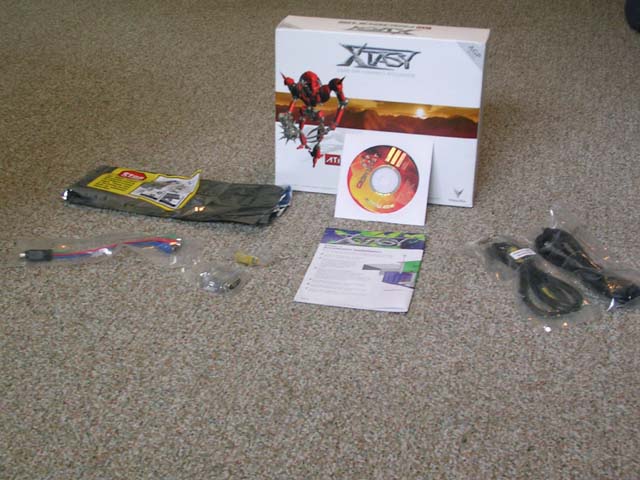
VisionTek’s Radeon X800 Pro bundle, from our 2004 review.
Who they were
ATI started in Canada in 1985 and spent most of its first fifteen years making graphics chips that ended up in office PCs and big-brand desktops. The Mach and Rage chips sold in huge numbers, but nobody built a gaming rig around one. The first Radeon arrived in 2000 and was decent. Then in 2002 ATI released the card that changed its reputation overnight.
Product spotlight: the generations
2002–2003: the Radeon 9700 Pro. The 9700 Pro was the first DirectX 9 card, and it wasn’t close. It beat everything NVIDIA had, and NVIDIA’s answer, the GeForce FX 5800, came late, ran hot and sounded like a hair dryer. The 9800 Pro followed in 2003 and became the card everyone recommended. The cheaper Radeon 9500 had its own legend, because the right model could be turned into a 9700 with a driver hack. I’ll give that one a whole post in Overclocking Legends.
2004–2005: the X800 years. This is where we came in. When the X800 launched against NVIDIA’s GeForce 6800 Ultra, our reviewer admitted that “many people, including myself, were skeptical of ATI’s claim that the X800 series cards were faster.” By the end of the review it was settled: “The X800 Pro has even beaten the 6800 Ultra in some tests, which is definitely a slap in the face for Nvidia.” We reviewed X800-series cards from several of ATI’s board partners: the VisionTek X800 Pro, the PowerColor X800 Pro VIVO, the Gigabyte X800 Pro, the passively cooled Gigabyte X800 XL, and on the budget end the PowerColor X700 and X800 GT. The stock coolers were loud enough that aftermarket ones like the Arctic Cooling ATI Silencer 5 had a real market.
2005–2006: CrossFire and the X1000 series. NVIDIA had SLI, so ATI built CrossFire. The first version needed a special “master” card and an external dongle that plugged into the back of the other card, which was about as elegant as it sounds. Motherboard makers jumped on it anyway, including ECS with a CrossFire board on Intel’s 955X. ATI also made its own chipsets, and even sold an ATI-branded motherboard. The X1800 showed up late in 2005, and the X1900 followed quickly in early 2006, with partners like Gigabyte calling it the world’s fastest consumer 3D graphics card.
What happened
In July 2006 AMD announced it was buying ATI for about $5.4 billion. We covered it as it happened: AMD’s board approved the offer, and a week later the merger was official. The big question at the time was whether ATI would keep making chipsets for Intel boards, and AMD said it would. A couple of weeks later there was a rumor that AMD would drop the ATI name, and AMD shot it down the next day: “The ATi name will live on at AMD as our leading consumer brand.” Our post ended with “We will continue to have our ATI vs. Nvidia wars.” Good times.
The deal closed in October 2006, and the first couple of years were rough. AMD paid a lot of money right as its processors were falling behind Intel’s Core 2, and the first big ATI launch under AMD, the Radeon HD 2900 XT, was late and hot. The comeback came in 2008 with the HD 4870, which was fast and priced well under NVIDIA’s top card. In 2009 the HD 5870 was the first DirectX 11 card, another one that’s getting its own Legends post.
Then in 2010 AMD did the thing it had said it wouldn’t. Starting with the HD 6000 series, the cards were AMD Radeon, and the ATI name was retired. You can see it in our news posts. In June 2010 we were reporting on ATI Catalyst 10.6. By April 2011 it was AMD Catalyst 11.4. The spirit lived on, though: the HD 6950 could be flashed into a 6970, just like the 9500 a decade earlier.
Where they are now
ATI the company is gone, but ATI the team never really left. Radeon is still AMD’s graphics brand, the Markham offices are still one of AMD’s big graphics sites, and Radeon chips have gone on to power game consoles from both Sony and Microsoft. It’s hard to argue the buyout didn’t work out in the long run. AMD’s Ryzen chips with Radeon graphics on board are exactly the kind of product the 2006 deal was supposed to make possible.
What’s missing is the name. I still think of the red box with the ATI logo when someone says Radeon. If you’ve got a 9700 Pro or an X800 in a closet, that’s a piece of history you can’t buy new anymore.
Next week: DFI LanParty, the boards with the UV-reactive slots.
— Luke