

Where Are They Now: Abit
If OCZ was the memory company for overclockers, Abit was the motherboard company. For a stretch of about ten years, if you asked a forum which board to buy for overclocking, there was a good chance the answer started with an A. This one’s personal for me, because once I learned what overclocking was, an Abit NF7 is the board I bought.
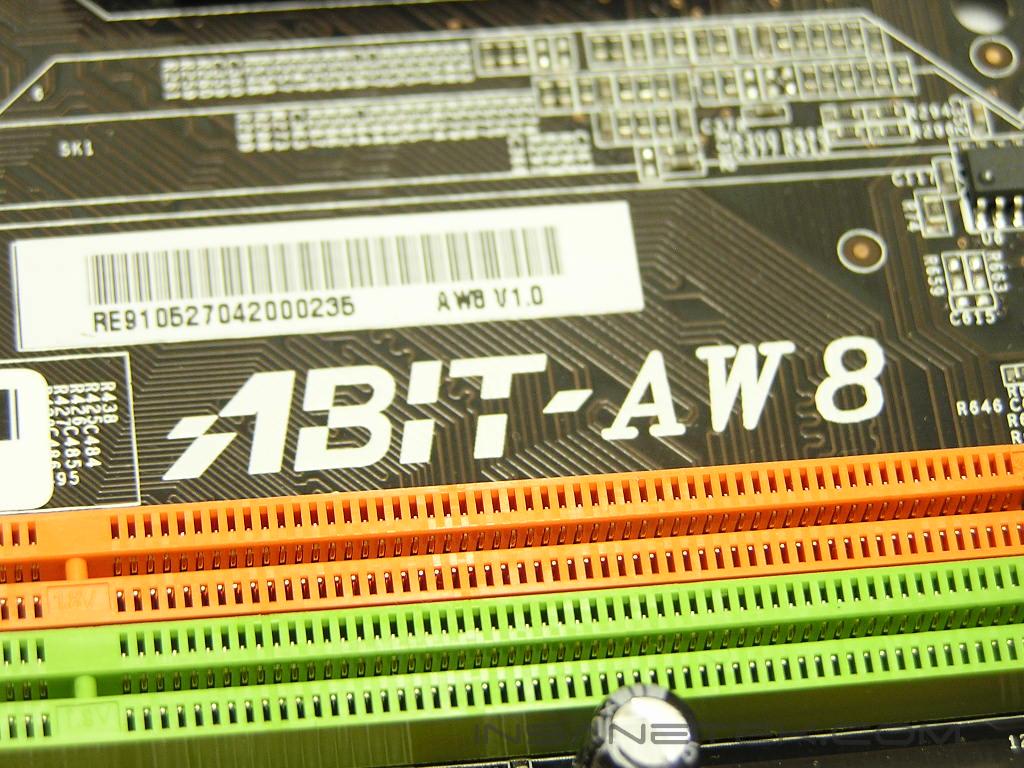
The Abit AW8, from our 2005 review.
Who they were
Abit was founded in Taiwan in 1989, and by the late ’90s it had figured out what enthusiasts actually wanted. The big one was SoftMenu. Back then, changing your CPU speed meant opening the case and moving jumpers around with tweezers. SoftMenu put it in the BIOS. Bump the bus speed, save, reboot, see what happens. That sounds obvious now. It wasn’t then.
Our own reviewer summed up the reputation in our KV8 Pro review: Abit had been “known for their excellent overclocking motherboards since the ancient days of Pentium IIs and Celerons,” and its KT7 was “considered the motherboard closest to perfection.” Then, a little wistfully: “Boy, those were the days.”
Product spotlight: the generations
Here’s Abit’s run, starting a little before InsaneTek because you can’t tell this story without it.
1998–2001: the legends before us. The BH6 on Intel’s 440BX chipset was the board you paired with a cheap Celeron and ran way past its rated speed. The BP6 took two Celerons at once, which Intel had never intended anyone to do, and it gave a lot of people their first dual-processor machine for not much money. On the AMD side, the KT7 and KT7A-RAID owned Socket A for a while.
2002–2003: the NF7-S. This is the one. nForce2 was the best Socket A chipset ever made, and the NF7-S (the S added Serial ATA and FireWire) was the board everyone bought to run it. Pair it with a cheap Athlon XP, push the front-side bus to 200MHz and beyond, and you had a machine that kept up with chips that cost three times as much. I covered the chip side of that story in the Athlon XP 1700+ DLT3C. Our Command Per Clock guide used an NF7 v2.0 as its test board and called it “quite the overclocker with the right tweaks in the BIOS.” Half the fun of the NF7 was the BIOS scene. Modded BIOS files got passed around the forums like trading cards, each one promising a few more megahertz. The same era brought the IC7-MAX3 for the Pentium 4, and OTES, Abit’s heatpipe cooling that blew the hot air from the chipset and voltage regulators straight out the back of the case.
2004–2005: the years we reviewed. This is where we had boards on our own test bench, and the honest version is that Abit was a little late to the Athlon 64. The NF8 review opened with “Everyone’s been talking about Abit’s recent lack of effort in supplying good motherboards,” and our Fatal1ty AN8 review said it was “a little strange that Abit seemed to be behind.” When the boards showed up, though, they were good. The NF8 came in “well below $100” and earned a recommendation. The KV8 Pro was the budget pick. The AX8 gave VIA fans a PCI Express board. Then the Fatal1ty AN8 arrived with a fiery red PCB, red LEDs and OTES fans, and our verdict was simple: “It’s definitely the motherboard to use for your gaming rig.” Along the way Abit added uGuru, a chip on the board that let you change your overclock from Windows without rebooting. On the Intel side, the AW8 and AL8 brought DDR2, the AW8 with Silent OTES on top, though it left us asking for “a better working BIOS.” We finished 2005 with the NI8 SLI and the Fatal1ty AN8 SLI.
2006–2008: one last great board. The AB9 and the IN9 32X-MAX kept the lineup going into the Core 2 era, and then in 2007 Abit released the IP35 Pro. On the P35 chipset with a Q6600 or an E6750, it was one of the most talked-about boards of the year, and I’ll come back to it in the Overclocking Legends series. The IX38 QuadGT followed. After that, the new boards mostly stopped.
What happened
Two things hurt Abit, and they hit at about the same time.
The first was capacitors. Around 2002 and 2003 the whole industry got a batch of bad electrolytic capacitors, the “capacitor plague,” and boards from that era had a habit of bulging, leaking and dying a few years in. Abit wasn’t the only company affected, but it became the name people associated with it, and it ended up facing a class action lawsuit over it.
The second was money. In December 2004 the Taiwan Stock Exchange downgraded Abit’s stock over questionable accounting. Investigators found that a big share of its import and export business ran through a handful of related companies at a single address, which made its sales look bigger than they were. That’s the context for those “where’s Abit?” lines in our 2005 reviews. The company was fighting for its life while it was trying to ship Athlon 64 boards.
A shipping company put money in during 2005, but it wasn’t enough. In January 2006, Universal Scientific Industrial (USI) announced it would buy Abit’s motherboard business and the brand, and the deal closed that spring. HotHardware called it Abit rising from the ashes. For a while that’s what it looked like. The IP35 Pro came out under USI.
It didn’t last. Abit tried branching out into things like speakers and digital photo frames, but the motherboard market was consolidating fast around Asus, Gigabyte and MSI, and a smaller brand with a damaged reputation couldn’t keep up. Abit announced it was leaving the business, and on December 31, 2008, it closed.
Where they are now
There is no Abit today. USI kept the name and the patents, and support for the last boards wound down over the following years, but no new Abit motherboards have been made since 2008. USI itself is still around, building electronics for other companies’ products, which is a very different business from selling red motherboards to gamers.
What Abit left behind was a playbook. BIOS overclocking menus, overclocking from Windows, gaming-branded boards with flashy PCBs, heatpipes on the chipset. Every board maker does all of that now. Abit did it first, or close to it, and did it when the big brands were still selling beige.
If you’ve still got an NF7-S or an IP35 Pro, check the caps and keep it. People still go looking for those boards for retro builds.
Next in the series: Corsair, the memory company that’s still standing.
— Luke