

GeIL Ultra-X PC3200 Winbond BH5 1GB Dual Channel Kit
Introduction
Before I begin, I must be honest and say that I’ve never been a big fan of GeIL memory. I remember when GeIL first introduced their low latency PC3200 memory about 2 and a half years ago. The use of copper heatspreaders made me skip with joy. Being new to the computer industry, I had doubts, but reviews showed the memory worthy of my dollars. I immediately bought a few sticks to play with. I obtained their Platinum PC3200, Platinum PC3500, and Platinum PC3700. They were all big disappointments to me. Why? None of them overclocked well. The Platinum PC3500 couldn’t even run the rated speeds and timings. The Platinum PC3700 was half-decent. It was around the time Intel released the Northwood 2.4C, and the PC3700 allowed me to run 300FSB with a 5:4 divider, resulting in 240MHZ. Since then, I have not touched GeIL memory. Many continue to recommend the memory with good results, but I did not want to give them another try.
My opinions began to change when we received our sample of the GeIL Ultra-X PC3200. The memory was based on Samsung TCCD IC’s and won our Must-Have award. I was rather impressed by the performance and the overclocking headroom. I still wasn’t entirely persuaded, because all memory with TCCD and Brainpower PCB seem to perform well.
Samsung discontinued the TCCD chips in February. Many memory manufacturers were forced to find alternatives for low latency operation. Luckily, Winbond chips are being fabricated again under the same process as the renowned BH5, allowing low latency operations of 2-2-2 at 200MHZ. They also give the DFI Ultra-D users a chance to really pump some juice to the memory to see just how high the memory can reach. That’s what we’re going to do with GeIL’s Ultra-X PC3200 based on the Winbond chips. Paired with the DFI Ultra-D motherboard and some high voltage, we’ll see if the results can change my opinion of their memory.
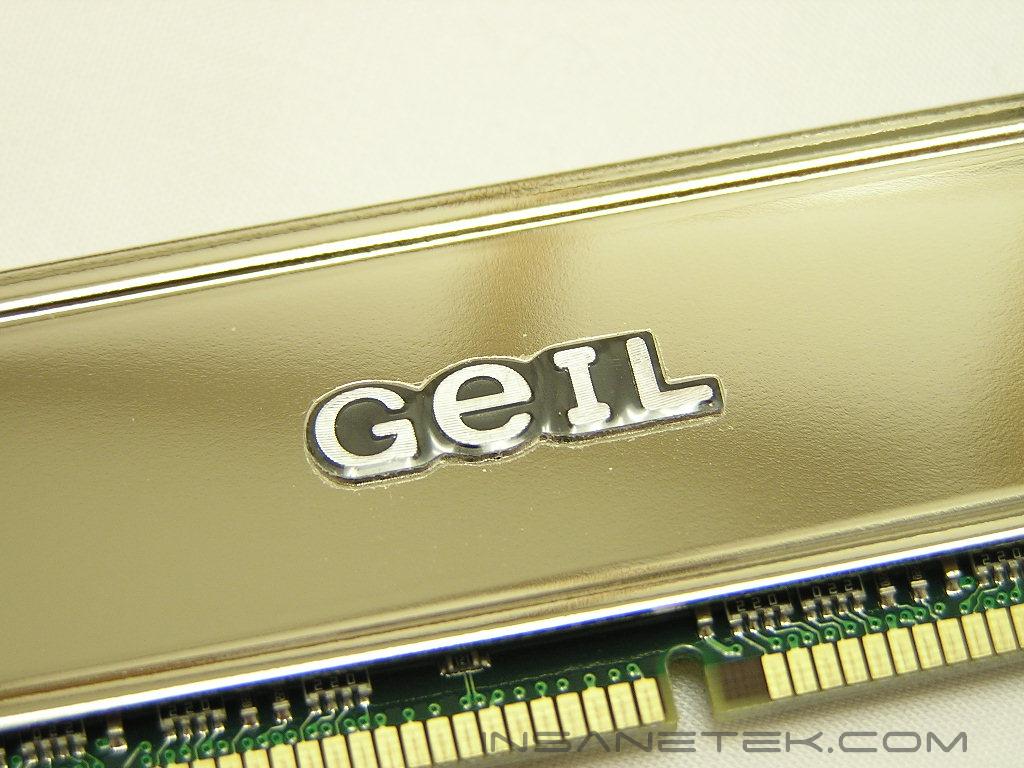
GeIL Ultra-X PC3200 based on Winbond
I’m not sure why GeIL did not rename the memory, because the use of different chips without a change in the model name will cause some confusion. Enthusiasts looking to buy TCCD chips will be directed to the Ultra-X, but might end up with Winbond chips instead, and vice-versa. If you do want TCCD chips, the Ultra-X PC4400 is guaranteed to be TCCD.
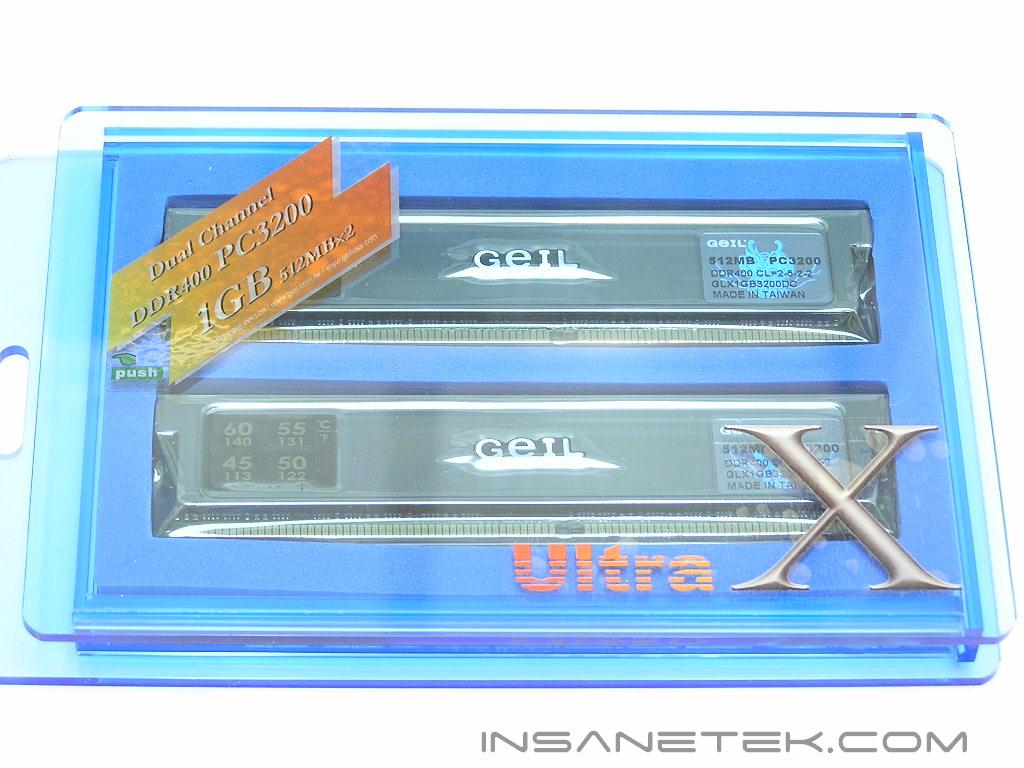
GeIL’s packaging is the fanciest I’ve seen. The memory comes in a classy blue acrylic case with hard Styrofoam for cushion. Each individual stick of memory is sealed inside an anti-static bag. The seal is airtight! It looks like wrapped-up meat.
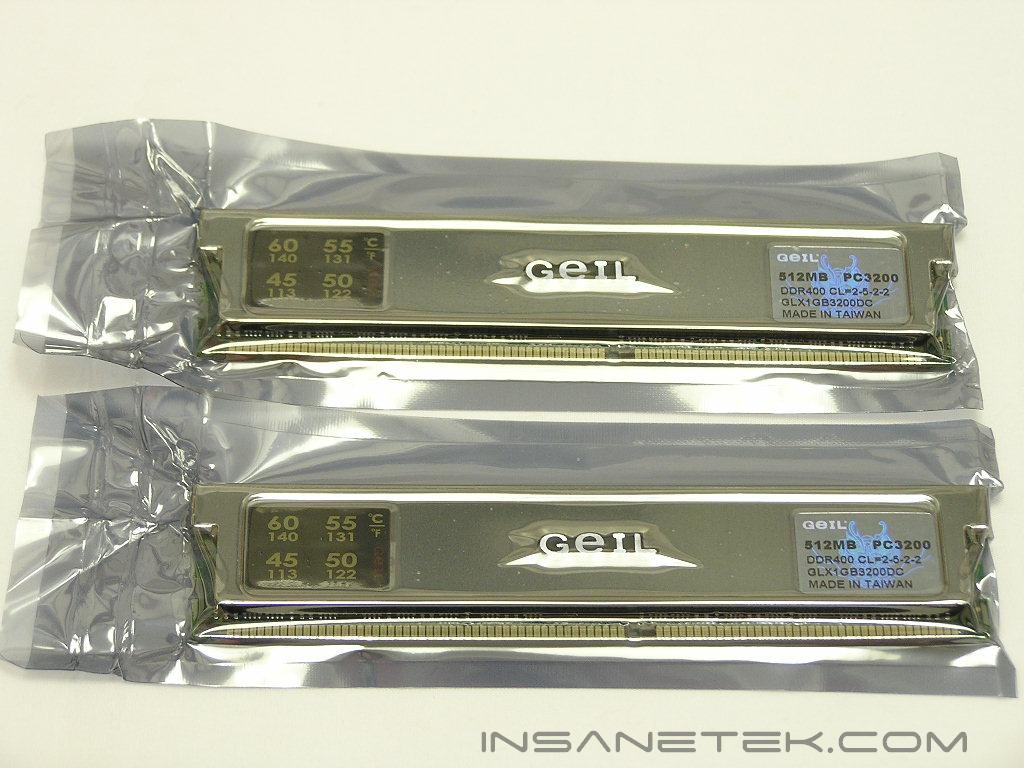
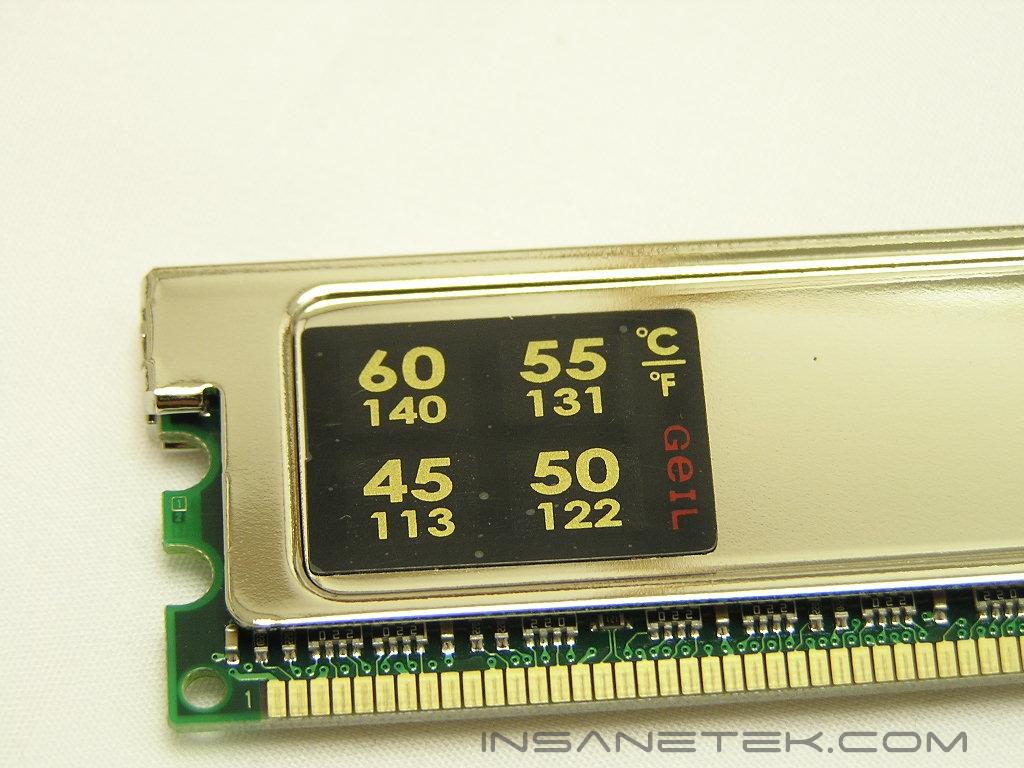
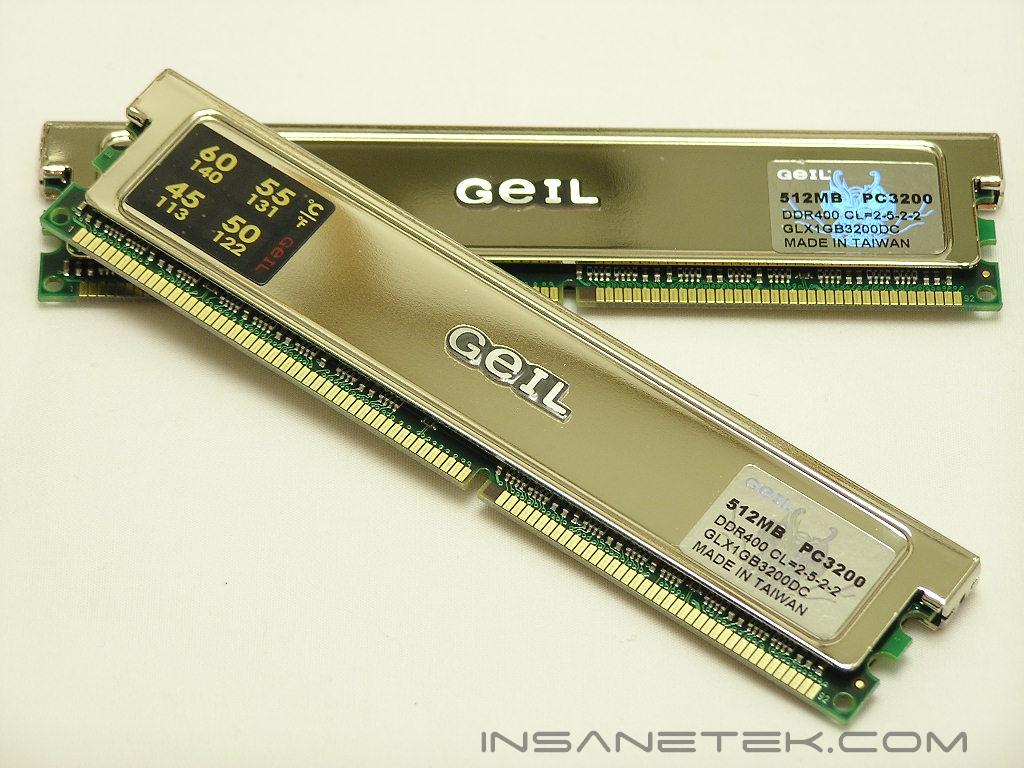
GeIL’s heatspreaders are different from the typical heatspreaders that you see. There are no clips involved, which means they’ll be extra hard to remove. The platinum finish copper heatspreaders have a mirror finish and are highly reflective. It’s a love-hate situation, because I love the looks but hate it when I leave a fingerprint. There is also a thermal sticker to indicate the temperature. It’s not a necessity, but a cool addition.
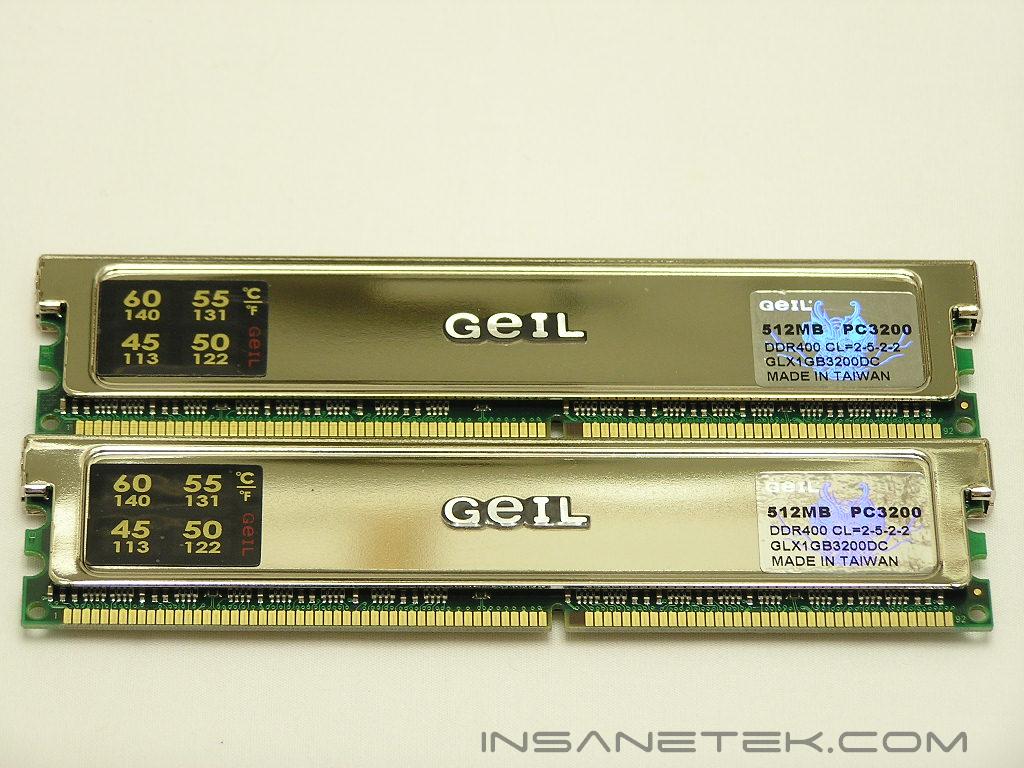
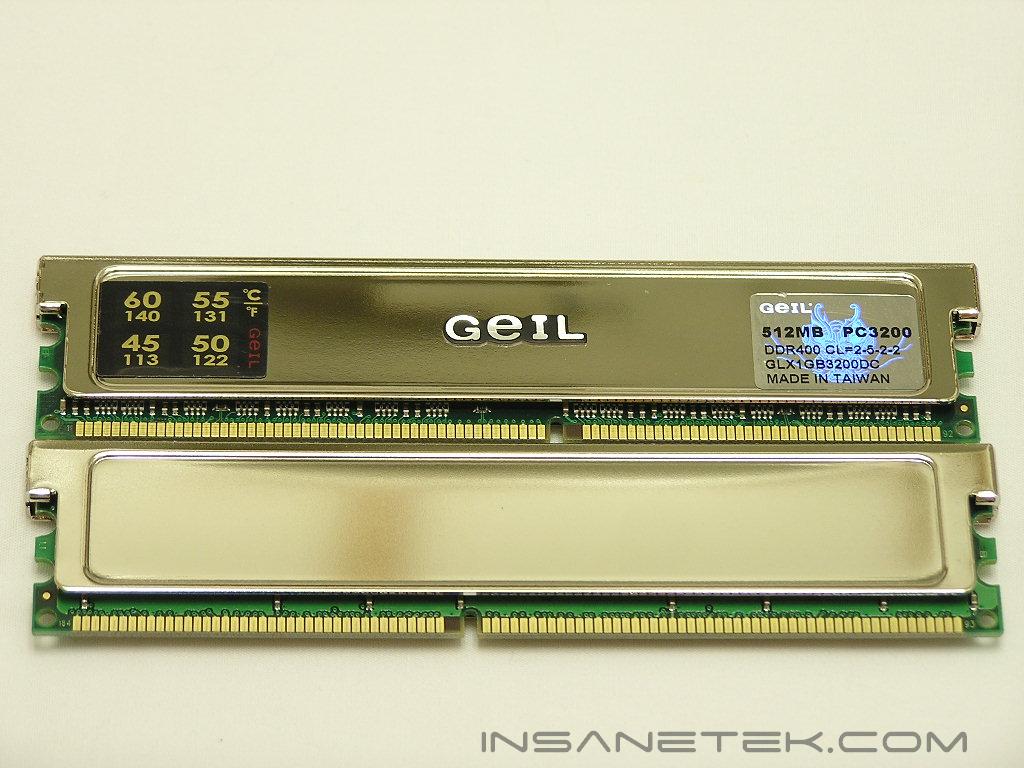
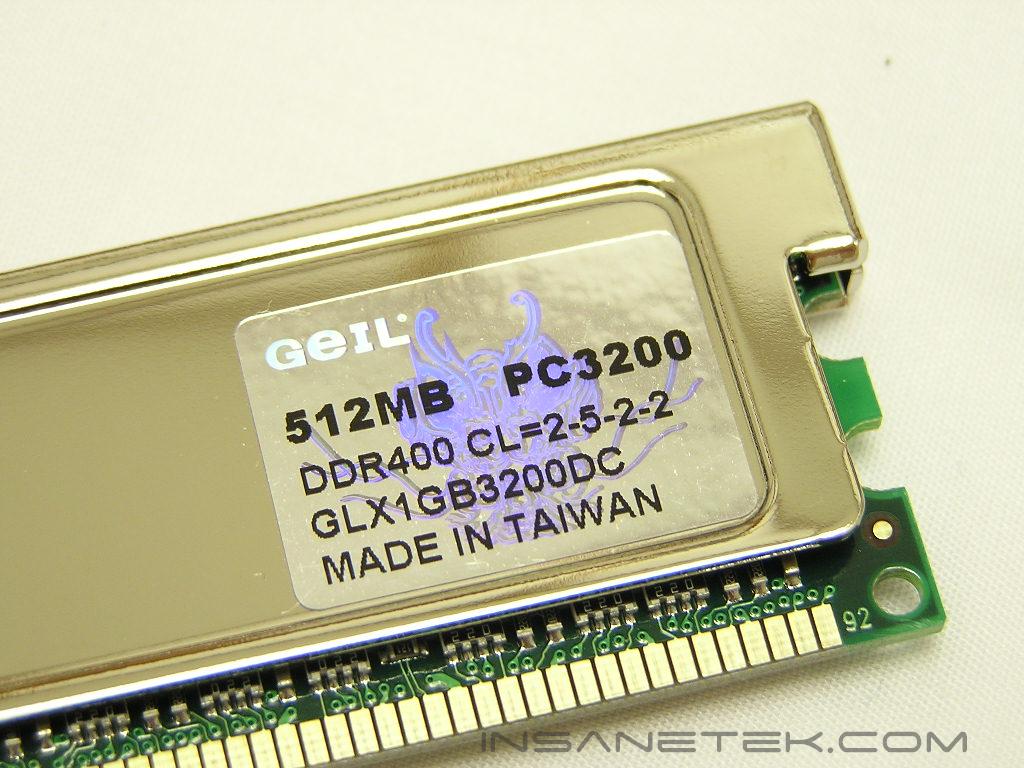
Like the TCCD based Ultra-X PC3200, this Winbond based Ultra-X PC3200 is rated to run 200MHZ with latencies of 2-2-2-5. A quick check over at GeIL’s website revealed no information about voltage requirements. Judging from previous GeIL memory, the memory voltage warranty should be from 2.5v-2.9v. Don’t quote me on this, I’m just guessing.
Test System and Overclocking
Test System:
- AMD Athlon64 3000+ Winchester
- DFI LANParty UT nF4 Ultra-D
- 2 x 512MB GeIL Ultra-X Winbond BH5 PC3200
- ATI X800 (400/490)
- Enermax Noisetaker 470W
- Arctic Freezer 64
Overclocking:
Keep in mind that during overclocking, the latencies are as follows: CAS-TRCD-TRP-TRAS
We all know that Winbond chips love voltage, right? With the DFI Ultra-D, supplying voltage won’t be a problem. The overclocking process will focus on the headroom with extremely low latencies of 2-2-2-5. If you want a comparison of Winbond’s low latencies and Samsung TCCD’s high frequencies, check out our review of the OCZ Gold PC4000 VX. Randy compared the two memory chips with the same exact CPU speed. The TCCD is running 1:1 with looser timings, while the Winbond runs with a divider and latencies of 2-2-2-5. The Winbond chips can definitely keep up.
For this review, we’ll test the headroom and voltages required to reach a certain speed. I performed a quick test with some Kingston HyperX PC3000 RMA sticks I received and my CPU and motherboard allow at least a good 265HTT.
I started with 200HTT 2-2-2-5 at 2.8v and received an error. No worries, because I have plenty of voltage to spare. The memory probably needed 2.85v or so, but because the Ultra-D doesn’t have half voltage options, I used 2.9v. At 2.9v, the memory overclocked up to 215HTT. I increased the voltage to 3.2v, the most common and highest VDIMM allowed on other motherboards, and the memory overclocked to 240HTT. Not too shabby. The Winbond chips are eliciting the old BH5 days. I pushed further to 3.4v, the common maximum voltage allowed on a motherboard when using the OCZ DDR Booster. The memory went up another 10MHZ to 250HTT. I then pumped as much voltage as I could and eventually settled on the highest overclock of 260HTT. The final voltage was 3.6v. Any increase resulted in memory errors. I have a feeling that the memory could fare better, but I’m not sure what was causing the problem. The CPU is capable of higher HTT, but the memory controller might be like that HTT with extreme low latencies. The motherboard could’ve had a heat issue, but a fan cooled the MOSFET’s. I was puzzled. I came to the conclusion that I maxed out the overclock on the memory because my Kingston KHX3000 reached 265HTT. Don’t get me wrong here, 260HTT 2-2-2-5 isn’t bad at all. I was able to get some impressive scores with the results.
One thing GeIL wanted me to mention is the memory has some secret potential when paired with the DFI Ultra-D. Because the motherboard allows so many CAS latencies, I went ahead and dropped CAS to 1.5. Sure enough, the memory ran fine. It was pretty cool. Running 260HTT 1.5-2-2-5 got me a good increase in overall performance. Due the nature of memory design, I only used that setting for benchmarks. Using it 24/7 might kill the memory’s lifespan.
You must wonder why I didn’t loosen the latencies to see how much higher the memory could go, but that would defeat the purpose of having Winbond chips. Winbond based memory is made for high frequencies with low latencies. If you are going to loosen the timings in your system because you don’t have the voltage, don’t bother getting these. You’ll put them to waste. You might as well look for TCCD solutions. It’ll be like installing NOS in your car and never racing. What’s the point?
Overclocking Results:
- 200HTT 2.0-2-2-5 1T 2.9v
- 215HTT 2.0-2-2-5 1T 2.9v
- 240HTT 2.0-2-2-5 1T 3.2v
- 250HTT 2.0-2-2-5 1T 3.4v
- 260HTT 2.0-2-2-5 1T 3.6v
- 260HTT 1.5-2-2-5 1T 3.6v
Results
A series of memory intensive benchmarks will be run to test the performance of our sample. The other tests will be based on common benchmark programs such as 3DMark and PCMark. Real life performance differences will be tested through current games such as Far Cry and UT2004. Memory bandwidth benchmarks will be based off of SiSoft Sandra and Everest Home Edition. Super PI and PiFast will also be used to test memory performance, as the benchmark benefits largely from FSB increases.
SiSoft Sandra Memory Bandwidth
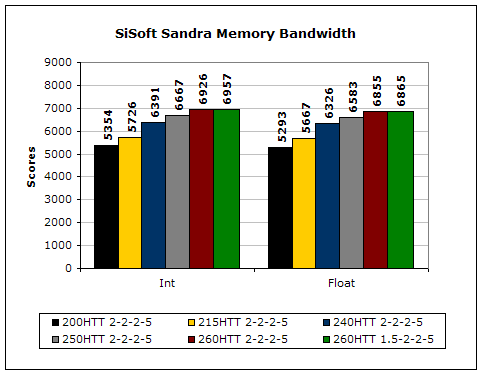
SiSoft Sandra is the most widely used memory bandwidth test and can distinguish increases in performance from lower latency timings.
Everest Home Edition
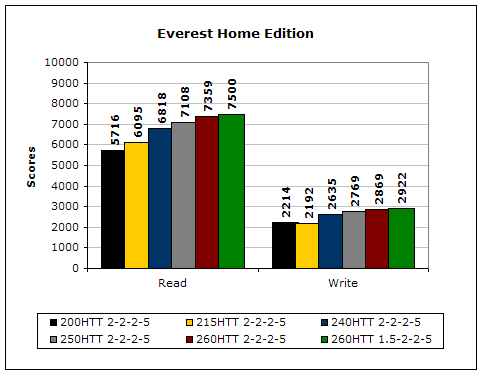
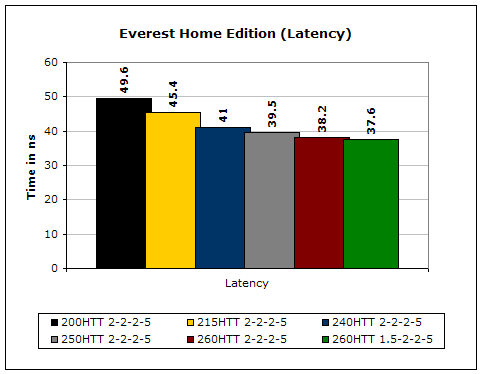
Much like Sandra, Everest Home Edition tests the memory’s ability to read and write data in large chunks. The results reveal the lower latencies helping just a little with performance.
3DMark2001SE
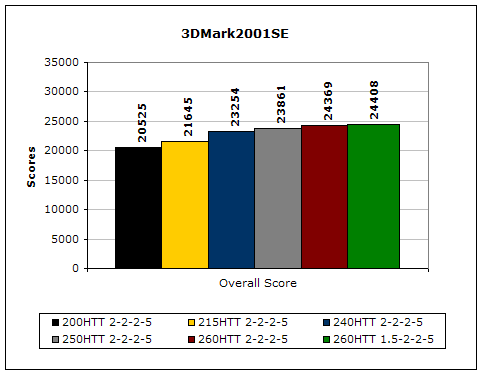
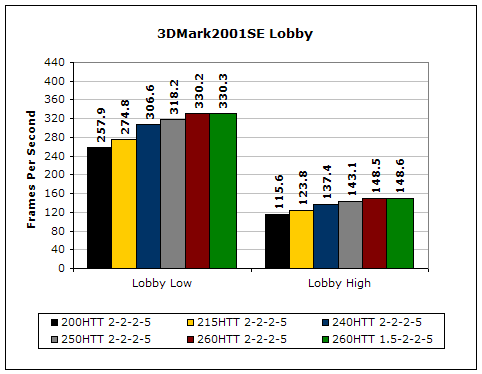
3DMark is probably the overclocker’s favorite benchmark. Unlike 3DMark2003, which stresses mainly the video card, 3DMark2001SE tests all of the system’s main components. Increasing the CPU speed, memory speed, and video card speeds will result in higher results in the final score.
Results Continued
Far Cry
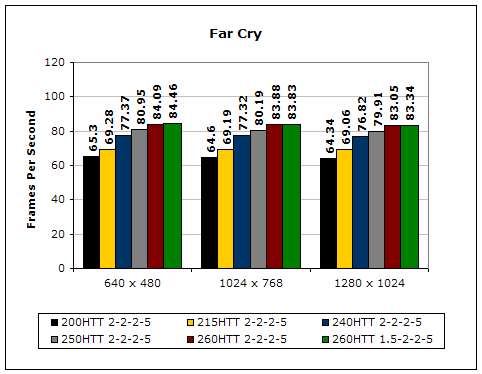
Since Far Cry is a game, the performance results will be very similar to 3dMark2001. I ran the benchmark at 640x480 so the benchmark would not be too GPU dependent. The tests under 1024x768 and 1280x1024 are an approximation of what kind of frames you’ll be getting. While the results are similar to 3dMark2001 in performance, this benchmark will give more significant results because Far Cry is extremely demanding.
Unreal Tournament 2004
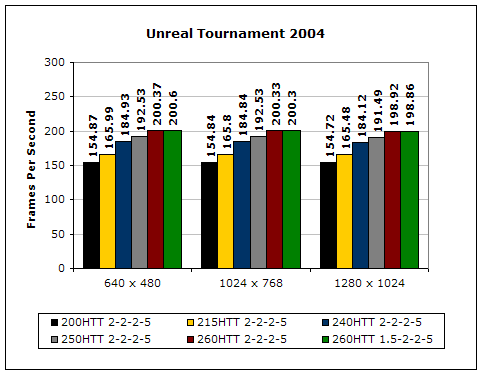
Unreal Tournament is another popular game engine to test overall system performance. Here, we can see the same results as Far Cry and 3dMark2001. Like Far Cry, UT2004 was also run at 640x480 to limit GPU dependency. The other resolutions are to give an approximation of actual gameplay performance.
PCMark2002
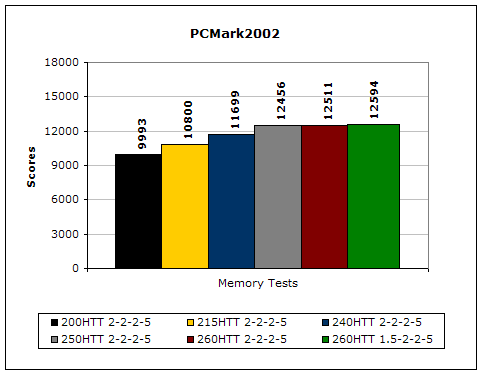
PCMark is another benchmark created by Futuremark. It tests the memory compression and decompression speeds in small to large chunks of data.
Super PI
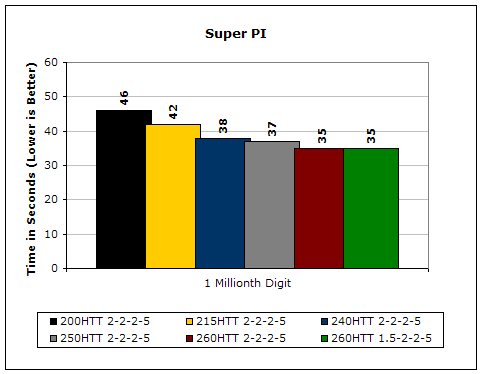
Since the value of PI is infinite, Super PI is a speed test to find the digit you’re looking for. In this case, we chose the millionth digit. Super PI benefits greatly from higher FSB as well as low latencies.
PiFast
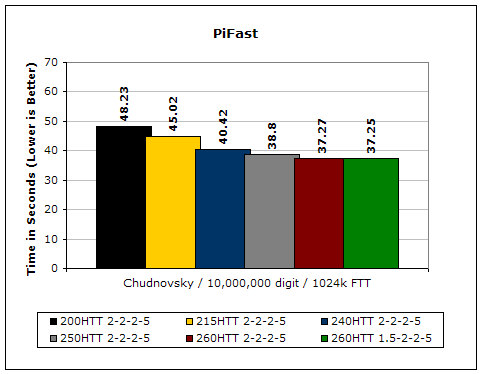
PiFast is similar to Super PI and the results can be greatly affected by a slight adjustment to the memory megahertz and latency.
Conclusion and Thoughts
GeIL’s Winbond solution is awesome. If you own a motherboard with voltage to spare, you should definitely spring for these. While TCCD does provide better performance when running 1:1, it’ll be hard for you to actually find memory that can reach 300HTT with fairly good timings. With everyone owning DFI motherboards that supply at least 3.2v, this memory is what you should be getting. I prefer TCCD because I like to run my memory at 1:1, but after experiencing the performance of high megahertz and low latencies, I’m slowly changing my mind. If you have a 10x multiplier on your CPU, know that you’ll have one smoking system with these sticks. 10x260 = 2.6GHZ. If you’re running at that setting, the lower latencies of 2-2-2 will bring you increased performance and an overall better computing environment. The only downside would be the voltage required for these sticks to shine. Currently, there is only one motherboard that’s capable of unleashing the overclocking potential. Then again, most enthusiasts already own it.
After playing with these GeIL sticks, I’m convinced they’ve changed their ways. GeIL is really good stuff and a good choice for those who are looking for high performance memory. With such a low price, these are definitely worth springing for. This memory is definitely Highly Recommended!
Pros:
- Excellent mirror finish heatspreaders
- Very well packaged and protected, c’mon airtight seal!
- Excellent overclocking potential with extreme low latencies
- Loves voltage
- Excellent performance
- Excellent price
- Runs CAS 1.5!
Cons:
- Name can cause confusion with older TCCD based Ultra-X PC3200
- Requires high voltage in order to shine

We would like to thank GeIL for providing us the sample. If you have any questions or comments, feel free to hit us up in the forums. You can also check out more of our latest reviews on the front page.