

SilverStone Zeus ST52F 520W
Introduction
SilverStone is making great impressions with their line of quality cases. The recently reviewed TJ05 and TJ06 left us very satisfied and would make great recommendations for enthusiasts looking for something more than just a beige box. Having a great case leads to a number of other needs. The most important would be the power supply. As we all know, having a top of the line power supply is a necessity. The stability ensures the security of your important hardware components. Not many people know this, but a good power supply also helps reduce your electricity bill.
SilverStone strives to make great products that generate little noise. They have a number of power supplies that are equipped with large fans for cooling. Today’s sample we’ve received is SilverStone’s high end power supply, which comes rated at 520W and uses 2 80mm fans for cooling. The power supply comes reasonably priced and has many of the options that would satisfy many users.
SilverStone Zeus ST52F
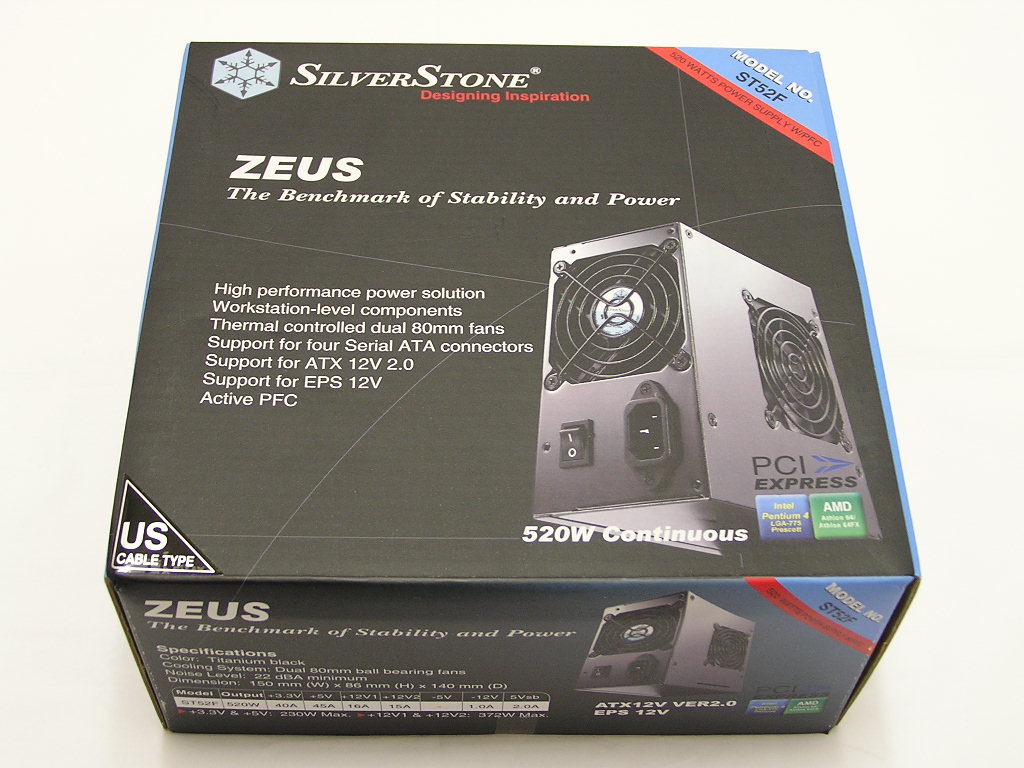
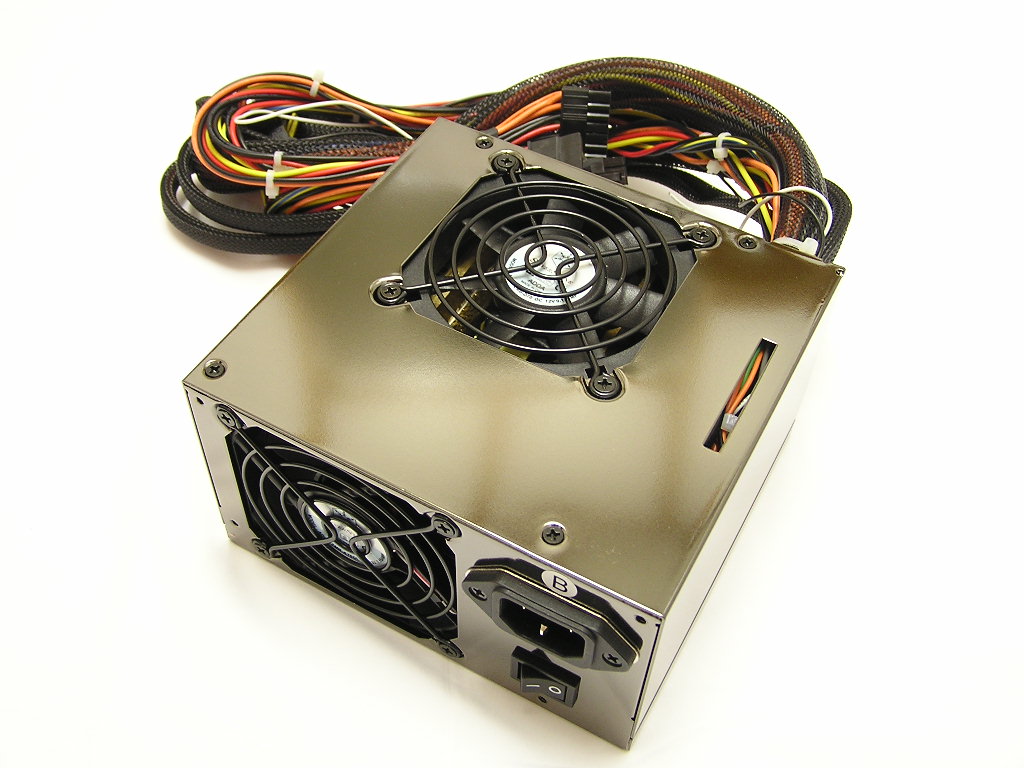
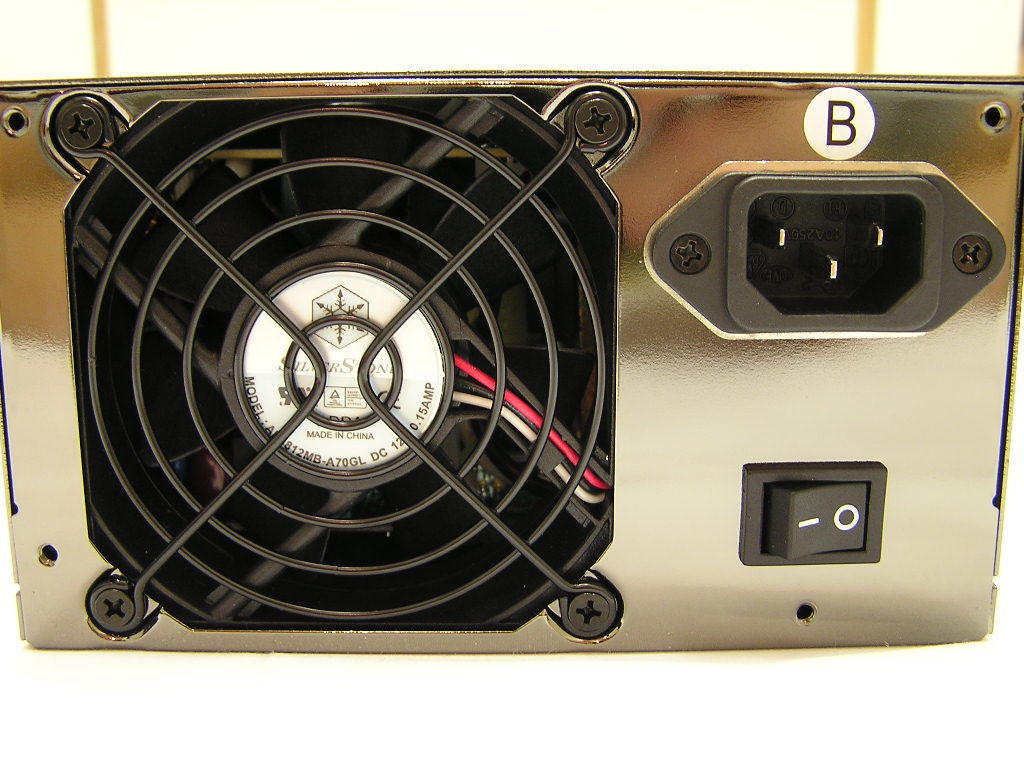
The power supply comes in a nice looking black box. The power supply itself has a nice titanium black finish with a slight reflective finish. Right from the start, I knew the power supply was well constructed. The casing and cables were all solid and nothing felt flimsy. The power supply also followed the general rule of thumb: the heavier the better. The Zeus ST52F was quite heavy, an indication of use of good capacitors and inductors.
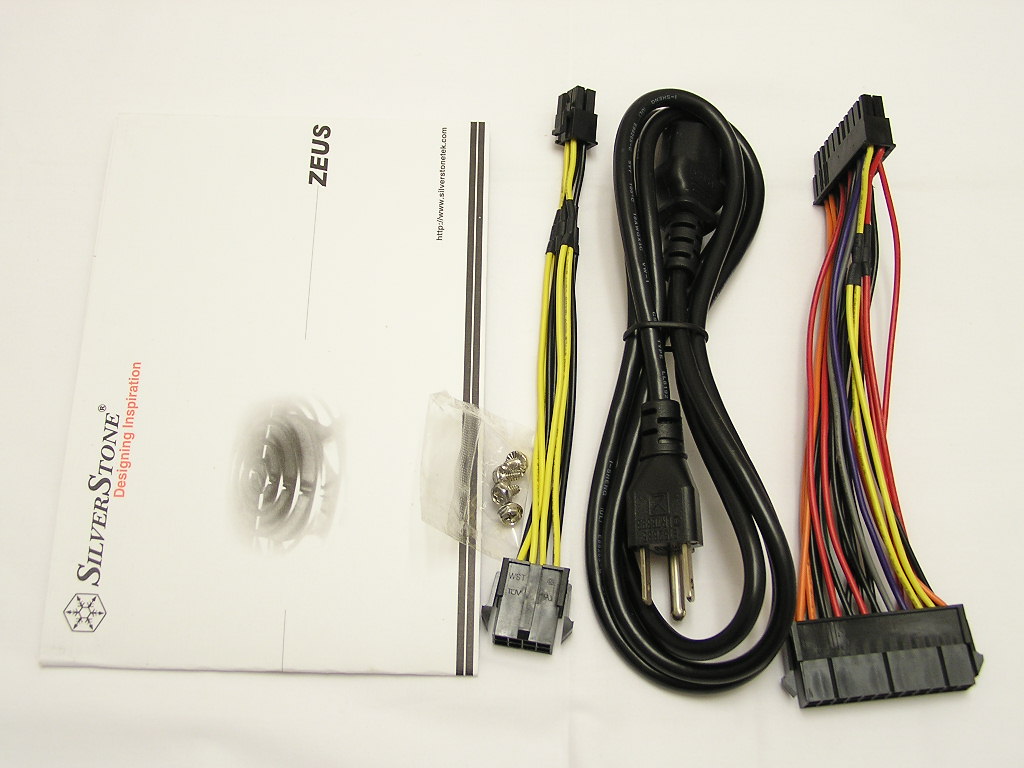
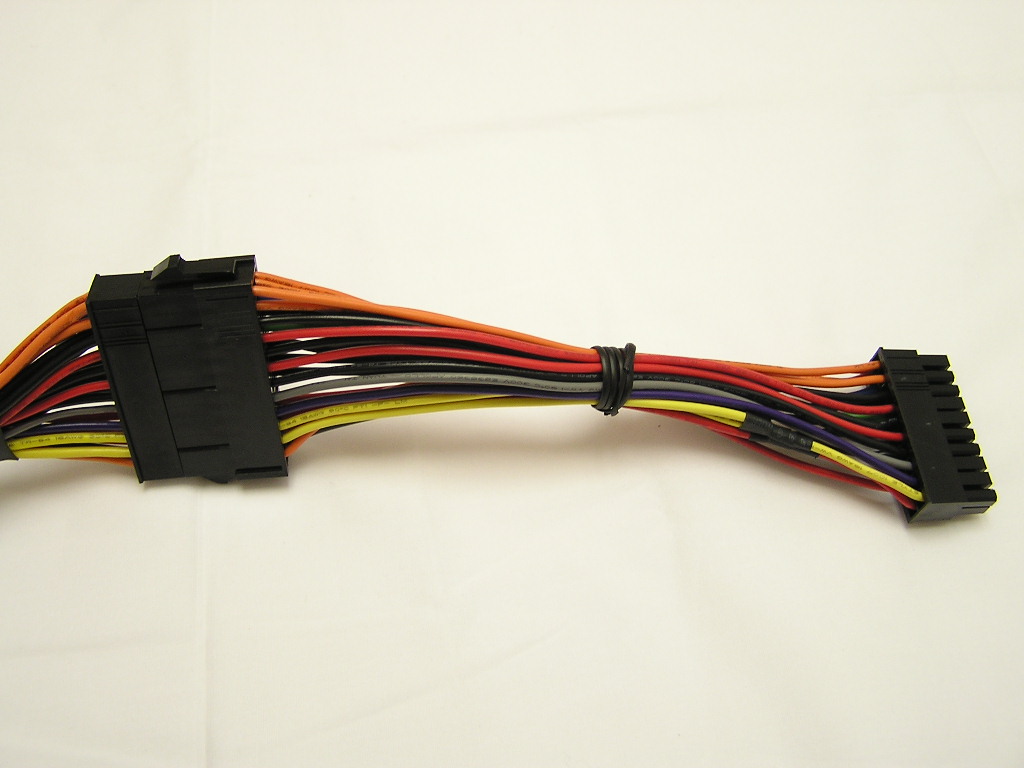
Along with the power supply is the usual inclusion of the AC adapter, simple user’s manual, 4 case screws, and a 20pin-to-24pin ATX connector. The only odd inclusion would be the 8pin-to-4pin 12v adapter. The power supply is able to put out a beefy 520W of pure power, so the ST52F can be a good consideration for use in server systems. Instead of the desktop 4pin 12v requirement, server motherboards requires an 8pin 12v connector. Many companies that sell power supplies often include both these connectors but users will only end up using one or the other. The extra cable only adds to the cable clutter and is not something that should affect the final purchasing decision. SilverStone was smart in supplying a single cable and an adapter. This lessens the overall cable mess and is still satisfies the needs of both server and desktop motherboards.
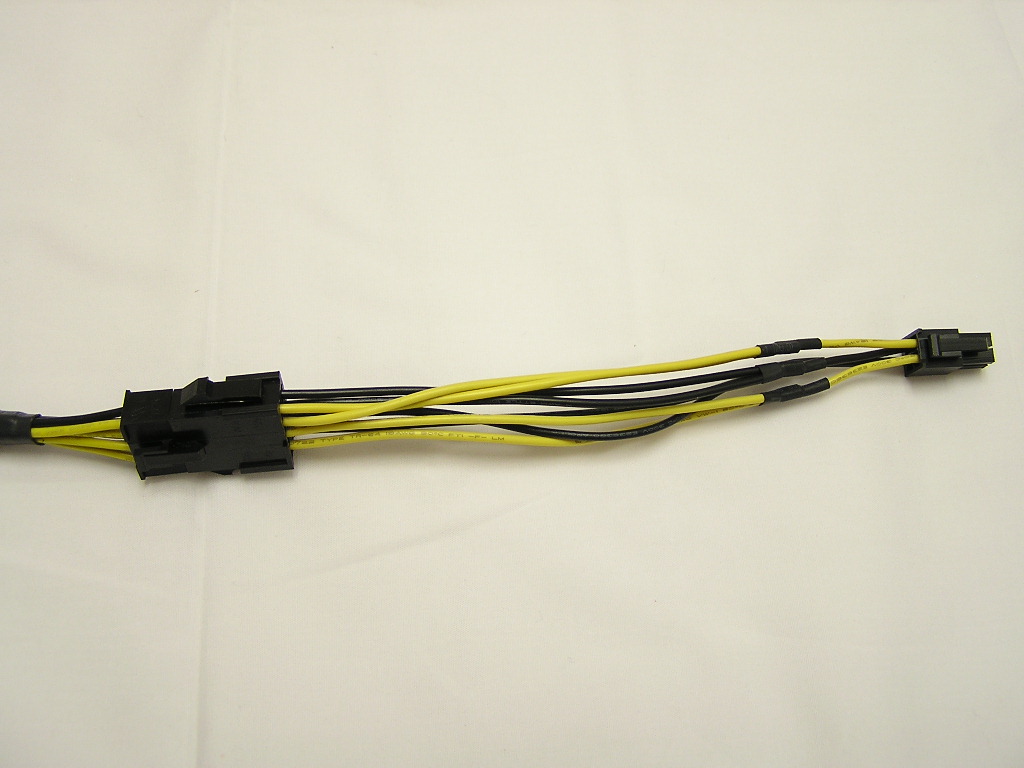
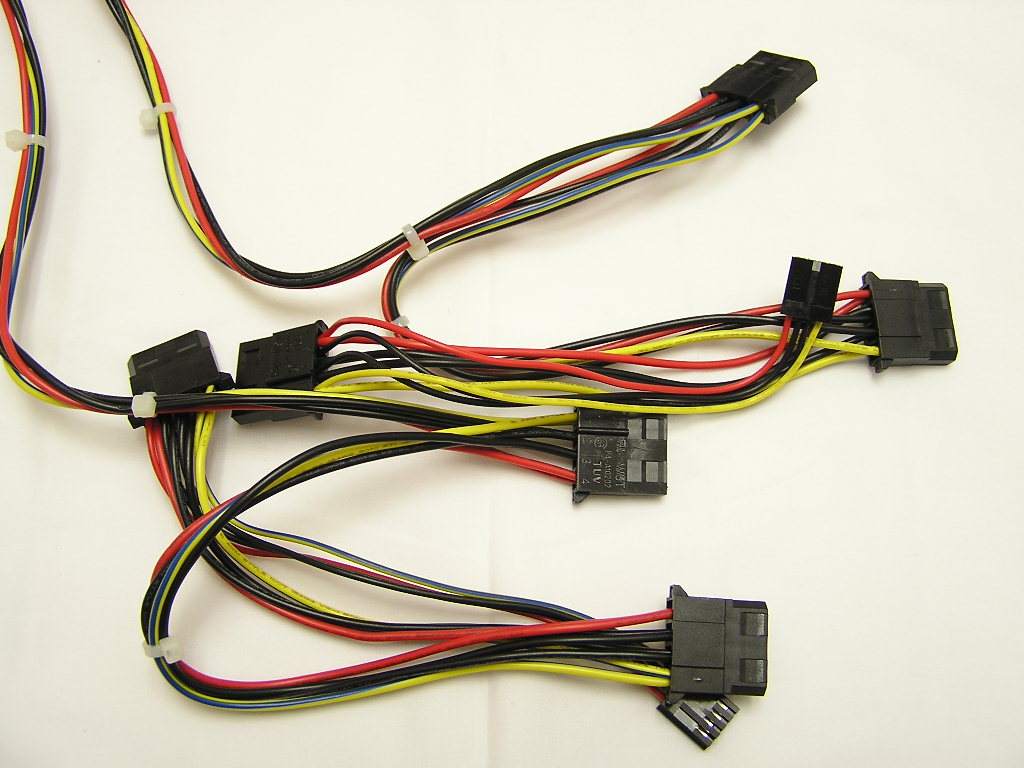
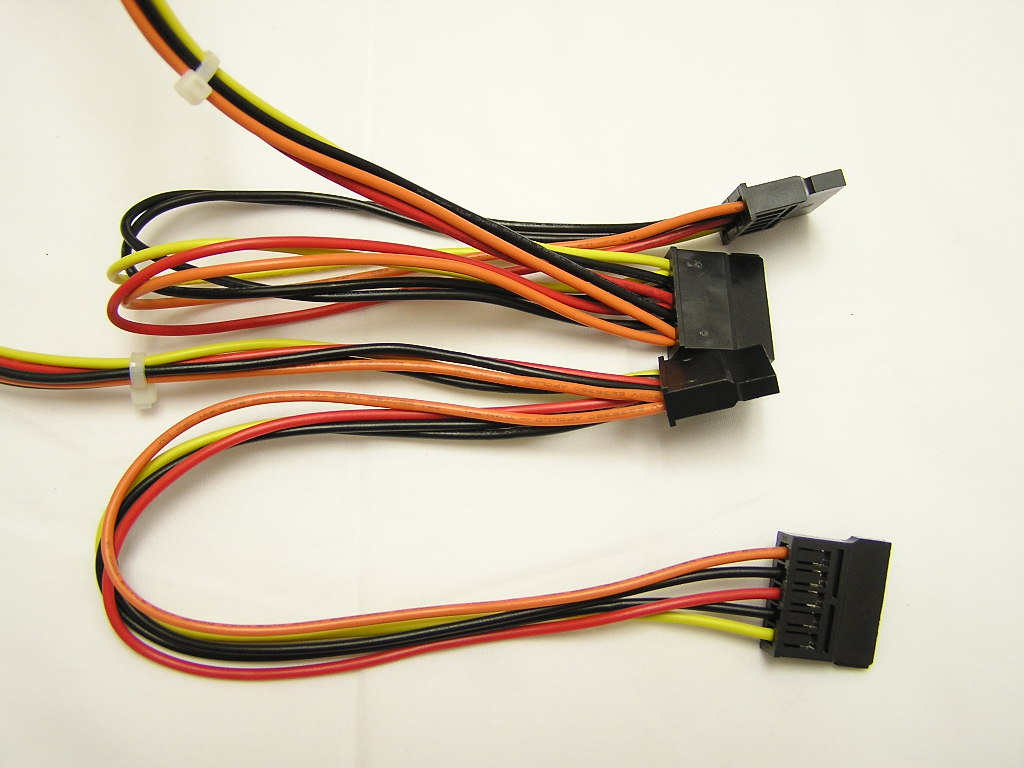
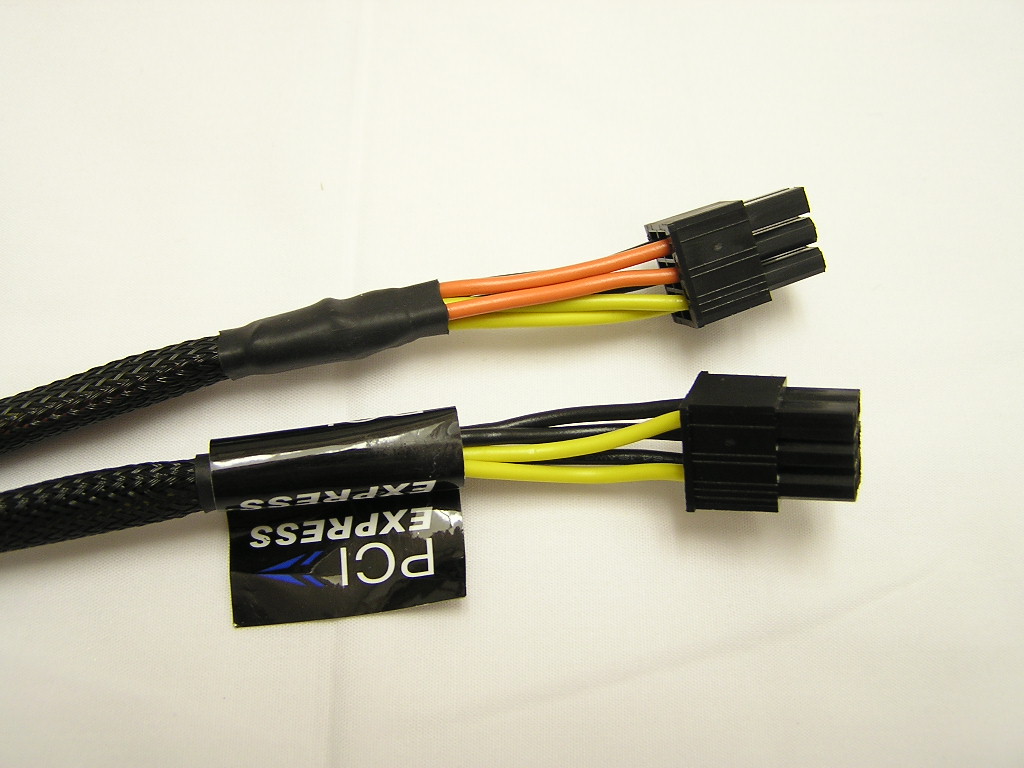
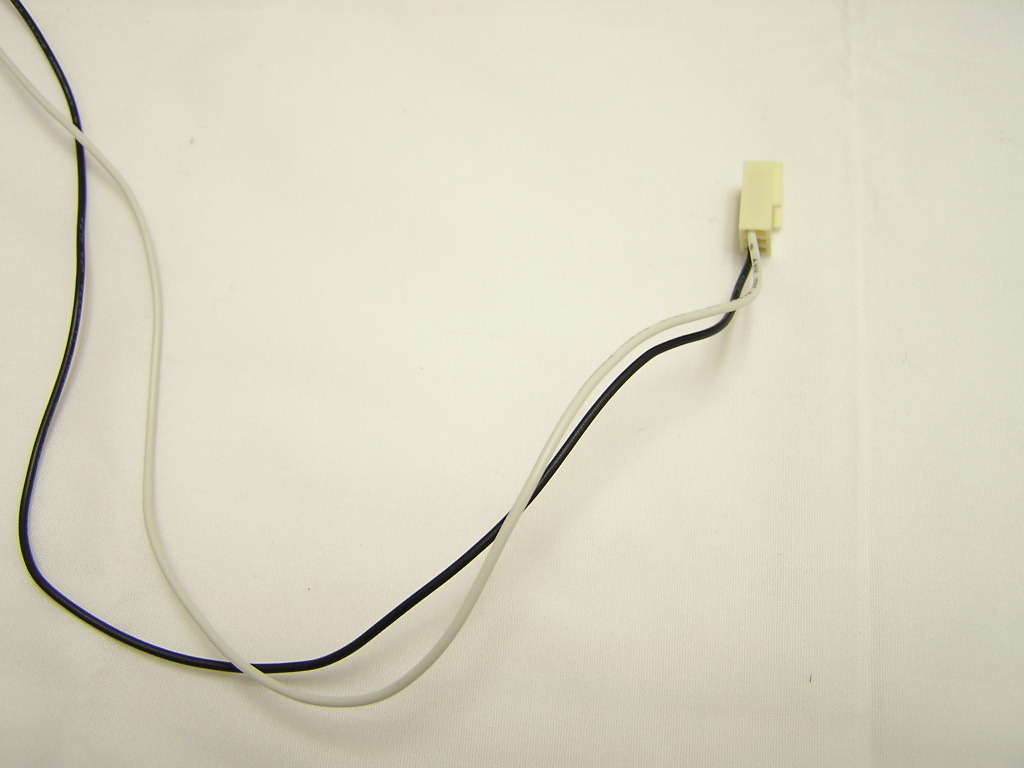
Speaking of connectors, the SilverStone ST52F comes with plenty of connectors to suit your high end needs. It came with 6 4pin Molex connectors and 2 3pin floppy connectors. Assuming that you slap in 4 optical drives, that still leaves you with 2 connectors for the master and slave hard drives. It’s not too shabby. Most power supplies only come with 4 4pin Molex connectors, which can often run a little short when you have multiple drives running in the system. For newer systems that require SATA connectors, the ST52F supplies 4 power heads to feed that nice array of RAID. While there aren’t as many as the Enermax we’ve reviewed, the ST52F does supply more than the usual 2 SATA connectors found in the majority of power supplies out there. Enthusiasts will be happy to know that this power supply is built for the future. The included PCI-E power connector allows users to power their high end PCI-E graphic cards without the need to use a splitter. There is another 6pin connector that has 5v rails that should be for workstation graphic cards. Note that it didn’t work with the X800XT. A 3pin fan header is also included to monitor fan speeds. The two 80mm fans in the ST52F are thermal controlled to ensure a cool operating environment inside the power supply. Enthusiasts with larger towers will be glad to know that the ST52F has long cables to ensure that everything that needs power will get power. The ST52F was tried in the SilverStone TJ06 and fit perfectly. The cables were able to reach all the way down to the bottom of the case without a problem. There was even extra length for the cables to be routed nicely.
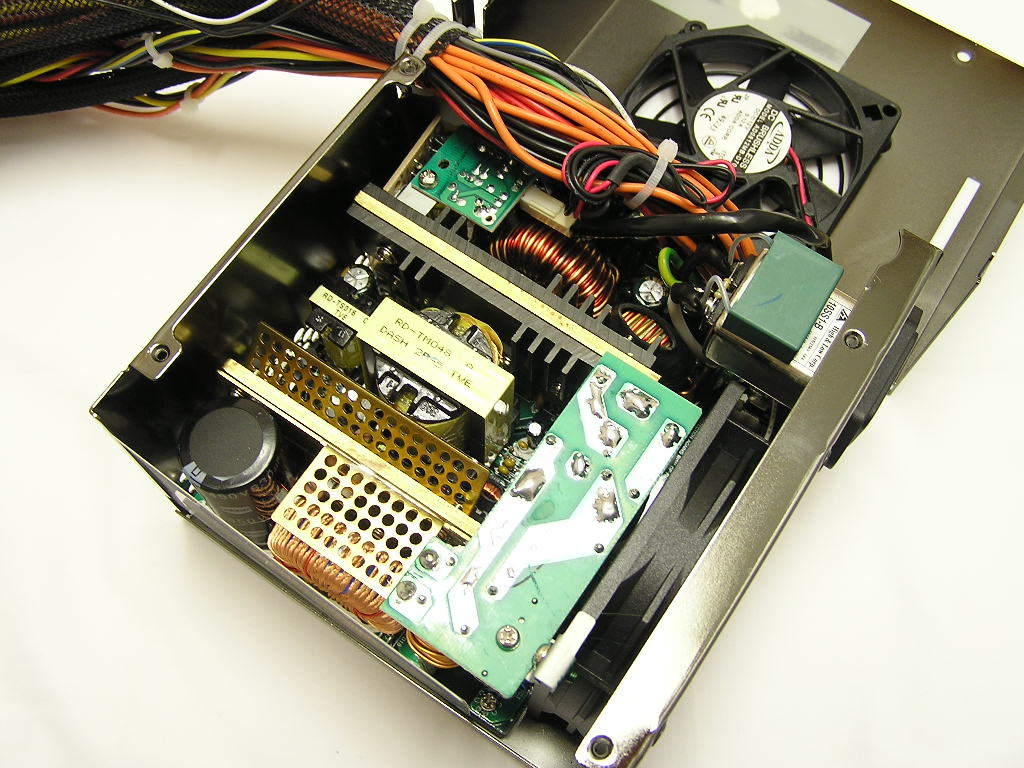
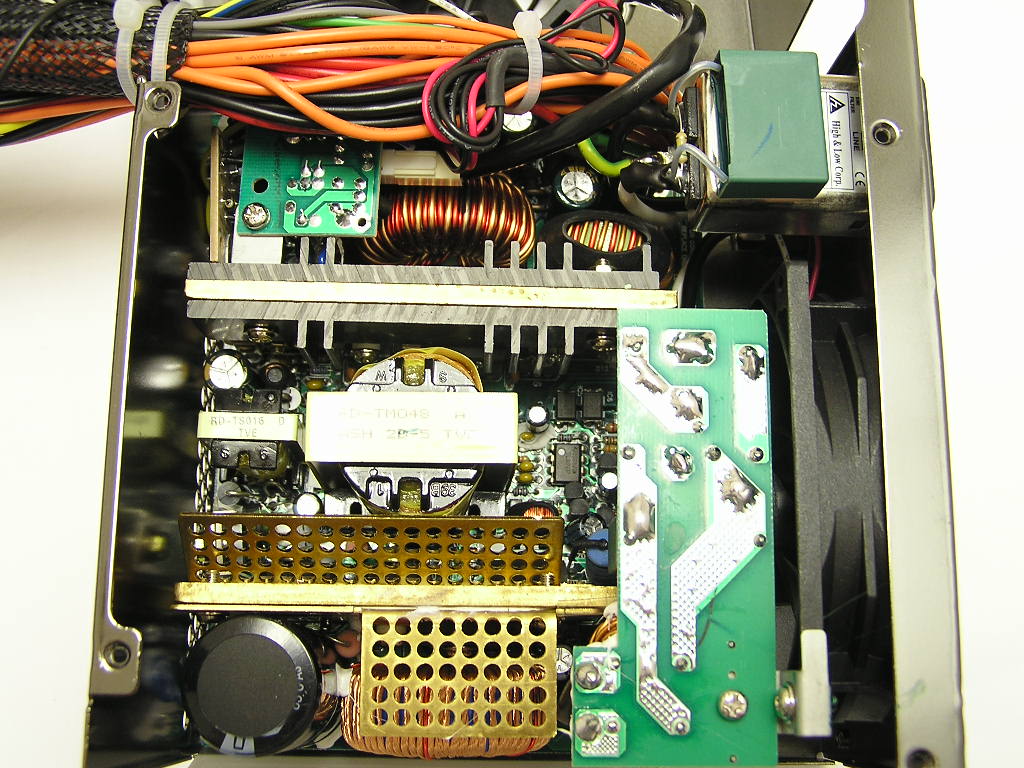
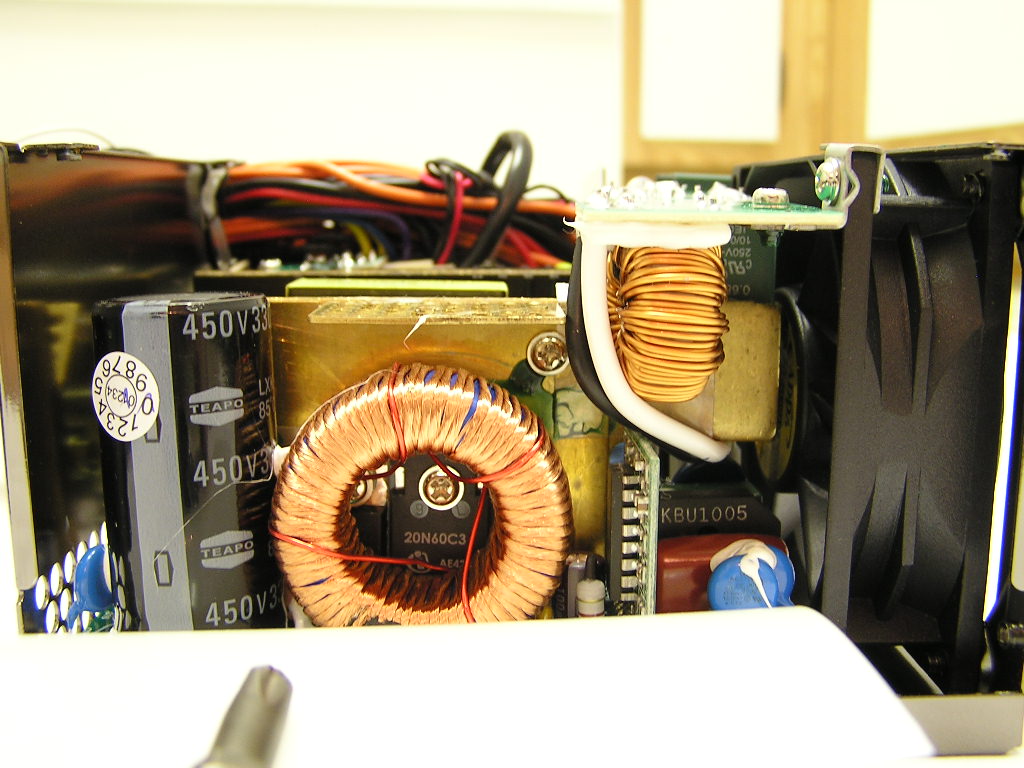
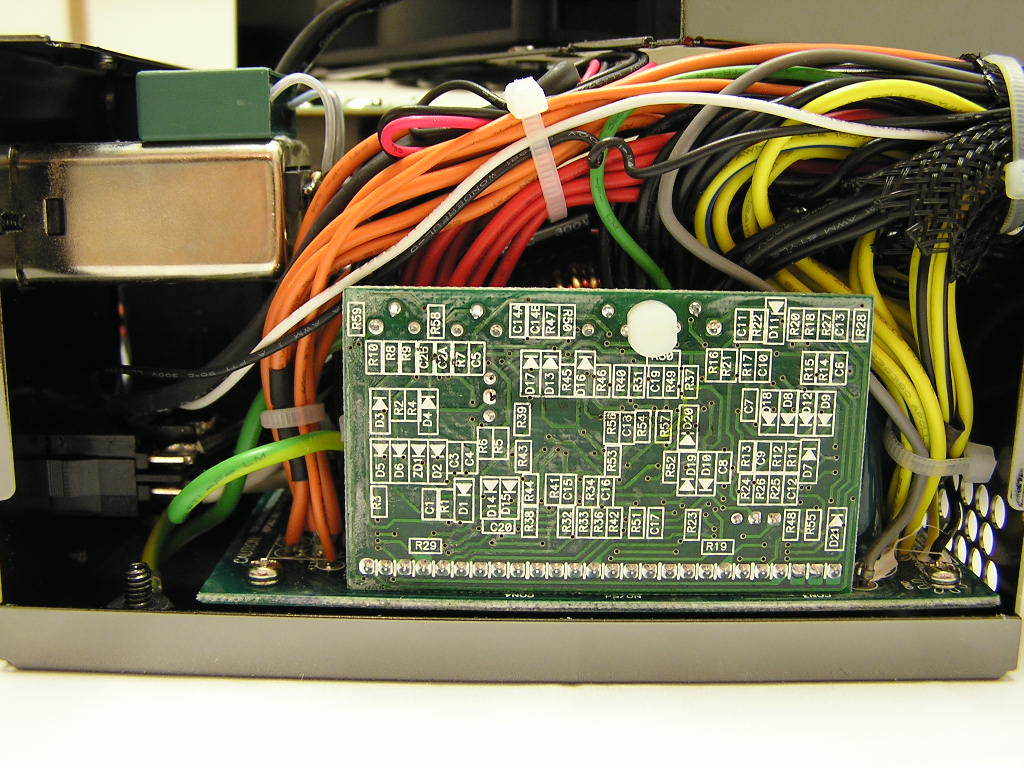
As mentioned earlier, the ST52F was extremely heavy when received. This is an indication of the use of quality capacitors, inductors, and heatsinks. I opened up the power supply to find it jammed packed with components. There was absolutely no empty space wasted. The heatsinks were rather small, but that couldn’t be helped. The unit was already filled as completely as possible. The small heatsinks wouldn’t be a big problem for cooling if the power supply operates with high efficiency. Unfortunately, SilverStone did not specify the power efficiency of the ST52F. Personally, I think it runs at around 70% like typical higher ends power supplies. It would be great to see power supplies with higher efficiency ratings. The higher the power efficiency, the lower the heat output of the power supply. I looked around inside the unit and was unable to find adjustable potentiometers.
Specifications
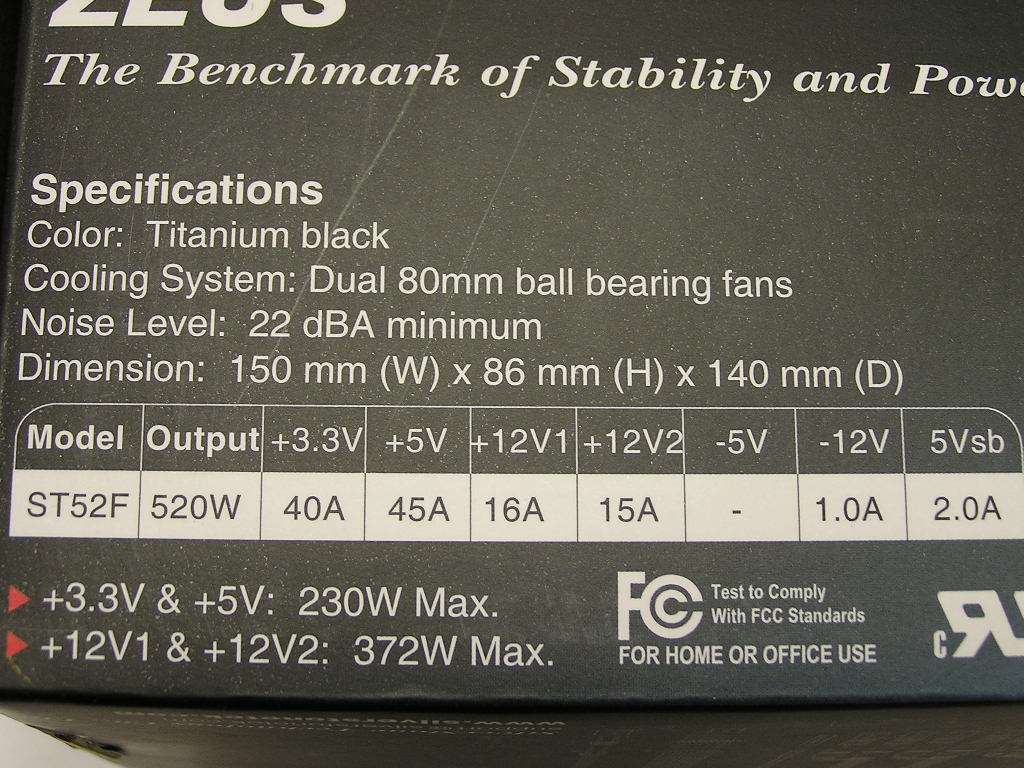
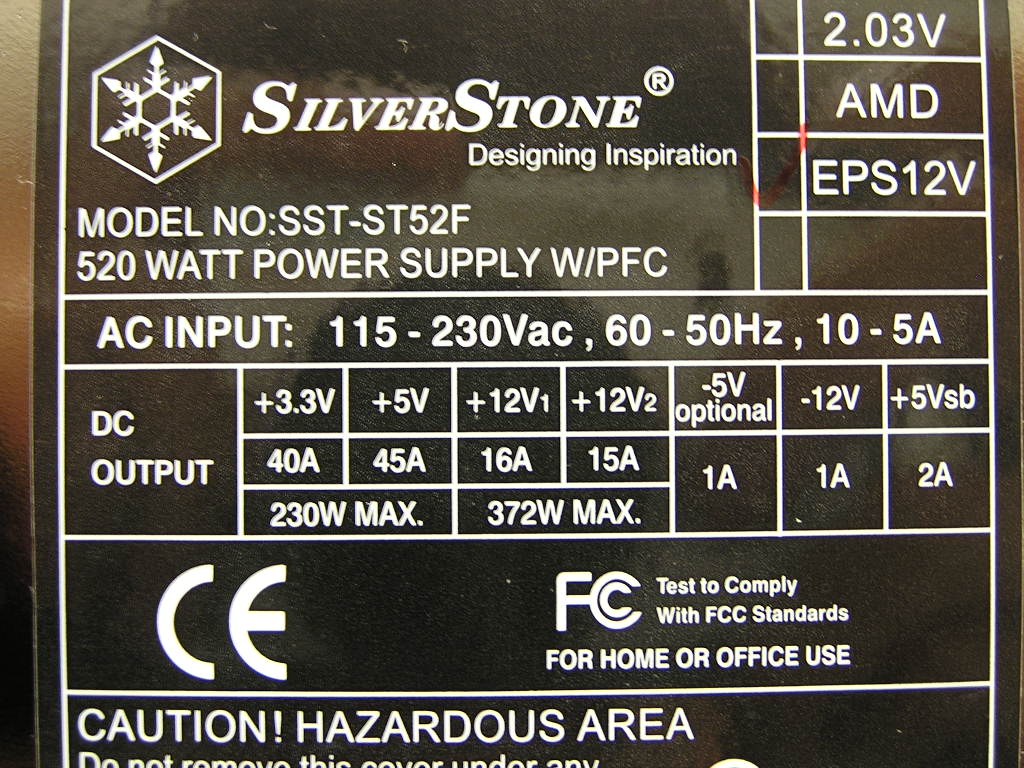
Like always, overclocking enthusiasts favor power supplies with high amperage per voltage rail. Overclockers need to keep the voltage rails stable in order for high overclocks to occur. If the voltage rails start dipping, systems can’t be overclocked high. The ST52F comes with great amps per rail for each voltage rail. The 3.3v and 5v are backed up with 40A and 45A respectively. The unit comes with dual 12v circuitry to allow for a more stable operation when loads get high. 12v1 is backed up by 16A while the 12v2 is backed up by 15A. This totals for a decent 31A total for 12v.
With the great internal components and high amps per rail, the ST52F also comes with many protection features:
- OPP
- OCP (over current protection)
- UVP (under voltage protection)
- OVP (over voltage protection)
- SCP (short circuit protection)
- NLO
The ST52F is also capable of 100,000 hours of operation under full load in 25°C temperatures. That is certainly impressive. The two fans are also rated to run at 22 dBA at their lowest RPM. The ST52F also comes with active PFC, which is definitely a good thing. No matter how people argue, active PFC is definitely preferable over passive or non PFC. Many people argue that PFC in a power supply serves no purpose, but there is definitely a point. Whenever the power supply starts to fluctuate with its power efficiency, the active PFC helps keep it up high. This way, power is not lost and wasted into heat. This lowers your overall electricity bill as well. Sure a single computer may not matter much, but it’ll definitely help for systems that run 24/7.
Test Setup and Results
Test Setup and Methods:
- Intel Pentium 4 520 2.8GHZ
- Abit AA8-Duramax
- ATI Radeon X800XT
- 2 x 512MB Centon Gemini Low Latency DDR2
- Western Digital 30GB 7200RPM
- Pioneer 10x DVD Rom
- Sony Floppy
- 2 x 80mm Antec fans
- DLink 802.11b wireless NIC
Running Stock:
- Intel Pentium 4 520 2.8GHZ – 2.8GHZ @ 1.3875v
- 2 x 512MB Centon Gemini Low Latency DDR2 – 200FSB 3:4 266MHZ @ 2.0v
- ATI Radeon X800XT – 500/500
- VAGP 1.7v
Running Overclocked:
- Intel Pentium 4 520 2.8GHZ – 3.71GHZ @ 1.5125v
- 2 x 512MB Centon Gemini Low Latency DDR2 – 265FSB 3:4 353MHZ @ 2.2v
- ATI Radeon X800XT – 540/540
- VAGP 1.8v
The ST52F sample we received did not come with a -5v rail. This leaves us unable to read LED displays from the OCZ DDR Booster or motherboard diagnostic displays. This is a little disappointing, considering that the ST52F comes with pretty much everything that we ask for.
Testing the power supply is a tedious task. Like cooling products, the “proper” testing method is long and strenuous. It involves many high end equipment and testing materials that we simply cannot get our hands on. A simple proper testing method would be to test the wattage draw from the AC outlet, voltage rail fluctuations, wattage fluctuations under high operating temperatures, power efficiency, and the power supply’s reaction to low input voltage. But because this site is dedicated more to overclocking, we’ll check for voltage fluctuations in an overclocked environment. After all, that is what overclockers generally care about.
Results:
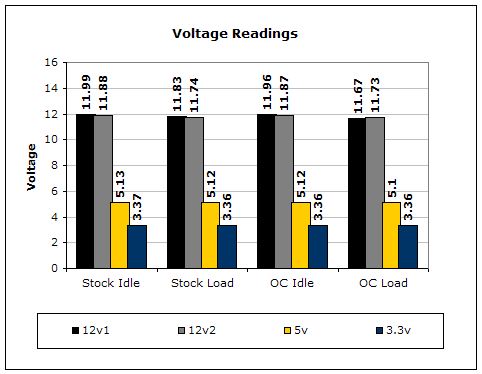
To test the power supply, a digital multimeter was used. For idle voltage readings, the system was left on the desktop not running any programs. For full load, the system ran 2 instances of CPU Burn-in, Prime95 torture test for maximum power consumption, and the Nature test in 3DMark2001SE. CPU Burn-in is a good program to maximize the CPU load. The results for the 3.3v and 5v were great and stable. The dual 12v rails were a little disappointing. This can’t be helped, as the LGA775 Prescott CPU and Radeon X800XT graphic card drew a lot of power under full load when overclocked. The ST52F still manages to stay within the safe 5% range throughout all testing. If more amps were given to the dual 12v rails, things would be a lot better.
Conclusion and Thoughts
SilverStone’s current high end power supply leaves us very satisfied. It’s true that previous reviews of power supplies performed better on the 12v rails, but that was because the test system was not as power hungry as our current one. The SilverStone ST52F kept the system running extremely stable and operated under minimal noise. The power supply is great and comes with great features and protection. The extra long cables makes the ST52F suitable for use in large towers and the low noise is a great consideration for silent systems. The active PFC is a great feature, considering that the majority of the power supplies available don’t come with it. It is definitely something that is needed. The heatsinks inside the power supply are a bit small, but cooling is of no problem with the two thermally controlled fans inside. The SilverStone Zeus ST52F is a highly recommended power supply for every enthusiast out there and I can assure that whoever gets one will be happy. Due to the dips on the 12v rails when the system was overclocked, it does not win the Must-Have award, but instead gets our highest recommendations.
Pros:
- 520W of pure power
- Long cables to make suitable in large towers
- Nice black titanium finish
- Extremely quiet
- 2 thermally controlled fans
- 6pin 12v cable for PCI-E graphic cards
- More SATA connectors than typical power supplies
- Great amps per rail
- Great performance in a highly overclocked system
- Excellent excellent price
Cons:
- Small heatsinks
- Could use more amps on the dual 12v rails
- No adjustable potentiometers
- No -5v rail for diagnostic LEDs

We would like to thank SilverStone for providing us the sample. If you have any questions or comments, feel free to hit us up in the forums. You can also check out more of our latest reviews on the front page.