

Raidmax RX-520XP 520W
Introduction
For some time now, Raidmax has been producing computer cases and power supplies for the average user. More recently, they’ve been branching out into the gamer’s community and have started designing better looking computer cases and high end power supplies.
I’ve used Raidmax power supplies before and they’ve always been sufficient in keeping the system running stable. Most of the Raidmax cases that consumers can buy come packaged with Raidmax power supplies. The combination is typically adequate for your every day needs. However, if you wish to overclock your system, then you should look for something more high end. As everyone knows, the power supply in your system is the most important piece of hardware. What we have from Raidmax today is their high end power supply fit for overclockers and gamers. Continue reading and you can judge for yourself whether this Raidmax unit is a good choice for you.
Raidmax RX-520XP
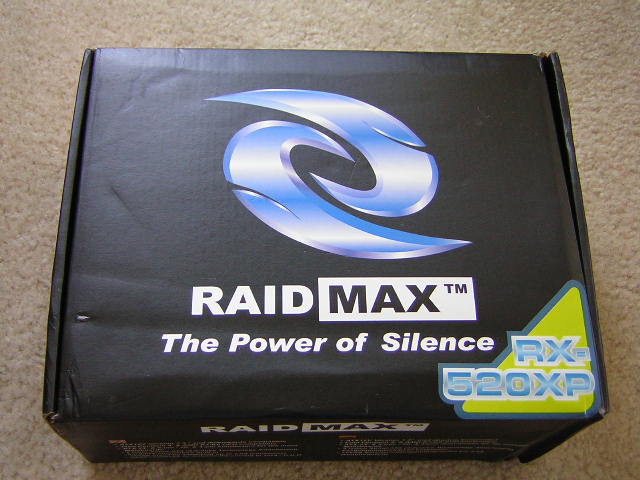
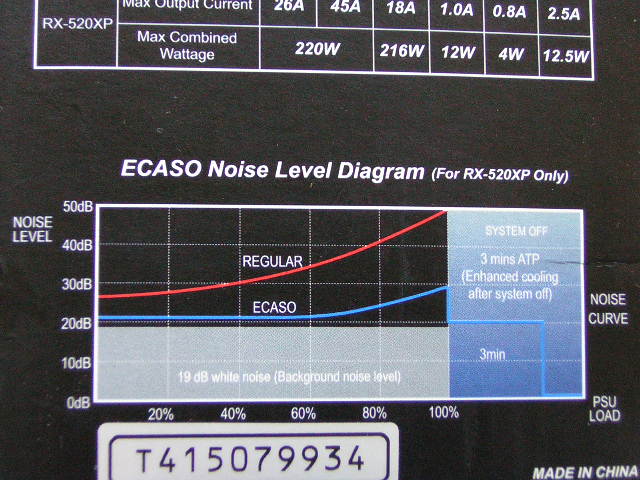
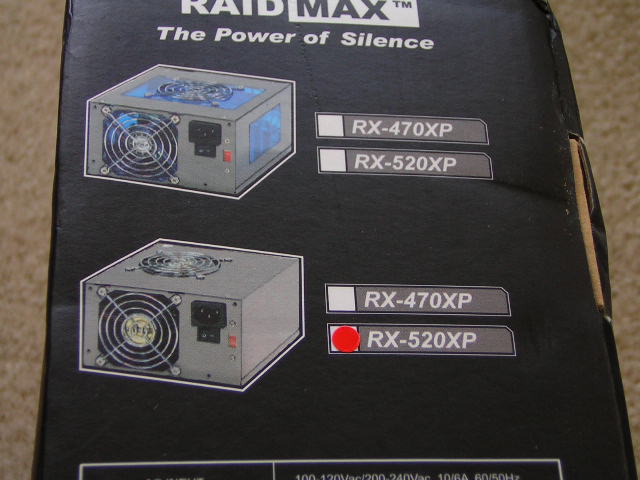
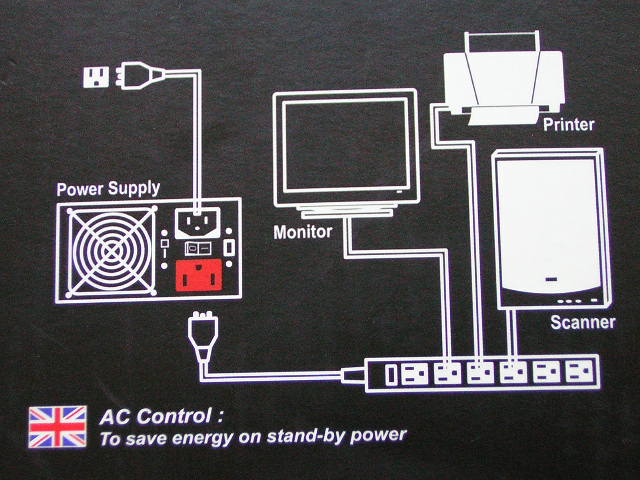
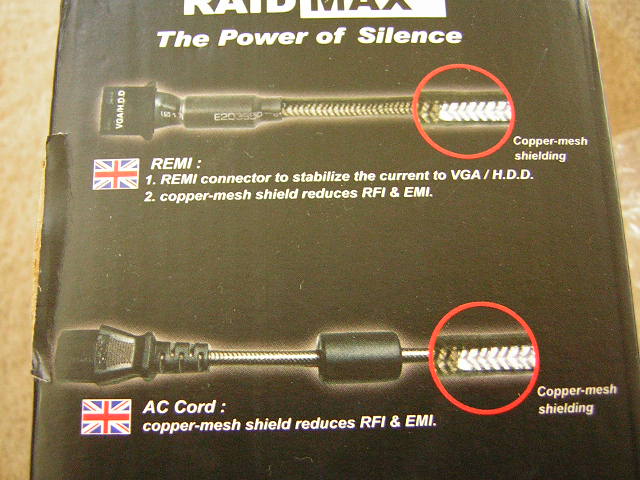
The unit arrived packaged in a simple black box with a cool looking logo. The sides of the box present some of the new Raidmax power supply features. This includes the ECASO cooling feature, AC control feature, copper-mesh AC cord, and the copper-mesh VGA/HDD power Molex connectors.
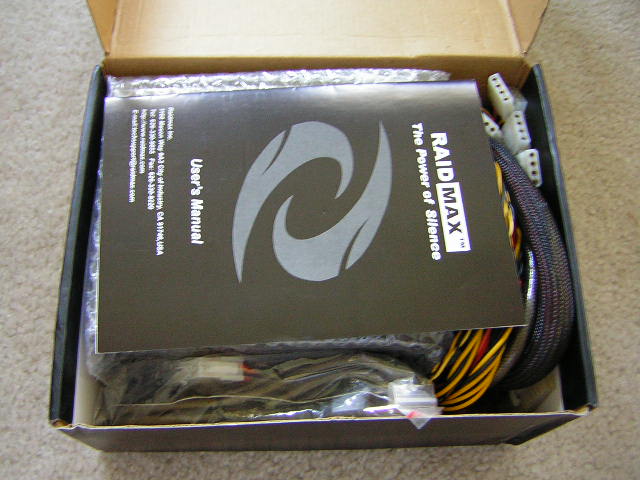
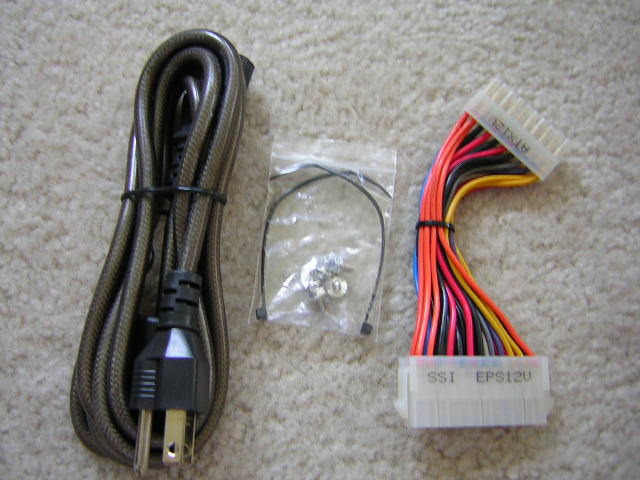
Inside the box, there was a simple and brief instruction manual and a small bag of accessories. The bag contained the copper-mesh AC cord, case screws, two zip ties, and a 24pin-to-20pin ATX connector. It would be nice to just use a 20pin connector, but that would rule out this power supply for use with server boards. I guess you can’t argue much when you’re offered with more options. The power supply was wrapped up nicely with bubble wrap.
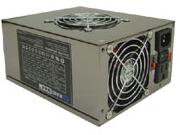
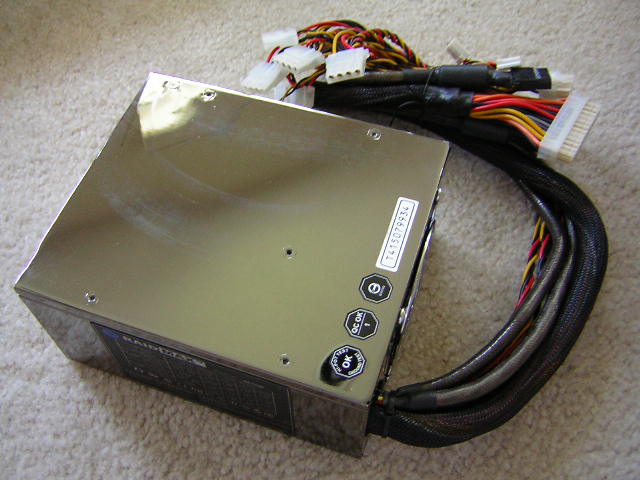
The power supply has an extremely eye-catching black metallic mirror finish. I was scared to touch it with my bare hands and leave grease marks. No, I’m not dirty; it’s hot in my house and I sweat. Already left some fingerprints on it? They come off easily after a wipe with some paper towels. The puppy doll I got from Mickey D’s reflected nicely on the power supply. There is also a small sticker covering one of the screws that warns “Warranty Void If Removed.”

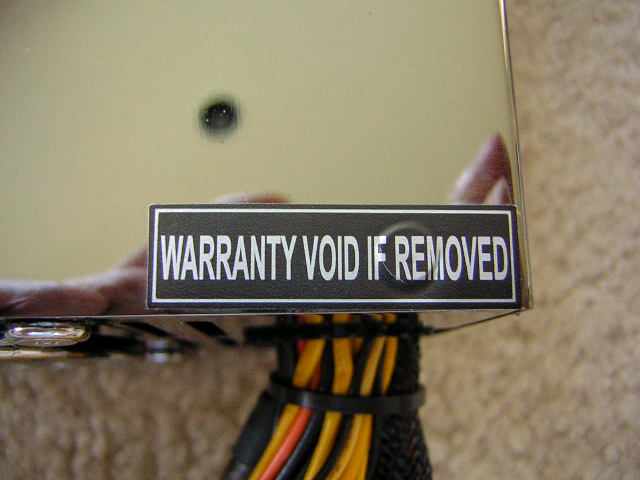
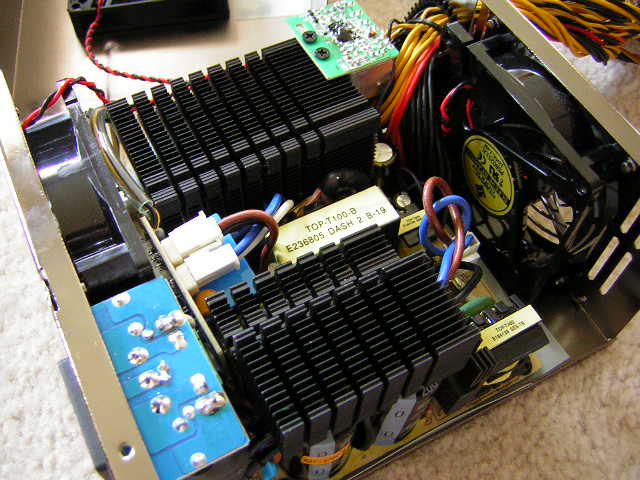
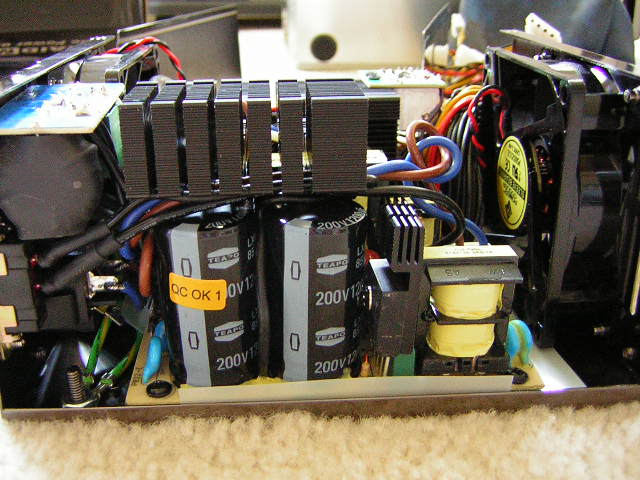
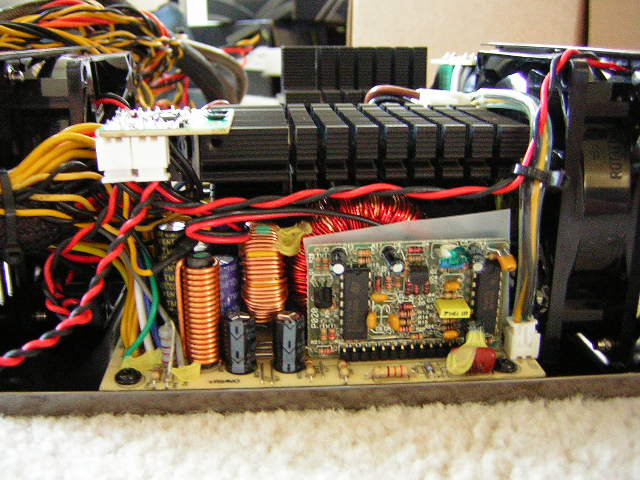
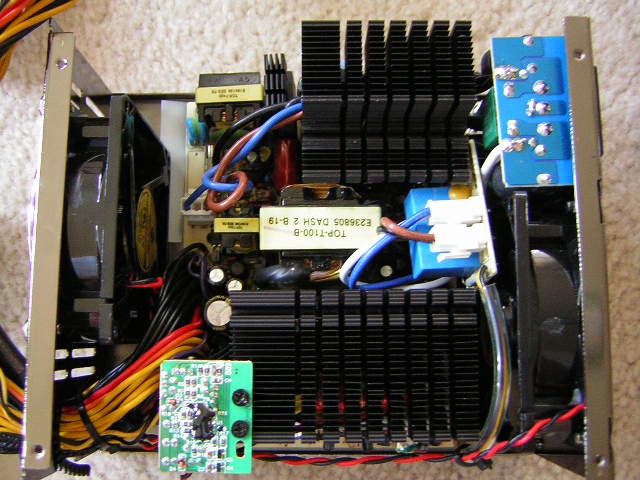
There’s no point in getting a good power supply if the guts are made of crap. I went ahead and voided the warranty by messing up the sticker label. The innards of the power supply were very pleasing to my eyes. The inside is filled with heatsinks and capacitors. As a rule, the heavier the power supply, the better the power supply. It’s a good sign of efficient capacitor usage and large heatsinks. As shown below, the pictures reveal that large heatsinks and large capacitors are used. I looked around for possible adjustable potentiometers, but unfortunately, I could not find any. Maybe I overlooked them. Also note that there is a fan controller on a small green PCB that allows users to mod the PUSS for other fans. There are a total of 3 fans inside the power supply to help dissipate heat from both the power supply and the case. The fans are extremely quiet and are not audible at all. When I turned on the power, I thought my fans were dead due to the lack of noise. I placed my ears next to the fan and felt warm air blowing out. It was actually running. This is extremely appealing for enthusiasts looking for silence.
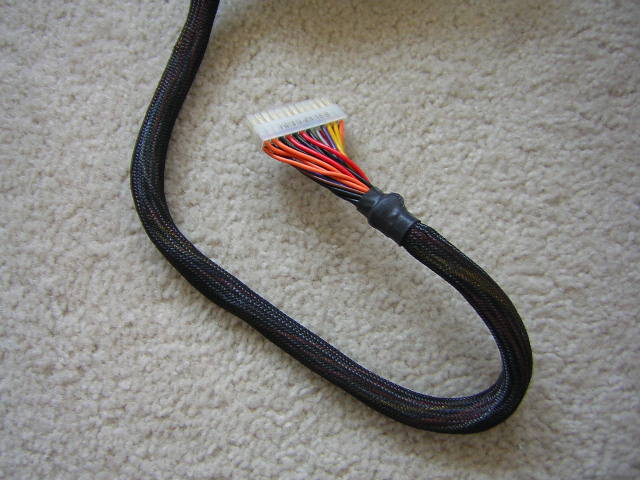
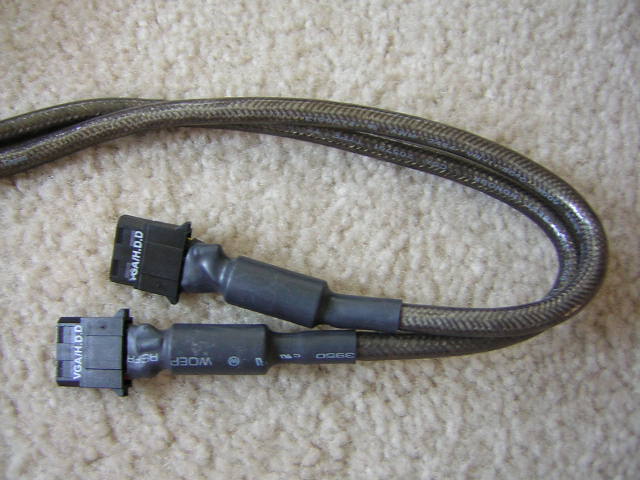
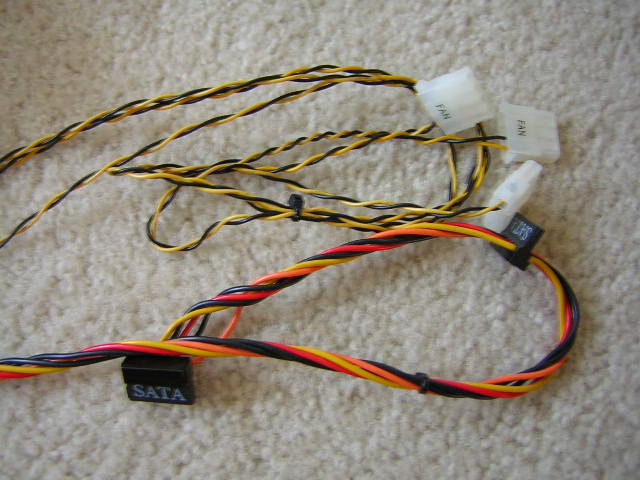
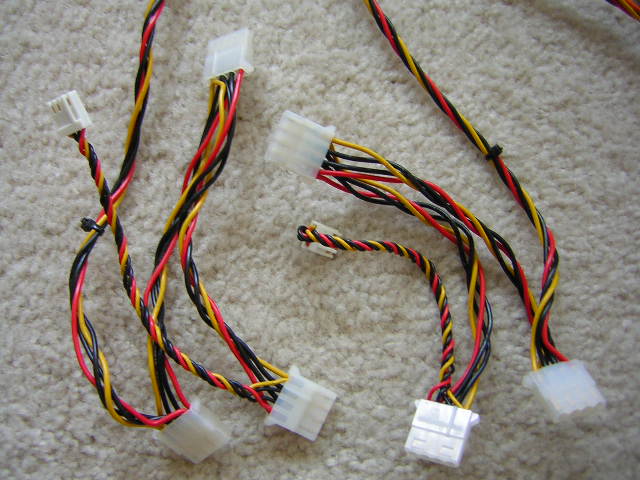
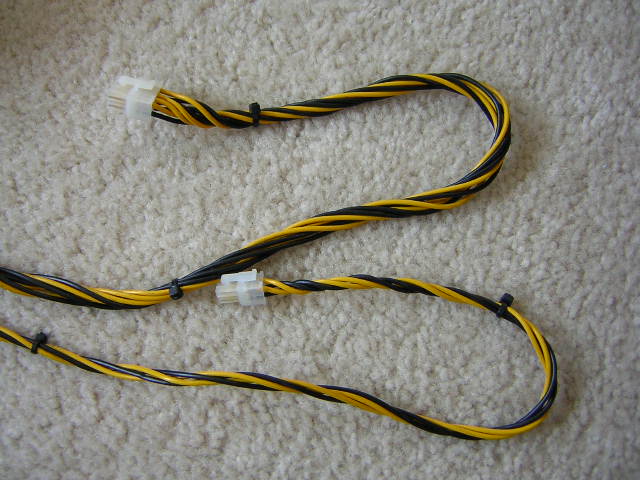
There are plenty of connectors that come with the power supply. All the wires are braided to reduce EMI. The ATX connector has been braided with mesh to improve the look and reduce cable mess. There are a total of 2 copper-mesh VGA/HDD Molex connectors. It’s good for Raidmax to include these, as they reduce noise and help keep the power clean and stable. One connector for the hard drive and one for current video cards is sufficient for most systems. Of course more would be ideal, but that would increase the cost of the power supply. There are a total of three 4pin Molex connectors dedicated for fans. We all like having more fans, but they usually eat up our connectors. Having extra ones dedicated for fans is certainly a plus. There are two serial power connectors for users with serial drives. It’s made to run in series so that it creates less cable clutter when you run two 74GB Raptors in RAID 0 (drool). There are a total of six regular 4pin Molex connectors and two 3pin floppy connectors. The extra 4pin Molex connectors can come in handy in systems with more than one hard drive or systems with lots of optical drives. There is also a 4pin and an 8pin 12v connector for current motherboards. Most of the current motherboards use the 4pin connector; while the 8pin is for server boards.
Specifications
For a power supply to be superior, there must be enough amps to power each voltage rail and keep them stable. Power supplies usually have higher amps per rail when the wattage increases. The amps per rail for the Raidmax is good, with the exception of the 12v. Most power supplies in the 450-500W range have been supplying at least 24 amps. I found that 18 amps was a bit too low for my liking.
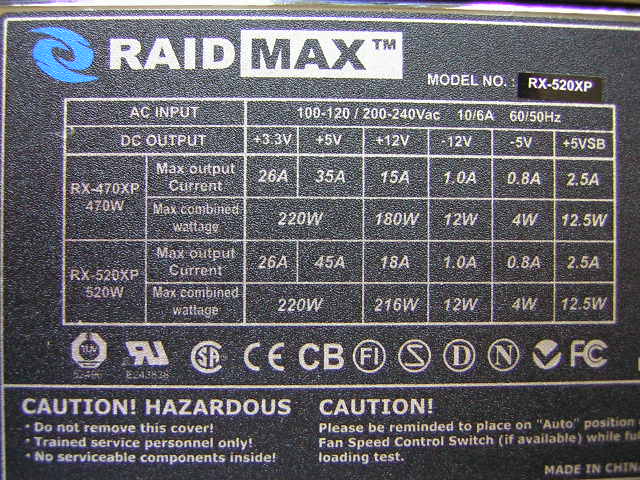
Here is some RX-520XP information available on the Raidmax website.
- All connectors are gold-plated for more stable outputs
- Output-cables are twisted wires reducing EMI
- Supports OVP, OCP & SCP (Short-Circuit Protection)
- ATX12V version 1.3 and downwards compatible
- Intel Pentium 4. & AMD K7/K8 CPU compatible
- Silence Control Technology with Dual-Fans for Whispering operation of 21-22dBA at up to 60% load
- Two Serial-ATA harddisk-connectors built-in
- ECASO Technology, keep fans running for cooling down you power and system 3 mints after shout down the power
- Video Card Connector with Noise Filter for Power-Hungry Video Card
Installed and Tucked Away:
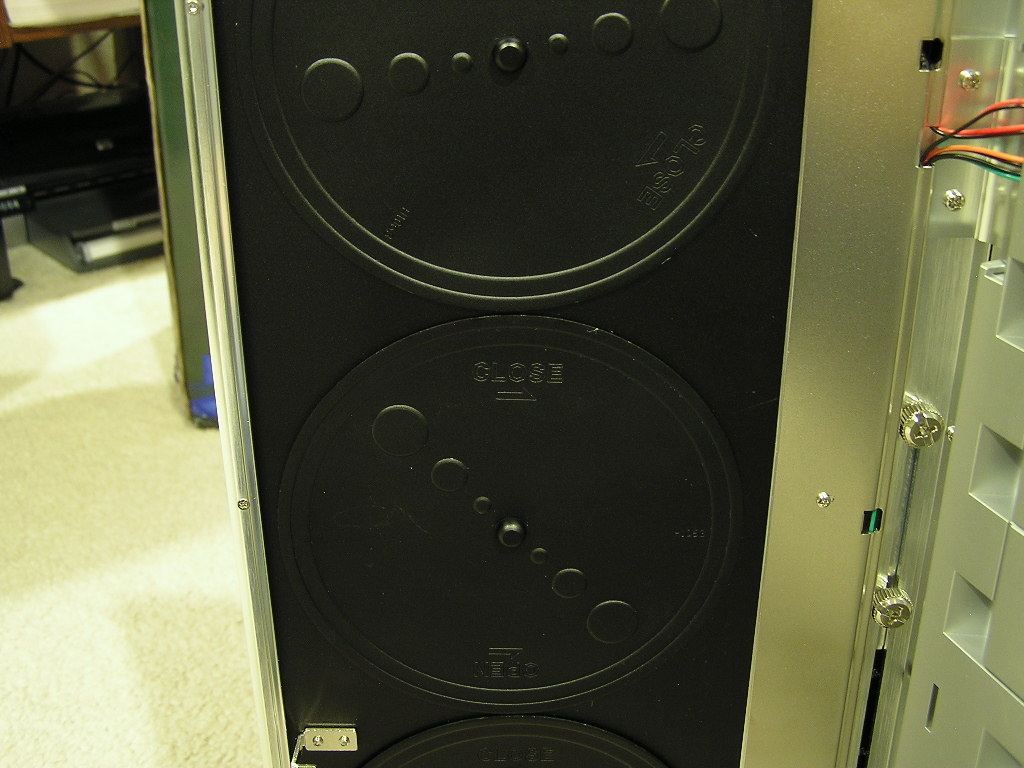
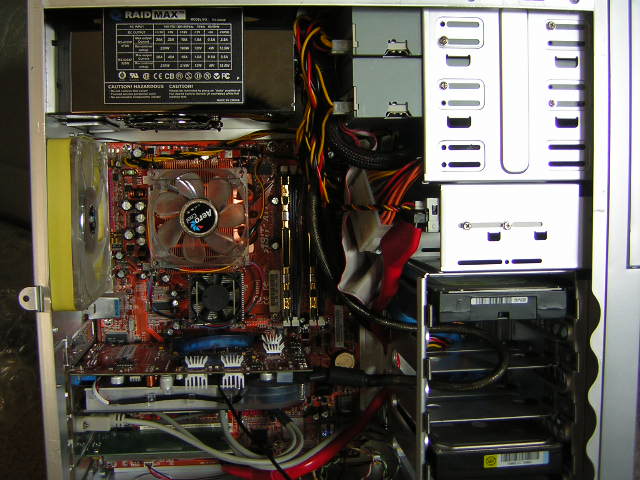
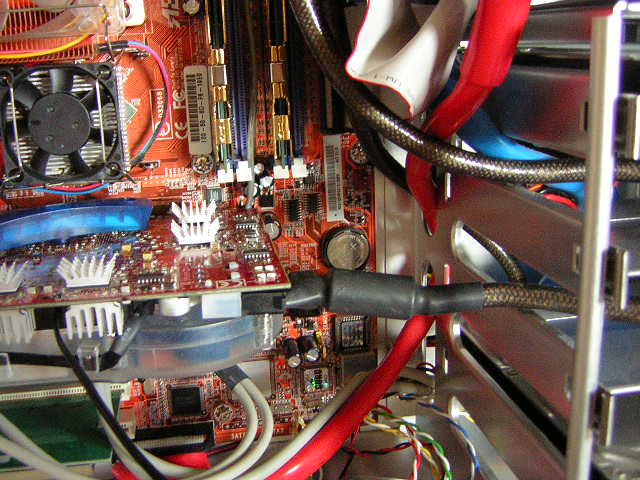
Installing the power supply is relatively easy. The only reason I had a hard time was due to the crappy Antec Super Lanboy. This case is definitely not for users who switch out hardware on a regular basis. There is only room to fit all the hardware, but not enough to move things in and out. After I managed to squeeze in the power supply, I tucked away all the cables as well as I could and plugged in all the power connectors. Next stop: voltage testing.
Test Setup and Results
Test Setup and Methods:
- Intel P4 2.4C
- Abit AI7 (GAT: A-A-A-D-D)
- Radeon 9800 Pro (Omega drivers based on Catalyst 4.6)
- 2 x 512MB OCZ PC3200 Platinum Limited Edition
- Black Lite-On 16x DVD Rom
- Black Lite-On 52x CDRW
- Black Sony floppy
- DLink 802.11b NIC
- 2 x 120mm Aerocool Blue LED fans
- 1 x 80mm Aerocool Blue LED fan
- 1 x 80GB Western Digital 8MB 7200RPM
- 1 x 60GB Maxtor 2MB 5400RPM
Running Stock:
- Intel P4 2.4C – 2.4GHZ @ 1.525v
- OCZ PC3200 Platinum Limited Edition – 200FSB 1:1 200MHZ @ 2.6v
- Radeon 9800 Pro – Gigacube BIOS @ 400/350
- VAGP @ 1.6v
Running Overclocked:
- Intel P4 2.4C – 3.42GHZ @ 1.7v
- OCZ PC3200 Platinum Limited Edition – 285FSB 5:4 228MHZ @ 3.2v
- Radeon 9800 Pro – Gigacube BIOS @ 400/350
- VAGP @ 1.8v
Methods of testing:
Voltage readings will be from the ATX motherboard connector. That is where the voltage lines are connected to the motherboard, and it is the most reliable source. Readings off the Molex connectors can be off a bit due to wire efficiency, so it can vary from Molex to Molex. For 12v load readings, Folding@Home will be used to test the stability of the 12v rail. Folding puts a full load on the CPU, and because the CPU draws from the 12v rail, it will be the perfect test. For 5v load readings, the video card will loop through the Nature test in 3DMark2001SE. For 3.3v load readings, the memory will be run through the memory torture test in Prime95.
Results:
Testing the voltage readings is fairly quick and simple. The voltages change immediately under full load.
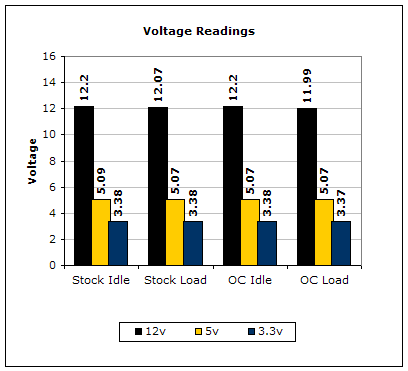
The results were pretty impressive. The rails over volt a little bit to allow the rails to remain stable at the specified voltages, even when there is some slight fluctuation. The 5v and 3.3v rails are great when running at stock or at load. The highest drop for 5v was a mere 0.02v, and it was still above 5v. The 3.3v rail is excellent. It already runs at 3.38v, so it’s great for overclockers pumping VDimm to their memory. The only thing I didn’t like was the 12v rail. It’s true that it was still stable when powering an overclocked P4 CPU and running at full load, yet it still dropped a good 0.11v due to load. That’s a 1.7% dip in performance. If the amps on the 12v rail were higher than 18, the 12v rail would have been much more stable. Nonetheless, it was still kept within the 5% safe range for the 12v.
Conclusion and Thoughts
Raidmax has finally produced an enthusiast power supply that is worth your dimes and nickels. Coming in at a mere $85, it is very affordable, considering most quality power supplies cost over $100. The power rails are stable even on a fully overclocked system. The only big dip is the 12v rail, but that is still kept at 11.99v. The addition of the copper-mesh Molex connectors are great for current high speed hard drives and video cards such as the Western Digital Raptors and the Nvidia 6800Ultra. The included copper-mesh AC cord is also a great addition, as it helps reduce noise and fluctuation right from the start. Raidmax has done a great job making a quality power supply and keeping it under $100. It has now replaced my older Vantec Stealth 420W. I must also note that the ECASO feature works very well. The fans kept running to help dissipate the heat trapped inside the power supply. Not only that, it was silent. For modders looking for some action, there is also the RX-520XPW that comes with blue windows. Overclockers should definitely add this power supply to their choice list.
Pros:
- Heavy–indication of good heatsinks and capacitors
- 520W of power
- Excellent stable 5v and 3.3v rails
- Copper-mesh VGA/HDD Molex connectors for better power stability
- Copper-mesh AC cord to help stabilize power from the start
- Braided wires help with cable clutter and mess
- Three silent fans to help dissipate heat
- ECASO feature works very well
- Plenty of Molex connectors
- Serial ATA power
- Server motherboards friendly
- Only $85 (at time of review)
Cons:
- The dip for the 12v rail is high (not sure if it’s that bad since it’s still at 11.99v)
- Only 18A on the 12v rail
- No adjustable potentiometers
We would like to thank Raidmax for providing us the sample. If you have any questions or comments, feel free to hit us up in the forums. You can also check out more of our latest reviews on the front page.