

Fortron 400W Blue Storm
Introduction
It’s a relatively unknown fact, but Fortron is a leading competitor when it comes to making quality power supplies. It was only last year that enthusiasts realized the quality and capabilities of Fortron power supplies. The 530W version stood out among the others. It has enough wattage to power everything you throw at it, and is backed up by quality stable rails. The most praised feature of the power supply is the adjustable potentiometers. It allowed enthusiasts to adjust the voltage rails to do some serious overclocking. Fortron continues to innovate in search of better power supplies and this time they’ve added some looks. The new Fortron Blue Storm is an all blue power supply and supplies a decent 400W of power. With such good looks, let’s hope they continue the quality they’re known for.
Fortron Blue Storm 400W
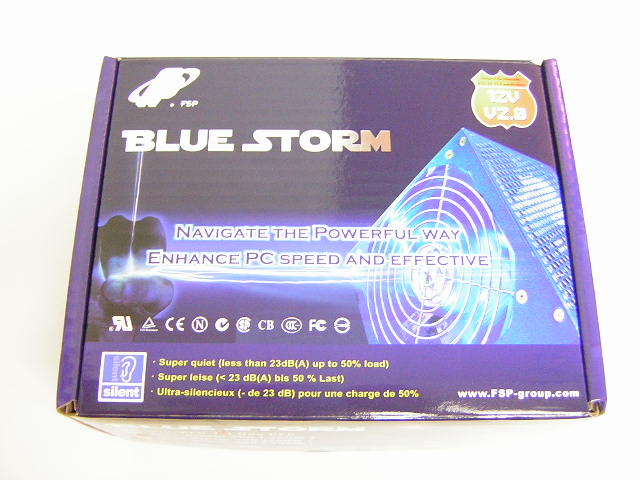
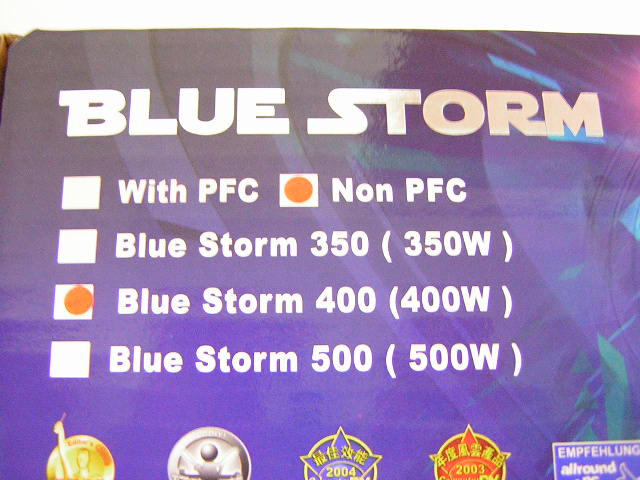
The package comes in a nice blue box and indicates that the power supply is compliant with Intel’s v2.0 requirement. The sample I received is a 400W Blue Storm and is Non PFC. PFC stands for Power Factor Correction, which means it cleans out power fluctuations and makes the power supply work to its maximum efficiency. There are three types of PFC: active, passive, and non PFC. Active is the most complex and provides the best protection. It corrects poor power and automatically adjusts input voltage from the AC source. That means that if there was a huge power spike through the wall AC outlet, the active PFC will correct that and prevent permanent damage. Passive PFC uses a capacitive filter to correct poor power from the AC source, but does not protect against power spikes or power abnormalities. The last is non PFC, which has no power protections or filterations. Of course active PFC would be ideal in a power supply, but it causes the cost of power supplies to be much higher. At least it would be better to have passive PFC, but most low-priced power supplies available have non PFC. Knowing that Fortron is a reputable power supply manufacturer, it would have been better to know that they provide better protection.
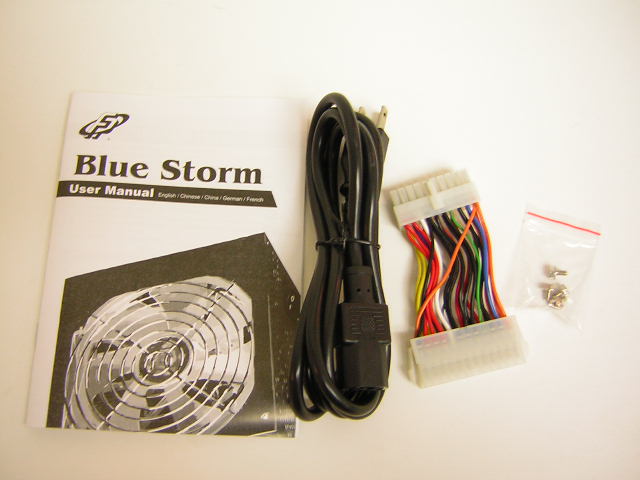
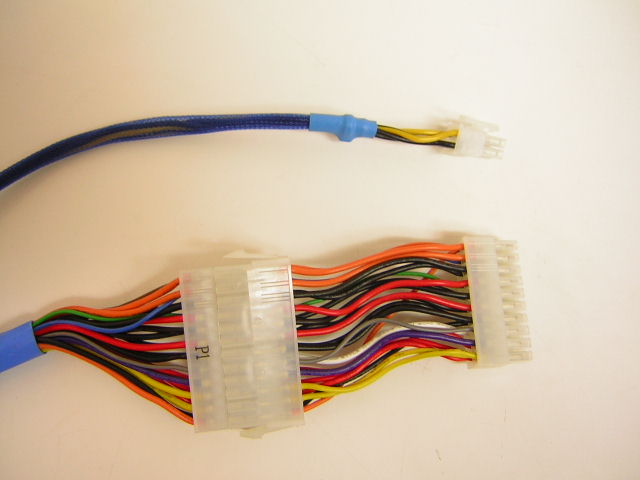
Included in the package is a 24pin-to-20pin ATX connector, a simple instructions manual, AC adapter, and 4 screws.
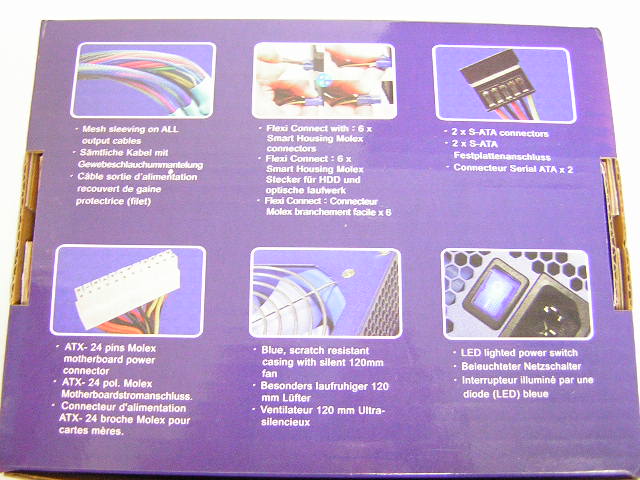
The Blue Storm is exactly as the name describes; it’s all blue. The casing is blue, the 120mm fan is blue, the connectors are blue, and the cables are even nicely sleeved in blue. The power supply looks good. I just hope that it provides the quality power. There is only one fan in the power supply and it’s 120mm in size, delivering 38CFM. The use of a large fan is helps reduce noise without losing the increased airflow. The air exits through the back of the power supply through honeycomb-shaped holes. This arrangement of holes allows for decreased air restriction.
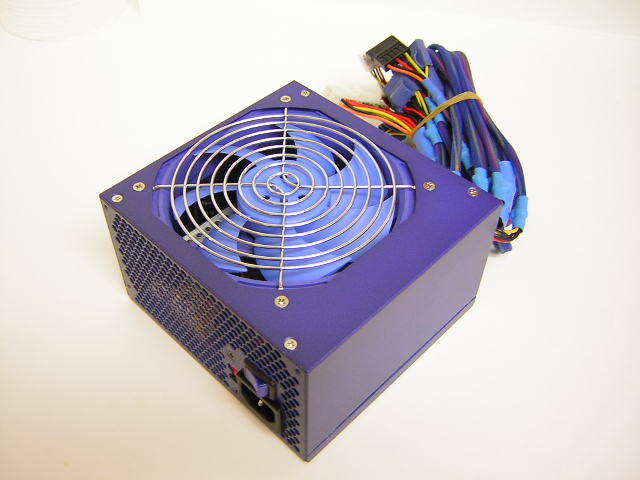
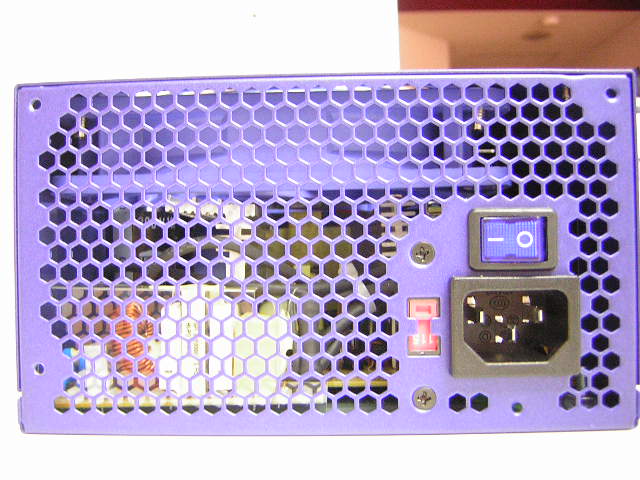
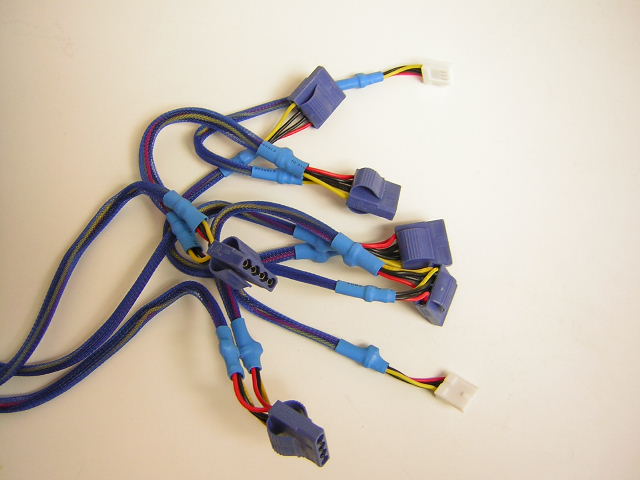
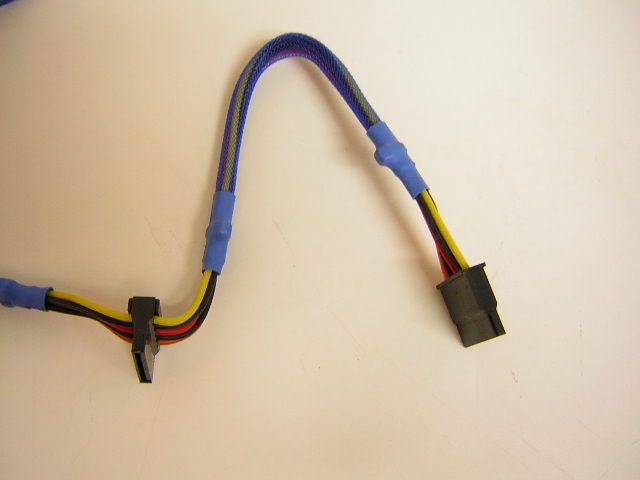
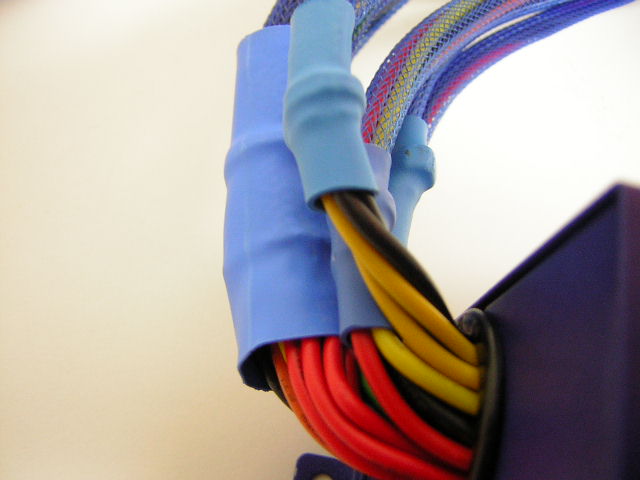
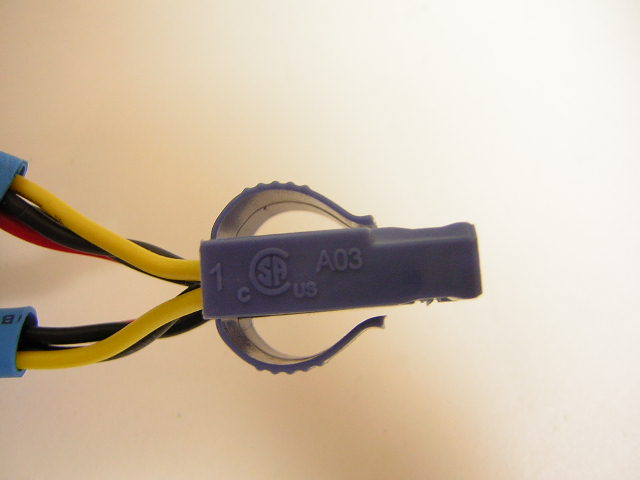
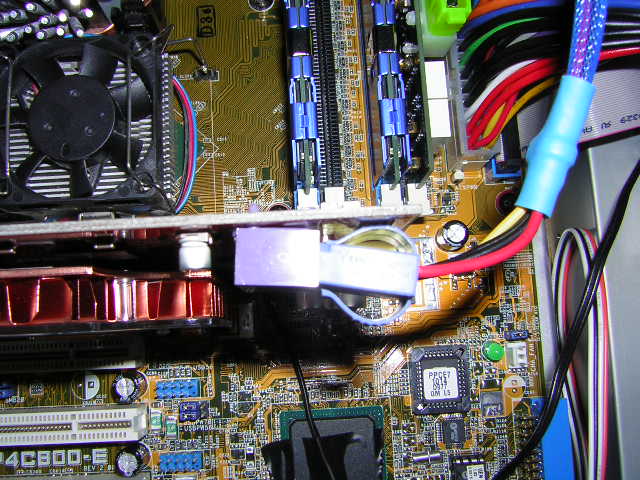
The Blue Storm has a decent number of power connectors to suit your every day needs. There are six 4pin connectors, two 3pin connectors, two SATA connectors, and a 4pin 12v connector. The cables come nicely sleeved in blue to match the overall look of the power supply and is wrapped in heatshrink at the ends. The heatshrinks were not heated well enough to fully wrap around the cables, but it doesn’t move around either. A tighter fit would have looked better aesthetically. The 4pin connector comes with the so called “EZ Grip” Female Molex connectors. This makes the connector easy to remove with a push of the tabs. There is no more wiggling and yanking of wires. There was one thing that I didn’t like about the new connector, and it’s that it doesn’t have a snug fit on video cards that require a 4pin power connector. The cables are of a fairly decent length and will not have any trouble fitting inside a full tower case.

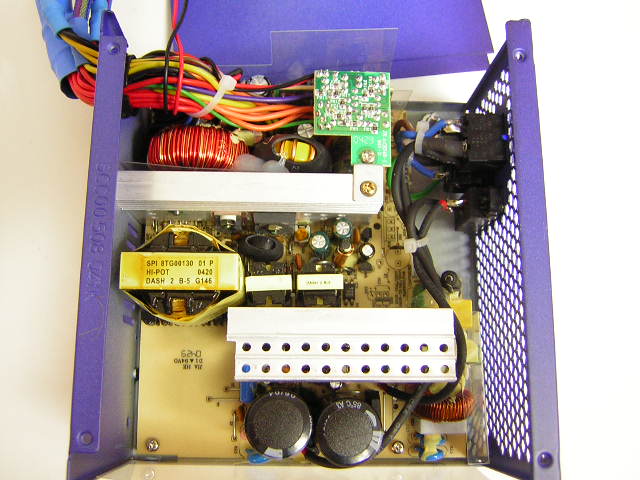
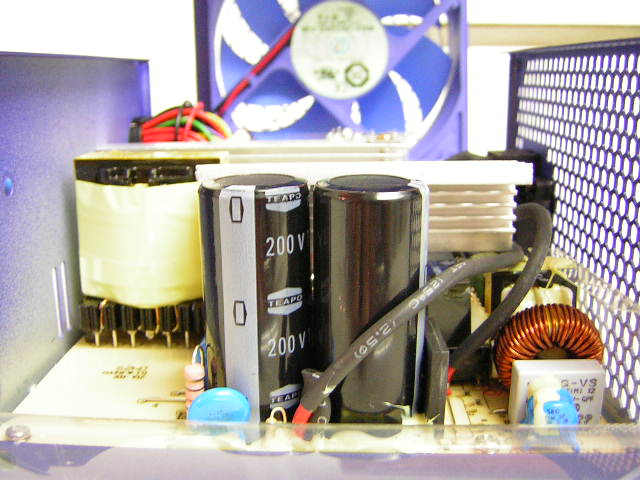
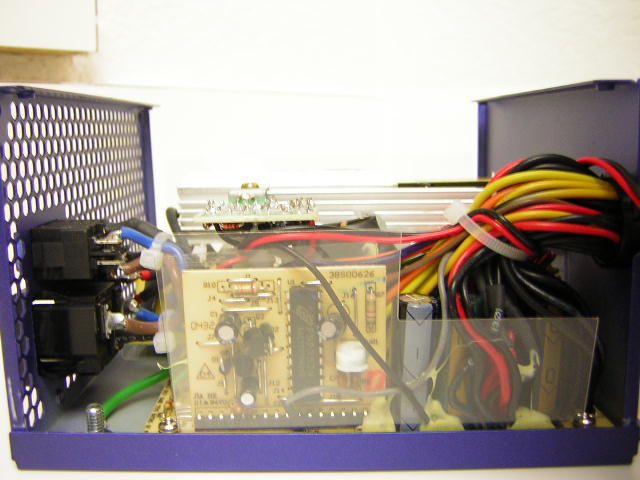
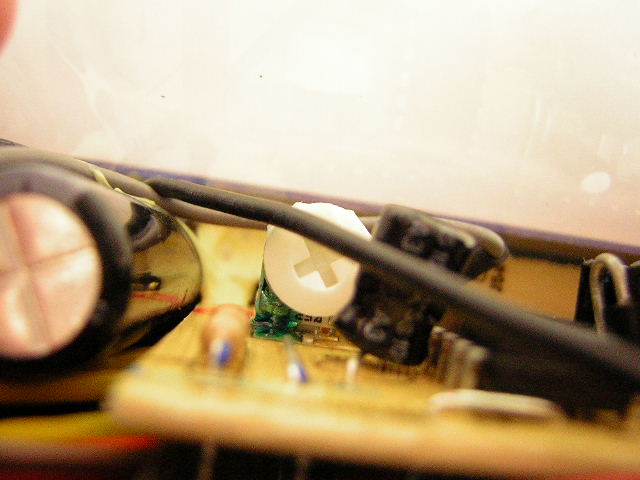
The well known Fortron 530W power supply came heavy and was filled with quality parts. The Blue Storm can be considered far from that quality. Checking the internals revealed lots of empty space as well as wasted PCB area. It was a shame that Fortron didn’t stick to their previous design and pack the power supply with capacitors and heatsinks. The heatsinks are some of the smaller ones I’ve seen. The power supply comes with a rated 70% efficiency, the rest is dispersed as heat. That 30% of power can generate quite an amount of heat. Larger heatsinks should be used in such a case. The heatsinks used here are smaller than that of the Enermax Noisetaker v2.0 reviewed recently and the Noisetaker v2.0 has a high 80% efficiency. Granted that the price tag is different, yet the difference in quality shouldn’t be all that big. One favorite feature of the Fortron 530W was the adjustable potentiometers. I checked around and was able to find the adjustable pots inside the power supply. There were four altogether, one for each rail. Because there are two independent 12v rails, the adjustable pots for those are separate. Keep in mind that opening up the power supply will void all warranties, even if Fortron does not have a sticker to prevent such an intrusion. InsaneTek and Fortron are not responsible for any damages.
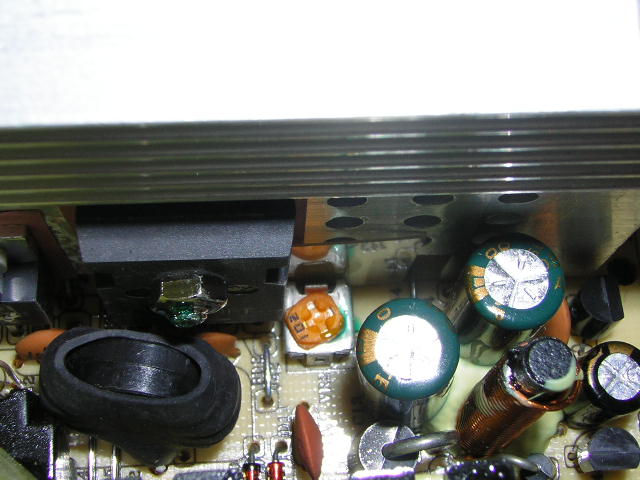
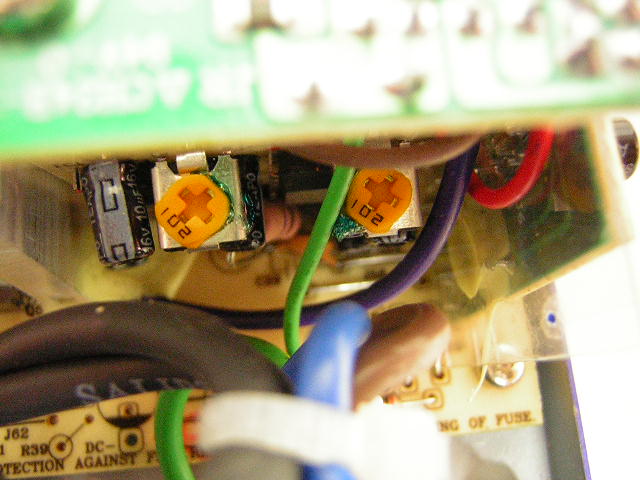
Specifications
Although the Blue Storm lacked quality insides, the rated amps per rail don’t look all that bad. Intel’s ATX v2.0 requirement calls for a 24pin ATX connector in addition to dual independent 12v lines. One 12v line feeds power to the CPU to keep the system running stably. This means that stability won’t be affected much when there are multiple hard drives and power hungry video cards running.
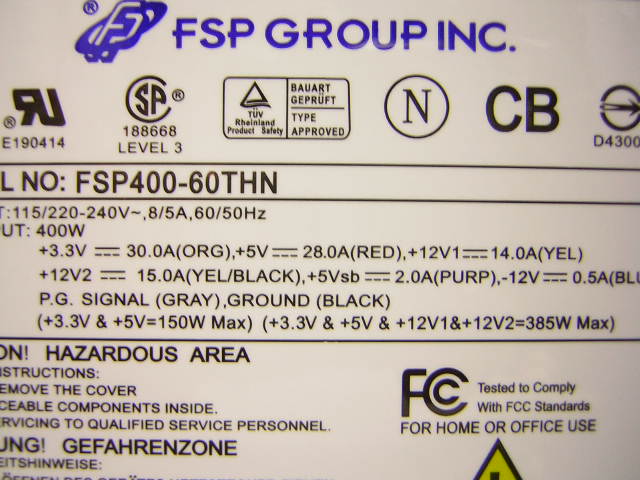

The two 12v rails come with 14A and 15A, respectively. While this is a bit low relative to other power supplies, it is suitable for a typical system and even under overclocked conditions. However, extreme overclocking conditions might require higher amps to maintain system stability. Notice that the Blue Storm does not have a -5v rail. This means that you won’t be able to use motherboard diagnostic LEDs or the OCZ DDR Booster.
The Blue Storm offers a low level of protection features:
- OVP (over voltage protection) - 3.3v: 4.6v (maximum); 5v: 6.5v (maximum); 12v1 and 12v2: 15.5v (maximum)
- OCP (over current protection) - 3.3v: 70 maximum; 5v: 48 maximum; 12v1 and 12v2: 20 maximum
- SCP (short circuit protection) - the power supply will shut down when short circuit occurs
The Blue Storm meets these safety requirements:
- IEC 60950
- TUV EN60950
- UL 60950
- Nemko + CB Report
As mentioned earlier, the power supply is rated to have a 70% efficiency. The power supply is rated to produce 400W of power at an ambient temperature of 25°C. There is no way a typical computer setup will create an ambient temperature of 25°C. This means that the output of the power supply is lower than the rated 400W under typical conditions of 30°C-35°C.
Test Setup and Results
Test Setup and Methods:
- Intel P4 2.4C
- Asus P4C800-E (with droop mod)
- BFG 6800 OC
- 2 x 512MB Kingston HyperX PC3200UL
- Western Digital 30GB 7200RPM
- Pioneer 10x DVD Rom
- Sony Floppy
- 2 x 80mm Antec fans
- DLink 802.11b wireless NIC
Running Stock:
- Intel P4 2.4C – 2.4GHZ @ 1.525v
- Kingston HyperX PC3200UL – 200FSB 1:1 200MHZ @ 2.65v
- BFG 6800 OC – 350/700
- VAGP 1.5v
Running Overclocked:
- Intel P4 2.4C – 3.48GHZ @ 1.7v
- Kingston HyperX PC3200UL – 290FSB 5:4 232MHZ @ 2.85v
- BFG 6800 OC – 380/880
- VAGP 1.8v
Results:
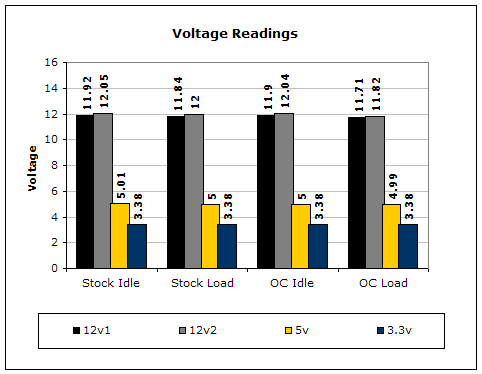
To test the power supply, a digital multimeter was used. For idle voltage readings, the system was left on desktop not running any programs. For full load, the system ran 2 instances of CPU Burn-in, Prime95 torture test for maximum power consumption, and the Nature test in 3DMark2001SE. CPU Burn-in is a good program to maximize the CPU load. The results were a little disappointing. The 12v1 line had such an impact on load under overclocked conditions that I felt unsafe keeping the system running that way. Fortunately for enthusiasts, the rails are adjustable to make up for the power fluctuation.
Conclusion and Thoughts
Fortron seems to have missed a lot in producing the Blue Storm. The unit had so much empty space going to waste. Fortron should have packed up the internals with quality capacitors and heatsinks to keep the power supply running at maximum efficiency. The lack of parts did not help stabilize the 12v lines. The lines took a big hit when the system was under load in overclocked conditions. The 3.3v rail was stable, but the maximum VDIMM was only running at 2.85v. Fortron really needs to go back to the drawing board and come up with a beefier power supply. The Blue Storm does look nice, but looks can be deceiving. Fortron should have stuck with the 530W and made that power supply blue instead. If you’re in the market for a new power supply but don’t have $100 to experiment with, stay away from the new Fortron Blue Storm. Get the Fortron 530W instead.
Pros:
- All blue finish
- Sleeved cables
- EZ Grip connectors
- Uses 120mm fan
- Silent
Cons:
- Small heatsinks
- Lots of empty space
- Voltages drop low under overclocked conditions
- Older 530W cousin is much better
We would like to thank Fortron for providing us the sample. If you have any questions or comments, feel free to hit us up in the forums. You can also check out more of our latest reviews on the front page.