

Cooler Master Real Power 550W
Introduction
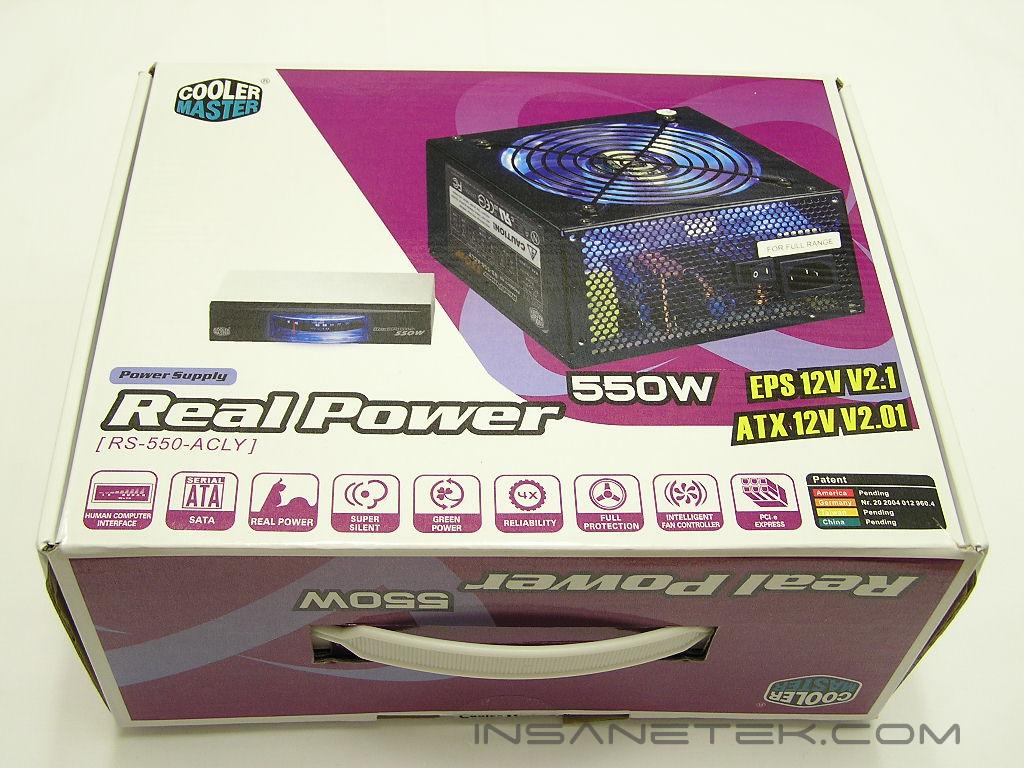
I was pleasantly surprised when Cooler Master started a line for power supplies. The Real Power 450W we looked at a while back was a great choice for the price and performed rather well. Being new to the ballgame, the Real Power 450W version was a bit lacking on the amps for the 12v rail and dipped below the 12v line, but still managed to stay within the safe 5% range. While that shouldn’t bother the majority of enthusiasts out there, extreme overclockers will want their 12v rail to be high and steady, above the 12v margin. Since we mainly focus on overclocking, the drop under the 12v line was disappointing. The lack of a PCI-E connector for high end gaming systems was also a turnoff for enthusiasts who look for future-proof components. Fortunately for us, Cooler Master has heard our demands and created their latest flagship Real Power 550W.
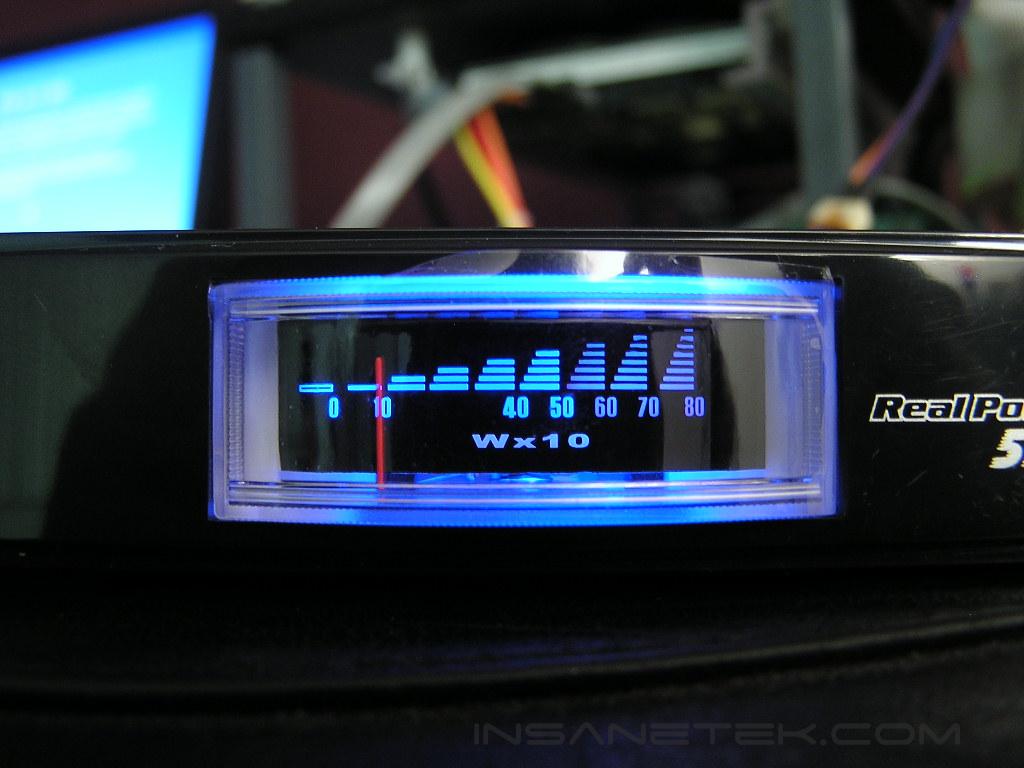
The new power supply provides a beefier wattage rating, PCI-E connector, and continues the use of a wattage meter display. If Cooler Master continues the great performance of the Real Power 450W, this 550W should definitely have no problems being a top choice for your high end gaming/overclocking system.
Cooler Master Real Power 550W
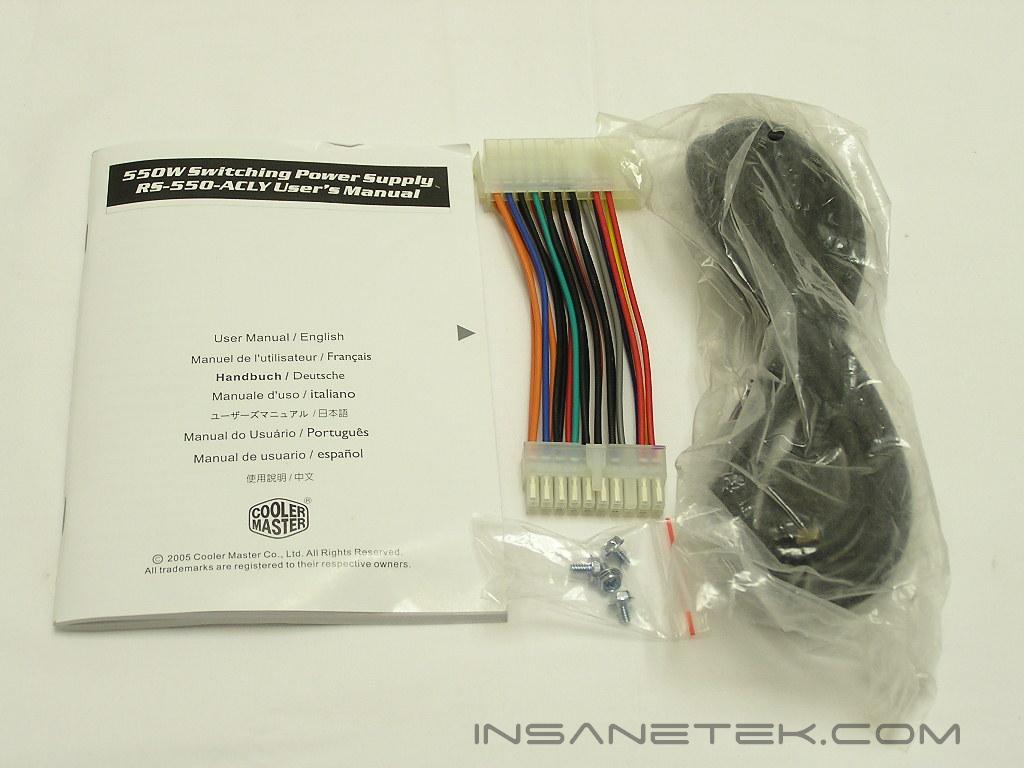
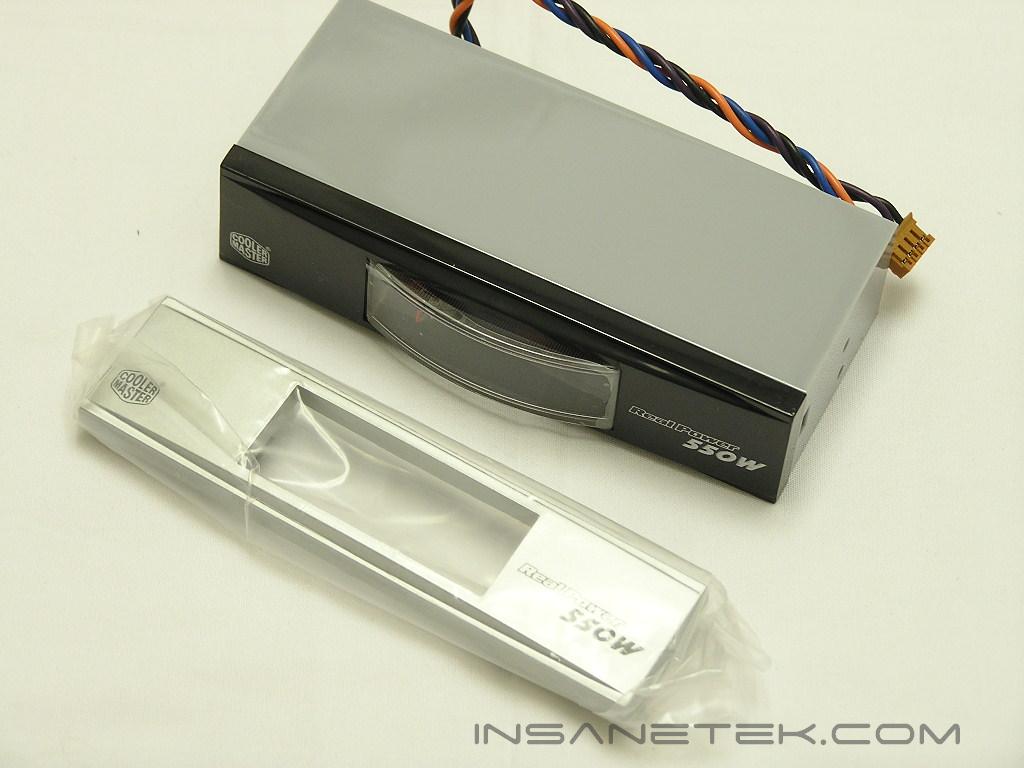
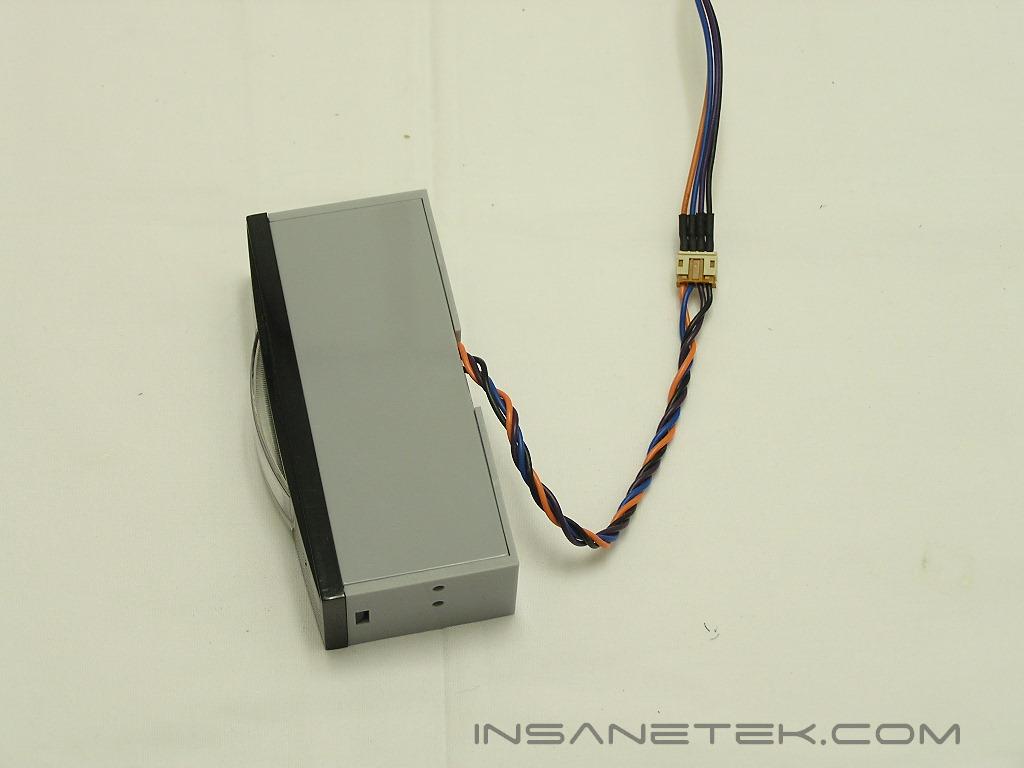
The Cooler Master Real Power 550W comes with all the necessary accessories for complete installation. It includes the AC adapter, a 24pin-to-20pin adapter, a user manual, and a wattage meter display. The wattage meter display comes with a second bezel to provide users the option of either using black or silver. One minor thing that enthusiasts didn’t really like about the previous 450W version was that the wattage display only came in silver. This was a big turnoff to those who have black cases and like to keep that uniform look.
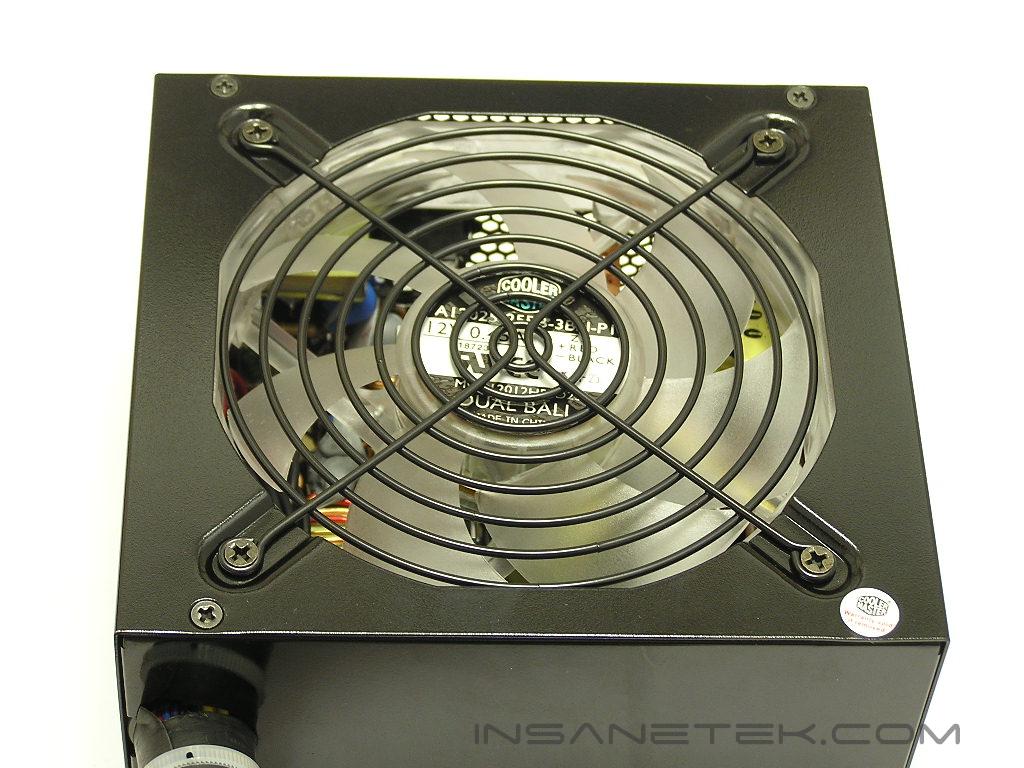
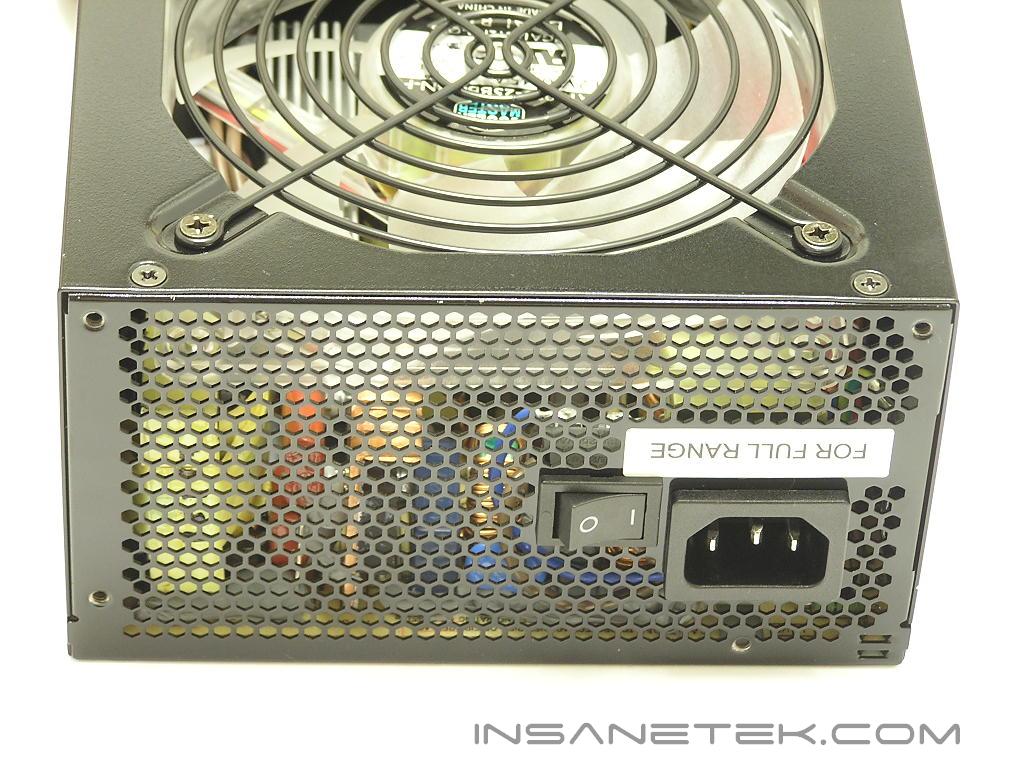
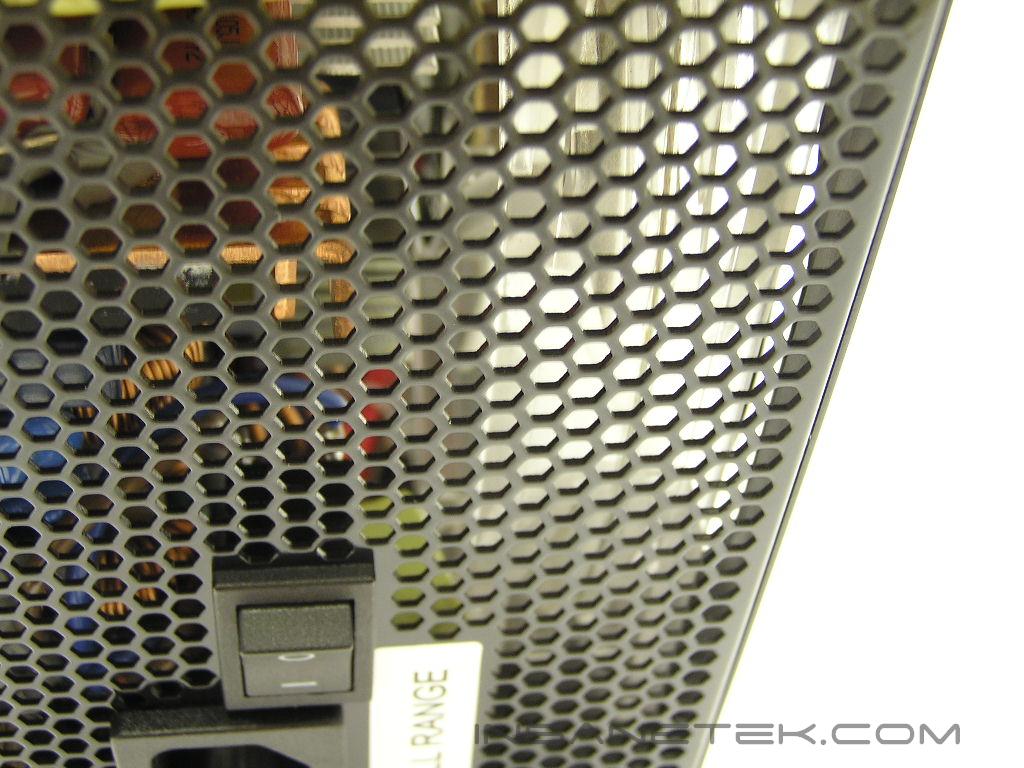
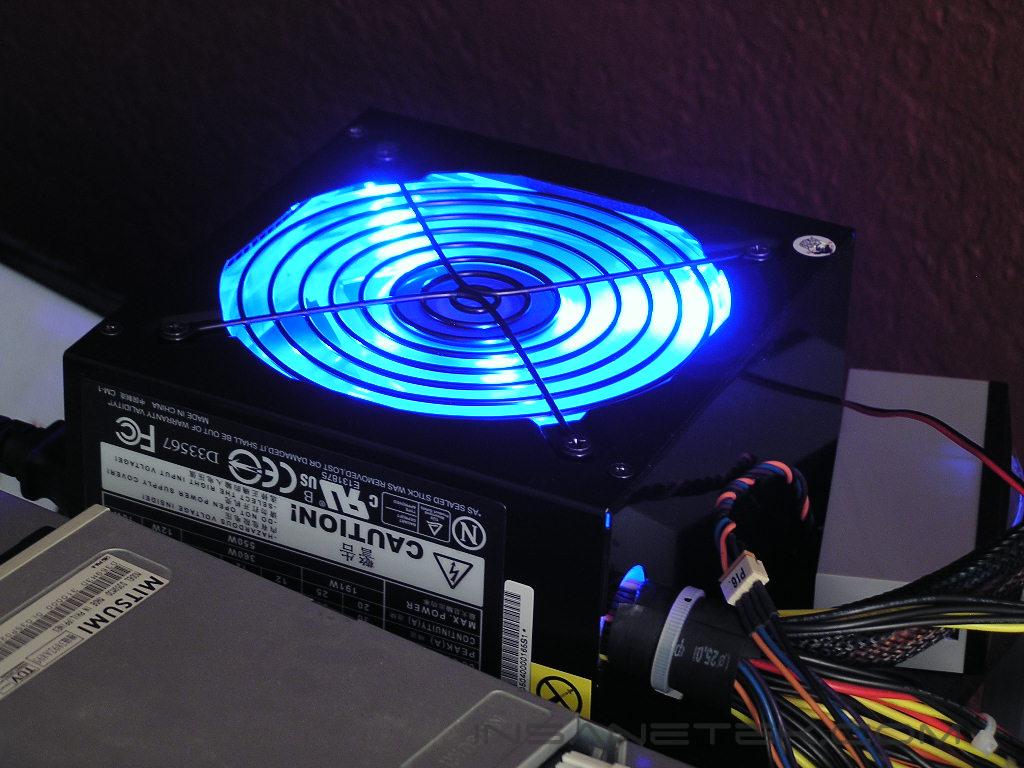
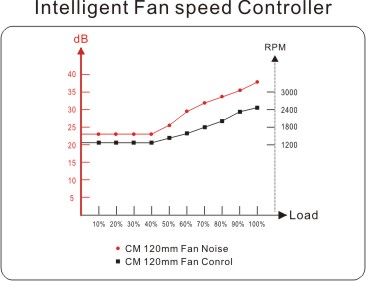
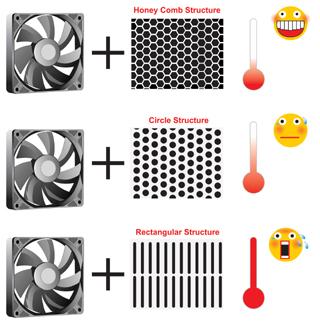
The power supply comes in a reflective black finish casing with a large 120mm fan. The cooling of the large 120mm fan covers the entire circuitry board and runs at a low decibel rating of 23dBA. The fan is thermally controlled and will speed up as the load increases, and according to Cooler Master, that low noise level will continue up to 220W. The fan also provides a bright blue LED when turned on, adding great aesthetics to your windowed case. Cooler Master is one of the first, if not the first, to utilize the honeycomb air vent design. The physical shape of the honeycomb allows air to easily flow out of the power supply without much restriction.
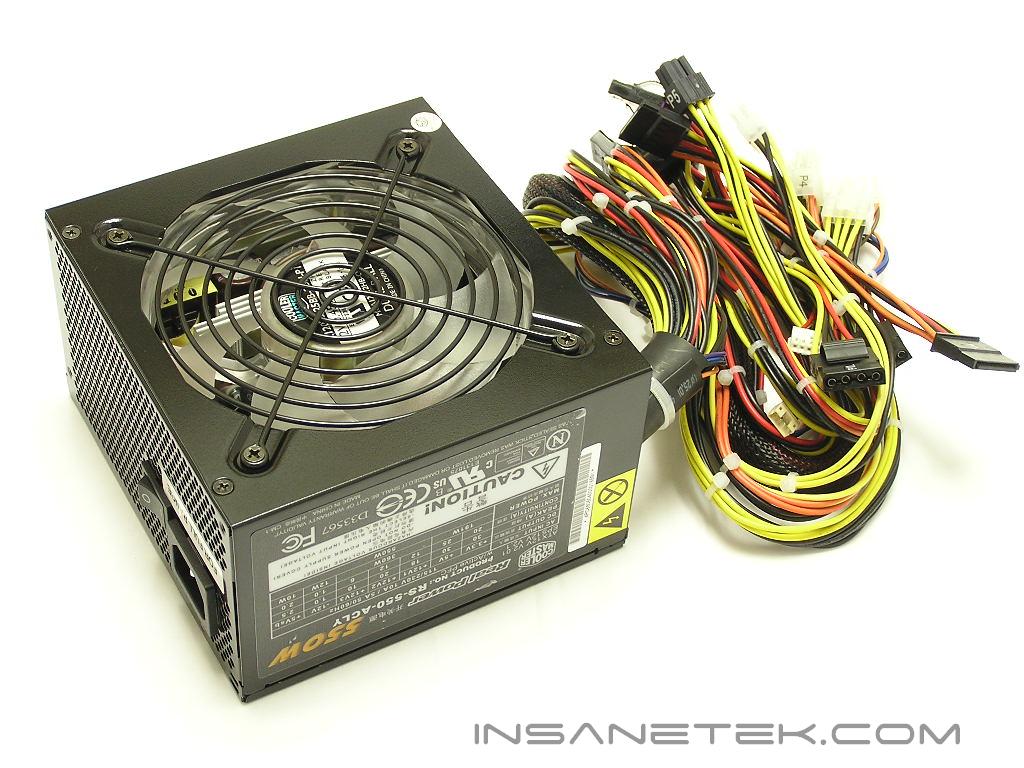
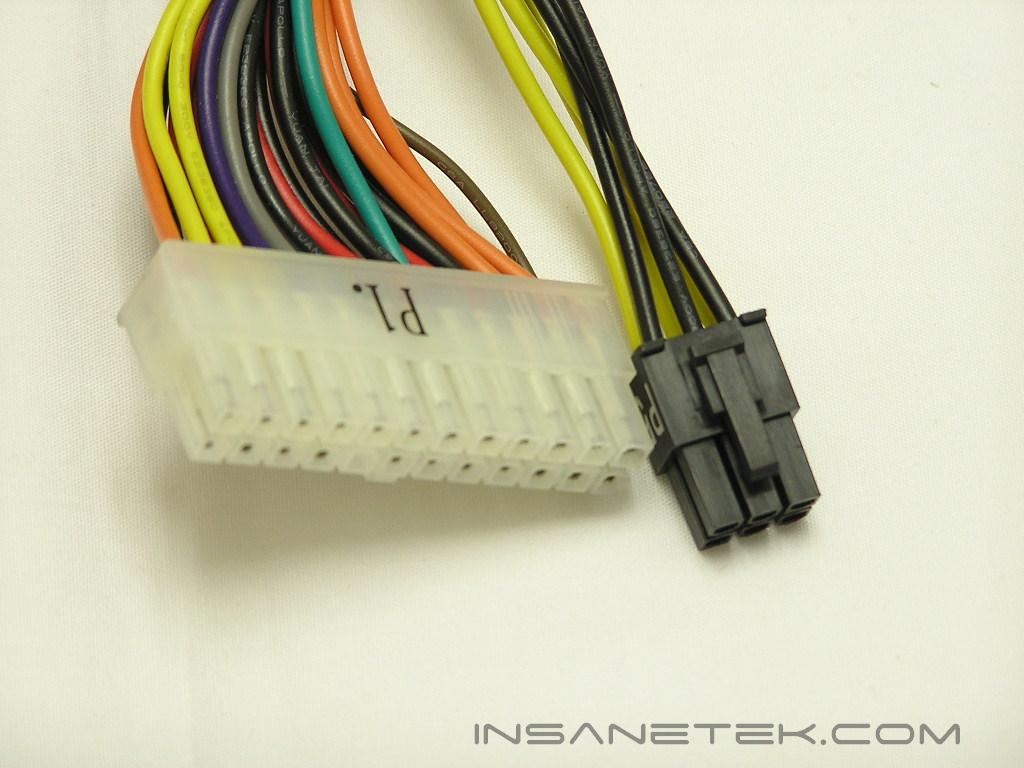
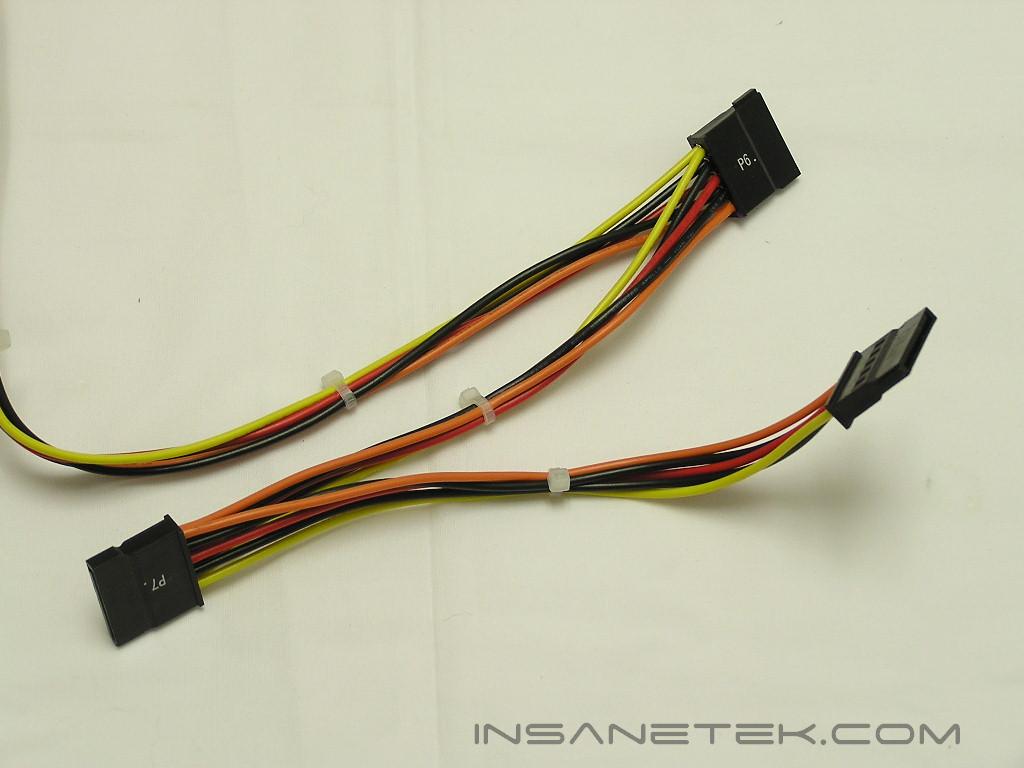
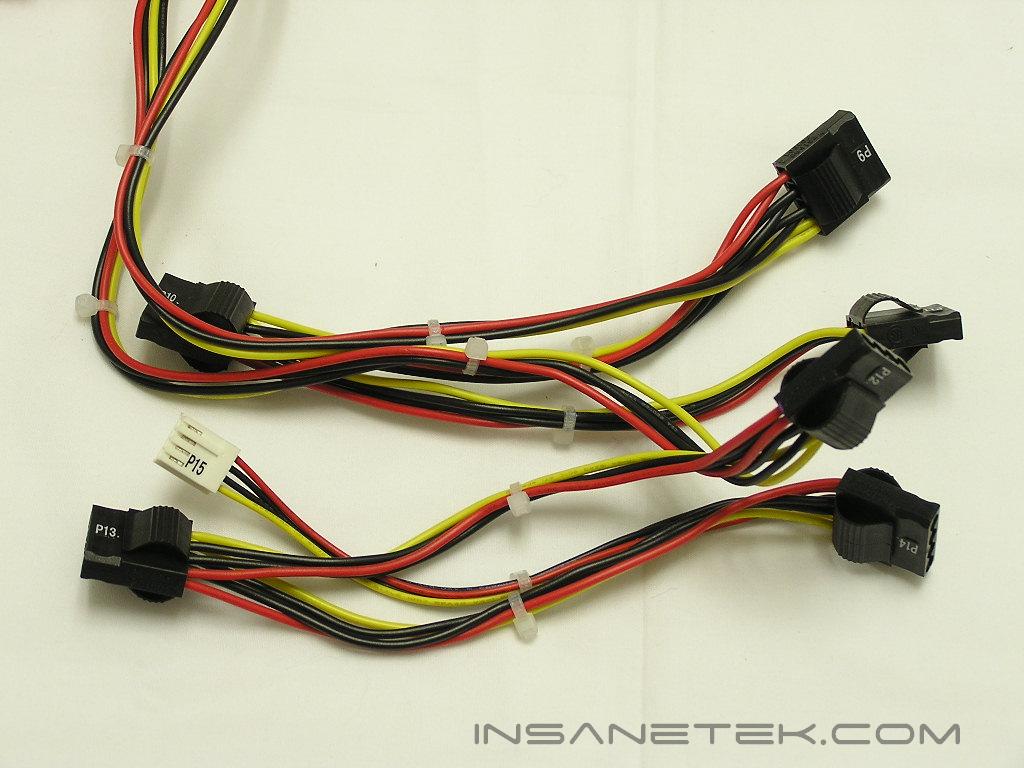
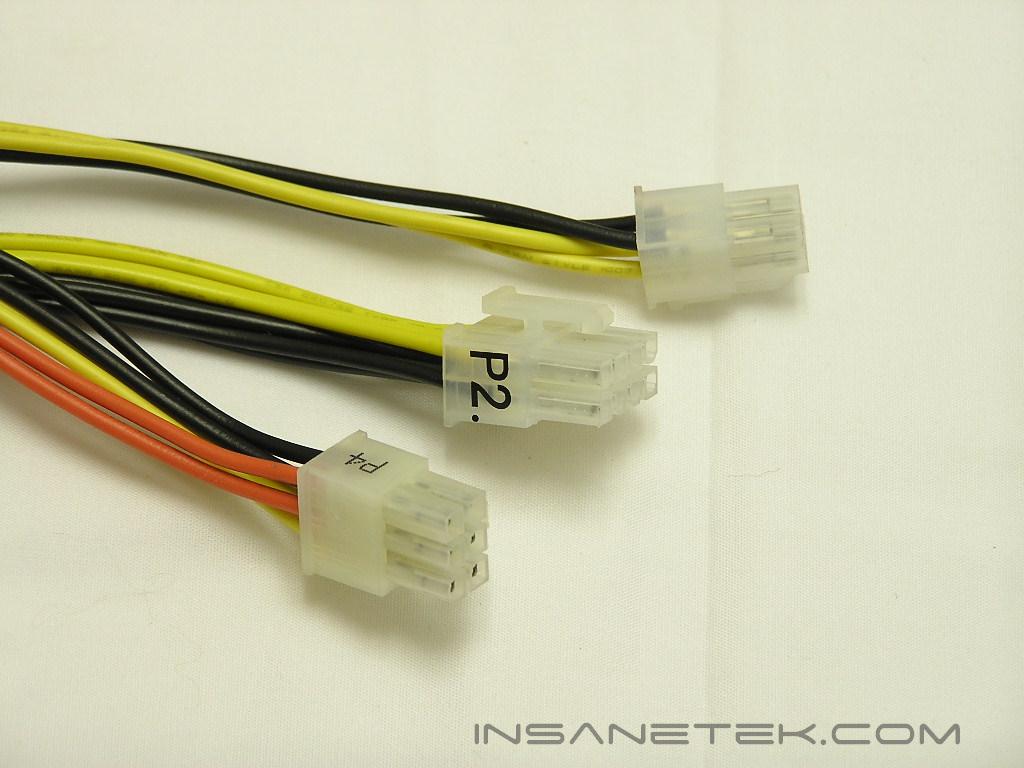
As mentioned earlier, one main feature that was missing from the Real Power 450W was a PCI-E connector. Unfortunately, it’s still insufficient for the high end enthusiasts. Why? There’s only one PCI-E connector! That leaves SLI users a out in the rain. The ATX connector comes in the 24pin version, as all motherboards are transitioning to meet the higher Intel power specifications. For users with older systems that only need the 20pin, an adapter is included. The power supply comes with six 4pin Molex connectors, one 3pin floppy connector, three SATA connectors, one 4pin 12v connector, one 8pin 12v connector (typically used for server motherboards), and one 6pin PCI-E connector for workstation graphic cards. You cannot use the 6pin workstation PCI-E adapter on regular graphic cards. It won’t supply the proper power that the graphic card needs. All the 4pin Molex connectors have grips that allow easy removal when attached to devices. It comes in very handy at times. While three SATA connectors are sufficient to run a high end system with a RAID array, having four connectors would’ve been better. It’ll allow users to run a dual RAID array. The only drawback of the cables will be the length of the ATX connector. It will be a bit too short for full tower cases with inverted motherboards trays, or the so-called BTX design. These cases include the Thermaltake Kandalf (with BTX motherboard tray), ThermalRock Circle, Enermax MaxFlow, and the SilverStone TJ06. The one additional cable that is included connects the wattage meter display.
Specifications
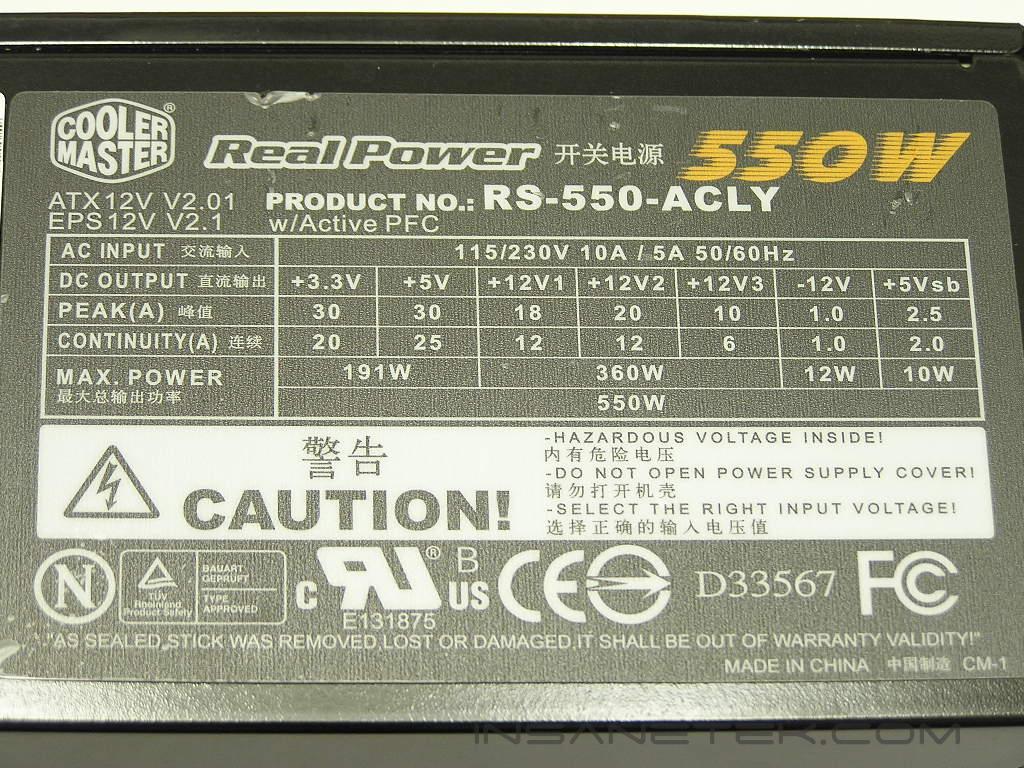
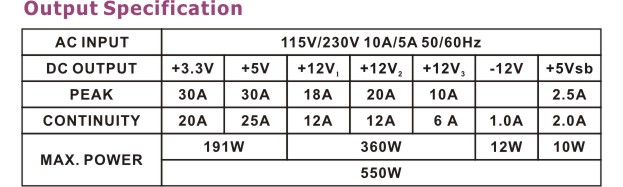
A power supply won’t be any good if each rail isn’t backed up by a good number of amps. With 550W, the rails on each amp are distributed quite evenly. What is surprising is that the 12v rail is separated into three independent lines. This means that when load hits the power supply, the voltages won’t drop significantly. While having dual 12v rails is more than enough, having three is even better. The more the merrier.
The Real Power 550W comes with Active PFC to allow better power management inside the power supply. Many people argue that PFC in a power supply serves no purpose, but there is definitely a reason for it. Whenever the power supply starts to fluctuate with its power efficiency, the active PFC helps keep it up high. This way, power is not lost and wasted into heat. This lowers your overall electricity bill as well. Sure a single computer may not matter much, but it’ll definitely help for systems that run 24/7. With the options of the power supply, the 550W can be easily be used for small servers.
The power supply operates at a good efficiency of 75% or higher. The higher the efficiency rating, the less power the power supply wastes. This means that 75% of the power coming into the power supply is being used to power the system. The other 25% is released off as heat. This might sound really crappy, but it’s actually pretty good. The highest efficiency rating so far is 80%, and few companies have acheived that. The typical rating is 70%, and those can only be found on good power supplies. The power supplies that comes bundled with cases or cost $20 operate at about 20%, haha.
| Type | Intel® ATX12V V2.01 Form Factor / SSI EPS12V V2.1 Form Factor |
| PFC | Active PFC (PF>0.99) |
| Input Voltage | 90V~264V (Auto Range) |
| Input Current | 10A at 115Vac / 5A at 230Vac |
| Input Frequency Range | 47 ~ 63 Hz |
| Power Good Signal | 100 ~ 500 ms |
| Hold Up Time | > 17 ms |
| Efficiency | > 75% Typically |
| Output Capacity | 550W Continually |
| Output Peak Capacity | 650W |
| Dimensions | Standard ATX 150 x 140 x 86 (mm) |
| Operation Temperature | 0~40℃ |
| MTBF | >400,000 hrs |
| 120mm Exhaust Fan | Dual Ball Blue LED |
| EMC | CE / BSMI / FCC / CCC |
| Safety | UL / cUL / TUV / NEMKO / BSMI |
The Real Power offers a low level of protection and features:
- OVP (over voltage protection)
- OCP (over current protection)
- OTP
- OLP
- Short Protection
- Active PFC
Power Supply Internals
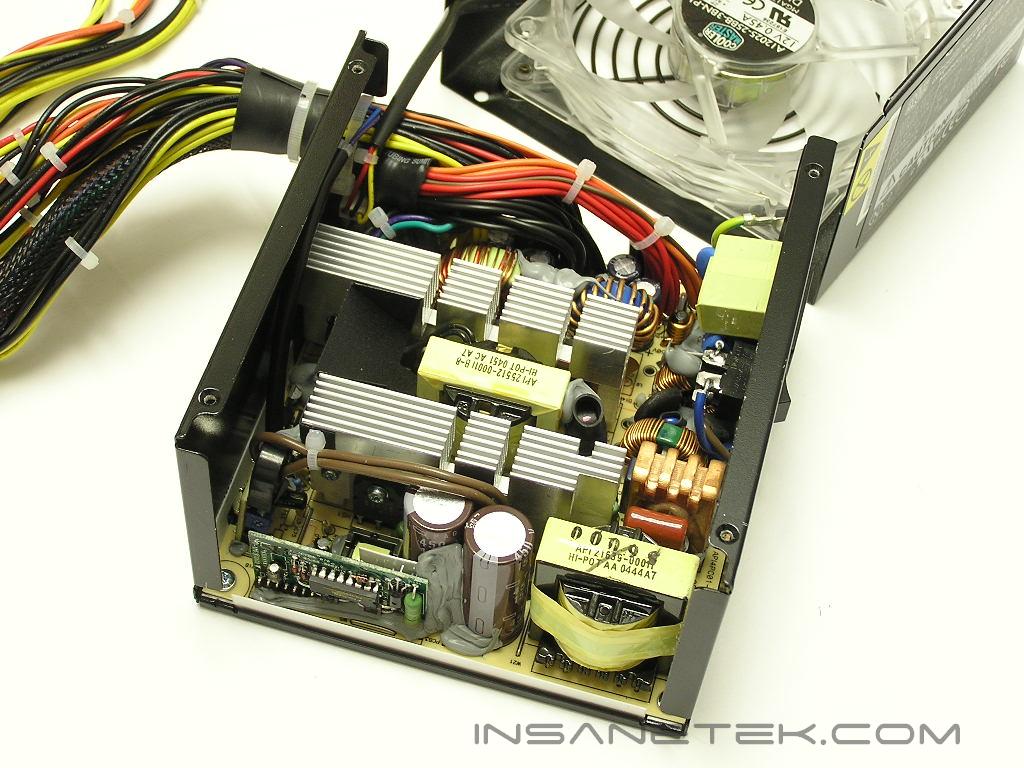
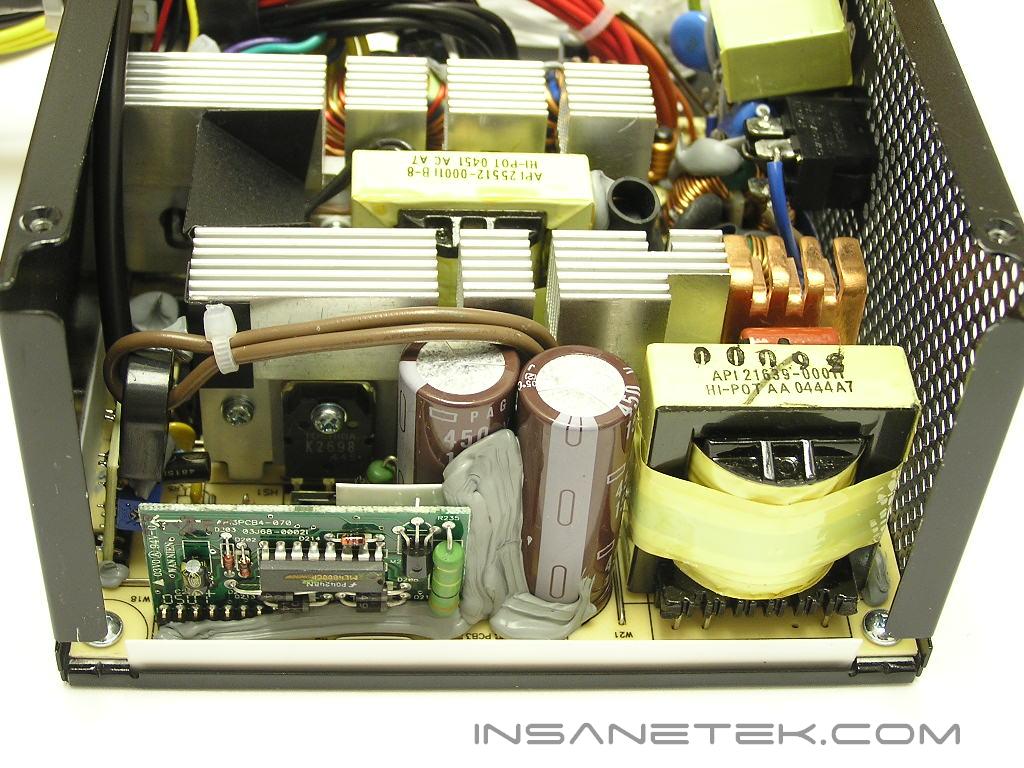
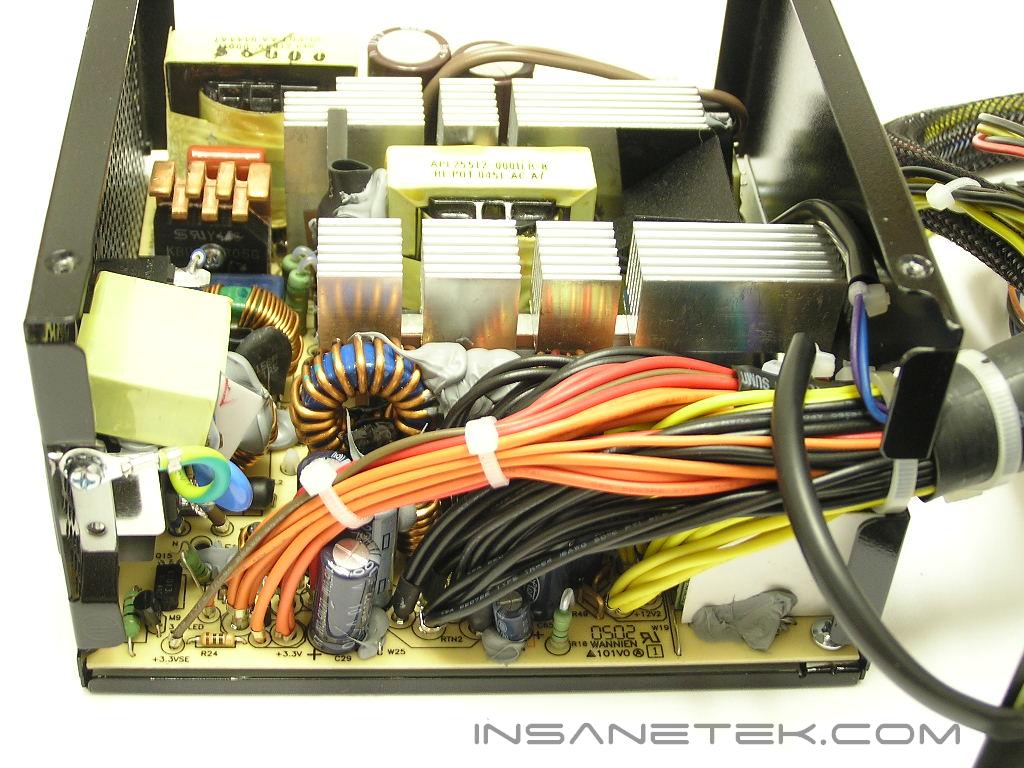
A good power supply won’t be good if the internals aren’t made with quality parts. The majority of high rated power supplies out there are built with small circuit boards with cheap capacitors that are cooled by small heatsinks. I find it quite surprising that companies would actually release a power supply and not take full advantage of the space inside the casing. Examples would be the OCZ ModStream and the Fortron Blue Storm. They performed decently and kept the system stable throughout, but they didn’t make good use of all the space they were given. As a result, the rails would drop under an overclocking environment. If they did take advantage of all the space they were given, more components could have been added to allow a stronger stable operation.
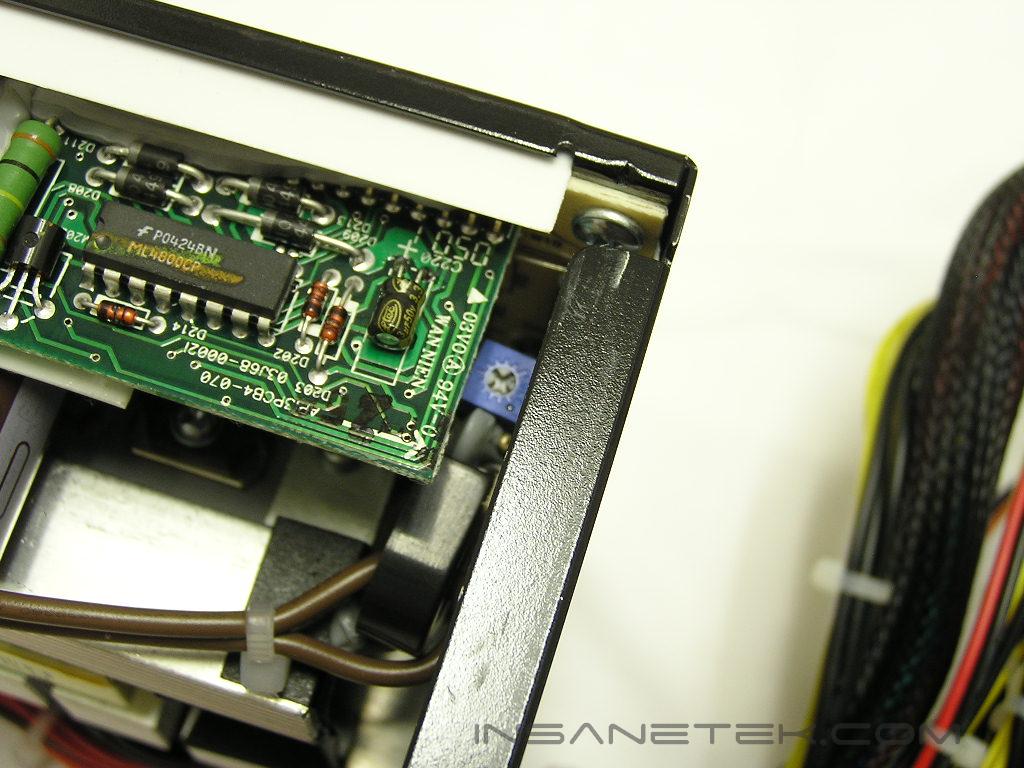
The Real Power 550W comes with a circuit board filled with components. The aluminum heatsinks are a bit small for my liking, but with a 120mm fan blowing across, cooling wouldn’t be too much of an issue. I looked around and did find one interesting thing. There is a single potentiometer hidden all the way at a corner. I looked around to see what rail it’s for but couldn’t find any labels. I didn’t test it since all my rails ran pretty strong. From my personal experience, it should be for the 3.3v rail. Don’t take my word for it, though.
Test Setup and Results
Testing Setup and Methods:
- AMD Athlon 64 3000+ Venice
- DFI LANParty UT nF4 Ultra-D
- Nvidia Geforce 6800GT PCI-E
- 2 x 512MB Centon Advance PC3200 Low Latency
- Hitachi 80GB SATA
- Pioneer 10x DVD-Rom
- Sony Floppy
- 1 x 120mm fan
- DLink 802.11b wireless NIC
Running Stock:
- AMD Athlon 64 3000+ Venice 1.8GHZ – 1.8GHZ @ 1.4v
- 2 x 512MB Centon Advance PC3200 Low Latency – 200HTT 1:1 200MHZ @ 2.6v
- Nvidia Geforce 6800GT PCI-E – 350/1000
- Chipset voltage – 1.5v
- LDT voltage – 1.2v
Running Overclocked:
- AMD Athlon 64 3000+ Venice 1.8GHZ – 2.7GHZ @ 1.65v
- 2 x 512MB Centon Advance PC3200 Low Latency – 300HTT 1:1 300MHZ @ 3.0v
- Nvidia Geforce 6800GT PCI-E – 400/1100
- Chipset voltage – 1.7v
- LDT voltage – 1.3v
Testing the power supply is a tedious task. Like cooling products, the “proper” testing method is long and strenuous. It involves high end equipment and testing materials that we simply cannot get our hands on. A simple proper testing method would be to test the wattage draw from the AC outlet, voltage rail fluctuations, wattage fluctuations under high operating temperatures, power efficiency, and the power supply’s reaction to low input voltage. But because this site is dedicated more to overclocking, we’ll check for voltage fluctuations in an overclocked environment. After all, that is what overclockers generally care about.
Results:
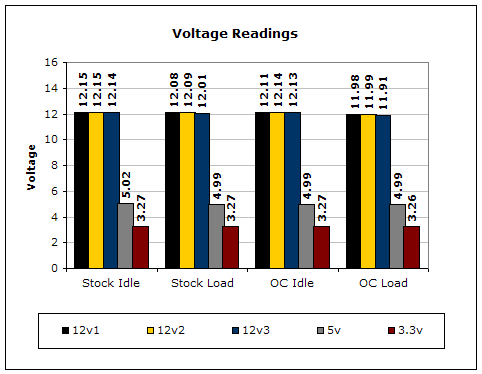
To test the power supply, a digital multimeter was used. For idle voltage readings, the system was left on the desktop not running any programs. For full load, the system ran 2 instances of CPU Burn-in, Prime95 torture test for maximum power consumption, PCMark2004 hard drive benchmark, and the Nature test in 3DMark2001SE. CPU Burn-in is a good program to maximize the CPU load. The results for each rail were great throughout all overclocking tests. Although each rail did dip below the rated voltage line, the difference isn’t anything to worry about. It’s well within the 5% safety zone.
Conclusion and Thoughts
Cooler Master extends their Real Power line and continues to do a great job. Their Real Power 450W earned our recommendations and the 550W is no different. It’s a great power supply and provides users with great performance. Although the rails did drop a bit below what overclockers would’ve liked, it’s not serious enough to sound any alarms. The inclusion of the wattage meter display is a great little feature and allows users to see just how much power their systems are consuming. The testbed used for testing only drew close to 150W at full load. The large 120mm blue LED fan provides great cooling and operates at extremely low noise levels. I could barely hear it with my ear near the spinning fan. It’s definitely great for a silent/low noise system. The only drawback would be that it’s not SLI capable right out of the box. With such a high wattage rating, it’s bound for high end systems. It definitely needs another PCI-E capable for the massive gamers out there. Yet, the Real Power 550W is a power supply that deserves a good recommendation.
Pros:
- Glossy black finish
- Large quiet blue LED 120mm fan
- Wattage meter display
- Easy grip connectors
- Active PFC
- Great efficiency of 75%
- Quiet
- Server ready
Cons:
- Not SLI capable out of the box

We would like to thank Cooler Master for providing us the sample. If you have any questions or comments, feel free to hit us up in the forums. You can also check out more of our latest reviews on the front page.