

Patriot PDC1G3200+XBLK 1GB Dual Channel Kit
Introduction
As the age of Samsung TCCD memory chips come close to an end, companies are using what’s left in their stock to produce low latency DDR ram. PDP Systems is one of the lesser known memory companies that followed the trend of TCCD. It’s a surprise to hear that their company has been around since 1985. Although in existence for such a long time, they have provided memory for a variety of components, ranging from Flash memory devices to ATI graphics cards. Only recently has PDP Systems decided to join the highly competitive memory market with the name Patriot.
Patriot’s extreme performance (EP) line is made for gaming and performance for those that need low latency and extreme speeds. Their dual channel (DC) line is just a combination of two sticks from their EP line. Their third line of memory is the signature line (SL), which strives for affordability and quality. With these three lines in mind, it’s hard to disregard Patriot as competitive brand name memory. While the well known companies, like Kingston and Corsair, pump out their lines of memory, we have PDP Systems’ Patriot PC3200+XBLK 1GB DC Kit.
Patriot PC3200+XBLK
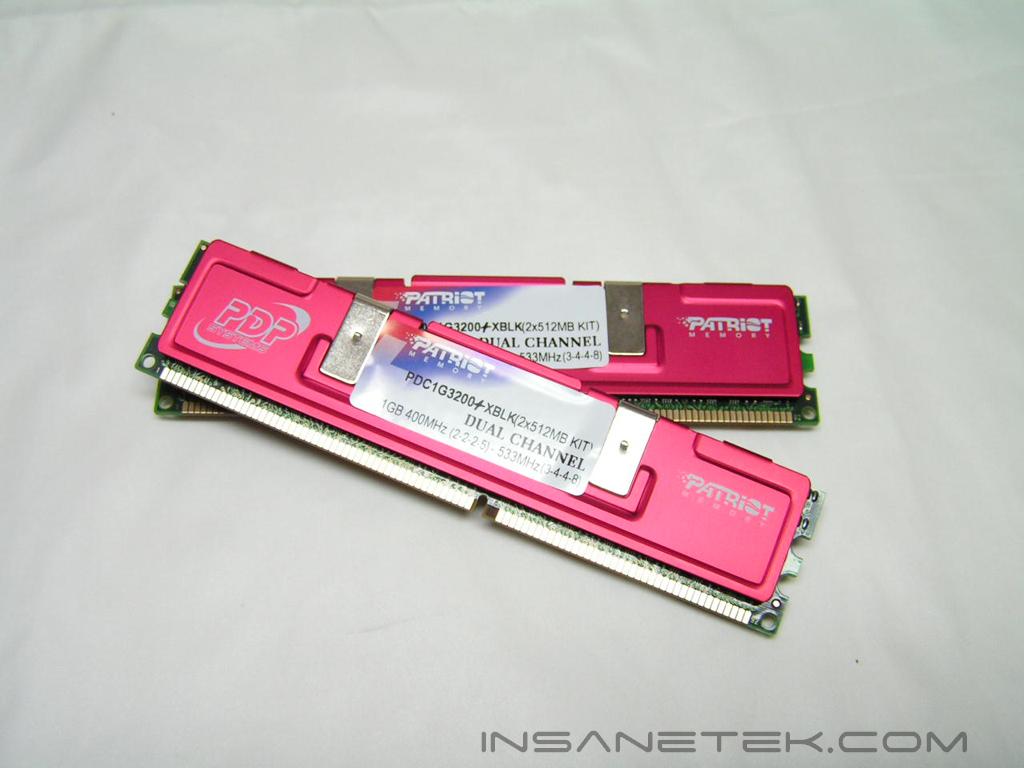
The packaging of the Patriot PC3200+XBLK reminds me of Mushkin and Corsair’s packaging. The memory comes in a slim box and is easily accessible, so you don’t have to cut it open. Unlike what we have seen before, Patriot’s heatspreaders are red. They don’t dissipate the heat, but they do look pleasing. PDP Systems, like many others, provides customers with a lifetime warranty and free technical support.
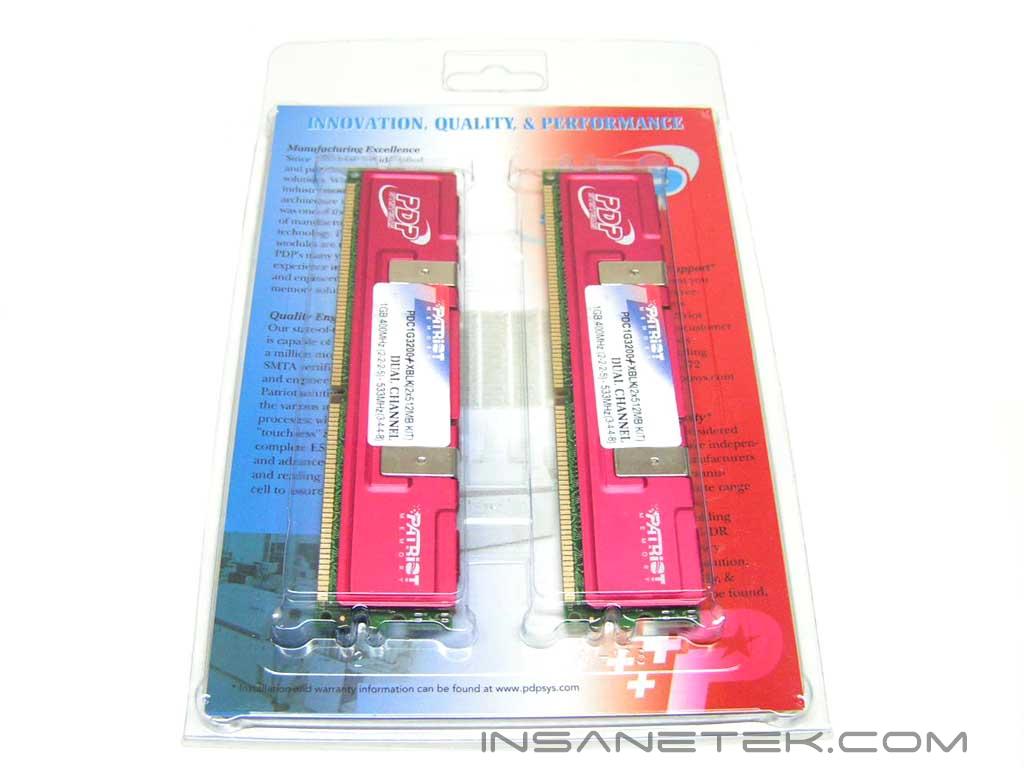
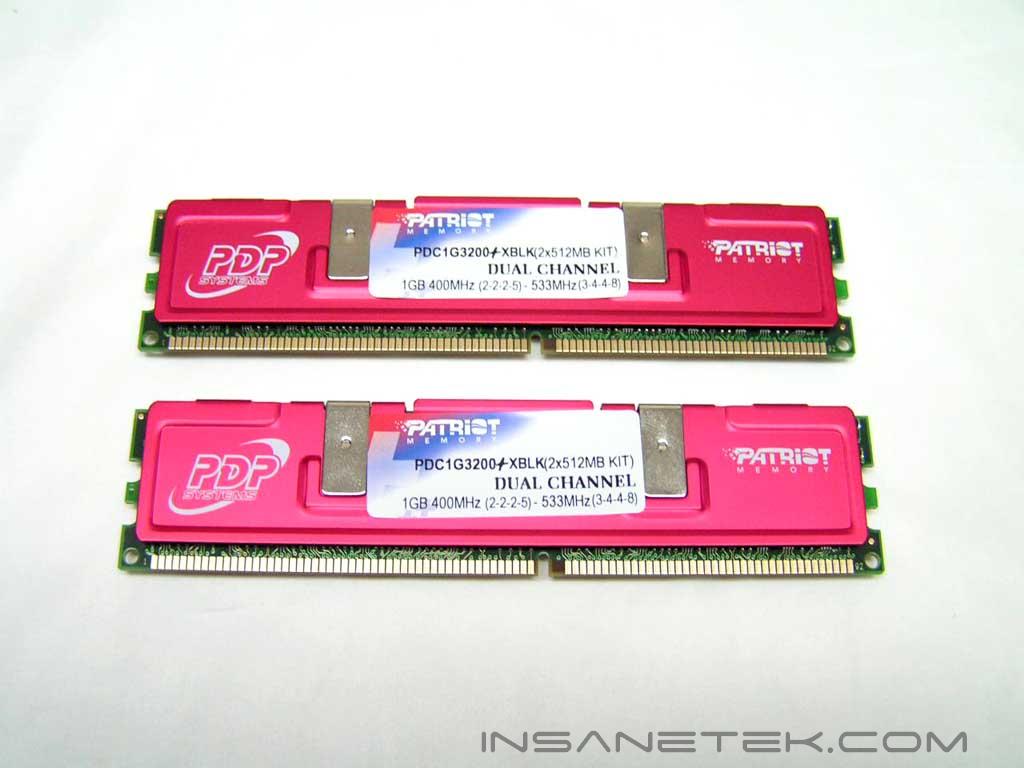
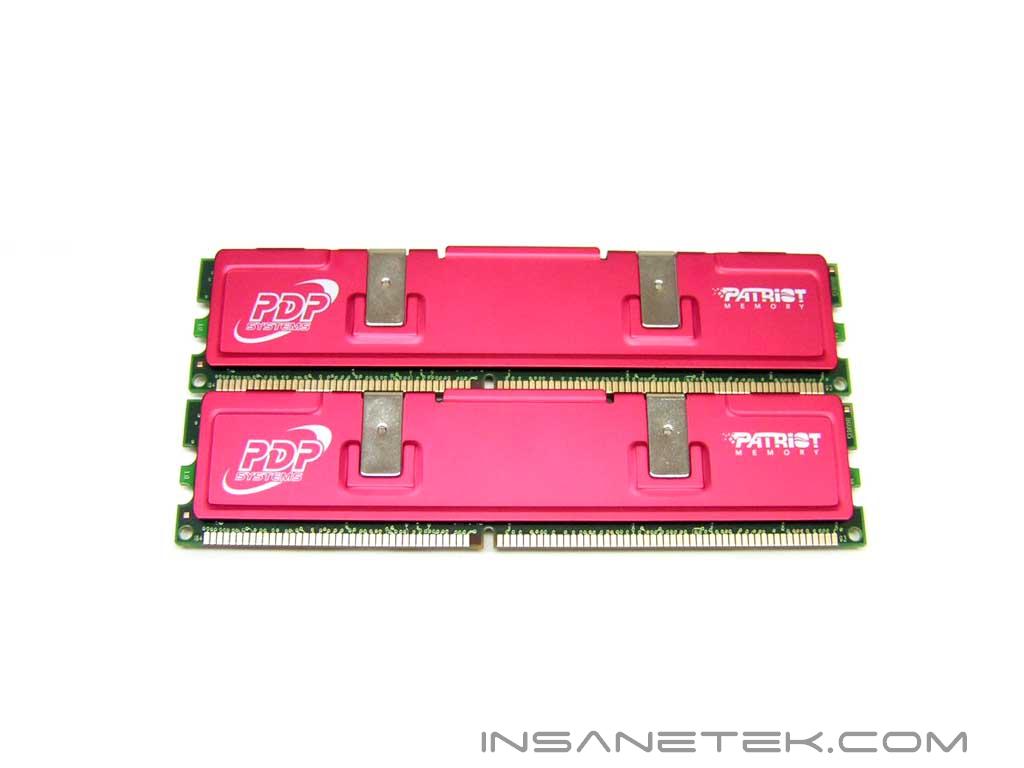
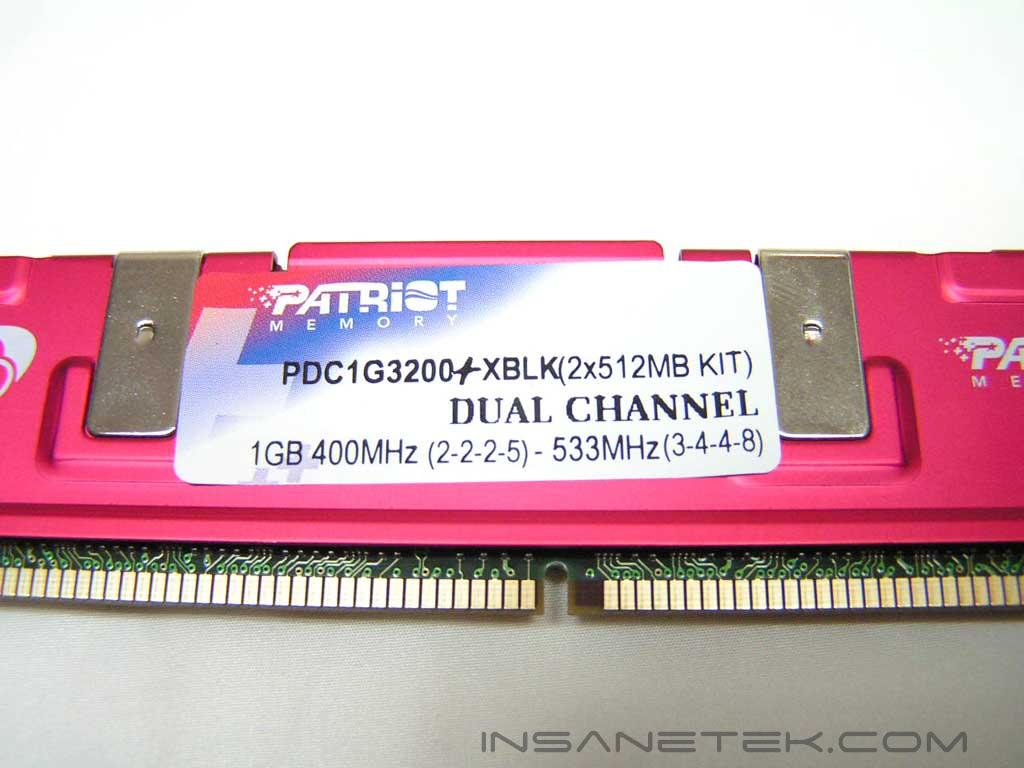
The PDP memory is rated at 200MHz, with latencies of 2-2-2-5 and 3-4-4-8 at 266MHz. With a few voltage adjustments, lower latencies can be achieved. Patriot has chosen to use Brainpower PCBs in their line of memory to improve overclockability. The Brainpower PCB uses a more efficient layout and takes advantage of shorter traces. The memory I received uses the B6U815 PCB.
Test System and Overclocking
Test System:
- AMD Athlon64 3000+ Winchester
- MSI K8N Neo2 Platinum
- 2 x 512MB PDC1G3200+XBLK
- Leadtek Geforce FX 5950 Winfast A380 Ultra
- TTGI SF-450TS 450W Power Supply
Overclocking:
Keep in mind that during overclocking, the latencies are as follows: CAS-TRCD-TRP-TRAS
One thing to notice when using memory with TCCD chips is the random tolerance of voltage. Because of these inconsistencies, be cautious when comparing different pairs of memory. During my tests, I used Super Pi as a reference point. If Super Pi did not work, then the overclock was too high and I reached my limit. I would then test the stability with Prime95 for two hours. To start off, I ran the memory at stock speeds, 200MHz at 2-2-2-5 1T, so to ensure that it works properly at rated specifications. It went through POST with no problems, so I rebooted and tried the next step up. The memory was maxed out at 217MHz at 2-2-2-5. Maximum voltage for my board was 2.85v and it didn’t help the memory past 217MHz. Loosening the timings to 2-3-3-6 1T, I was able to go further to 240. Next up is what we’ve been waiting for. TCCD is known to work wonders with latencies at 2.5-3-3-7. I changed the timings to 2.5-3-3-7 1T and I topped out at 275MHz. Anything after 275MHz, Windows XP would BSOD me and anything above 290MHz, the bios would show weird corrupted letters. I tried lowering the multiplier to 8x and latencies to 3-4-4-8, but no gains showed. When the command rate was loosened to 2T, I wasn’t able to get much more than a 2MHz increase, which is pretty worthless. At 2.85v, 275MHz isn’t a bad deal. It reached a high 275MHz with nice timings of 2.5-3-3-7 1T.
Highest overclock results: 9 x 275HTT
Overclocking Results:
- 200HTT 2.0-2-2-5 1T 2.85v
- 217HTT 2.0-2-2-5 1T 2.85v
- 240HTT 2.0-3-3-6 1T 2.85v
- 275HTT 2.5-3-3-7 1T 2.85v
Results
A series of memory intensive benchmarks will be run to test the performance of our sample. The following tests will be based on common benchmark programs such as 3DMark and PCMark. Real life performance differences will be tested through memory hungry games such as Unreal Tournament 2003 and Far Cry. Memory bandwidth benchmarks will be based off of SiSoft Sandra and Aida32. Super PI and PiFast will also be used to test memory performance, as the benchmark benefits largely from HTT increases.
SiSoft Sandra
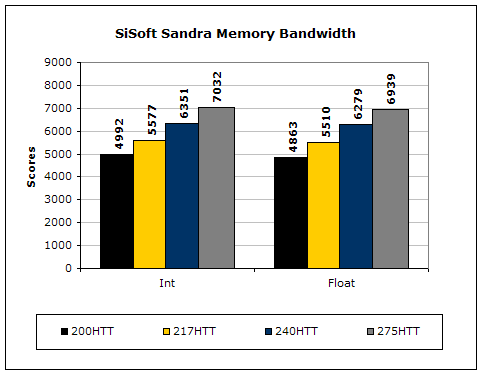
SiSoft Sandra is the most widely used memory bandwidth test. It can tell you the increase in performance from just lowering the latency timings.
Aida32
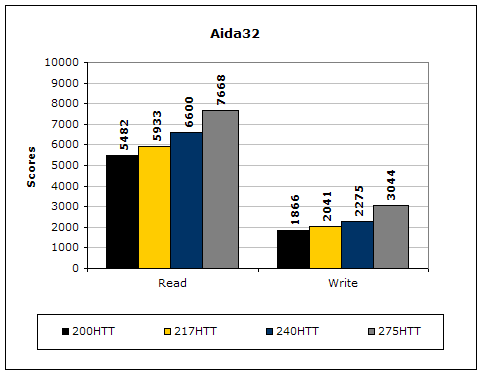
Much like Sandra, Aida32 tests the memory’s ability to read and write data in large chunks. The results are similar to the results in Sandra.
3DMark2001SE
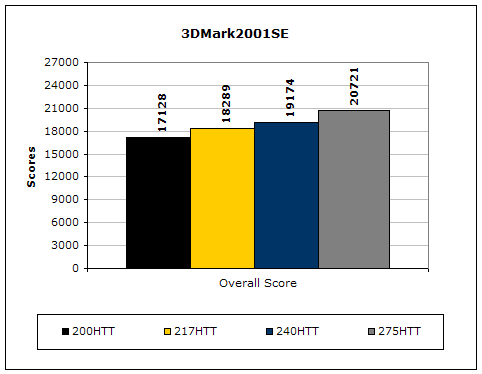
3DMark is probably the overclocker’s favorite benchmark. Unlike 3DMark2003, which stresses mainly the video card, 3DMark2001SE tests all of the system’s main components. Increasing the CPU speed, memory speed, and video card speeds will result in higher results in the final score.
PCMark
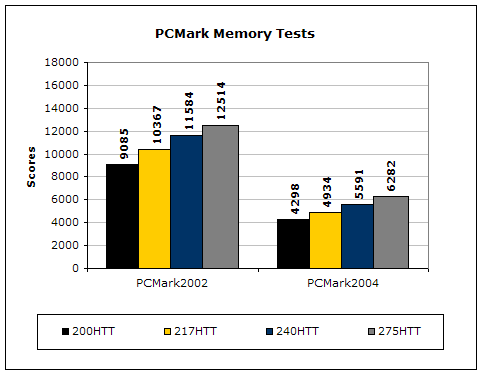
PCMark is another benchmark created by Futuremark. It tests the memory compression and decompression speeds in small to large chunks of data.
Results Continued
Far Cry
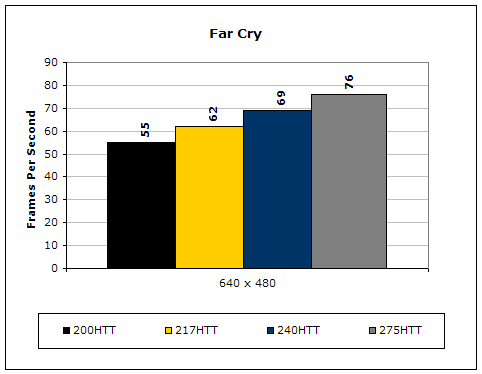
Far Cry is currently one of the most popular games and does a great job of taxing your system.
Unreal Tournament 2003:
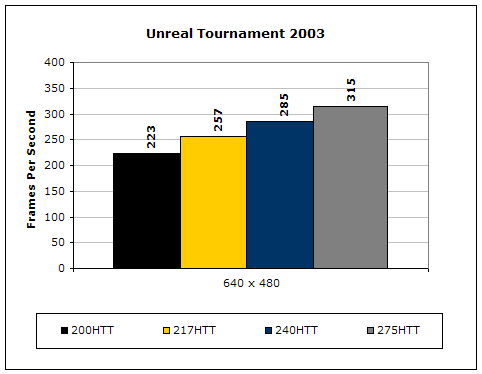
Although UT2K4 is out, UT2K3 is still a gamer’s choice and an overclocker’s benchmark. This game is more memory hungry than the younger brother. Much like the newer game, the performance difference is minimal.
Super PI
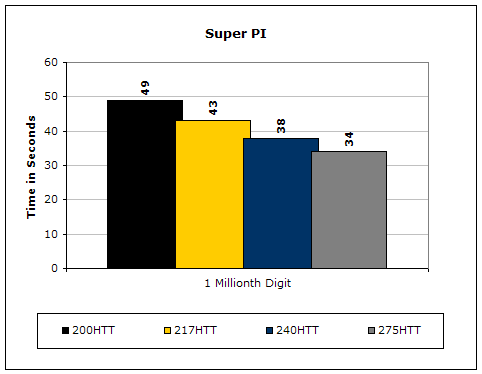
As the value of PI is an infinite value, Super PI is a speed test to find the digit you’re looking for. In this case, we chose the millionth digit. Super PI benefits greatly from higher HTT as well as low latencies.
PiFast
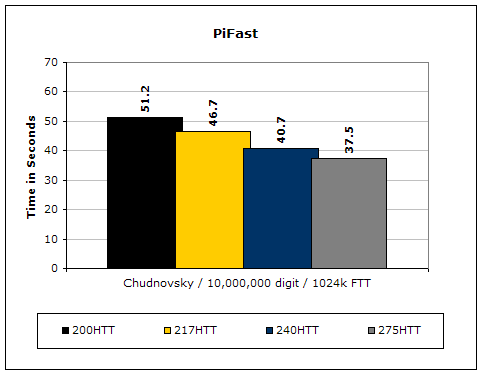
PiFast is similar to Super PI and the results can be greatly affected by a slight adjustment to the memory megahertz and latency.
Conclusion and Thoughts
Patriot’s version of low latency memory certainly gave me a nice first impression. It has been quite a success and provides tough competition to top rated companies and manufacturers. For Patriot’s first few lines of memory in the highly competitive market, it sure performed exceedingly well. My highest overclock with these two sticks of memory was a bit lower than expected. However, it ran rated speeds just fine and even ran tighter timings than it’s specifications had informed me of. The price is absolutely a steal for a 1GB dual channel kit, as it reaches speeds of the other famous name brands of memory. Patriot’s ram has quite a way to go until it outmatches other companies, but with their entry, they sure did an outstanding job. The PDC3200XBLK thus receives a recommendation with no hesitation.
John’s Addition:
Patriot’s offering of the TCCD based memory is definitely worth noticing. Many enthusiasts might have second doubts about the quality because the name Patriot PDP isn’t extremely well known. Rest assured, their memory is indeed good stuff. The overclocking potential of the PC3200+XBLK is excellent. Reaching 280HTT 2.5-3-3-7 1T would’ve earned it a Must-Have, but the 275HTT 2.5-3-3-7 1T is close and definitely outstanding. I know for a fact that these sticks used to use Brainpower 808 PCB. I’m not exactly sure why they moved to the 815 PCB, as the 808 has been proven to be the better PCB in terms of highest overclocks. However, the change to 815 didn’t seem to hinder anything. The price tag for the performance definitely deserves a high recommendation for all enthusiasts, budget and extreme users included.
Pros:
- Superb performance
- Overclockable (Highest overclock 275HTT @ 2.5-3-3-7)
- Highly competitive price (~$219.99)
- Lifetime warranty
- Brainpower PCB
Cons:
- None

We would like to thank Patriot for providing us the sample. If you have any questions or comments, feel free to hit us up in the forums. You can also check out more of our latest reviews on the front page.