

OCZ Platinum PC4800 Elite Edition 1GB Dual Channel Kit
Introduction
What’s the difference between the regular PC4800 memory and the new PC4800 Elite Edition? It all began when enthusiasts started to realize that OCZ had been using Samsung TCC5 IC’s in place of Samsung TCCD IC’s. The main reason why OCZ would do such a thing was not because they wanted to “cheat” anyone out of their money, but rather they wanted to help enthusiasts save on costs. It is true according to Samsung, that TCC5 is a lower grade chip, however it does not mean that it can not be just as good as TCCD. OCZ’s rigorous and strenuous speed binning procedure will ensure that enthusiasts get the highest quality TCC5 out there. Unfortunately, there are and always will be enthusiasts who demand to have TCCD, even if TCC5 can perform just as well and come at a lower cost. OCZ has heard the demand and will begin to provide enthusiasts with TCCD based memory, hence the Platinum PC4800 Elite Edition.
Our sample of the PC4800 was supposed to have TCC5 IC’s but we received TCCD instead. A mistake was made somewhere, but the memory was only able to overclock to 305MHZ max. The PC5000 DFI Special was TCC5 based and was only able to go as high as 313MHZ max. From those two sets of modules, it was already evident that quality speed binned TCC5 can perform just as well, and in this case, even better than TCCD. The new Elite Edition is supposed to be the solution for enthusiasts who beg for TCCD memory. Is the extra cost going to be worth it?
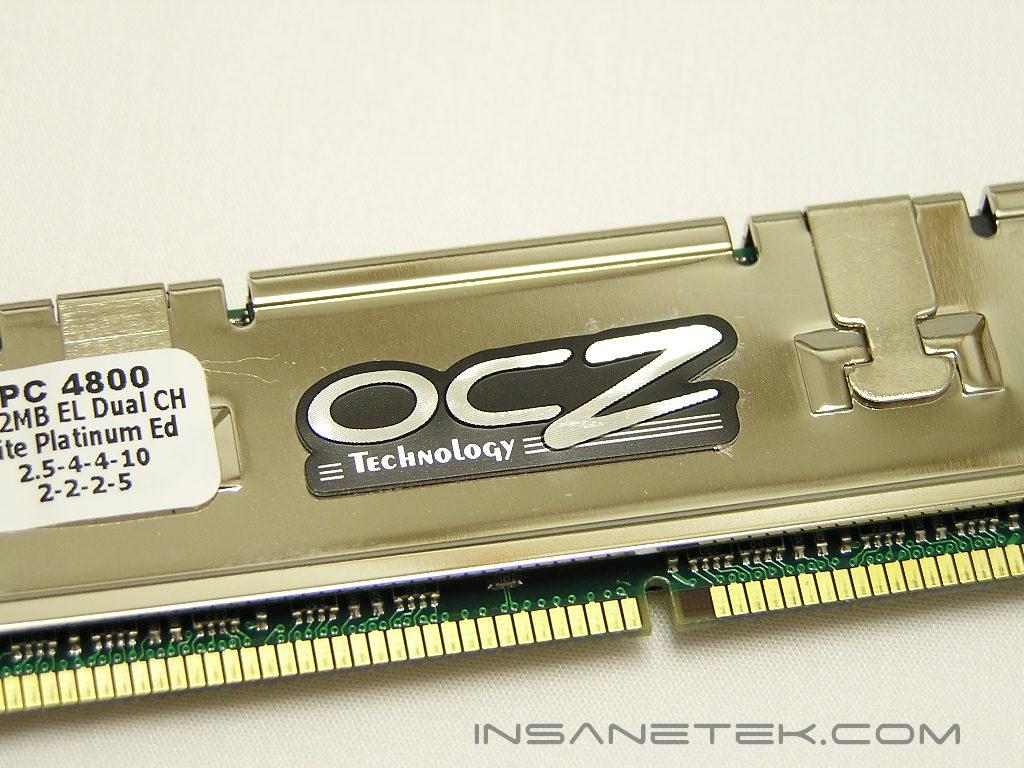
OCZ Platinum PC4800 Elite Edition
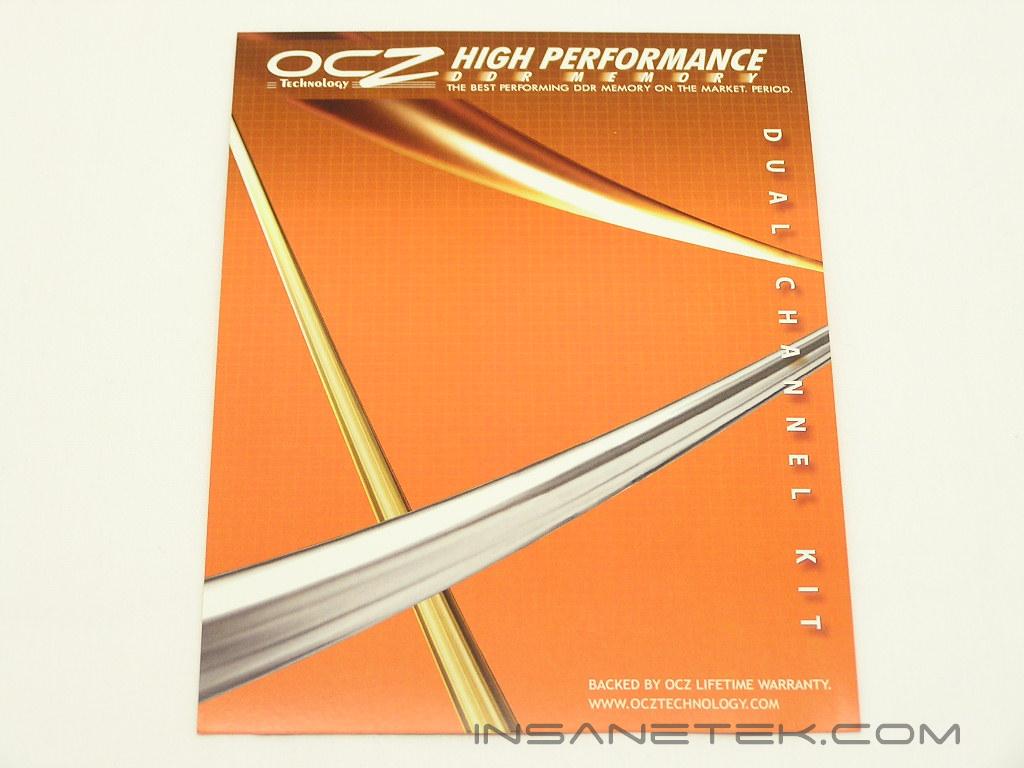
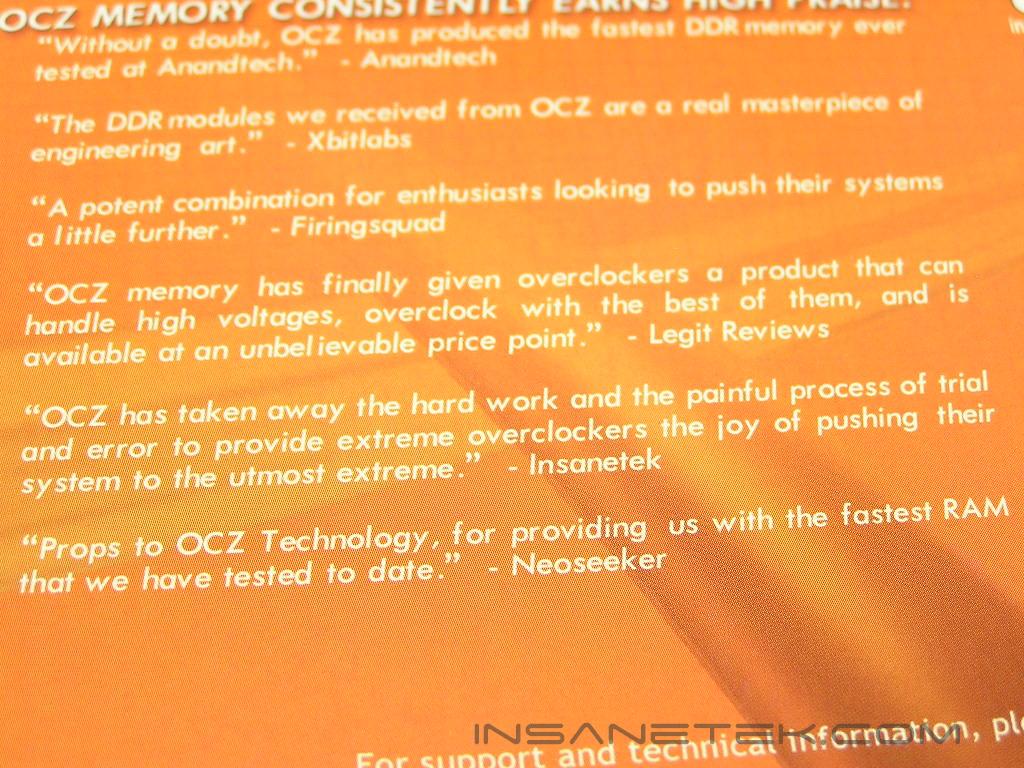
OCZ’s package continues to be a typical clamshell plastic tray, but the insert has been updated. The design shows a different look and has three “hair strands” of different colors. I stared at it and noticed that it appeared to show the three most popular OCZ heatspreader colors–Copper, Gold, and Platinum. It’s funny how things just appear when you stare at it long enough. On the back of the insert, there are new logos, awards, and quotes from various review sites. Do you like ours?
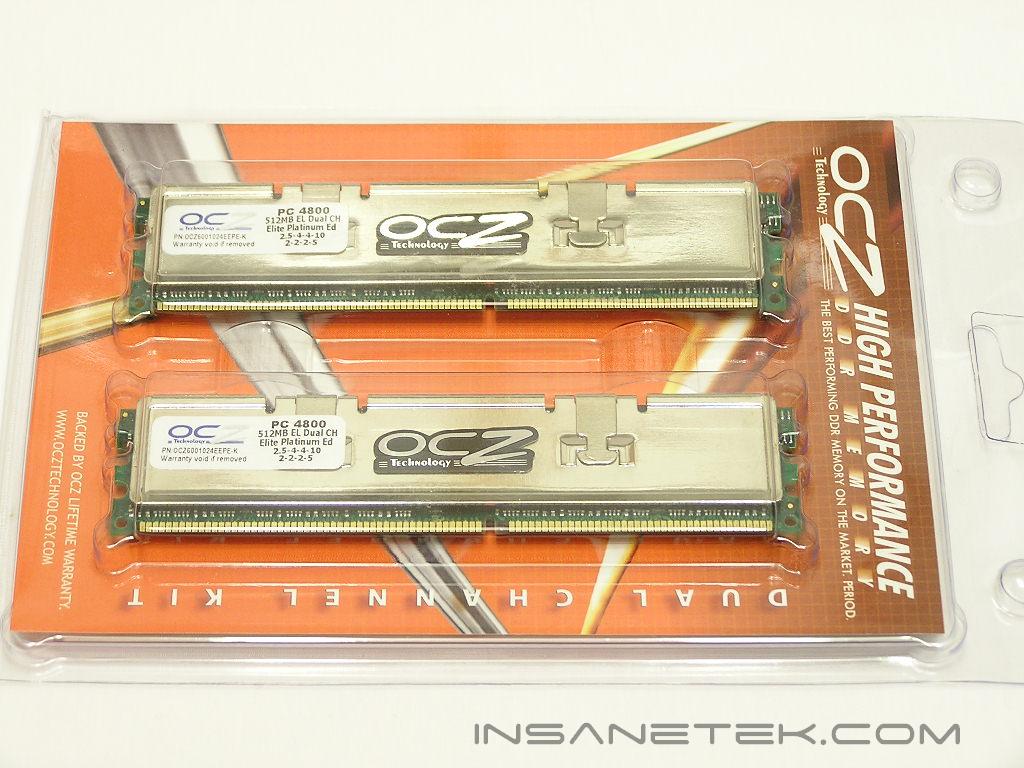

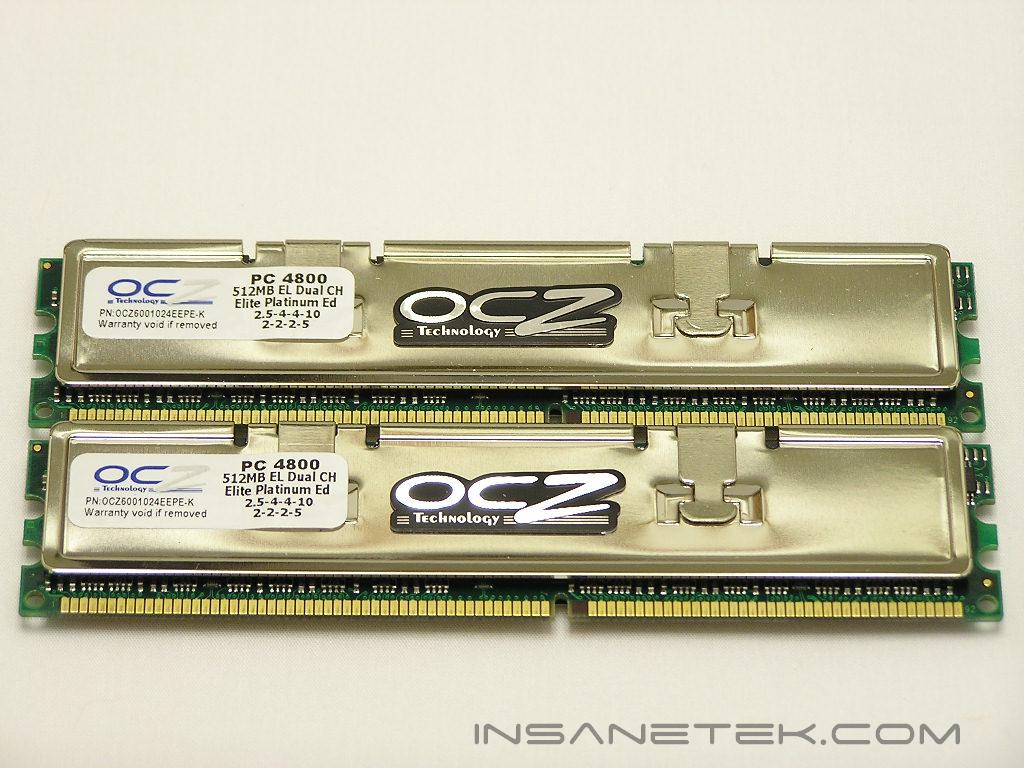
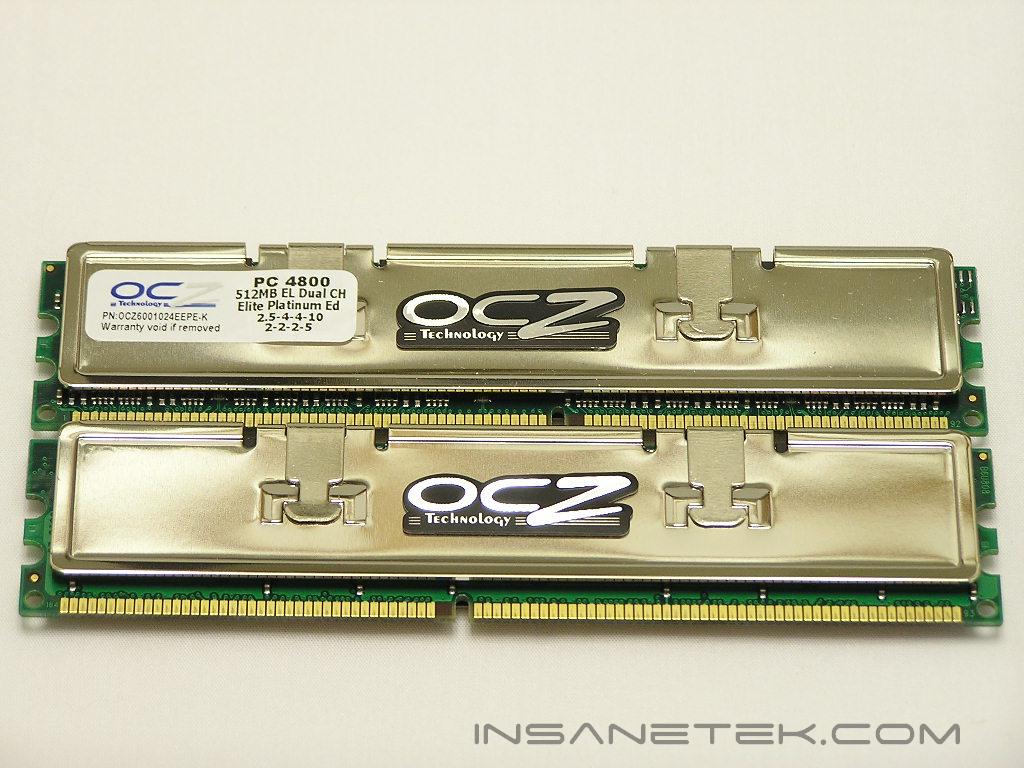
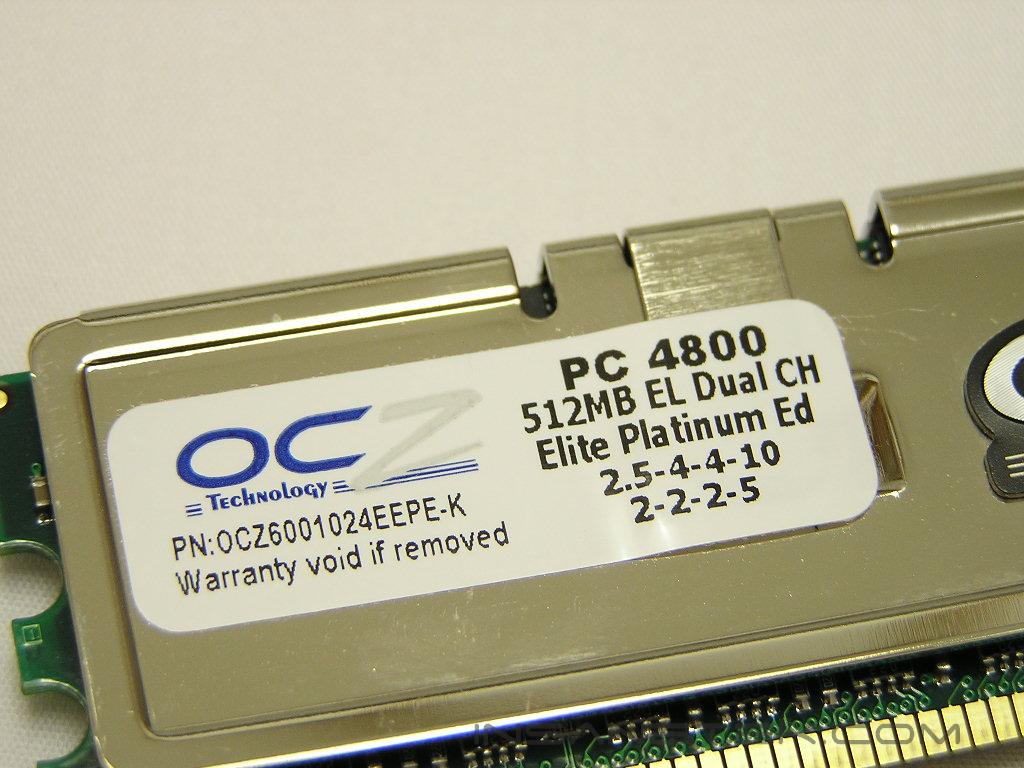
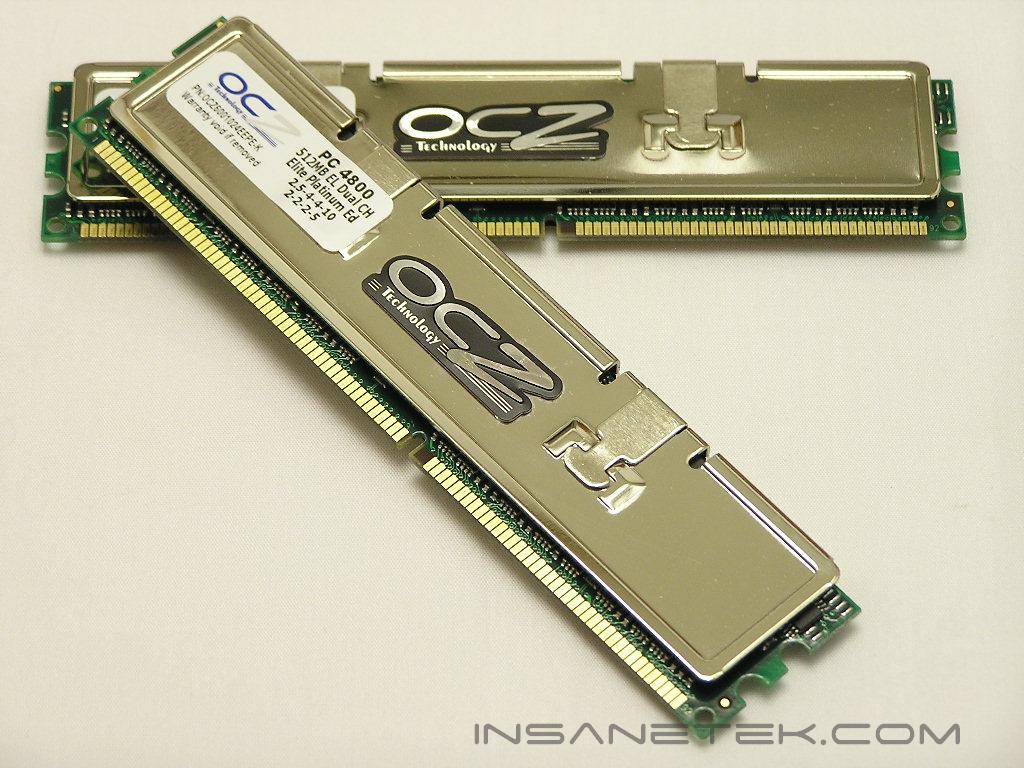
The Platinum PC4800 Elite Edition comes with a slightly different heatspreader that seems to be taking over the OCZ memory line. The heatspreaders are made of copper and have a nice reflective platinum mirror finish. The PC4800 Elite Edition has a dual speed rating. The memory is rated to run 200MHZ with timings of 2-2-2-5 and 300MHZ with timings of 2.5-4-4-10. Surprisingly, not many people are aware that not all TCCD based memory can run low latencies of 2-2-2-5 at 200MHZ. One such example would be the Gigaram PC3700. It overclocked pretty well, but couldn’t run the typical speed of 200MHZ at 2-2-2-5 at any voltage. The PC4800 Elite Edition is guaranteed to perform at both low latencies at 200MHZ and high frequencies at looser timings. From what I’ve heard, the speed binning process of the memory has been upgraded and is now even more rigorous than before. The sample of the Elite Edition comes with date code 519 TCCD and uses Brainpower 808 PCB. The Elite Edition is rated with a voltage of 2.8v but has OCZ’s EVP (Extended Voltage Protection) up to 3.0v.
Test System and Overclocking
Test System:
- AMD Athlon 64 3000+ Venice
- DFI LANParty UT nF4 Ultra-D
- 2 x 512MB OCZ Platinum PC4800 Elite Edition
- Sapphire Radeon X800
- Arctic Freezer 64
- Thermaltake PurePower 680W
Overclocking:
Keep in mind that during overclocking, the latencies are as follows: CAS-TRCD-TRP-TRAS
Throughout all tests, the multiplier has been kept at 8x to reduce any CPU bottlenecks. BIOS is flashed to the 414-3 and orange DIMM slots were used. Memory ratio is kept at 1:1.
I ran the memory at a default speed of PC3200 at 200MHZ with timings of 2-2-2-5 at 2.8v. As expected, the memory ran without a problem. With the timings kept at 2-2-2-5 and the voltage at 2.8v, the memory pushed all the way to 225HTT before beginning to receive an error. 225HTT with TCCD at such low timings is actually pretty good. The majority of the TCCD based memory could barely do 220HTT at any voltages. I increased the voltage to 3.0v and managed to get 230HTT out of the memory. Increased voltages beyond 3.0v didn’t help increase the overclocking headroom at such low latencies.
The next level of overclocking begins with looser timings, to see just how high the Elite Edition TCCD memory would go. The sweet spot for the voltage seems to be 2.8v (at least that’s what my sample liked). Any higher or lower would cause unwanted memory errors. With 2.8v and timings of 2.5-3-3-7, the Elite Edition reached a rather high 290HTT. The older TCCD IC’s with earlier date codes were able to do 300MHZ, with timings of 2.5-3-3-7, with about 3.0v, but those are currently very hard to find. If you are fortunate to find one, you’ll still have to pay a premium for it. The newer date code TCCD’s haven’t been overclocking very well with timings of 2.5-3-3-7. The GeIL ONE PC4800 and the Patriot PC4800 both didn’t overclock very well with timings of 2.5-3-3-7. The highest they were able to reach was a rough 270MHZ or less. I loosened the latencies to 2.5-4-3-7 and reached a pleasant 320HTT. The results were excellent with a mere 2.8v. Unfortunately, the overclocking stopped there. Looser timings of 2.5-4-4-8 didn’t help, while increased voltages did absolutely nothing but provide additional problems.
Overclocking Results:
- 200HTT 2.0-2-2-5 1T 2.8v
- 225HTT 2.0-2-2-5 1T 2.8v
- 230HTT 2.0-2-2-5 1T 3.0v
- 290HTT 2.5-3-3-7 1T 2.8v
- 320HTT 2.5-4-3-7 1T 2.8v
Results
A series of memory intensive benchmarks will be run to test the performance of our sample. The other tests will be based on common benchmark programs, such as 3DMark and PCMark. Real life performance differences will be tested through current games, such as Far Cry and UT2004. Memory bandwidth benchmarks will be based off of SiSoft Sandra and Everest Home Edition. Super PI and PiFast will also be used to test memory performance, as the benchmark benefits largely from FSB increases.
SiSoft Sandra Memory Bandwidth
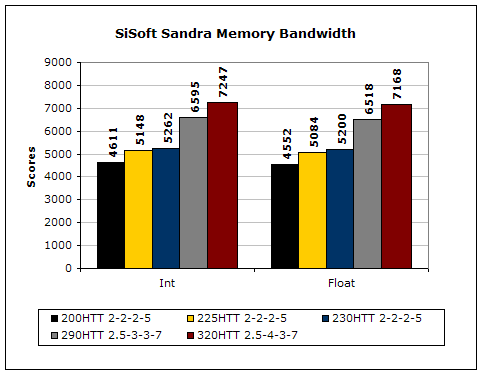
SiSoft Sandra is the most widely used memory bandwidth test. It can tell you the increase in performance from just lowering the latency timings.
Everest Home Edition
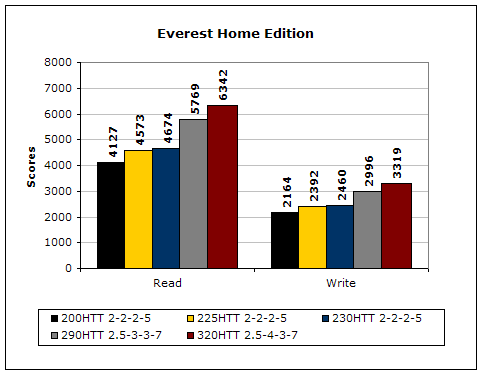
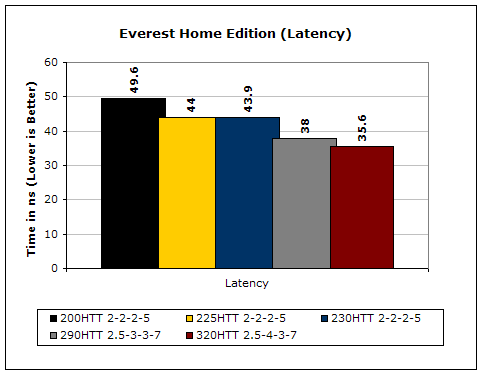
Much like Sandra, Everest Home Edition tests the memory’s ability to read and write data in large chunks. The results show that the lower latencies seem to help just a little with performance.
3DMark2001SE
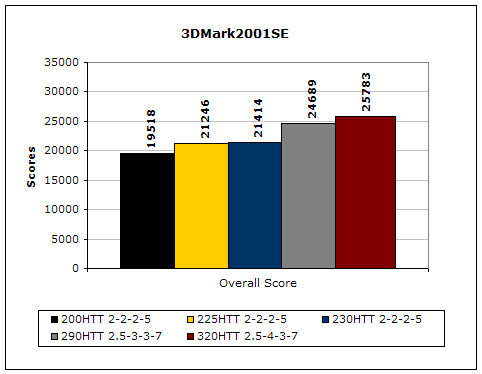
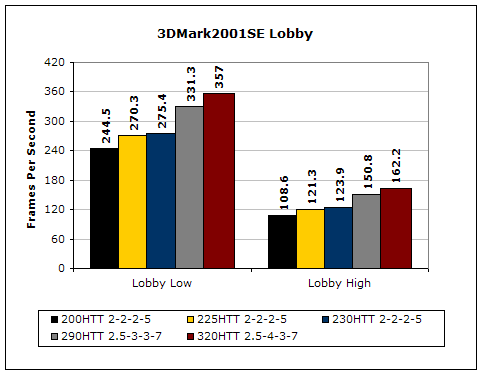
3DMark is likely the overclocker’s favorite benchmark. Unlike 3DMark2003, which stresses mainly the video card, 3DMark2001SE tests all of the system’s main components. Increasing the CPU speed, memory speed, and video card speeds will result in higher results in the final score.
Results Continued
Far Cry
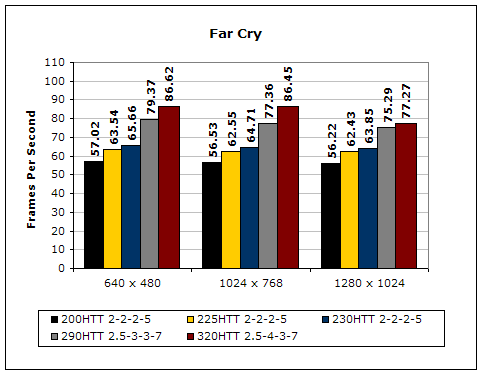
Since Far Cry is a game, the performance results will be very similar to 3dMark2001. I ran the benchmark at 640x480, so the benchmark would not be too GPU dependent. The tests under 1024x768 and 1280x1024 are an approximation of what kind of frames you’ll be getting. While the results are similar to 3dMark2001 in performance, this benchmark will give more significant results, because Far Cry is a lot more demanding.
Unreal Tournament 2004
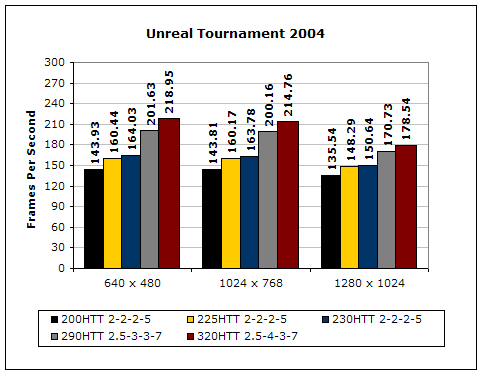
Unreal Tournament is another popular game engine to test overall system performance. Here, we can see the same results as Far Cry and 3dMark2001. Like Far Cry, UT2004 was also run at 640x480 to limit GPU dependency. The other resolutions provide an approximation of actual game play performance.
PCMark2002
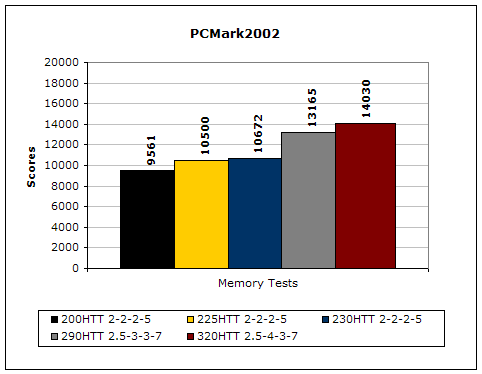
PCMark is another benchmark created by Futuremark. It tests the memory compression and decompression speeds in small to large chunks of data.
Super PI
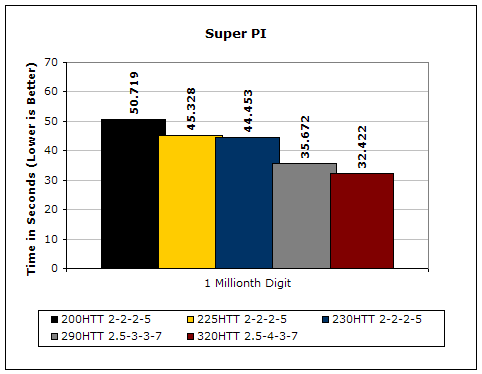
Since the value of PI is an infinite value, Super PI is a speed test to find the digit you’re looking for. In this case, we chose the millionth digit. Super PI benefits greatly from higher FSB, as well as low latencies.
PiFast
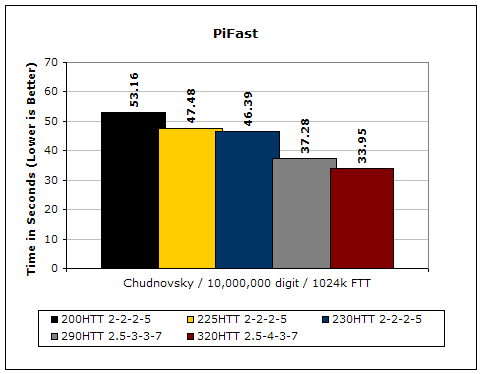
PiFast is similar to Super PI. The results can be greatly affected by a slight adjustment to the memory megahertz and latency.
Conclusion and Thoughts
OCZ continues to surprise me with each new memory introduction. The Platinum PC4800 was awesome, but then was surpassed by the PC5000 DFI Special. Now the Elite Edition beats out both previous memory with stunning overclocking results. I had no doubts that the Elite Edition wouldn’t be disappointing, but the main thing about this memory is that OCZ went back to use TCCD IC’s. The performance and overclocking results of the Elite Edition basically answers the question of whether TCCD is better than TCC5. If you look strictly at the performance and overclocking headroom, then yes it is slightly better. The TCC5 PC5000 DFI Special reached 313MHZ while the TCCD PC4800 Elite Edition reached 320MHZ. The difference between the two is 7MHZ, and to overclockers, that is a big difference. Then again, there is going to be a price premium charged for these great Elite Edition modules. TCCD is more expensive than TCC5, so the price gap between the two will be more than just $20. It basically comes down to what’s more important to you.
Personally, I still continue to find OCZ’s TCC5 based memory to be a great choice. The regular Platinum PC4800 is going to be at a guaranteed speed of 300MHZ, while coming in at a much lower cost than the TCCD based Elite Edition. For a typical overclocker, a Venice 3000+ paired with 300MHZ memory would result in a great performing 2.7GHZ processing power. For the extreme hardcore enthusiasts who absolutely need neck breaking performance, the Elite Edition would definitely be the top choice. The memory is so incredible that I am going to keep it in my testbed.
Pros:
- Platinum mirror finish copper heatspreaders
- Overclocks well with low latencies
- Overclocks superbly with a bit looser latencies
- Very high quality speed binned TCCD IC’s
Cons:
- Probably the cost

We would like to thank OCZ for providing us the sample. If you have any questions or comments, feel free to hit us up in the forums. You can also check out more of our latest reviews on the front page.