

OCZ Platinum PC4800 1GB Dual Channel Kit
Introduction
OCZ Technology is a popular choice for overclocking memory. Since the BH5’s were discontinued, a hunt for a low latency replacements started. The Samsung TCCD chips allowed low latency operations at 200MHZ, but not high memory scaling with the low latencies. OCZ surprised everyone with their introduction of the Gold Voltage Extreme memory. Although the PC3200 version was rated at 2-3-3 with 2.8v, higher voltages allowed low latencies of 2-2-2.
Our latest OCZ review was about the OCZ Gold PC4000 VX memory. Supplying 3.3v to the memory, enthusiasts were guaranteed a whopping 250MHZ with latencies of 2-2-2. That’s not too shabby. Randy even reached 260MHZ 2-2-2 with slight volatage adjustments. Randy also compared the low latency VX to high frequency scaling TCCD chips. Both tests were conducted with the same CPU processing speed, with TCCD running 1:1 and the VX running with a divider. For more results, check the OCZ Gold PC4000 VX review. The VX was able to compete against TCCD’s high speeds, but TCCD chips still won by a minute margin. While high speed TCCD is attractive, it’s difficult to find. TCCD overclocking results are also inconsistent. Enthusiasts often go through multiple purchases before finding the right kit. All those transactions are a pain. Yet now, OCZ has the fastest DDR available, the Platinum PC4800.
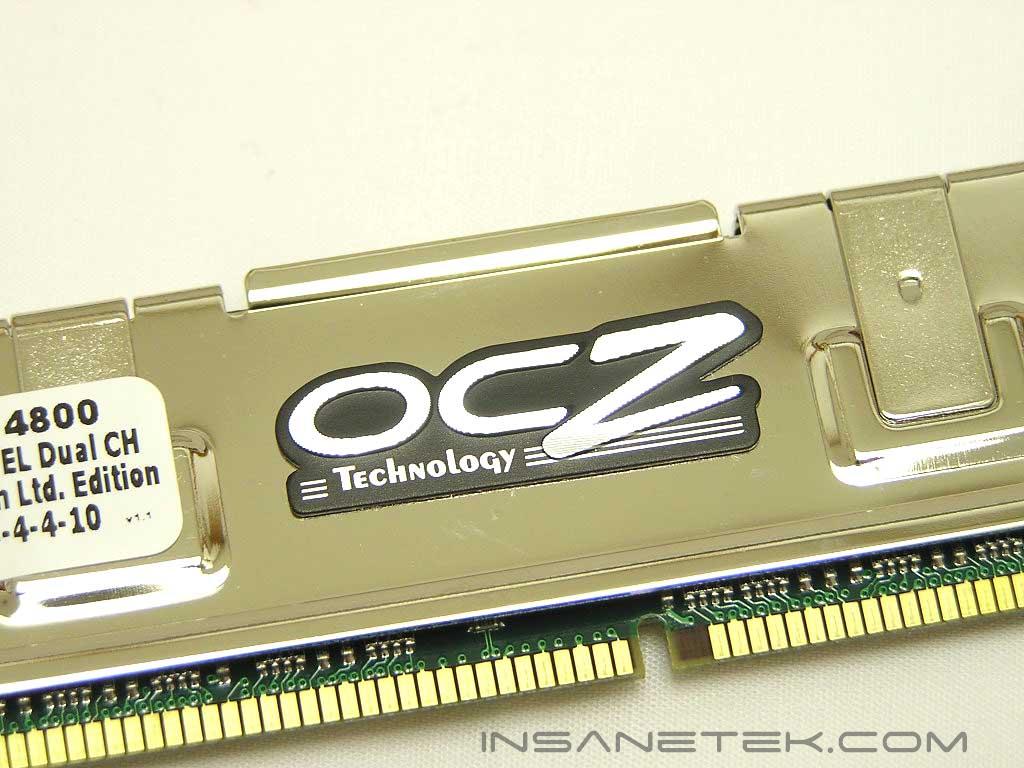
OCZ Platinum PC4800
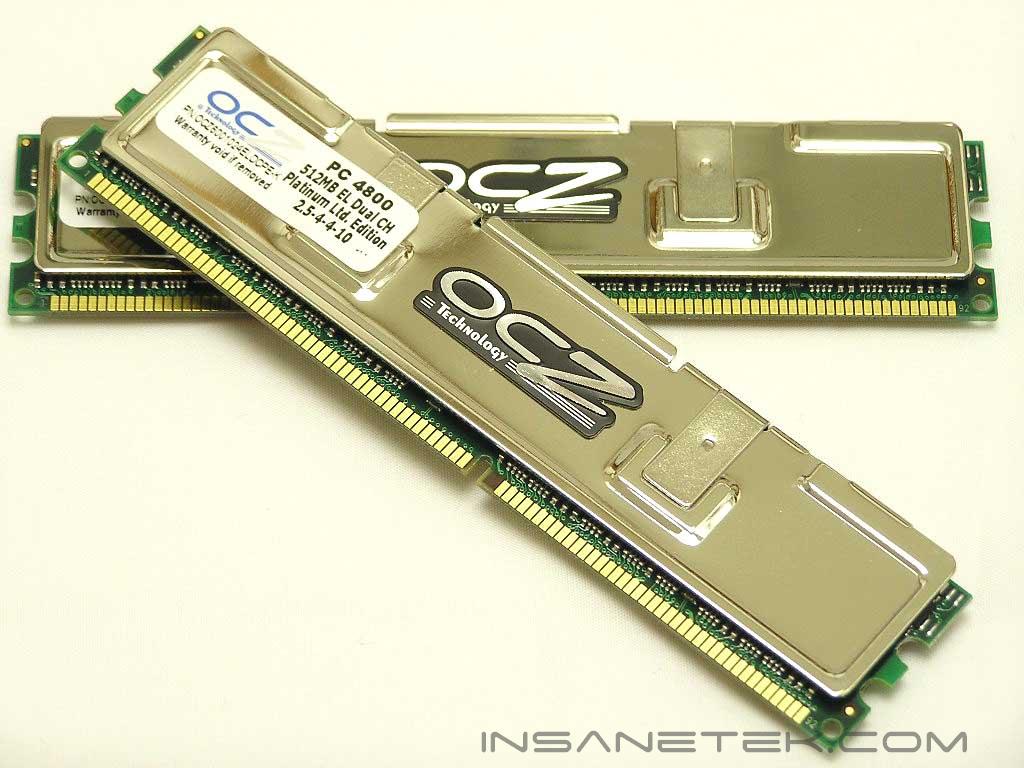
The OCZ Platinum PC4800 features the overclocking friendly Samsung TCCD chips. I peeked under the heatspreaders to find week 507 TCCD chips. The best TCCD chips are still week 431 and 437. If OCZ can ensure the memory runs at specified speeds and timings, then there’s nothing much to worry about. Like all of their high end memory, the Platinum PC4800 uses the Brainpower 808 PCB for the best overclocking results possible.
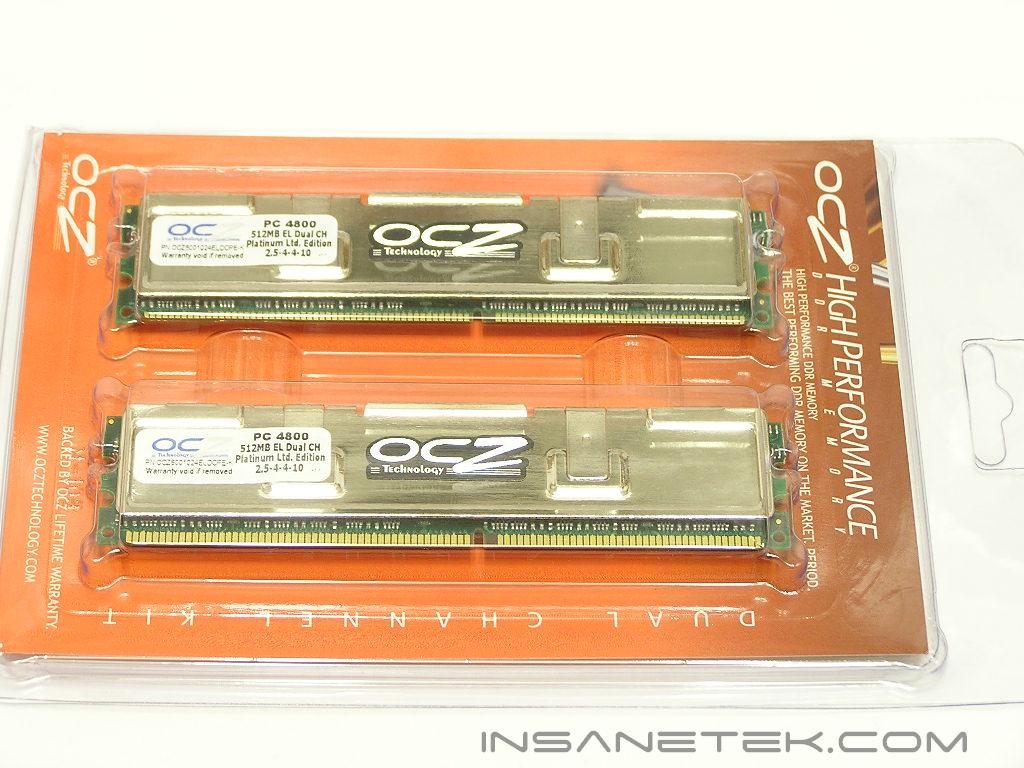
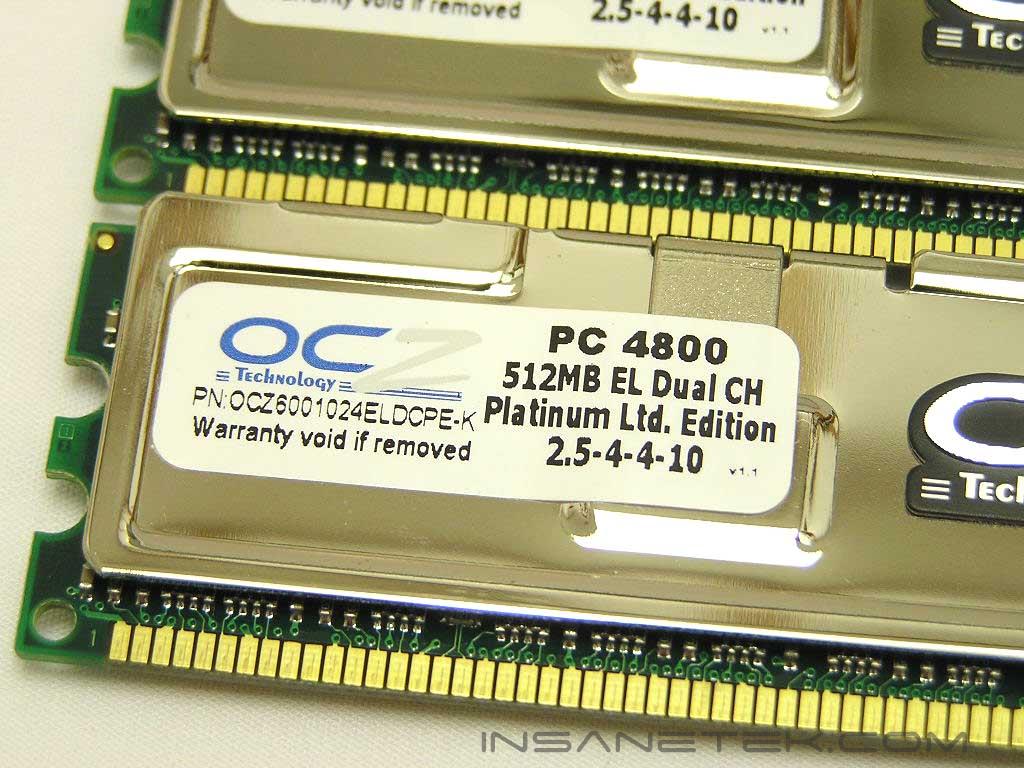
As always, OCZ’s Platinum line of memory is decorated with a platinum mirror finish over copper heatspreaders . The platinum finish is very eye-catching. The small sticker label lists the specified timings of the PC4800 memory, 2.5-4-4-10. A quick check over at OCZ’s website reveals the PC4800 to be rated at 2.85v for 300MHZ. The memory has been tested to run 300MHZ with a command rate of 2T, buy may also run 1T on capable motherboards. Yet, I didn’t like the fact that it was rated at 2T, because 1T provides the best performance.
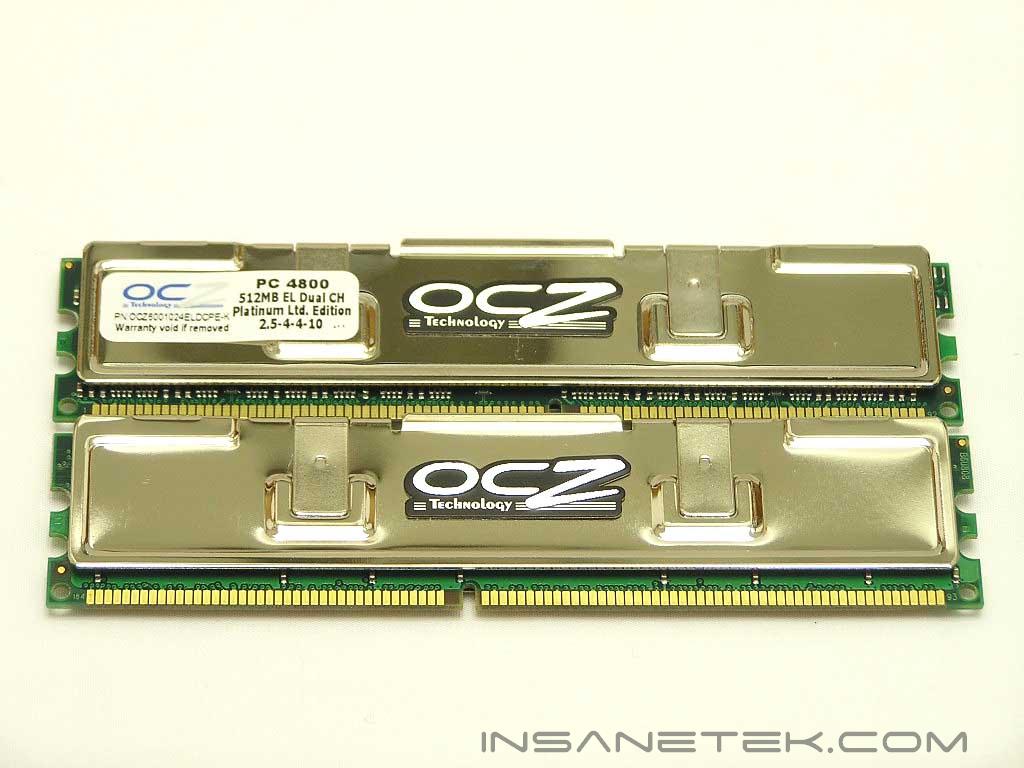
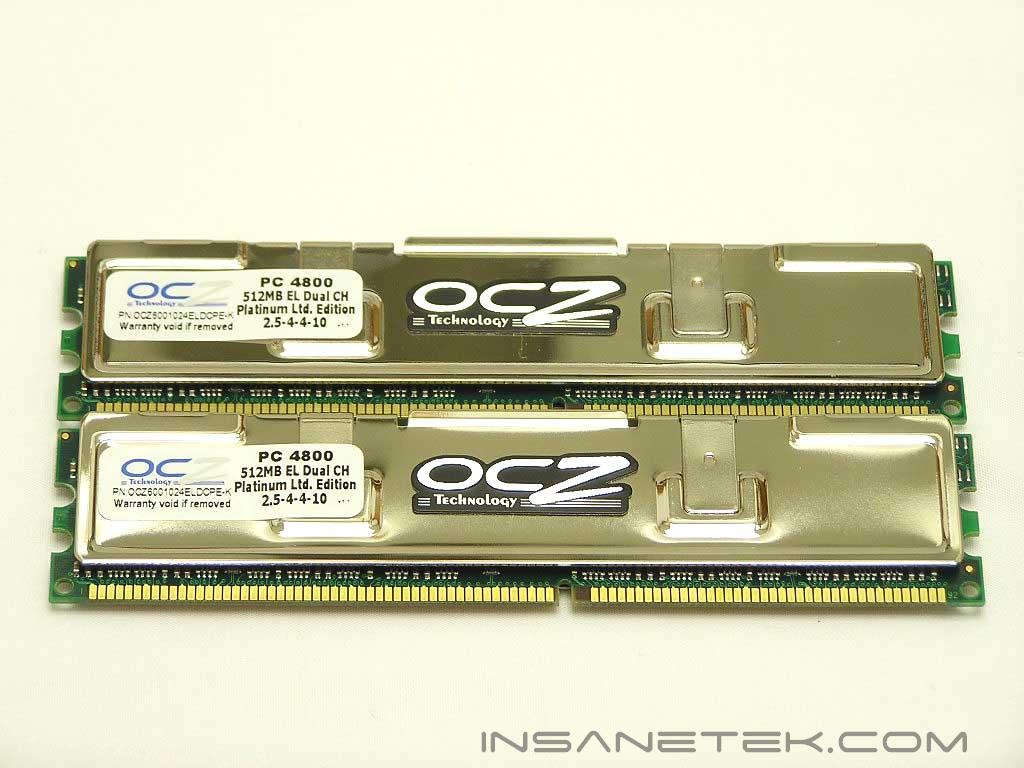
UPDATE:
We have received word from our friends at OCZ that the Platinum PC4800 is supposed to come with Samsung TCC5 ICs. For those who have a sticker label with the small print of “v1.1”, it means that your modules are using Samsung TCC5 chips.
Test System and Overclocking
Test System:
- AMD Athlon64 3000+ Winchester
- DFI LANParty UT nF4 Ultra-D
- 2 x 512MB OCZ Platinum PC4800
- ATI Radeon X800 (400/490)
- Enermax Noisetaker 470W
Because my processor cannot reach 9x300HTT, all tests will be conducted with a multiplier of 8x. This is to provide proper scaling of performance as memory and CPU speeds increase.
Overclocking:
Keep in mind that during overclocking, the latencies are as follows: CAS-TRCD-TRP-TRAS
Knowing that the Platinum PC4800 uses TCCD chips, I knew it was capable of running 200MHZ with latencies of 2-2-2-5. There were no problems at all. I won’t be wasting time here going through all stages of latencies, but rather shoot for the highest settings the memory will allow. If you’re actually going to use this memory in your system, or even plan to purchase it, don’t put it to waste by running it at low speeds. The Platinum PC4800 has one goal: to be the fastest DDR you can buy. Immediately I shot for 300HTT with 2.5-4-4-10 2T. As I expected, the memory performed fine. I dropped the command rate to 1T and was greeted with perfectly stability. The memory is already impressing me. I tightened the timings down to 2.5-3-3-7 1T and was only able to reach 260HTT stablely. The only disappointment with the Platinum PC4800 was the overclock at 2.5-3-3-7 1T. 260HTT is far from being good. The majority of the TCCD/Brainpower memory we’ve tested have hit beyond that. Even though the overclock with 2.5-3-3-7 1T wasn’t superb, keep in mind that the memory is intended for 300HTT and beyond. I loosened TRCD to 4 and hit jackpot. With timings of 2.5-4-3-7 1T, I went all the way to 305HTT stable. The surprising part is that it required only 2.8v. Increasing voltages at anytime didn’t help, but only increased heat output and eventually forced the memory to become unstable. I loosened to 2.5-4-4-8 and the command rate to 2T, but didn’t gain much more. The results for the Platinum PC4800 are impressive, to say the least.
Throughout the entire testing process, the memory did get quite warm and a fan was used to help keep things cool. With any DDR running at such high speeds, heat will be an issue.
Overclocking Results:
-
200HTT 2.0-2-2-5 1T 2.8v
-
260HTT 2.5-3-3-7 1T 2.8v
-
305HTT 2.5-4-3-7 1T 2.8v
-
300HTT 2.5-4-4-10 1T 2.8v
Results
A series of memory intensive benchmarks will be run to test the performance of our sample. The other tests will be based on common benchmark programs such as 3DMark and PCMark. Real life performance differences will be tested through current games such as Far Cry and UT2004. Memory bandwidth benchmarks will be based off of SiSoft Sandra and Everest Home Edition. Super PI and PiFast will also be used to test memory performance, as the benchmark benefits largely from FSB increases.
SiSoft Sandra Memory Bandwidth
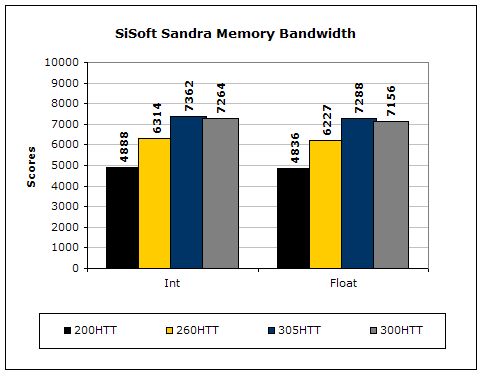
SiSoft Sandra is the most widely used memory bandwidth test. It can tell you the increase in performance from just lowering the latency timings.
Everest Home Edition
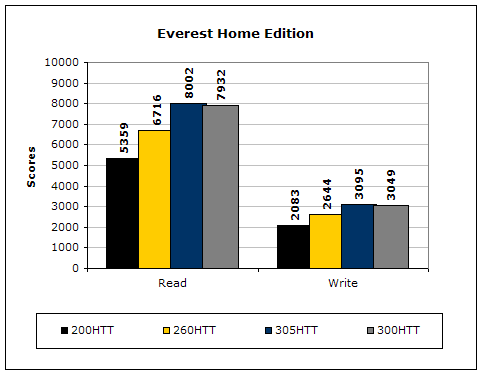
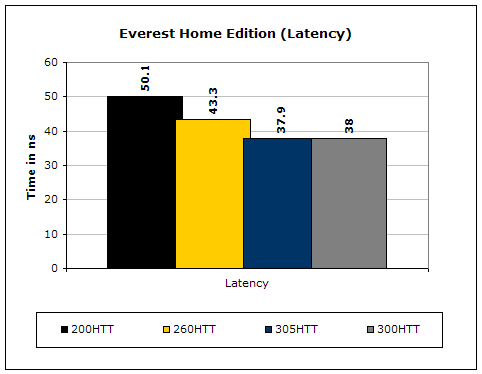
Much like Sandra, Everest Home Edition tests the memory’s ability to read and write data in large chunks. The results show that the lower latencies seem to help just a little with performance.
3DMark2001SE
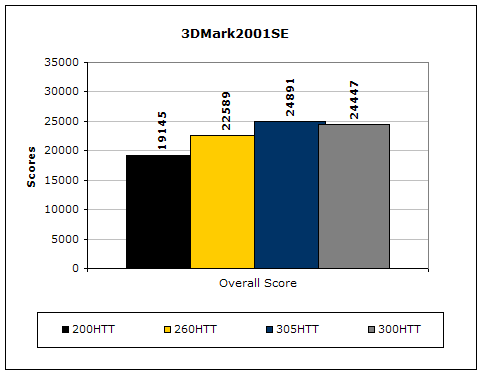
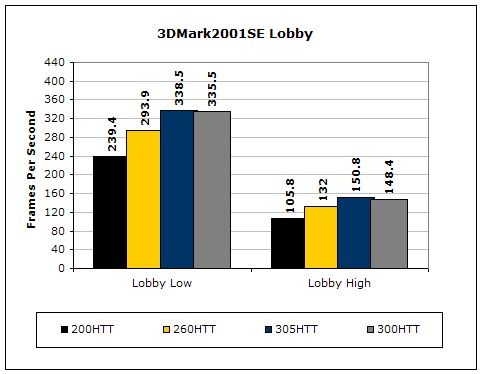
3DMark is probably the overclocker’s favorite benchmark. Unlike 3DMark2003, which stresses mainly the video card, 3DMark2001SE tests all of the system’s main components. Increasing the CPU speed, memory speed, and video card speeds will result in higher results in the final score.
Far Cry
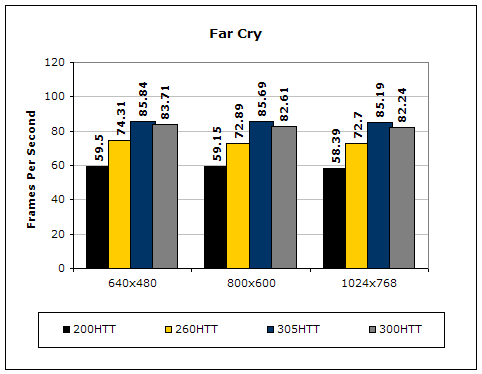
Since Far Cry is a game, the performance results will be very similar to 3dMark2001. I ran the benchmark at 640x480 so the benchmark would not be too GPU dependent. The tests under 1024x768 and 1280x1024 are an approximation of what kind of frames you’ll be getting. While the results are similar to 3dMark2001 in performance, this benchmark will give more significant results because Far Cry is extremely demanding.
Results Continued
Unreal Tournament 2004
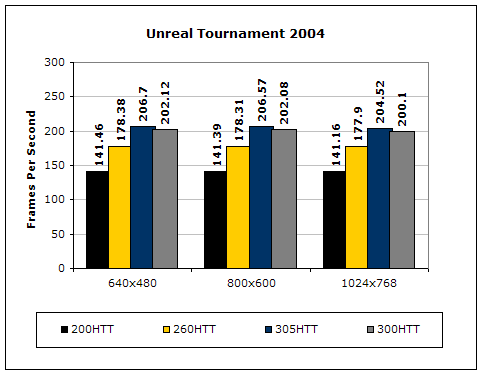
Unreal Tournament is another popular game engine to test overall system performance. Here, we can see the same results as Far Cry and 3dMark2001. Like Far Cry, UT2004 was also run at 640x480 to limit GPU dependency. The other resolutions are to give an approximation of actual gameplay performance.
PCMark2002
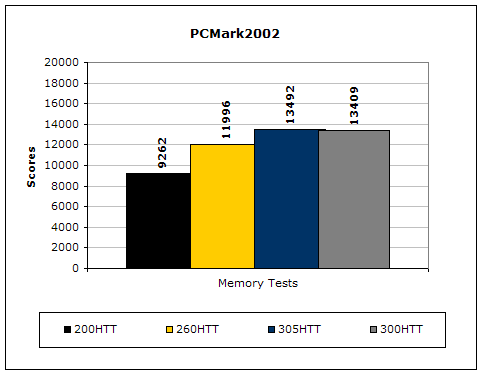
PCMark is another benchmark created by Futuremark. It tests the memory compression and decompression speeds in small to large chunks of data.
Super PI
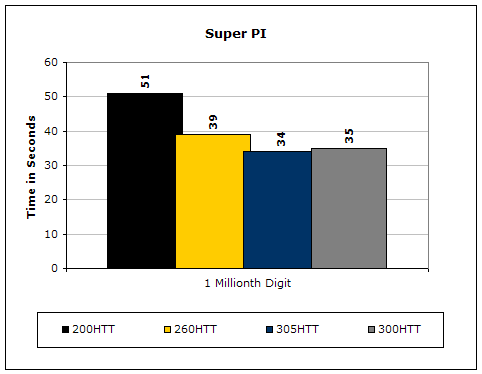
Since the value of PI is an infinite value, Super PI is a speed test to find the digit you’re looking for. In this case, we chose the millionth digit. Super PI benefits greatly from higher FSB as well as low latencies.
PiFast
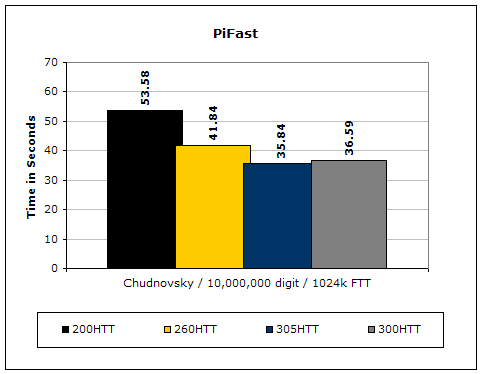
PiFast is similar to Super PI and the results can be greatly affected by a slight adjustment to the memory megahertz and latency.
Conclusion and Thoughts
OCZ’s new Platinum PC4800 is simply the fastest DDR memory available. If you can recall the OCZ Gold PC4000 VX review, the TCCD based Centon reached higher speeds, but only after careful handpicking and testing. The process is definitely grueling. I know plenty of enthusiasts who have gone through kits, still unable to find TCCD memory that can hit 300HTT with good timings. If they do indeed find TCCD that hits 300HTT, it’ll most likely run with a CAS latency of 3 and lose quite a bit of performance. OCZ has taken away the hard work and the painful process of trial and error to provide extreme overclockers the joy of pushing their system to the utmost extreme. The only gripe I have with the Platinum PC4800 is the price tag. Priced at over $300 for a 1GB dual channel kit is not cheap. But then again, you won’t be able to find other memory this good right out of the box. If you’re going to build an extreme overclocking setup, spending the extra $50 is well worth it. The Platinum PC4800 was ready to rock at 300HTT with no burning in required. As the saying goes, you get what you pay for. In this case, you get even more. The PC4800 is the best DDR memory I’ve ever laid hands on, allowing higher than rated speeds and latencies.
Pros:
- Beautiful platinum mirror finish
- Overclocks extremely well
- Runs better than specified timings
- Only needs 2.8v
- Extreme performance
Cons:
- High price tag (but can’t be helped, you have to pay to get the best goods)
- Needs additional cooling at high speeds

We would like to thank OCZ for providing us the sample. If you have any questions or comments, feel free to hit us up in the forums. You can also check out more of our latest reviews on the front page.