

OCZ Platinum PC3200 Rev2 1GB Dual Channel Kit
Introduction
Today we have OCZ’s Enhanced Latency Platinum Revision 2 PC3200. OCZ’s EL series focuses on low latencies at all of their rated speeds, making it an overclocker’s dream. The Platinum series is just one of the many groups of memory that OCZ produces. OCZ’s primary goal is customer satisfaction and their warranty assures that. OCZ does not only produce memory, but power supplies, cooling solutions, and a DDR booster, which allows the user to adjust memory voltage higher than what many motherboards allow. Read on to find out just how well the Platinum PC3200 Rev2 performs.
OCZ Platinum PC3200 Rev2
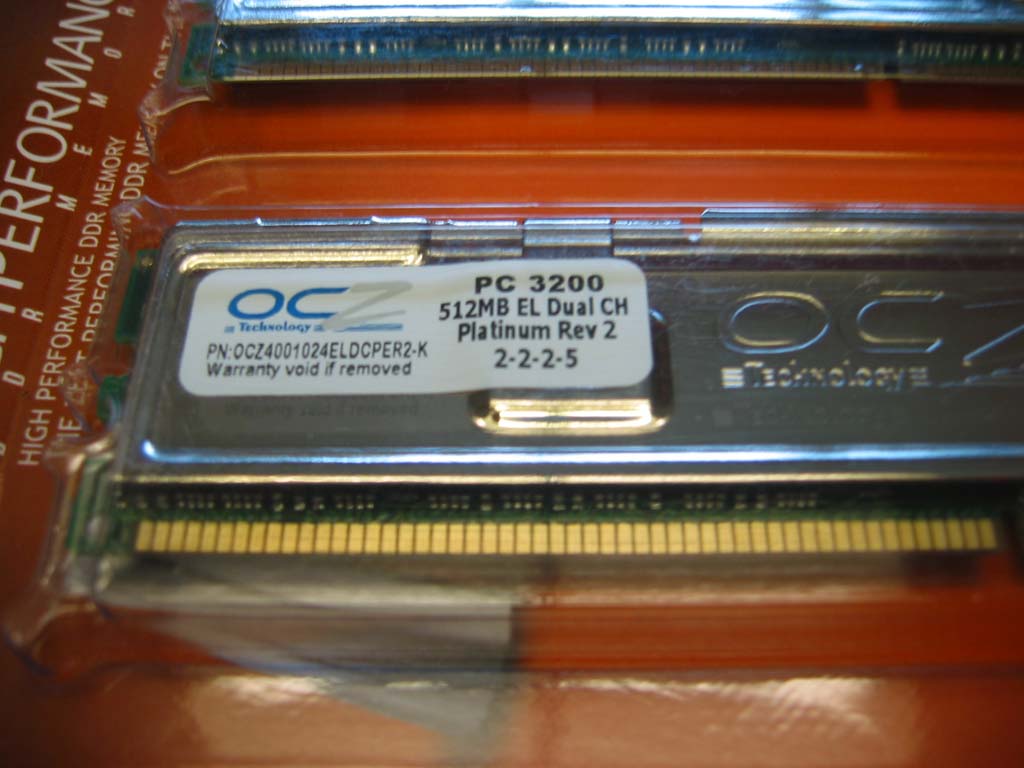
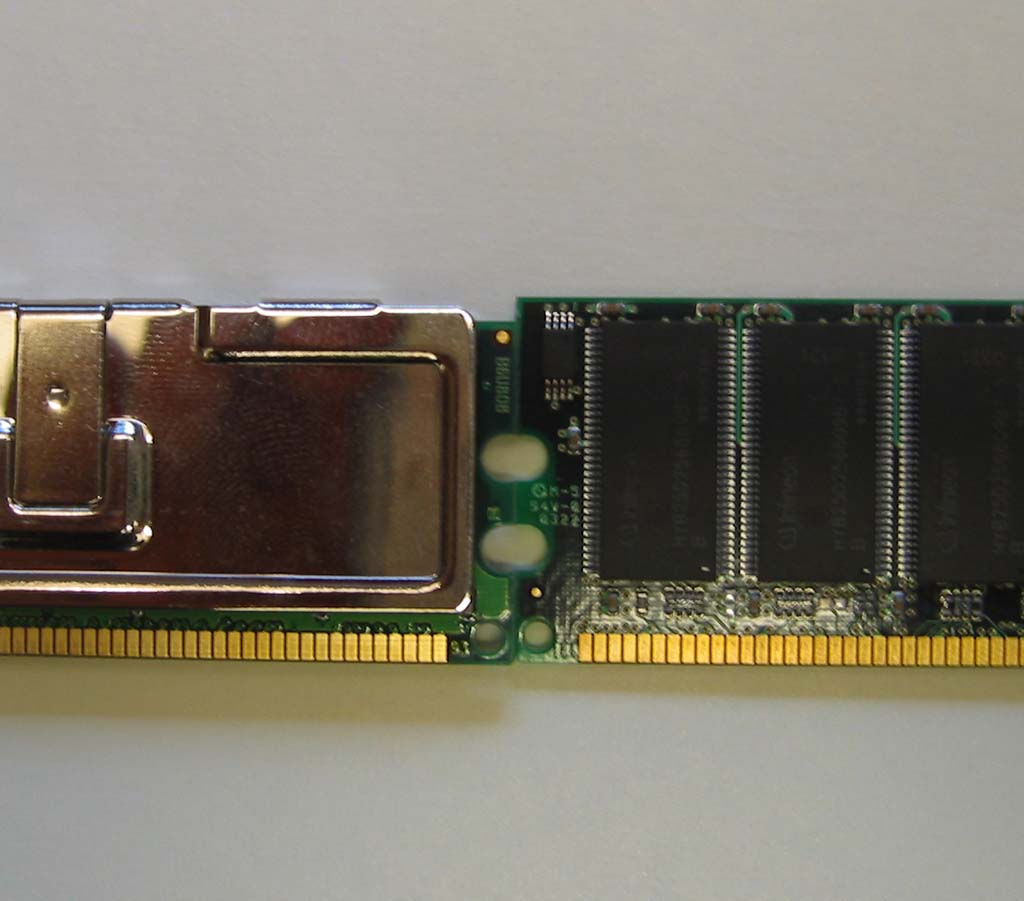
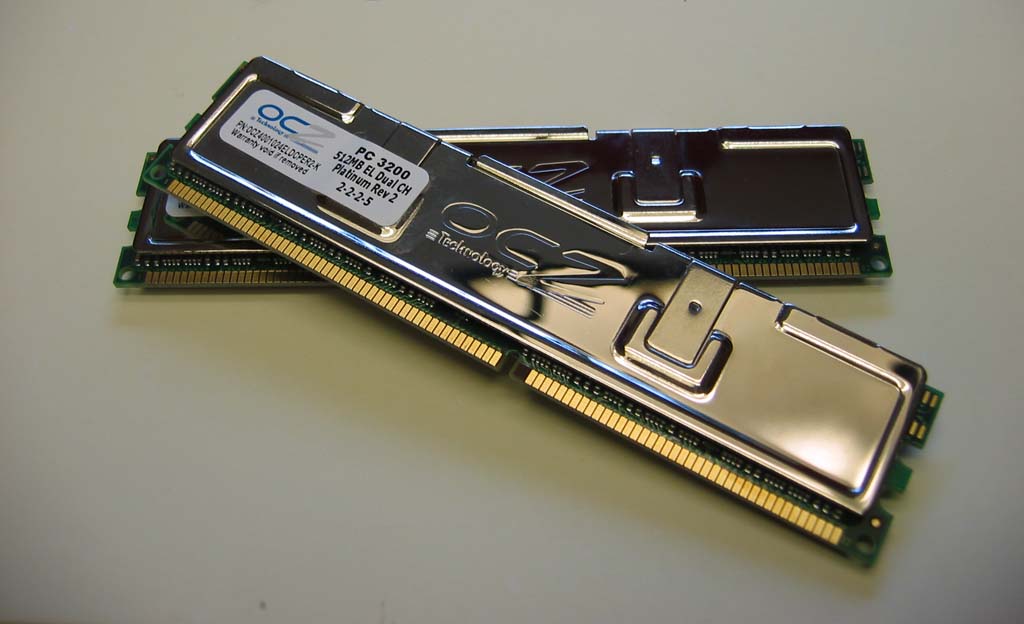
At first you’ll notice the shocking orange backdrop of the package, followed by the beautiful and shiny engraved heatspreaders. These sticks are from an earlier production of the Rev2, as OCZ has started using stickers of their logo.
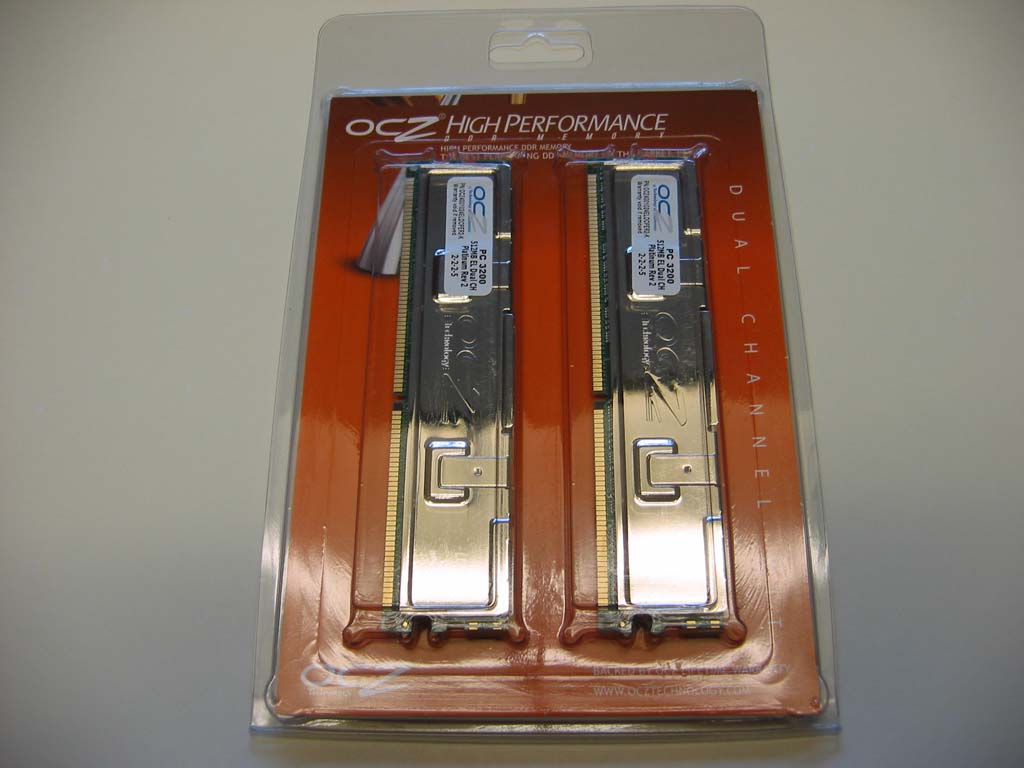
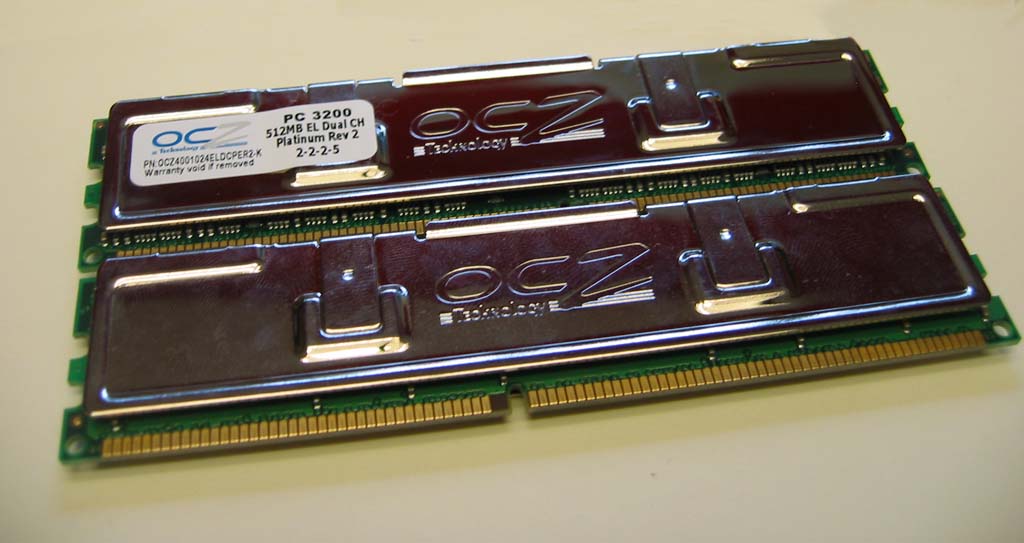
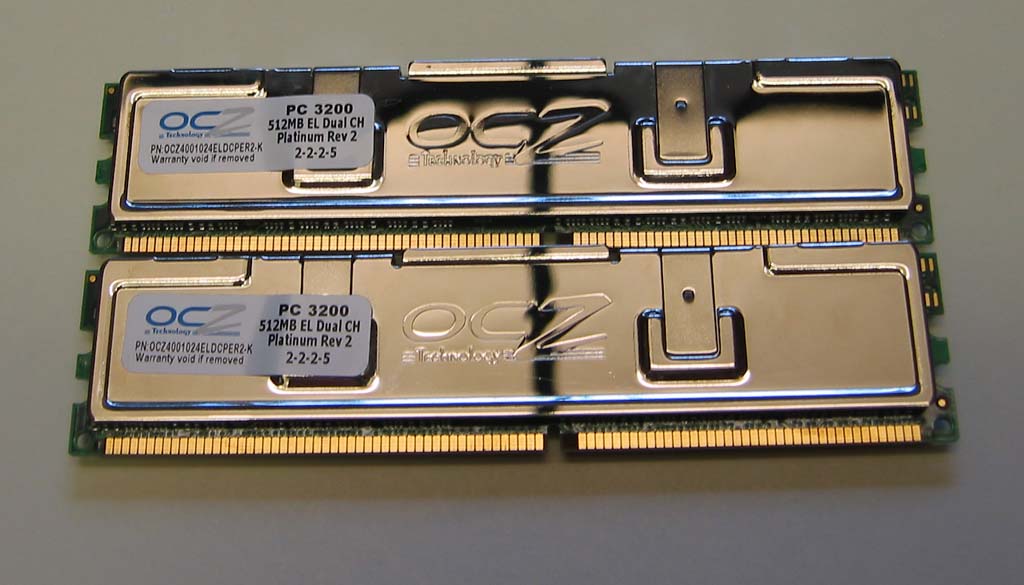
The Platinum PC3200 Rev2 employs Samsung TCCD F die ICs that are rated at 4ns, or 250MHZ. The ICs used in PC3200 modules are underclocked, but running at this lower speed allows them to run at tight timings of 2-2-2-5. OCZ has paired the Samsung ICs with a Brainpower PCB, which is sometimes superior to JEDEC reference PCB in overclocking. The Brainpower PCB is also shorter than the JEDEC PCB.
Test System and Overclocking
Test System:
- AMD Athlon64 3200+ Winchester
- MSI K8N Neo2 Platinum
- 2 x 512MB OCZ PC3200
- Visiontek X800 Pro
- Fortron 530W PSU
Overclocking:
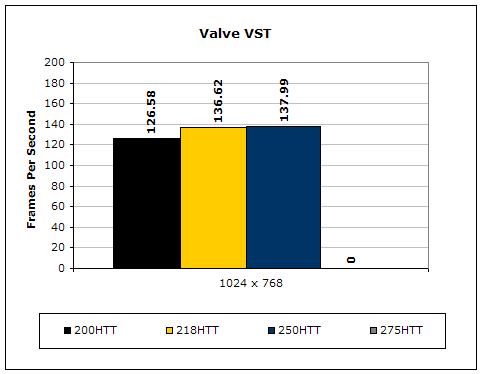
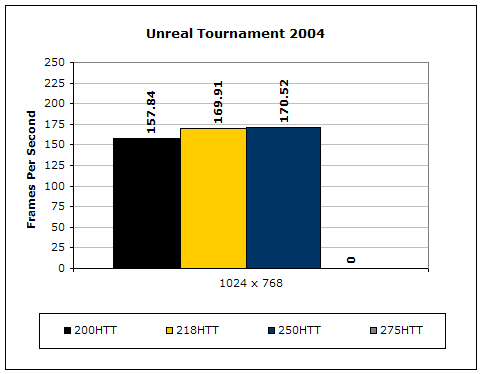
Given the rated timings of 2-2-2-5, I first tested how high these modules can scale at such tight timings. Leaving the voltage at 2.75v, I raised the HTT to 210MHZ. I then ran Memtest86 test #5 for 45 minutes to check for stability and did not receive any errors. I raised the HTT to 215MHZ and repeated Memtest. When I set the HTT to 220MHZ, I ran into errors after the second pass. I lowered the HTT to 218MHZ and VDIMM to 2.6v, knowing how Samsung ICs prefer lower voltages at certain times, and ran Memtest for 45 minutes without a hiccup. I then lowered my multiplier to 9x and the HTT to 250MHZ with loosened timings of 2.5-3-3-5 and Memtest ran error free. I then searched for a max overclock. Lowering my multiplier to 8x, I found a maximum Memtest stable speed of 275MHZ with timings of 2.5-3-3-7. Loosening to 3-4-4-8 did not help with overclock results. When I continued into windows at these speeds, my game tests were all unstable. Even lowering the multiplier to 7x did not help. The likely cause of this would be a faulty memory control aboard my processor, which is a well known problem with Winchester CPUs.
Overclocking Results:
- 200HTT 2.0-2-2-5
- 218HTT 2.0-2-2-5
- 250HTT 2.5-3-3-5
- 275HTT 2.5-3-3-7
Results
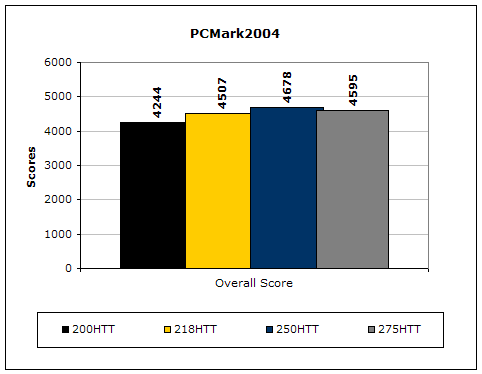
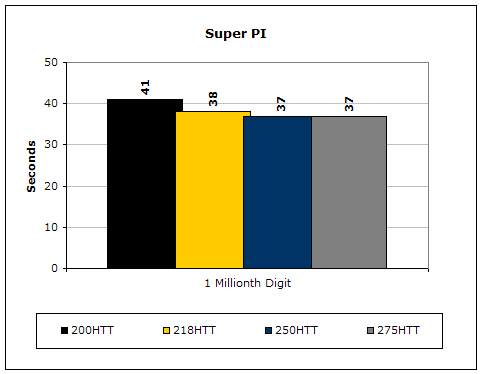
A series of memory intensive benchmarks will be run to test the performance of the RAM, including the standard benchmarks such as 3DMark and PCMark. Real life performance was measured with Valve’s Half-Life 2 stress test and Unreal Tournament 2004. Game details were set to maximum and AA and AF are off. The resolution was set to 1024x768. Memory bandwidth will be measured with SiSoft Sandra and Everest. Super PI and PiFast will also be used to measure memory performance. Results of 275HTT will be included, except those which did not complete.
Testing Setup:
All results are with 1T and are running 1:1 ratio
- 200HTT 2.0-2-2-5 10 x 200
- 218HTT 2.0-2-2-5 10 x 218
- 250HTT 2.5-3-3-5 9.0 x 250
- 275HTT 2.5-3-3-7 8.0 x 275
SiSoft Sandra
The higher bandwidth of 275MHZ does slightly beat that of 250MHZ, but it is in direct relation with CPU speed.
Everest
The same trend happens in Everest that happened in Sandra.
3DMark2001SE
PCMark2004
PCMark seems to take advantage of raw CPU speed over memory bandwidth.
Results Continued
Valve VST
Unreal Tournament 2004
Super PI
PiFast
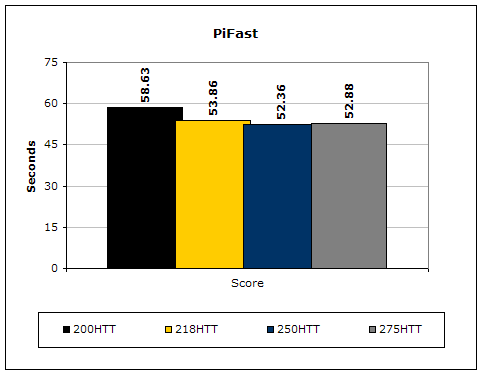
Even though the ram and HTT are being run at a higher speed, 8x275 cannot calculate as fast as 9x250.
Conclusion and Thoughts
OCZ has a great product here. Its appearance and performance are phenomenal. It has scalability from lower speeds with fantastic tight timings to very high speeds, DDR550 in this case, with decent timings. This memory is perfect for Athlon64 owners who want to squeeze every bit of performance from their systems. Its biggest fault would have to be its price, as it costs the most of its TCCD based competitors. Even though the memory comes with a high price, it still receives the recommended award.
Pros:
- Gorgeous heatspreaders
- Great overclocking potential
- Brainpower PCB
- Fantastic performance
Cons:
- Price tag

If you have any questions or comments, feel free to hit us up in the forums. You can also check out more of our latest reviews on the front page.