

OCZ Gold PC3700 Rev3 1GB Dual Channel Kit
Introduction
As the demand for performance memory grows, manufacturers strive to design the best memory modules for consumers. One well known company is OCZ Technology. While they’re not the largest company, many enthusiasts and overclockers have become fans of their products. Those who are able to look beyond their questionable past are well rewarded with high quality performance and service. OCZ continues to pump out great products for overclocking enthusiasts. They take great chips, like the Samsung F TCCD and Hynix DT-D5, and pair them up with great PCB’s from Brain Power to provide excellent overclocking performance memory. The Hynix chips were great for Intel Pentium 4 systems. Although the latencies weren’t terrific, it did allow users to scale high with a 1:1 ratio. Not many enthusiasts liked it, but it was great. Unfortunately, the older Hynix BT and CT D5s were not highly compatible with AMD’s Athlon64 CPUs; sometimes the CPU did not like to have 2 sticks of memory installed. The memory controller on the CPU was quite picky and some didn’t even like the infamous BH5’s! The new Hynix DT-D5 chips seem to have fixed that problem. Installing 2 sticks of memory was certainly no problem. Just how well it performs, you’ll have to read on to find out.
OCZ Gold PC3700 Rev3
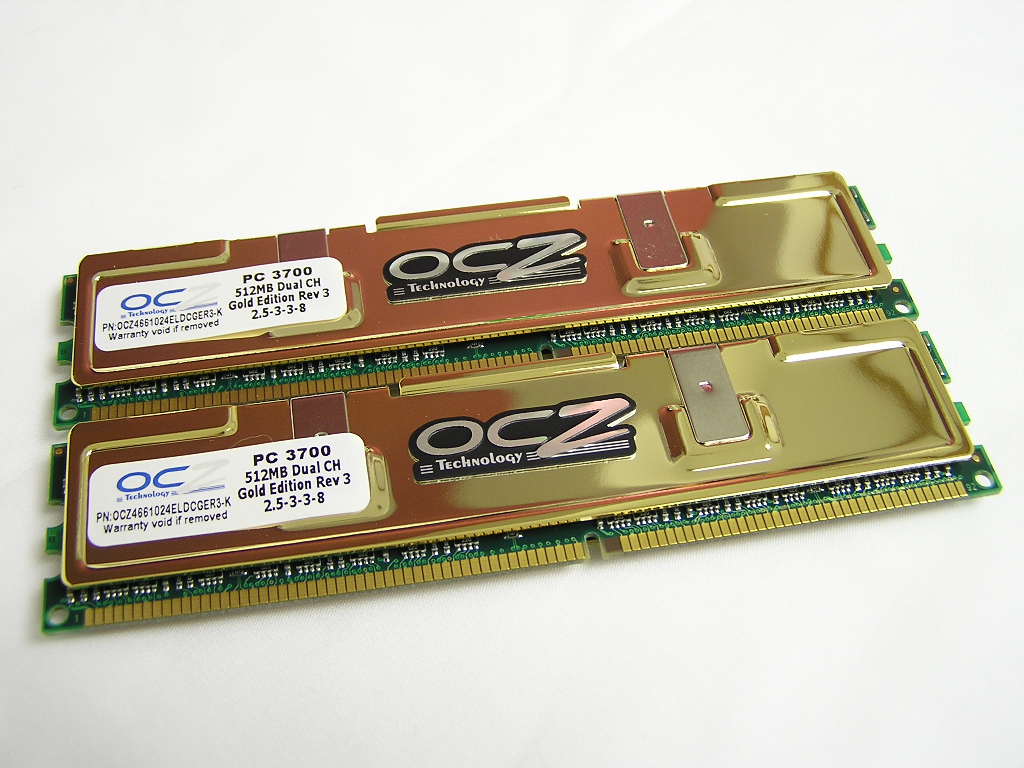
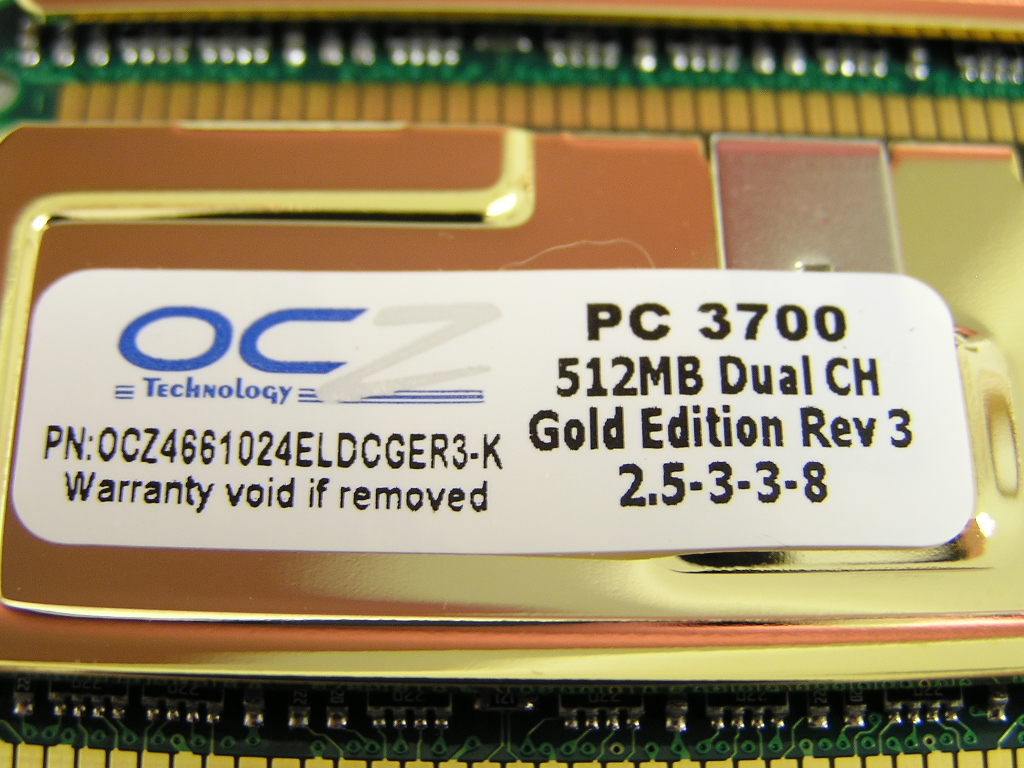
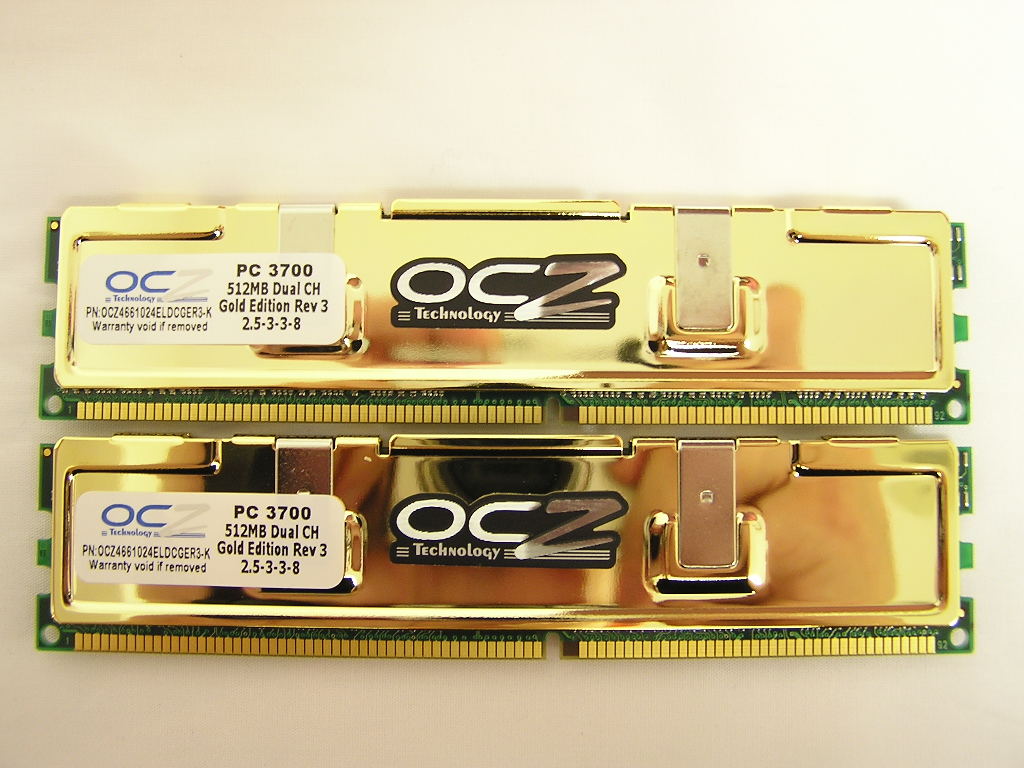
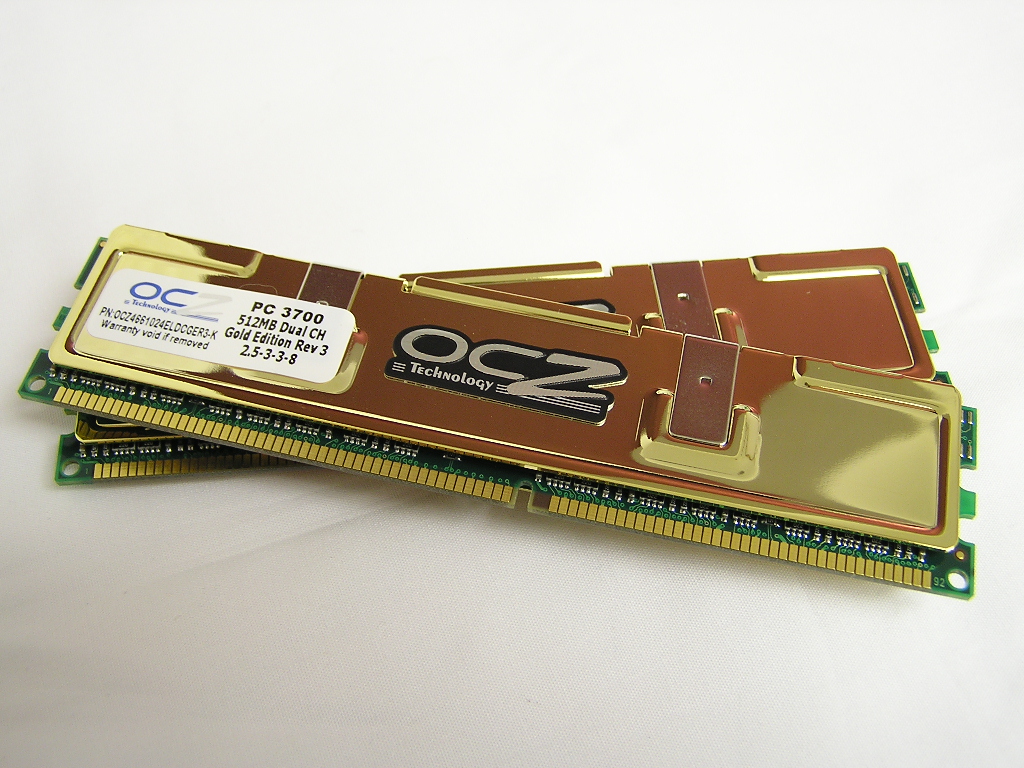
OCZ’s packaging continues to be eye catching with their orange background, but they’ve added one extra touch on the actual memory itself. The stylish look of the engraved OCZ logo is gone, and has been replaced by a sticker. I didn’t find this look too attractive and I’m sure that many others will agree. Please OCZ, go back to the engraved logo. It looks so much better.
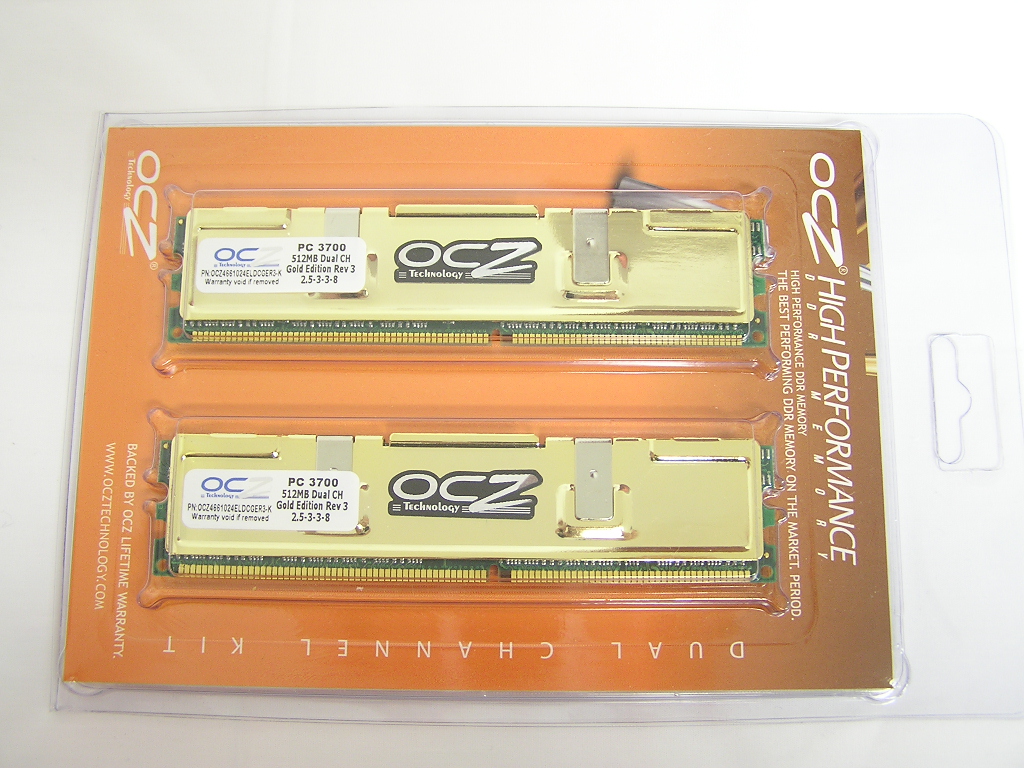
As mentioned earlier, the PC3700 Gold Rev3 utilizes Hynix DT-D5 chips for high scaling of memory frequency. Although only rated to be 5ns, which translates to 200MHZ, Hynix chips are able to hit as high as 300MHZ after some overclocking. The PC4000 Gold Rev2 uses the same chips, with the only difference being that they’re speed binned to ensure they run at the specified 250MHZ. The PC3700 Rev3 should be able to do just as well as the Gold Rev2, in most cases. The memory is speed binned to run 233MHZ with timings of 2.5-3-3-8. Although it’s not the best, it’s decent nonetheless. It’s also better than the previous revisions of the Gold series. The gold finished copper heatspreaders add a nice touch to the memory. Heatspreaders don’t do much in terms of cooling performance, but it does add to the bland look of memory sticks.
Test System and Overclocking
Test System:
- AMD Athlon64 3000+ Winchester
- MSI K8N Neo2 Platinum
- 2 x 512MB OCZ PC3700 Gold Rev3
- eVGA 6800 Ultra
- OCZ DDR Booster
- Ultra Products 600W
Overclocking:
Keep in mind that during overclocking, the latencies are as follows: CAS-TRCD-TRP-TRAS
The main purpose of this review is to find out just how well the new Hynix DT-D5 chips respond when overclocked with Athlon64 CPUs. To begin, I dropped the frequency to 200MHZ and went for the lowest timings. Many have reached as low as 2-3-2-6, but I was only able to achieve 2-3-3-6. These new Hynix chips don’t seem to like the A64 memory controller all too much. Keeping the timings of 2-3-3-6, I was able to get another 10MHZ out of the chips, bringing the overclock to 210MHZ. The next step was try the specified timings to see what these sticks are capable of. It ran the specified speed without a hitch, which is something that all memory should be able to do. I find it funny to see many enthusiasts praise a certain brand of memory only to say that it runs great and stable at a speed lower than specified. If the memory doesn’t run the specified speed and timings, it’s not great. So with the specified timings of 2.5-3-3-8, I pushed further until I hit a ceiling of 255MHZ. This is all under 1T command and 2.85v. Hynix chips are known to be able to like a little extra voltage to help boost the overclock and maintain overall stability. With the help of the OCZ Booster, I found a sweet spot of 3.1v. Although the increased voltage only brought the highest overclock to 260MHZ, it did help nonetheless. Increasing the voltage and loosening the timings and command rate provided no help in breaking the 260MHZ barrier. To many, these sticks will be considered average. To me, they’re pretty impressive. Here’s why:
True that Hynix chips are no Samsung TCCDs, but they have better consistency chip to chip. I purchased another kit of the same memory with my own money and found the overclocking results to be very similar. The purchased kit hit 265MHZ 2.5-3-3-7 1T. As you can see, the results are never 100% the same, but are nearly the same. The problem with the hyped TCCD is the inconsistency. It does bring amazing overclocks and performance, but I personally do not like it. The overclocking potential of one kit of memory can be vastly different from another kit, and this is not just because they’re from different manufacturers. For example, the results of the Kingston HyperX UL differed largely from the results of Corsair XMS XL, which also differed from the results of Mushkin Level II V2, and so on. I have never found consistency with the TCCD chips. One might argue that TCCD paired with Brain Power will provide great results, but the PCB should not be such a huge factor. So what am I trying to say here? Think back to the age of BH5. Remember how great those chips were? Well, the chips were great because their performance was consistent. OCZ had the Brain Power PCB paired with the BH5 while Kingston designed their own PCB to pair the BH5. As a result, BH5 memory from both of these manufacturers were superb. Now compare that to the current TCCD. It’s become a hit or miss situation. Many will argue that their results with TCCD memory are better than the OCZ Gold PC3700 Rev3 we have here today. Personally, I’ve had TCCD that didn’t fair as well. Due to this reason, I won’t be including a set of TCCD memory to compare in the benchmarks. One set can be amazingly better, dominating the Gold PC3700 Rev3, while the other set can be amazingly poor. It just can’t be compared so easily. Most of you will only care about the highest overclock possible anyway.
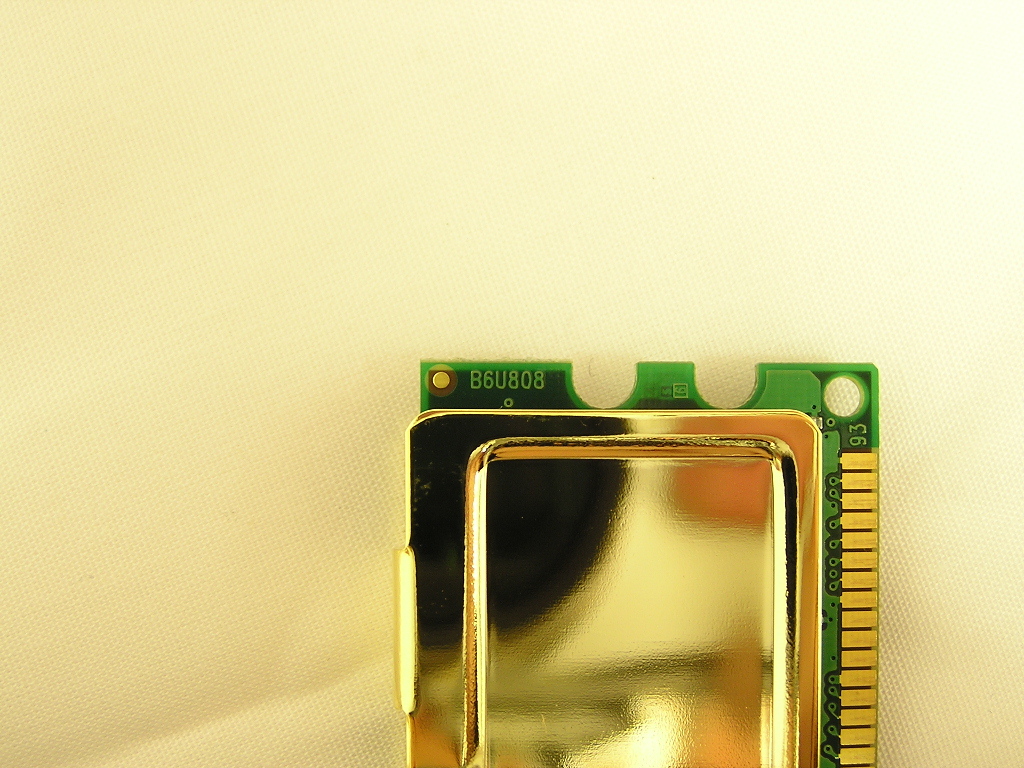
Also note that OCZ uses the highly praised Brain Power 808 PCB for the Gold PC3700 Rev3.
Overclocking Results:
- 200HTT 2.0-3-3-6 1T 2.85v
- 210HTT 2.0-3-3-6 1T 2.85v
- 233HTT 2.5-3-3-8 1T 2.85v
- 255HTT 2.5-3-3-8 1T 2.85v
- 260HTT 2.5-3-3-8 1T 3.10v
Results
A series of memory intensive benchmarks will be run to test the performance of our sample. The following tests will be based on common benchmark programs such as 3DMark and PCMark. Real life performance differences will be tested through current games such as Far Cry, UT2003, UT2004, and Halo. Memory bandwidth benchmarks will be based off of SiSoft Sandra and Aida32. Super PI and PiFast will also be used to test memory performance, as the benchmark benefits largely from FSB increases.
SiSoft Sandra
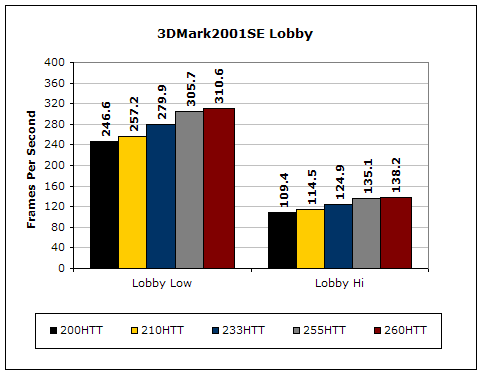
SiSoft Sandra is the most widely used memory bandwidth test. It can tell you the increase in performance from just lowering the latency timings. The results seem to scale linearly, despite the fact that the HyperTransport Bus is different when the overclock increases.
Aida32
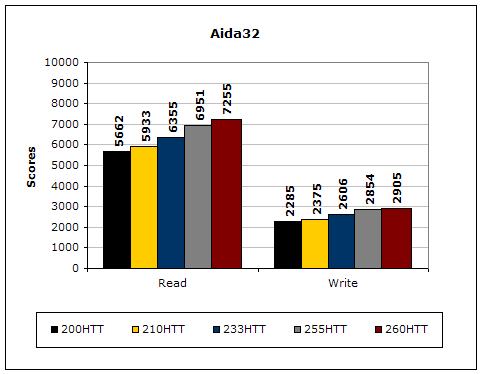
Much like Sandra, Aida32 tests the memory’s ability to read and write data in large chunks. The results are similar to the results in Sandra.
3DMark2001SE
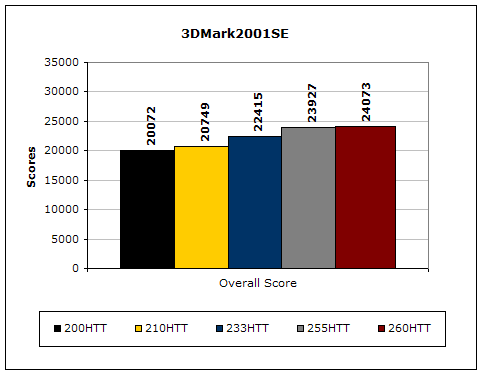
3DMark is probably the overclocker’s favorite benchmark. Unlike 3DMark2003, which stresses mainly the video card, 3DMark2001SE tests all of the system’s main components. Increasing the CPU speed, memory speed, and video card speeds will result in higher results in the final score.
PCMark
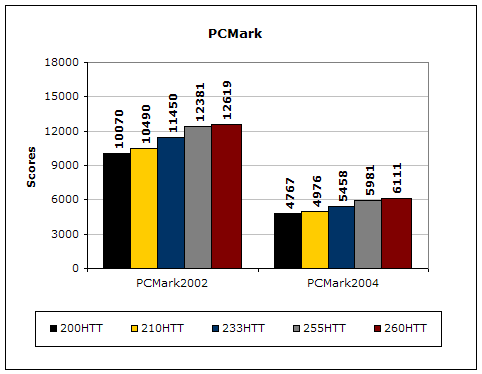
PCMark is another benchmark created by Futuremark. It tests the memory compression and decompression speeds in small to large chunks of data.
Results Continued
Doom 3
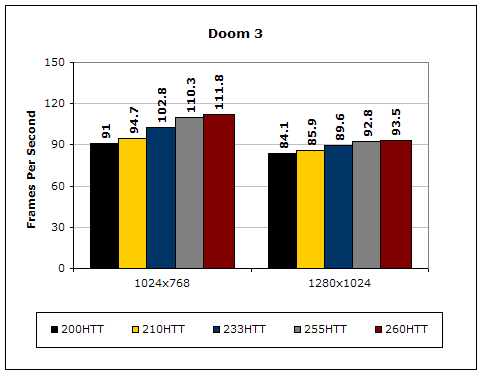
Although Doom 3 is known to be more graphic dependent than system dependent, the game responds positively when latencies are lowered and system bus is increased.
Far Cry
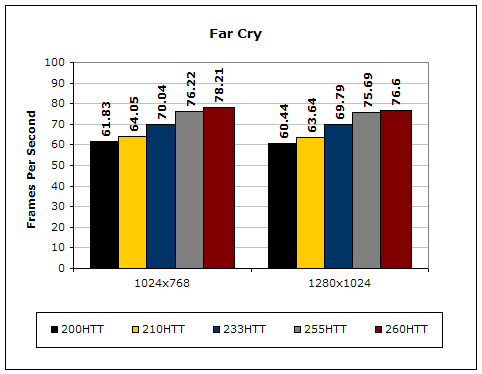
Far Cry is currently one of the most popular games and does a great job of taxing your system.
Unreal Tournament 2004
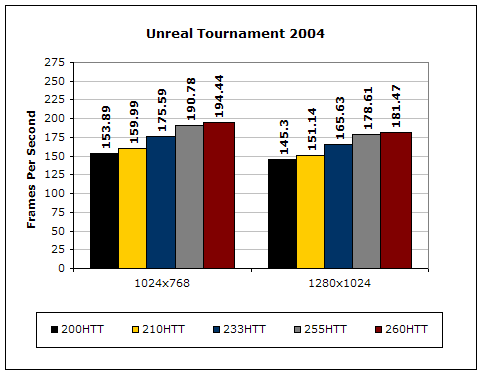
Unreal Tournament 2004 is another popular game that also doubles as a good benchmark. This game really likes memory bandwidth and it shows. The results were pretty much as expected.
Super PI
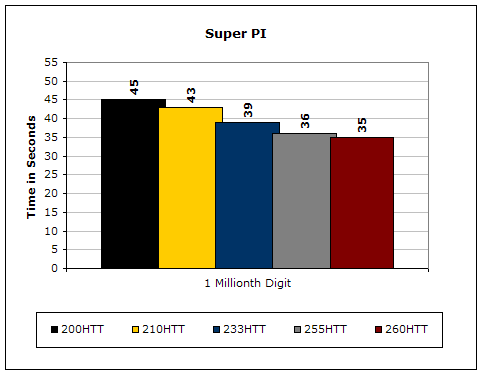
Since the value of PI is an infinite value, Super PI is a speed test to find the digit you’re looking for. In this case, we chose the millionth digit. Super PI benefits greatly from higher FSB as well as low latencies.
PiFast
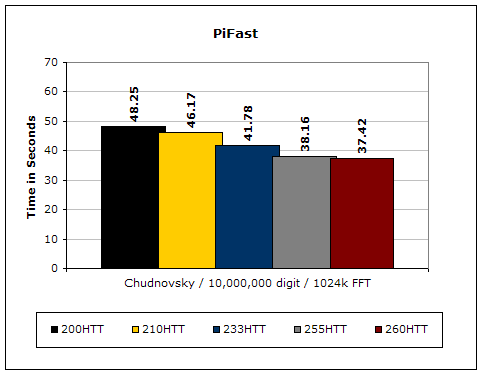
PiFast is similar to Super PI and the results can be greatly affected by a slight adjustment to the memory megahertz and latency.
Conclusion and Thoughts
OCZ Gold PC3700 Rev3 that uses Hynix DT-D5 chips is indeed better than the previous OCZ Gold line of memory. How and why can I say such a thing when I didn’t even compare it to the previous? The goal of this review was to see whether the OCZ Gold PC3700 Rev3 is able to perform on the AMD Athlon64 platform. Sure enough, it did, performing very well. Based on this fact alone, the kit of memory is superior than its predecessors. The BT-D5 and CT-D5 (or D43s) were unable to run successfully and stably on A64 platforms, making the migrations from Intel to A64 rather difficult. The overclocking potential of the OCZ Gold PC3700 Rev3 (DT-D5) was rather impressive. It reached a high frequency while maintaining decent timings and a command rate of 1T. Although there might be better memory out there, the Gold PC3700 Rev3 does deserve a good recommendation for the ability to overclock high and perform well on an A64 system.
Pros:
- Shiny gold heatspreaders
- Relative low price for high performance memory
- Brainpower PCB
- Decent overclocking potential
- Excellent performance
- Allows decent frequency under command rate 1T
Cons:
- Overclock result only considered to be mediocre (when compared to others)
- Requires over 3v+ for good overclock results

We would like to thank OCZ for providing us the sample. If you have any questions or comments, feel free to hit us up in the forums. You can also check out more of our latest reviews on the front page.