

Gigaram Mach 1000 PC3700 1GB Dual Channel Kit
Introduction
Gigaram has been around for almost a decade now, yet has little recognition among consumers. Those who do know Gigaram know them for their competitively priced memory. Crowded by other companies, like Corsair and OCZ, in the value memory market, Gigaram has looked to another section of the market to prove itself.
Gigaram’s base in the overclocking market is pretty much nonexistent. If you have ever shopped around for some highly overclockable memory, Gigaram has probably never crossed your mind. In the past, Gigaram has not thoroughly pursued the needs of the enthusiast. Their new Mach line of memory is aiming to change that. Gigaram’s Mach 1000 line of DDR memory is comprised of models rated up to PC4200. Some models in this series allow up to 3.1 volts without voiding the warranty. Today, we have Gigaram’s PC3700 1GB dual channel kit. We’ll find out if Gigaram hit their head on the diving board jumping into the overclocking pool.
Gigaram Mach 1000 PC3700
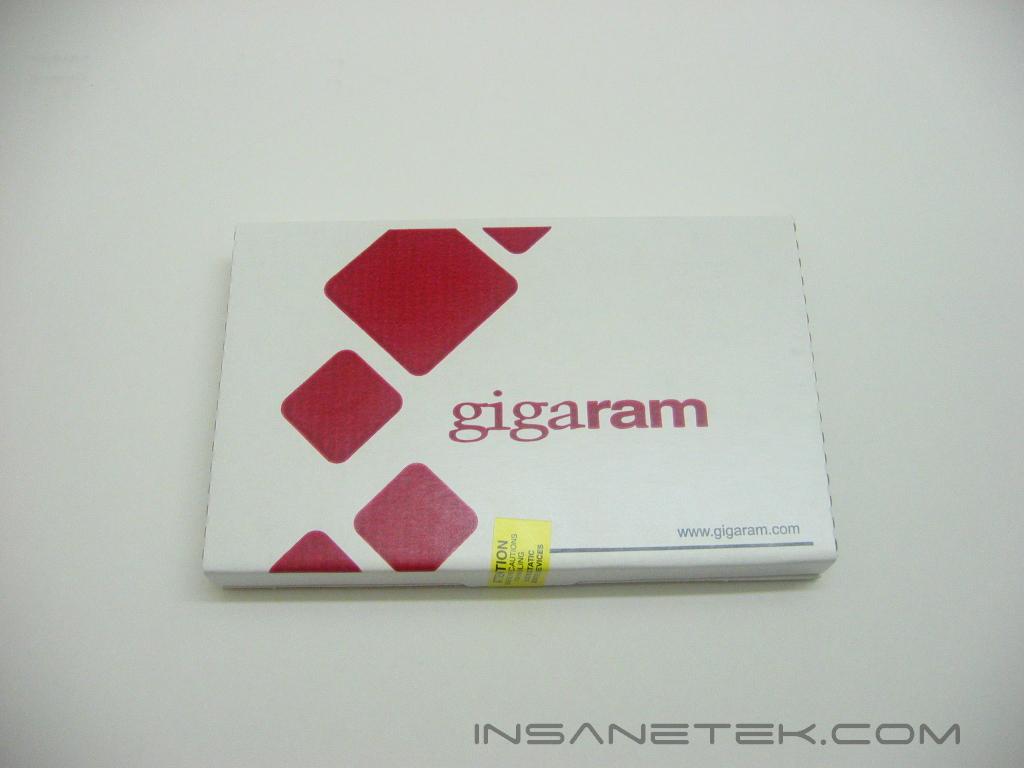
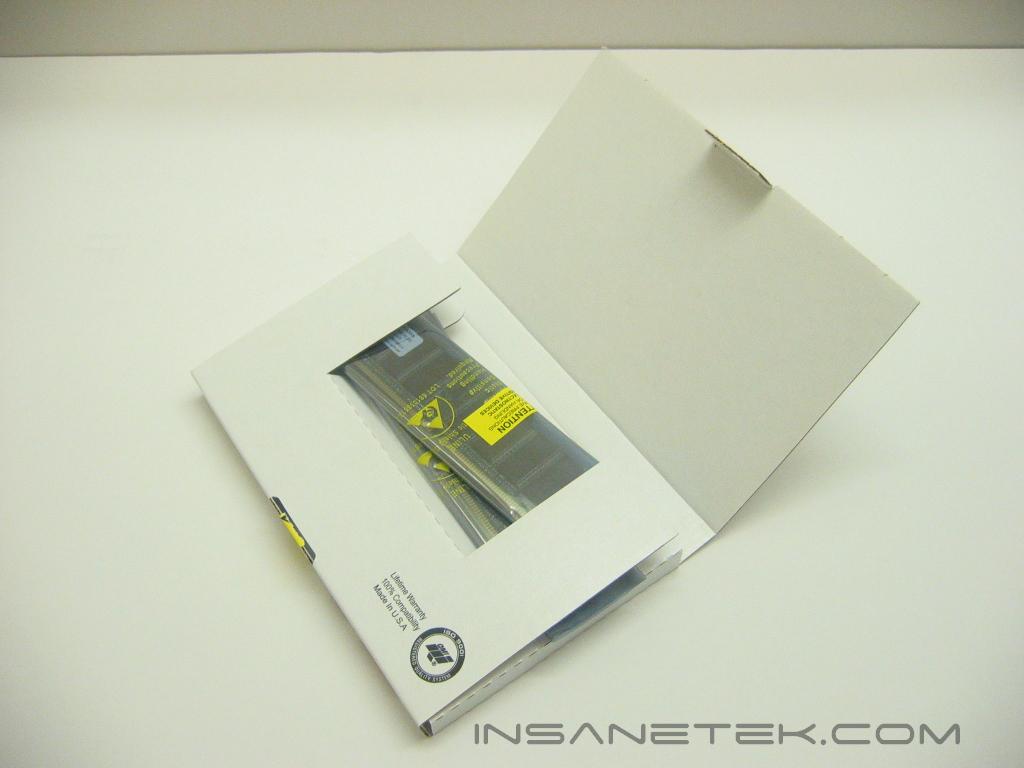
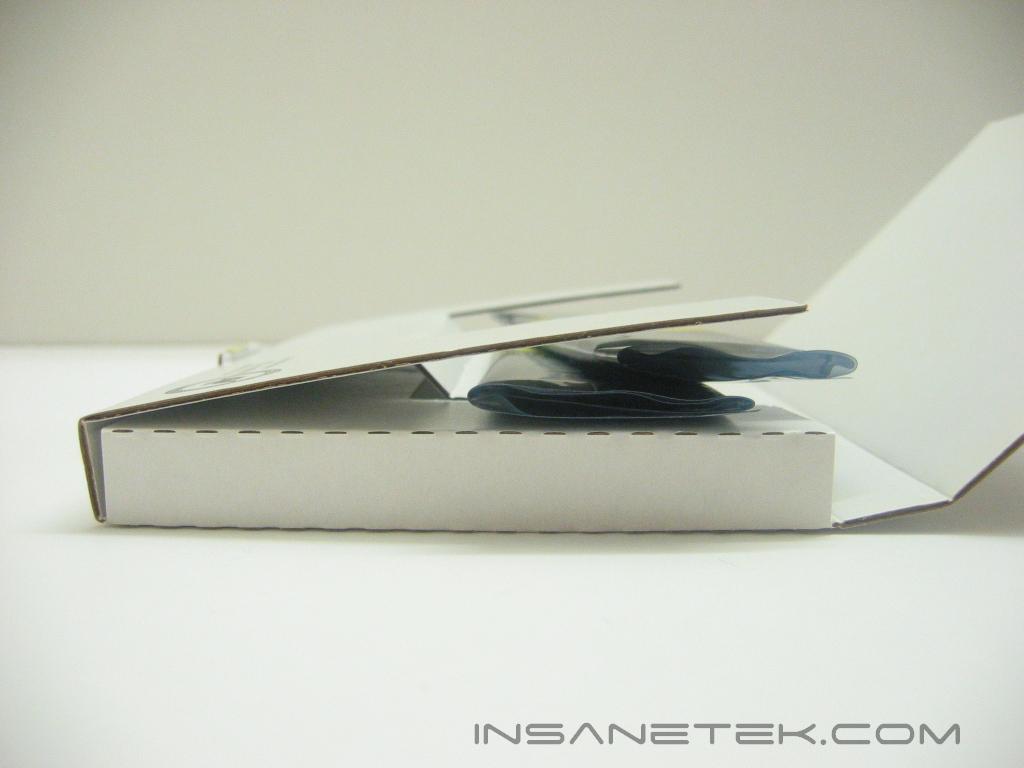
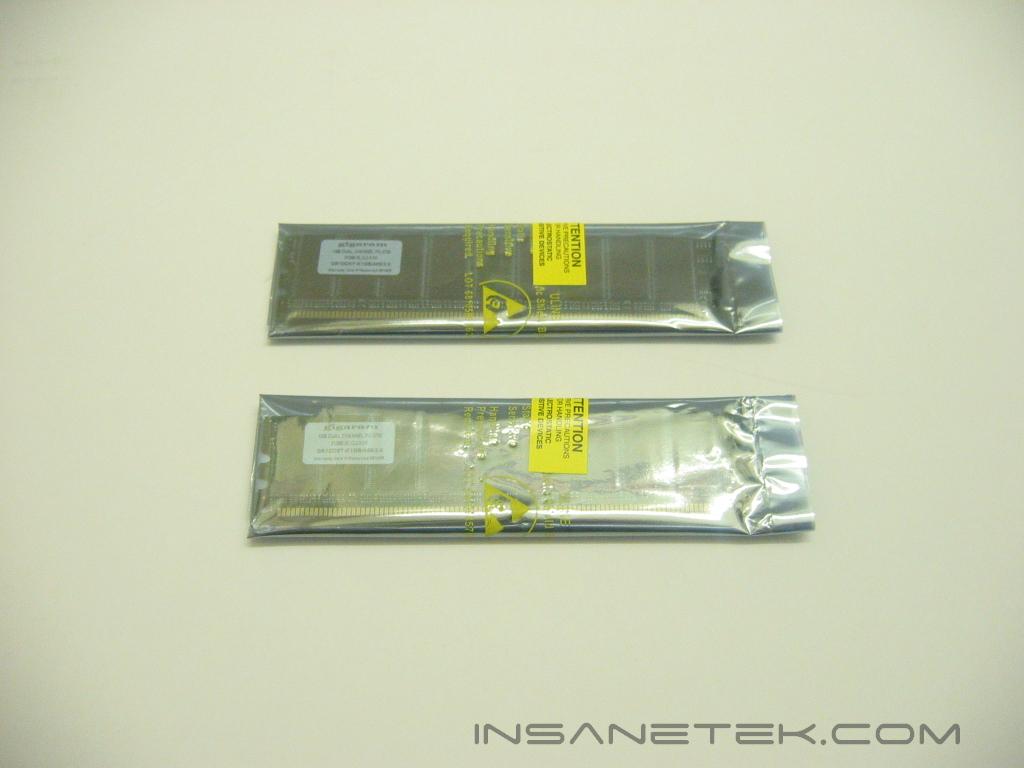
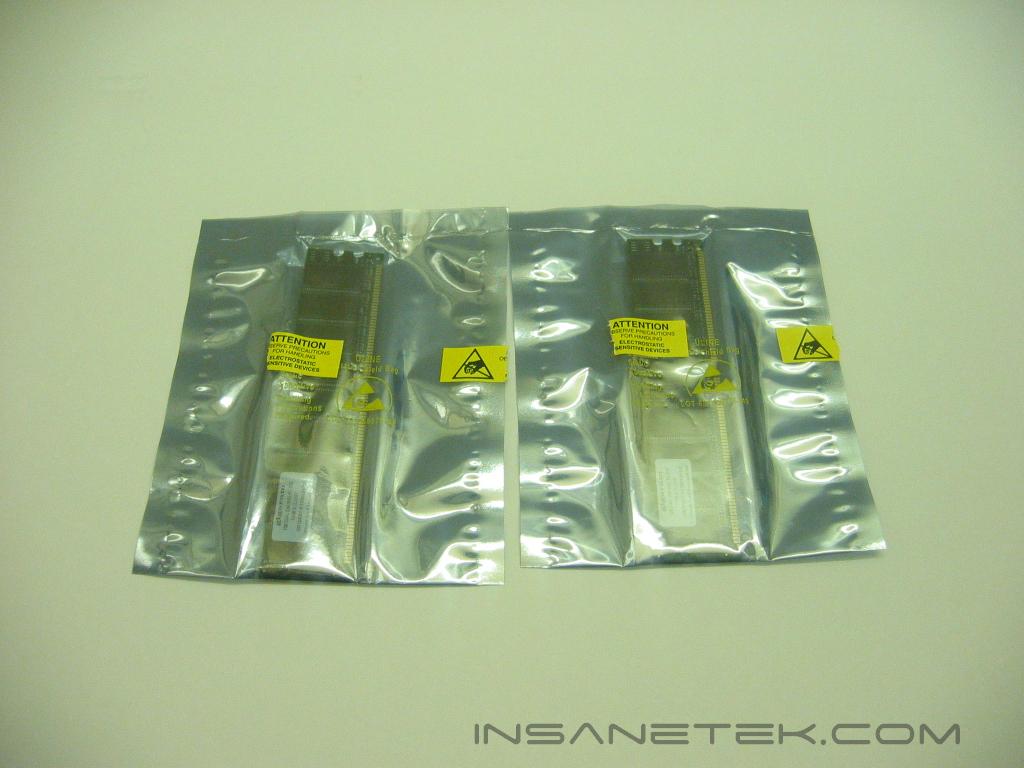
The Gigaram PC3700 dual channel kit is packaged in a unique cardboard box. Gigaram has strayed from the generic plastic clamshell that consumers have become accustomed to. The cardboard box gives them a much better ability to ensure their memory is safe throughout shipment. When the cardboard box is closed, the memory is held snugly and the modules don’t rattle. Gigaram packages their memory in antistatic bags for even greater protection.
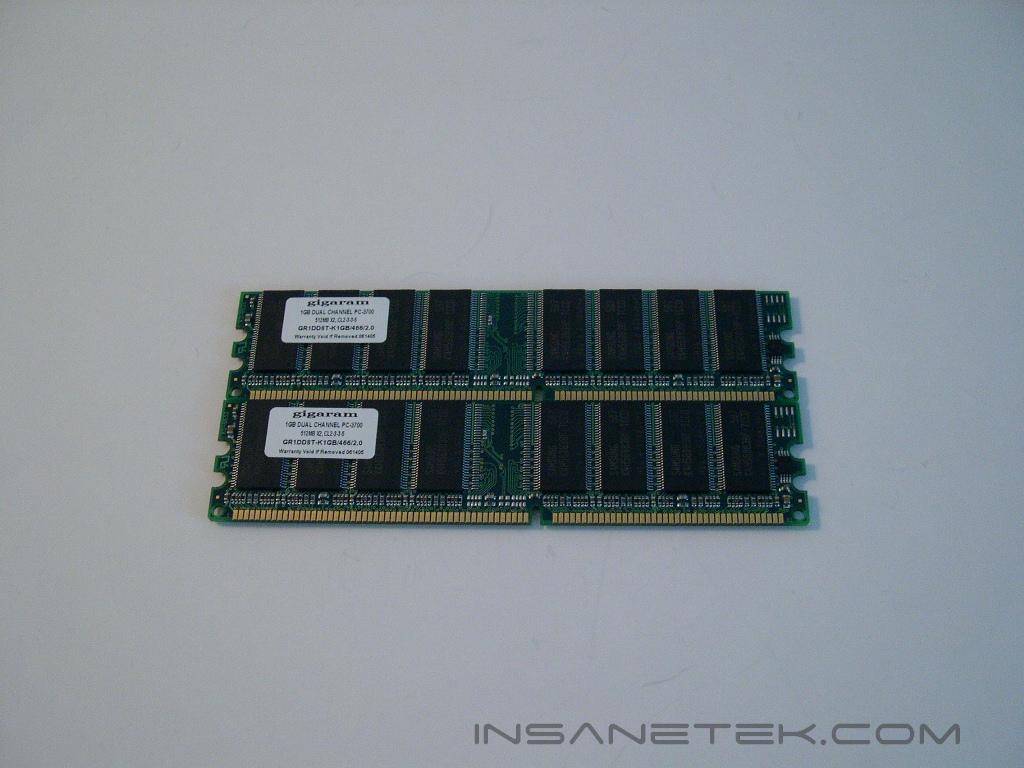
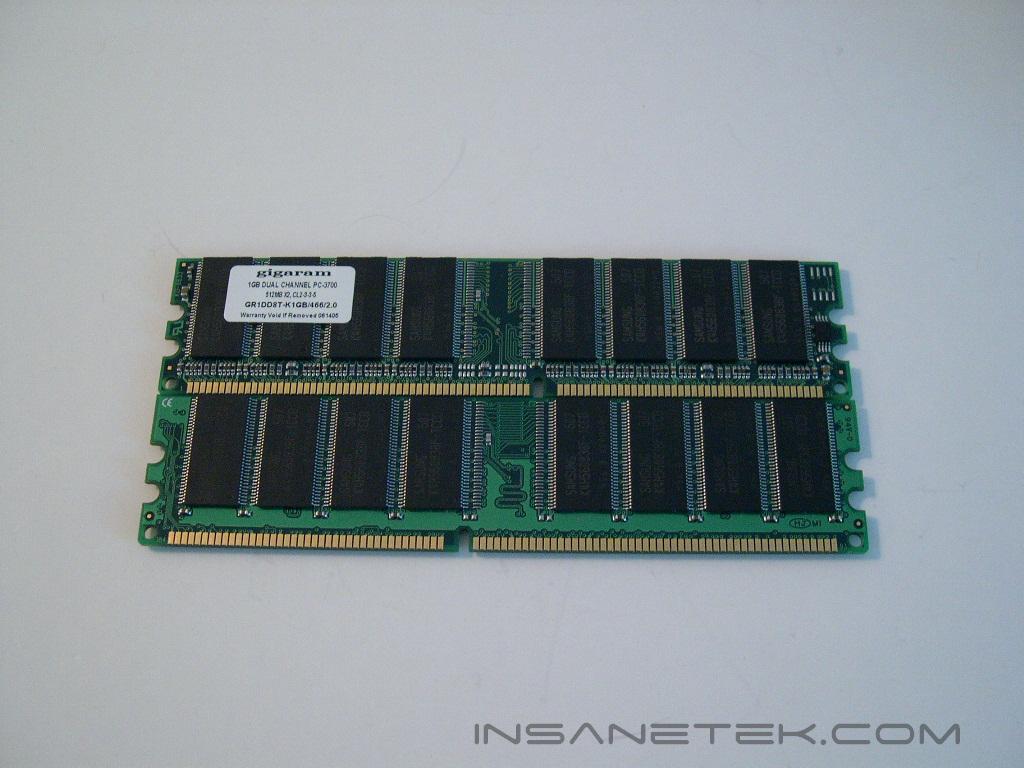
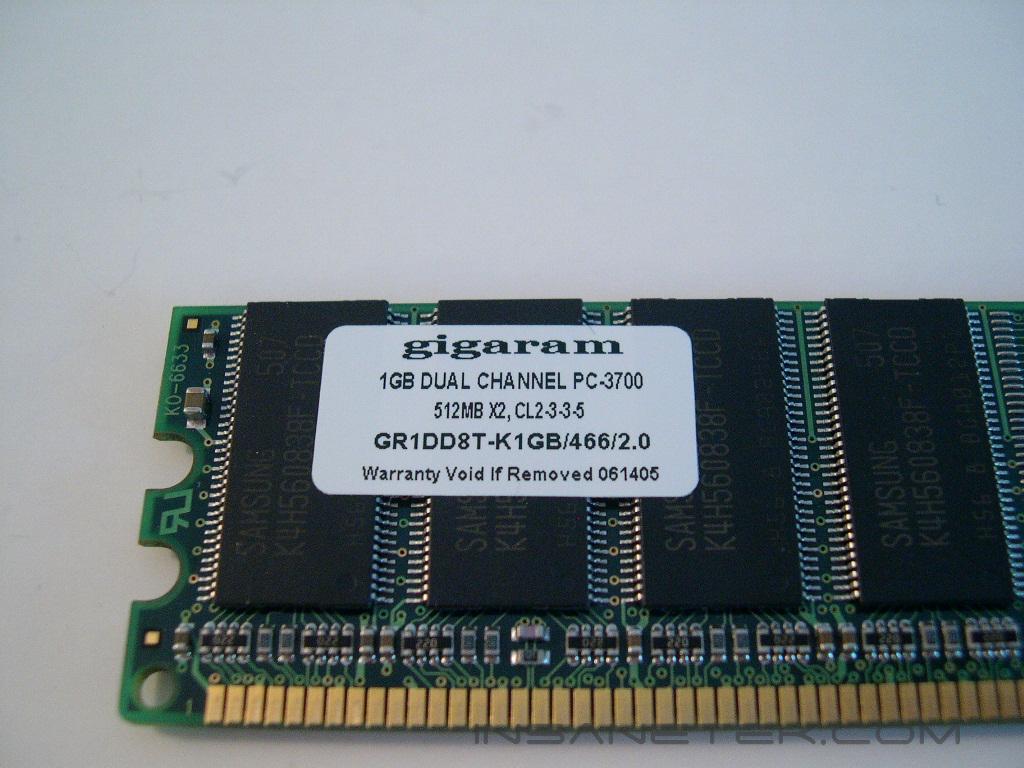
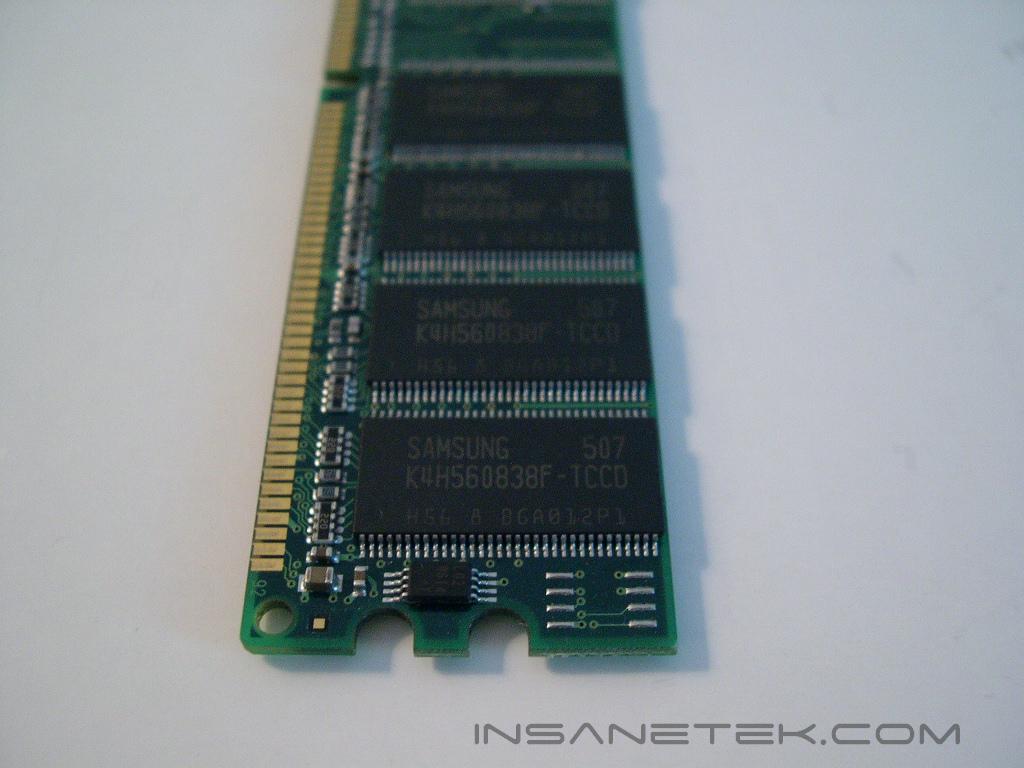
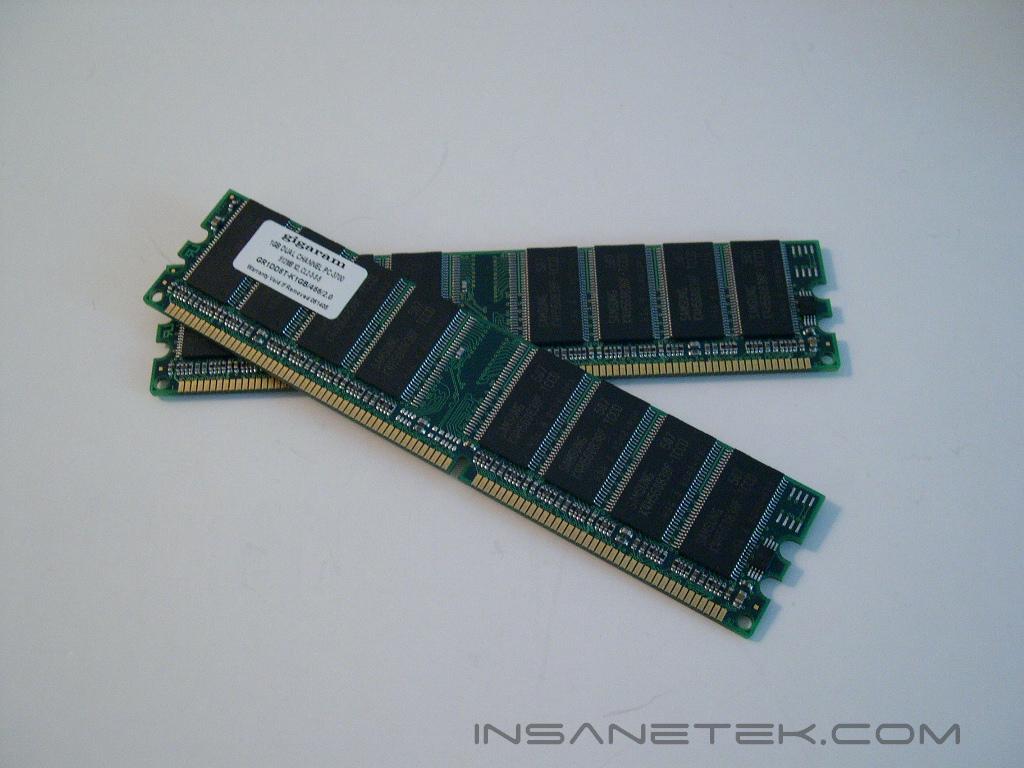
Our test sample was not outfitted with heatspreaders, although retail versions should have some attached. Heatspreaders aid in heat transfer from the ICs, but more importantly, protect the modules from damage. Without heatspreaders, the memory looks rather plain. The sticker on the memory informs us that the latencies are a fair 2-3-3-5, but there is no indication of voltage. Gigaram’s website specifies that this particular part is warranted up to 2.9v, but it would be nice to know the amount of voltage they use for testing. The PC3700 uses the infamous Samsung TCCD and our sample is equipped with chips from week 7 of 2005. Although chips from week 31, 37, and 40 of 2004 are revered as some of the best clocking TCCD, newer week TCCD are decent overclockers.
Test System and Overclocking
Test System:
- AMD Athlon 64 3700+ San Diego
- DFI LANParty Ultra-D
- 2 X 512MB Gigaram PC-3700
- PowerColor Radeon X850XTPE
- Corsair COOL
- OCZ 600ADJ 600W
Overclocking:
Keep in mind that during overclocking, the latencies are as follows: CAS-TRCD-TRP-TRAS
To test stability during overclocking, I loop test #5 of Memtest 86. If it runs error free, I move on to test #8. If both run error free, I run Super Pi 32m and Windows Memtest to at least 200%.
Since the modules are equipped with Samsung TCCD, I first tested latencies of 2-2-2-5 at 200MHZ. To my surprise, they couldn’t. Nor could they run 2-3-2-5 at 200MHZ. I tried voltages up to 3.0v, but still could not boot into Memtest. This is not the end of the world. TCCD is not famous for their speeds at low latencies, so I moved on to their rated timings, 2-3-3-5. I tested the rated speed and timings at 2.6v and ran into some errors in Windows Memtest. With 2.7v running through them, they ran error free. I loosened the TRAS to 7 and searched the highest stable speed I could reach at 2-3-3. I was only able to get to 236MHZ with 2.9v, while 3.0v gave me 240mhz stable. With TCCD over 2.9v, even below it, they emitted quite an amount of heat. Its always a good idea to have a decent amount of airflow over the memory. With the timings at 2.5-3-3-7 and a voltage of 2.8v, I was able to reach 282mhz stable. Raising the voltage up to 3.0v did not allow any higher speeds at these timings. 282mhz at these latencies is fantastic. I loosened the TRCD to 4 and was able to pass the stability tests with a bump in voltage to 2.9v at 292mhz. That’s where the memory hit a wall. Loosening the timings to 2.5-4-4-8 did not stabilize the modules at higher speeds. Memtest test #5 passed without a hiccup at 295MHZ, but test #8 would get a few errors on each pass.
Overclocking Results:
- 233MHZ 2.0-3-3-5 1T 2.7v - rated speed and timings
- 240MHZ 2.0-3-3-7 1T 3.0v
- 282MHZ 2.5-3-3-7 1T 2.8v
- 292MHZ 2.5-4-3-7 1T 2.9v
Results
A series of memory intensive benchmarks will be run to test the performance of our sample. The other tests will be based on common benchmark programs, such as 3DMark and PCMark. Real life performance differences will be tested through current games, such as Half-Life 2 and UT2004. Memory bandwidth benchmarks will be based off of SiSoft Sandra and Everest Home Edition. Super PI will also be used to test memory performance, as the benchmark benefits largely from FSB increases.
All tests were conducted with a multiplier of 9x.
SiSoft Sandra Memory Bandwidth
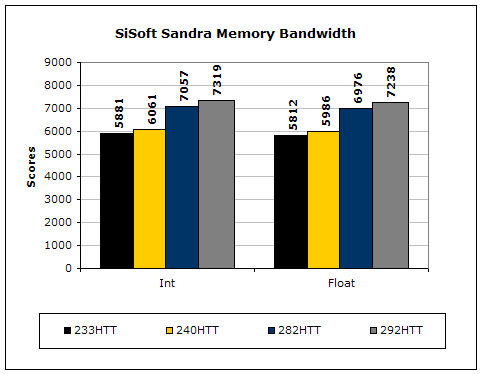
SiSoft Sandra is the most widely used memory bandwidth test. It can tell you the increase in performance from just lowering the latency timings.
Everest Home Edition
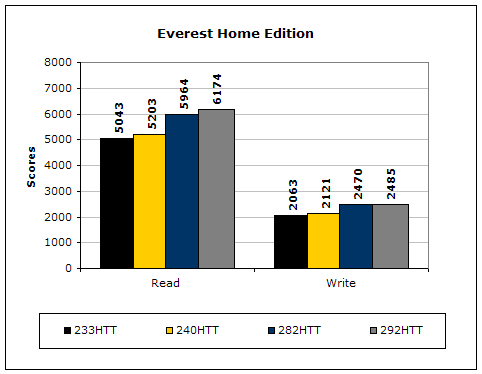
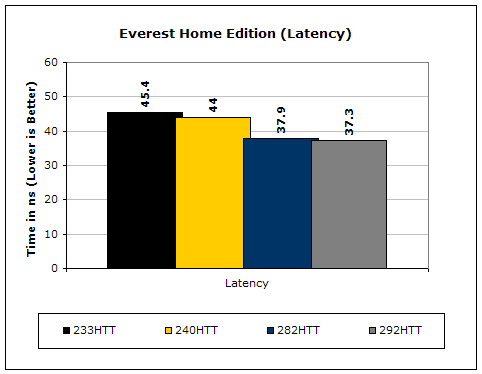
Much like Sandra, Everest Home Edition tests the memory’s ability to read and write data in large chunks. The results show that the lower latencies seem to help just a little with performance.
3DMark2001SE
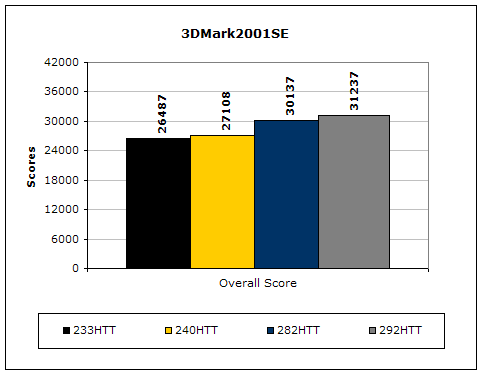
3DMark is probably the overclocker’s favorite benchmark. Unlike 3DMark2003, which stresses mainly the video card, 3DMark2001SE tests all of the system’s main components. Increasing the CPU speed, memory speed, and video card speeds will result in higher results in the final score.
Results Continued
Unreal Tournament 2004
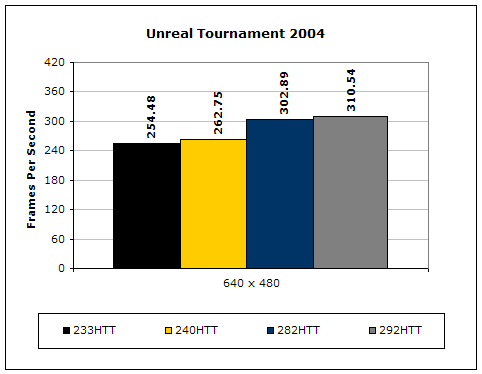
Unreal Tournament is another popular game engine to test overall system performance. Here, we can see the same results as 3dMark2001. UT2004 was run at 640x480 to limit GPU dependency.
Half Life 2
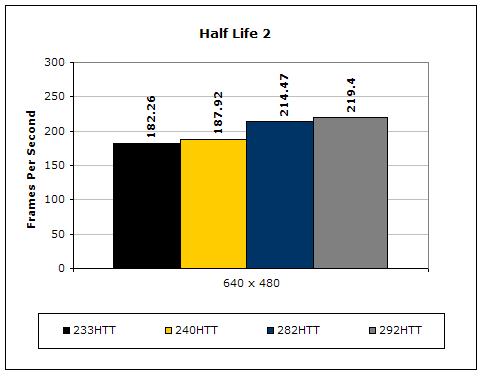
Half-Life 2 is another popular FPS game that gamers love. The game is also very memory intensive and is a great indicator of memory performance increase. Like UT2004, the game was run under the resolution of 640x480 to limit GPU dependency.
PCMark2002
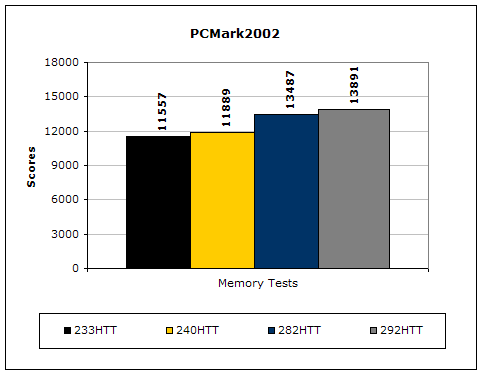
PCMark is another benchmark created by Futuremark. It tests the memory compression and decompression speeds in small to large chunks of data.
Super PI
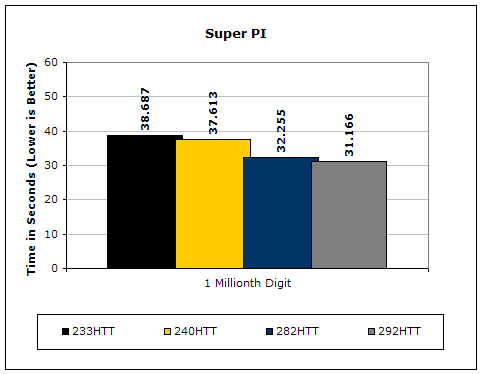
Since the value of PI is an infinite value, Super PI is a speed test to find the digit you’re looking for. In this case, we chose the millionth digit. Super PI benefits greatly from higher FSB as well as low latencies.
Conclusion and Thoughts
Gigaram has made a fantastic jump into the overclocking world. I was surprised by how well the newer week TCCD scaled with 2.5-3-3 timings, reaching 282mhz. I was also surprised by not being able to run at latencies of 2-2-2, as a majority of TCCD are capable of. I would have liked to have seen these modules with the Brainpower PCB, as it would have helped achieve a greater overclock. Beside the great overclockability of the Gigaram PC-3700, it is priced at the lower end of the TCCD spectrum. Gigaram’s unique packaging and lifetime warranty round this memory out nicely. With the fantastic overclockability of Samsung TCCD ICs and its relatively low price point, the Gigaram Mach 1000 PC-3700 1GB DC kit would make a great addition to any overclocker’s Athlon 64 setup.
Pros:
- Great overclockability
- Decent price tag
- Good timings at 233mhz
- Fantastic performance
- Lifetime warranty
Cons:
- Does not use Brainpower PCB
- Timings of 2-2-2 unattainable

We would like to thank Gigaram for providing us the sample. If you have any questions or comments, feel free to hit us up in the forums. You can also check out more of our latest reviews on the front page.