

Centon Advanced Gemini PC3200 Low Latency 1GB Dual Channel Kit
Introduction
Ever since the announcement of Samsung TCCD memory die, every manufacturer has been jumping on board to get out their own version of low latency DDR memory. Corsair started it all and the rest of the players followed. Even the uncommon brands, like PDP and PQI, sprung out with their own sticks of memory. Thus, it’s no surprise to see Centon jump out to compete with the rest of the players. Never heard of Centon? Well that’s because they’ve never focused on anything high end that would catch much attention. Centon is actually a large memory manufacturer and they’ve been in the memory field for a very long time. They usually target standard memory that offer more stability and compatibility for low end systems.
The computer industry is becoming fiercely competitive by the minute, and in order to keep up, Centon was forced to come out with their own version of low latency DDR memory. Most new low latency memory is the same. Crucial’s PC3200 Ballistix is just totally different memory. The others however, all use Samsung TCCD die. Added to that is the use of the same Brainpower PCB. As far as I know, Kingston’s HyperX and Corsair’s XMS XL Pro are the only manufacturers that specially design their own memory in house. Everyone else is the same underneath. The only difference is the heatspreaders and the sticker labels. Common sense would be to find the correct combination of Brainpower PCB and Samsung TCCD die that comes with the lowest price tag. Although the sample that we received today does not use Brainpower PCB, my contact at Centon assured me that all modules for sale will be have a Brainpower PCB. We’ve tested many modules here at InsaneTek and many of them have followed the same route of Brainpower PCB and Samsung TCCD die. Strangely, they don’t all perform the same. Like what I’ve been trying to tell everyone, Samsung TCCD is not as golden as everyone thinks it is. Well, we’ll just have to see how well Centon’s new memory overclocks.
Centon Advanced Gemini Low Latency PC3200
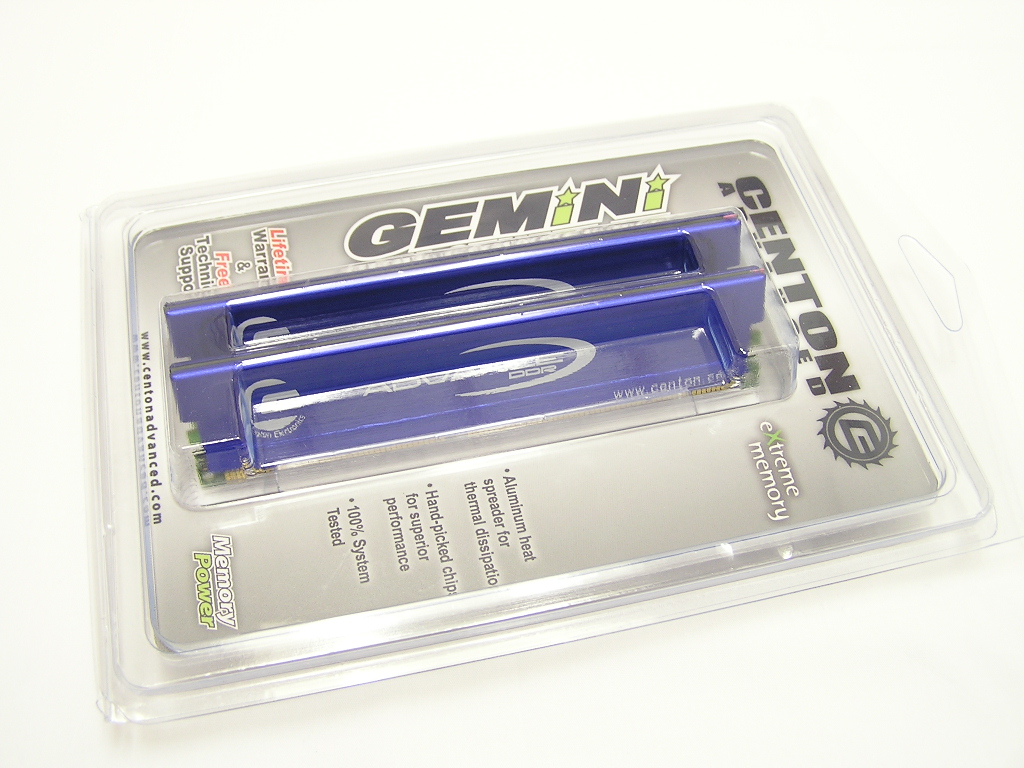
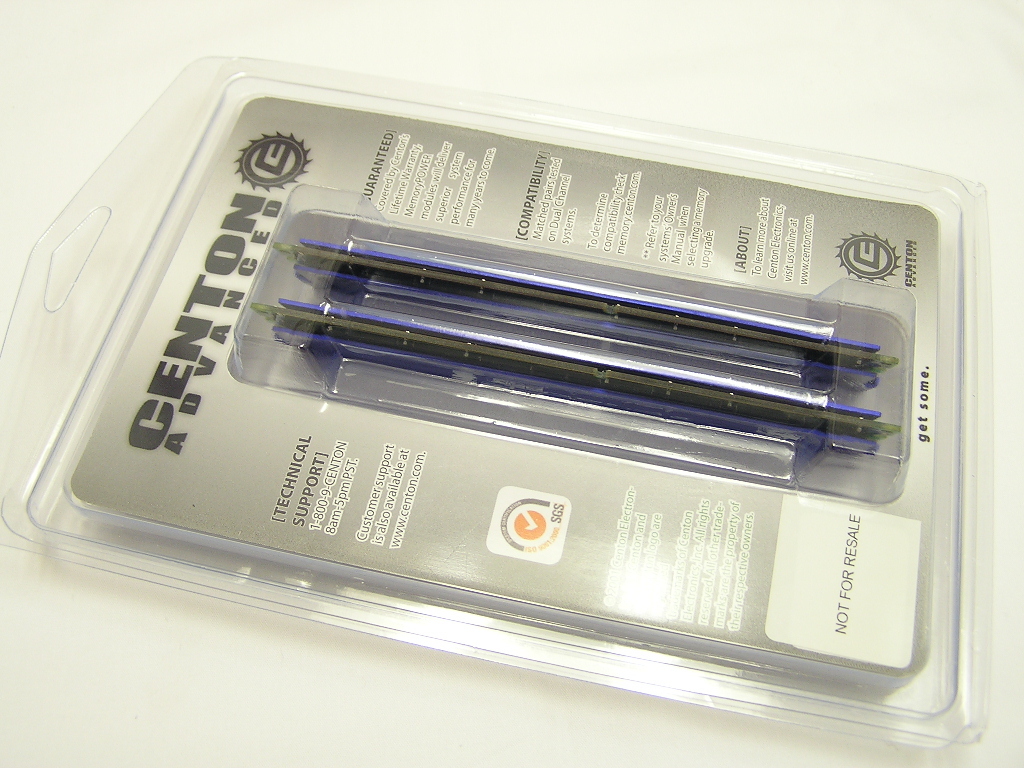
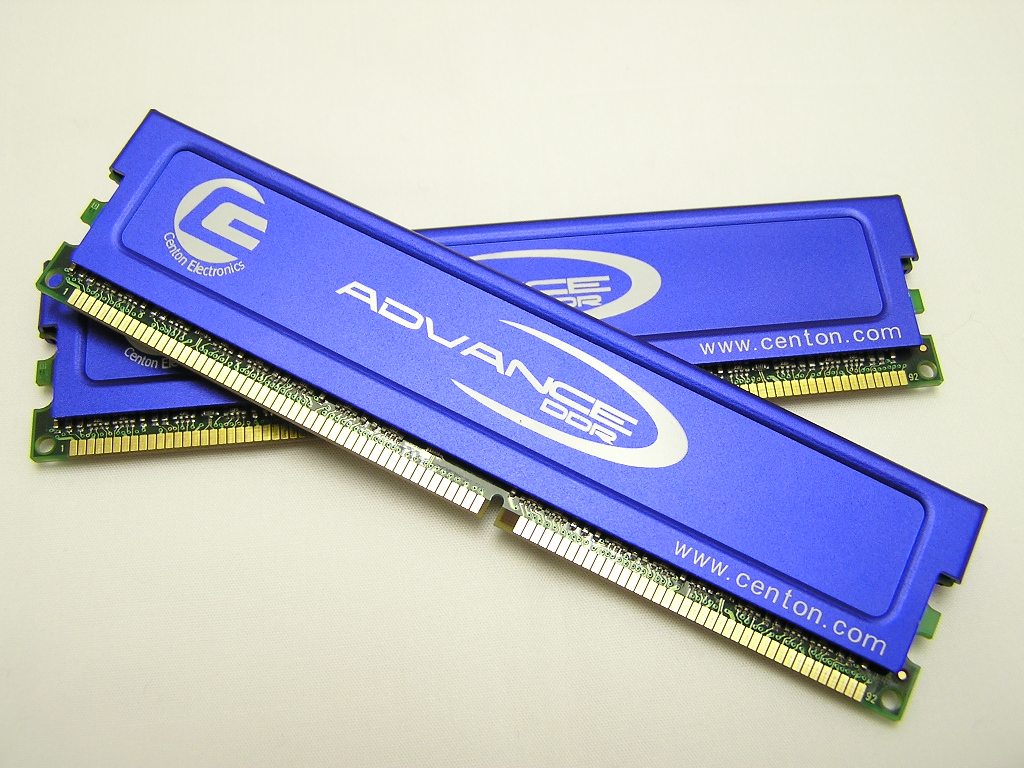
The packaging of Centon’s Gemini Low Latency PC3200 definitely stands out from the rest. It’s a bit bulkier than the rest, but does keep the memory nice and safe. The memory comes with blue aluminum heatspreaders, like the ones found on Corsair memory. Again, heatspreaders do absolutely nothing to help cool memory. It’s only for looks and allows companies to slap their logos. Centon’s memory comes with a lifetime warranty and free technical support; both of which should be a necessity from all memory manufacturers.
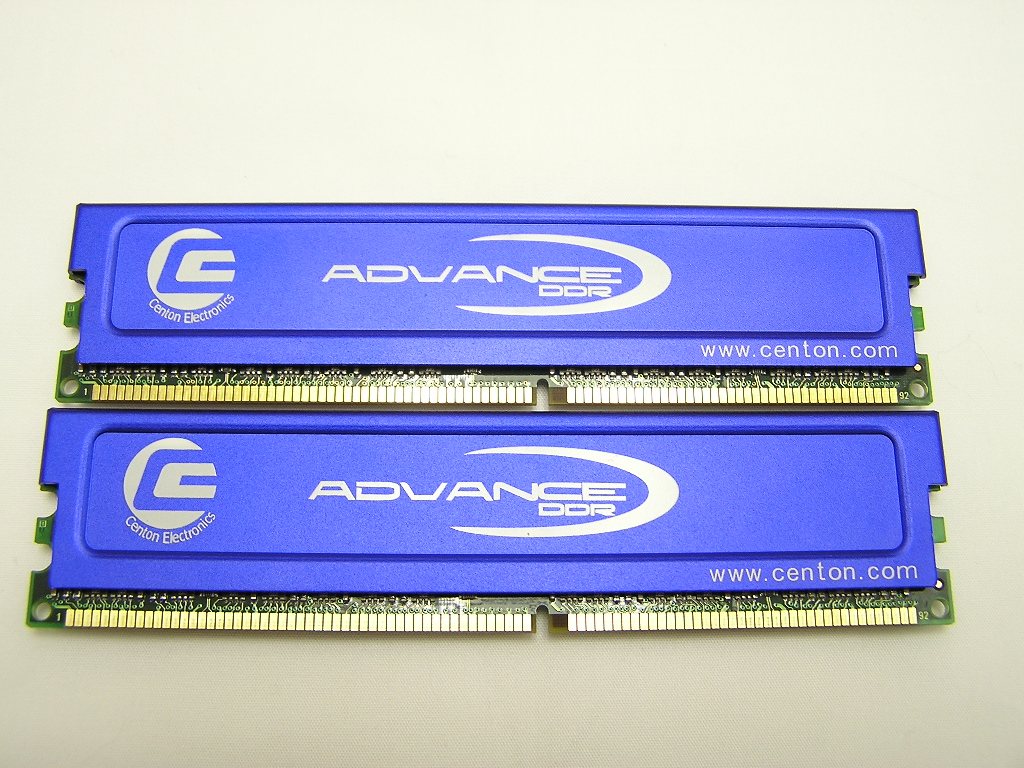
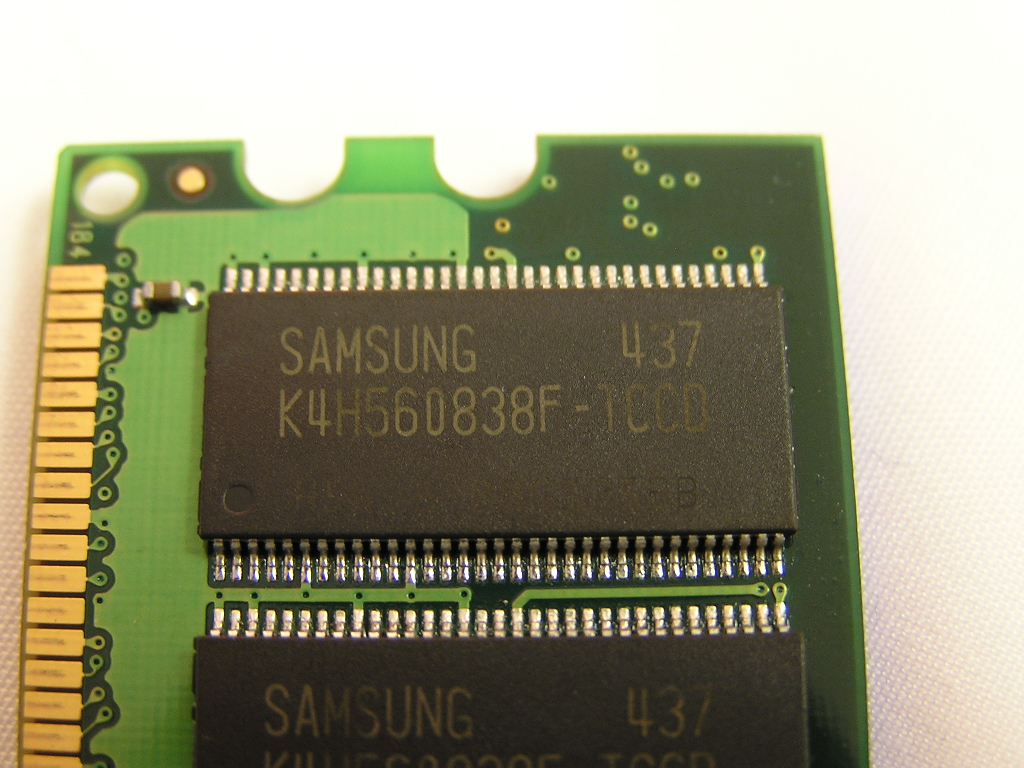
Not surprisingly, the Centon Gemini Low Latency PC3200 comes rated at 200MHZ with latencies of 2-2-2-5. The Samsung TCCD is rated to be 4ns, which is capable of 250MHZ but with a CAS latency of 3. The heatspreaders were easy to remove, and with a little prying, I found that the sample I received came with week 437 chips. Overclocking enthusiasts tend to like week 431 more, but I’ve found that the chips have little difference. It’s more luck of the draw than anything.
Test System and Overclocking
Test System:
- AMD Athlon 64 3000+ Winchester
- MSI K8N Neo2 Platinum
- 2 x 512MB Centon Gemini Low Latency PC3200
- Gigabyte Radeon X800 Pro
- OCZ DDR Booster
- Ultra Products 600W
Overclocking:
Keep in mind that during overclocking, the latencies are as follows: CAS-TRCD-TRP-TRAS
Many of you might wonder why I don’t compare the performance of the memory to other brands. Well that’s because there isn’t much point unless it’s a memory roundup. Overclocking enthusiasts will want the best overclocker and the final megahertz is what really matters. To start everything off, I ran the memory at 200MHZ at 2-2-2-5 1T, just to make sure that everything works as rated. Sure enough, it worked fine. Moving on, the memory topped out at 220MHZ 2-2-2-5 1T. Extra voltage beyond 2.85v didn’t help at all. This made certain that the memory was not one of those few that likes voltage. I loosened the TRCD to 3 and TRP to 6 and was able to go a bit further to 230MHZ. Loosening TRAS to 3 helped get me another 10MHZ. Running 240MHZ with latencies of 2-3-3-6 1T was good, as everything was fast and smooth. Now we get to what we’ve been waiting for. Samsung TCCD is known to reach outstanding speeds with latencies of 2.5-3-3-7. I was definitely happy to know that the memory reached a high 280MHZ with command rate of 1T. This is already higher than most of the memory I’ve played with, even if it’s just 5MHZ higher. I lowered the multiplier to 8x and latencies to 2.5-4-4-8 and received no help. Loosening command rate to 2T only gained me a few extra megahertz, and from our AMD Athlon64 article, you’ll see that the extra few megahertz won’t provide any performance increases. So at the end, the Centon hit a great 280MHZ with timings of 2.5-3-3-7 1T. It’s definitely not too shabby at all; and this is all with 2.85v
Highest overclock results: 9 x 280HTT
Overclocking Results:
- 200HTT 2.0-2-2-5 1T 2.85v
- 220HTT 2.0-2-2-5 1T 2.85v
- 230HTT 2.0-3-2-6 1T 2.85v
- 240HTT 2.0-3-3-6 1T 2.85v
- 280HTT 2.5-3-3-7 1T 2.85v
Overclocking Update:
With the DFI Ultra-D motherboard and loads of voltages in my hand, I decided to go back to the Centon Advanced PC3200 Low Latency memory and find the highest overclock. The Centon Advanced TCCD memory is one of the best overclocking memory we’ve reviewed here at InsaneTek and is used in all of my tests. Knowing that week 437 TCCD’s tend to respond a bit better than other week TCCD’s with increased voltage, I gave the memory 3.0v and reached an amazing 315HTT with 2.5-4-3-7 1T latencies. Wow. That’s faster than any other memory I’ve used so far, and believe me, I’ve used a boatload of memory. The modules ran error free under Memtest and completed 32M Super PI without a problem. A screenshot below is to prove that the memory is outstanding. Unfortunately my 3000+ Venice couldn’t allow anything beyond 9x300 so an 8x multiplier was used. This is with the memory using some another kind of Brainpower PCB. Just imagine what it’ll do with Brainpower 808…!
- 315HTT 2.5-4-3-7 1T 3.0v
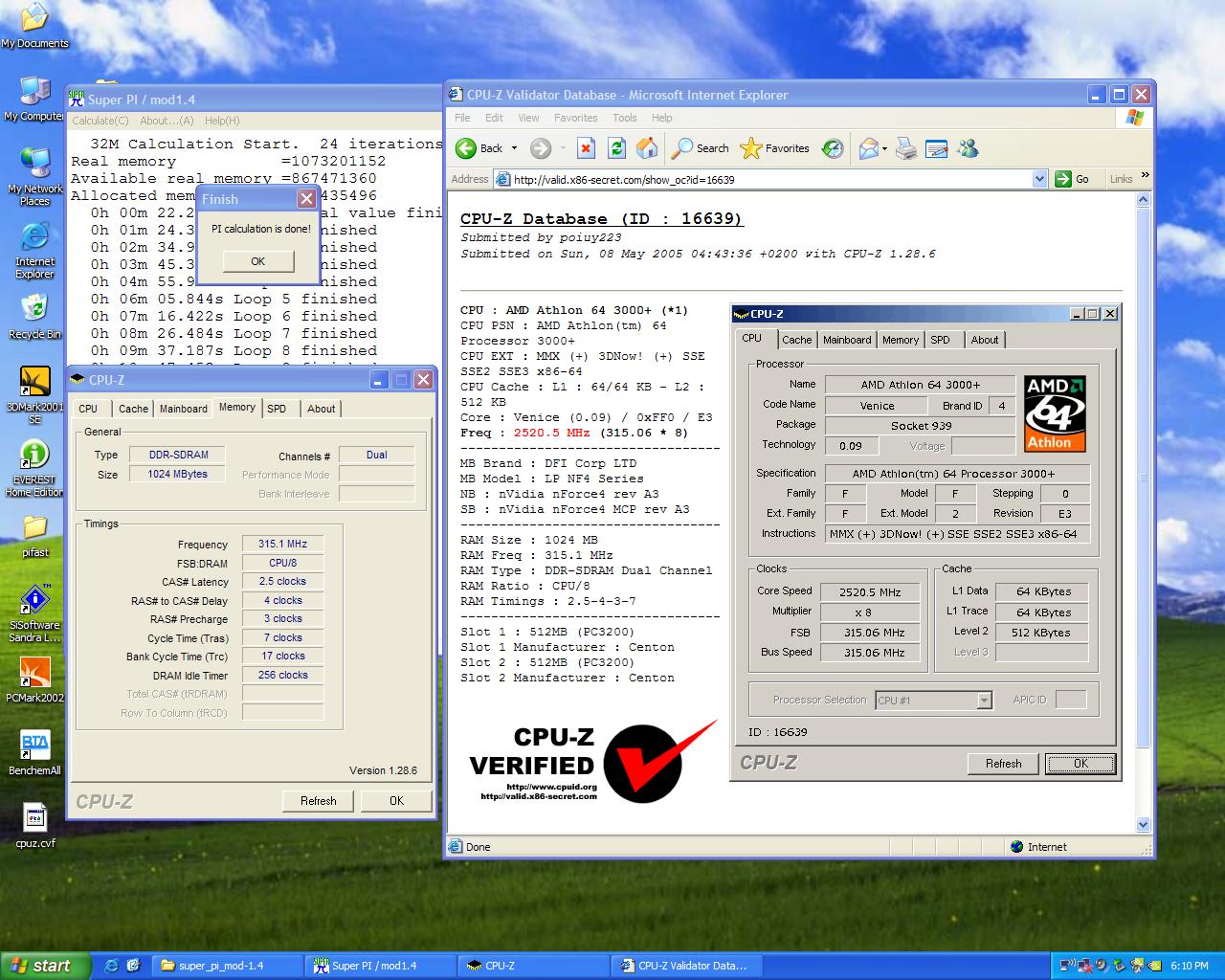
The screenshot shows that Super PI passed without failure at 32M calculations. The Super PI version is the Super PI mod1.4 which has been designed with anti-cheat. The CPU-Z has been validated to prove that that screenie is real and not fake.
Results
A series of memory intensive benchmarks will be run to test the performance of our sample. The following tests will be based on common benchmark programs such as 3DMark and PCMark. Real life performance differences will be tested through current games such as Far Cry, UT2003, UT2004, and Halo. Memory bandwidth benchmarks will be based off of SiSoft Sandra and Aida32. Super PI and PiFast will also be used to test memory performance, as the benchmark benefits largely from FSB increases.
SiSoft Sandra
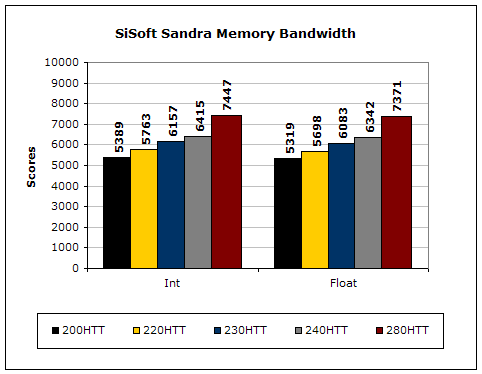
SiSoft Sandra is the most widely used memory bandwidth test. It can tell you the increase in performance from just lowering the latency timings. The results seem to scale linearly, despite the fact that the HyperTransport Bus is different when the overclock increases.
Aida32
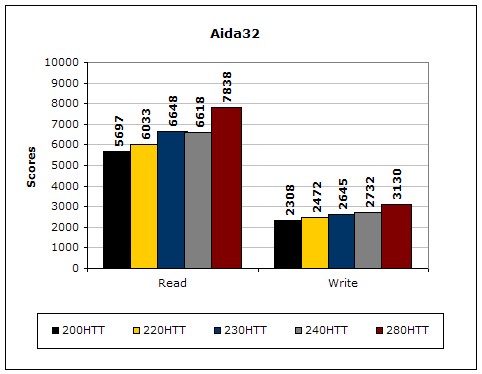
Much like Sandra, Aida32 tests the memory’s ability to read and write data in large chunks. The results are similar to the results in Sandra.
3DMark2001SE
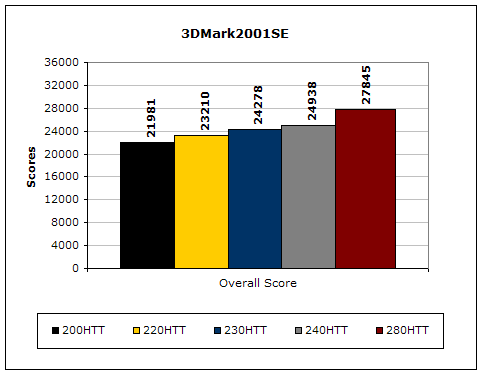
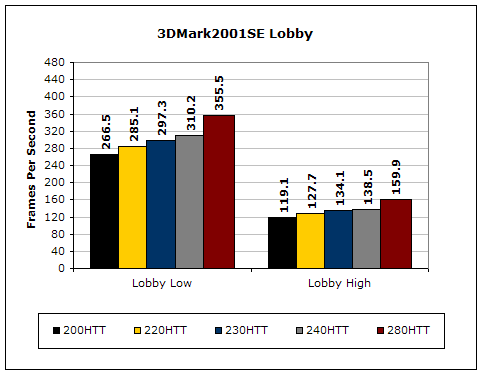
3DMark is probably the overclocker’s favorite benchmark. Unlike 3DMark2003, which stresses mainly the video card, 3DMark2001SE tests all of the system’s main components. Increasing the CPU speed, memory speed, and video card speeds will result in higher results in the final score.
PCMark
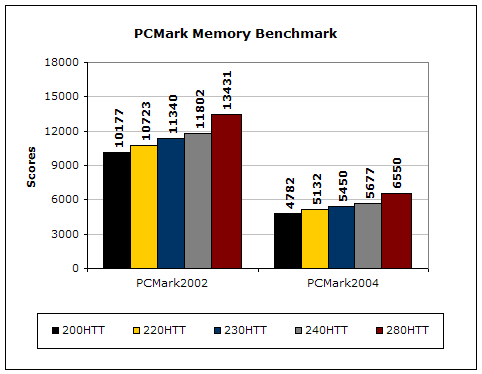
PCMark is another benchmark created by Futuremark. It tests the memory compression and decompression speeds in small to large chunks of data.
Results Continued
Doom 3
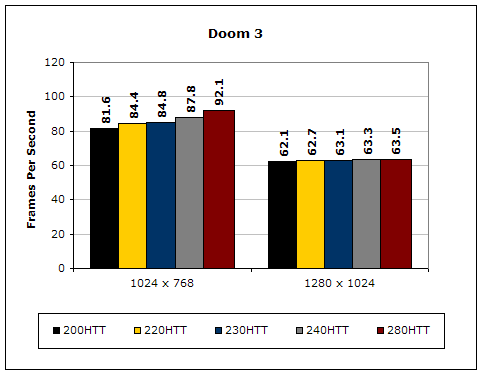
Although Doom 3 is known to be more graphic dependent than system dependent, the game responds positively when latencies are lowered and system bus is increased.
Far Cry
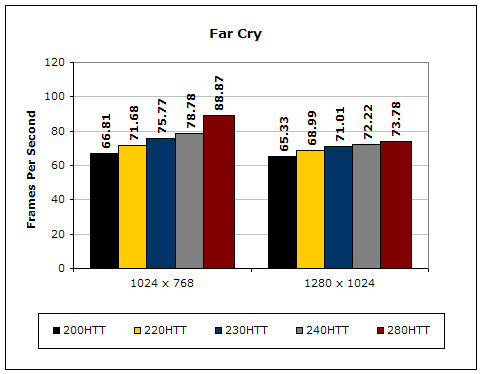
Far Cry is currently one of the most popular games and does a great job of taxing your system.
Unreal Tournament 2004
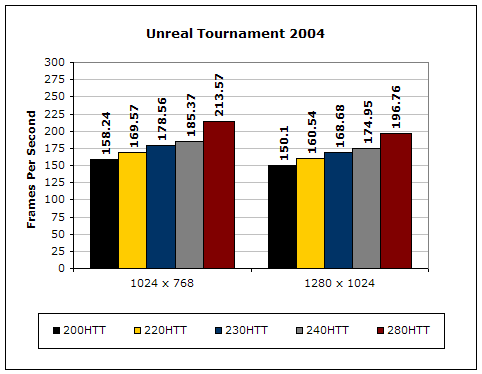
Unreal Tournament 2004 is another popular game that also doubles as a good benchmark. This game really likes memory bandwidth and it shows. The results were pretty much as expected.
Super PI
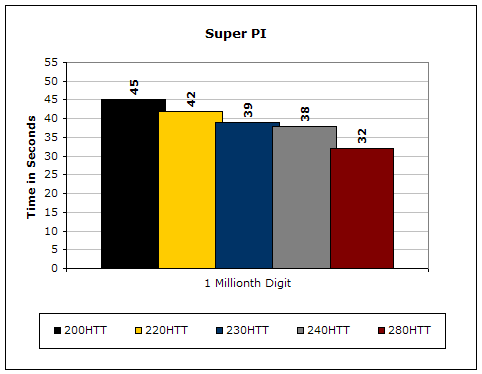
Since the value of PI is an infinite value, Super PI is a speed test to find the digit you’re looking for. In this case, we chose the millionth digit. Super PI benefits greatly from higher FSB as well as low latencies.
PiFast
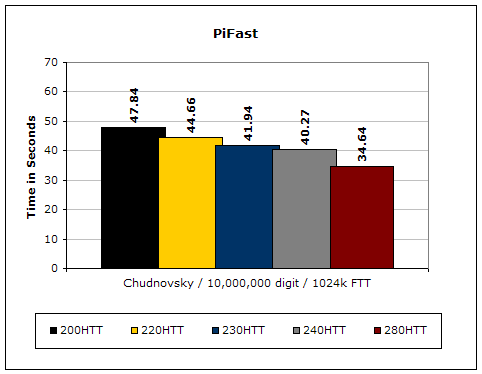
PiFast is similar to Super PI and the results can be greatly affected by a slight adjustment to the memory megahertz and latency.
Conclusion and Thoughts
Centon’s offering of their low latency memory based on the Samsung TCCD die proves to be a great threat for other companies. The memory overclocks extremely well even without the highly acclaimed Brainpower PCB. The interesting thing is that Centon will be using Brainpower PCB in the future and that sure should make things even better. Centon’s first attempt at breaking into the enthusiast community is successful. The price is decent and competitive and the performance is awesome. The only thing they need to improve on is the aesthetics. The memory does look a bit plain, even though the heatspreaders are a nice blue. Yet, that should not be a factor to turn down this memory. In fact, Centon’s Gemini Low Latency PC3200 is the best low latency DDR memory I’ve tested to date. Without a doubt, it wins the Highly Praised Award.
Pros:
- Excellent overclocking potential
- Excellent performance
- Competitive price
- Lifetime warranty
Cons:
- Bland aesthetics

We would like to thank Centon for providing us the sample. If you have any questions or comments, feel free to hit us up in the forums. You can also check out more of our latest reviews on the front page.