

TTIC NPH-1
Introduction
The ever increasing clock speeds of modern CPU’s also bring problems, mainly heat. Intel’s latest Pentium 4 cpu, the Prescott, is a testament to this. Unless engineers find some way to reduce heat output drastically, the need for large heatsinks and extravagant cooling devices will remain. The use of heatsinks and fans has been the norm since the first Pentium CPU’s. Back in the day the biggest heatsink ruled and that was that. Heatsinks are almost at their limits in terms of size so companies have been looking for new ways to improve on heatsink design, TTIC is one of them.
TTIC produces many different models of heatsinks for OEM companies. Their heatpipe line of heatsinks is their debut into the enthusiast market. Their unusually large heatpipe operates similarly to a refrigeration system. One side of the heatpipe heats the fluid inside and turns it into a vapor, the hot vapor travels towards the cooler opposite end where it condenses and gives off it’s heat. The heat is given off to the aluminum fins in this particular heatsink. This cycle repeats and makes for a very efficient way to transfer heat.
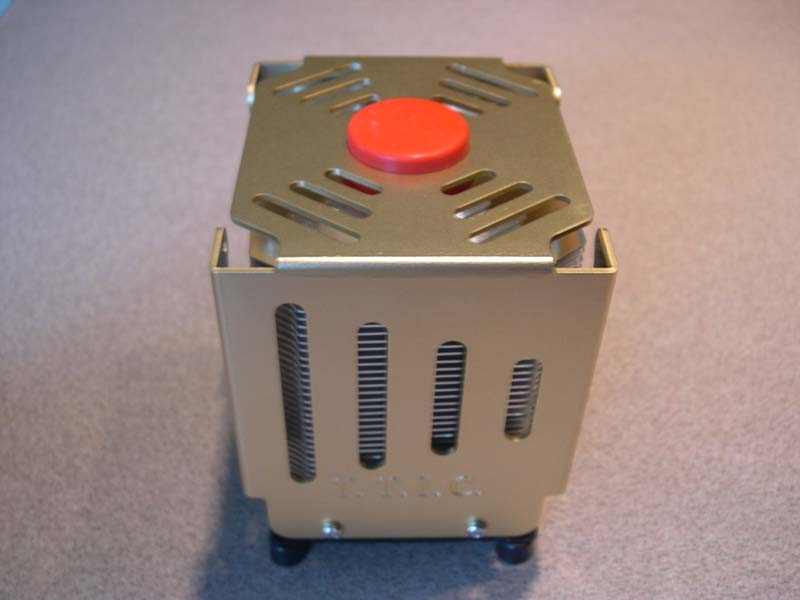
TTIC NPH-1
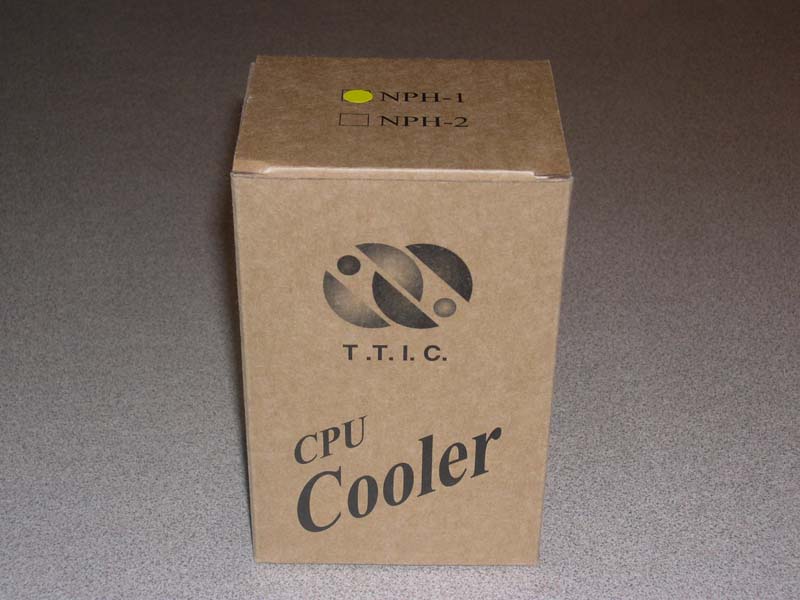
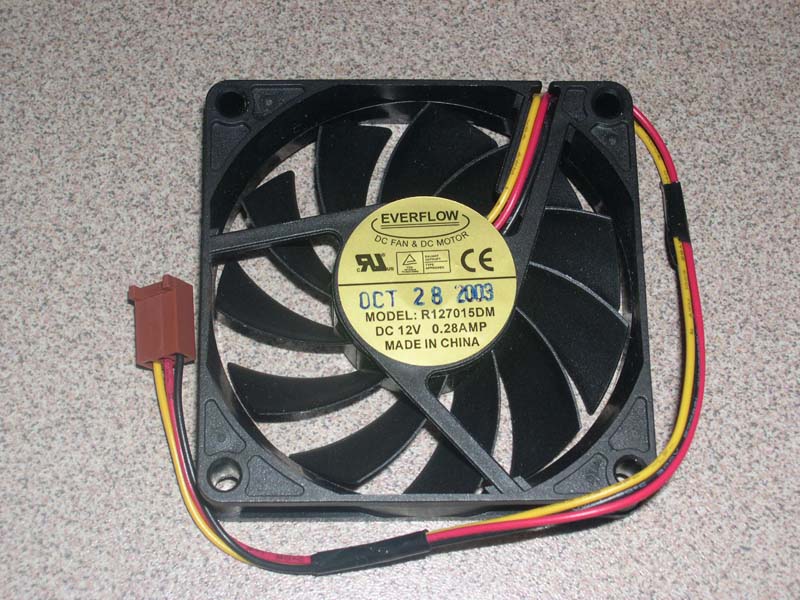
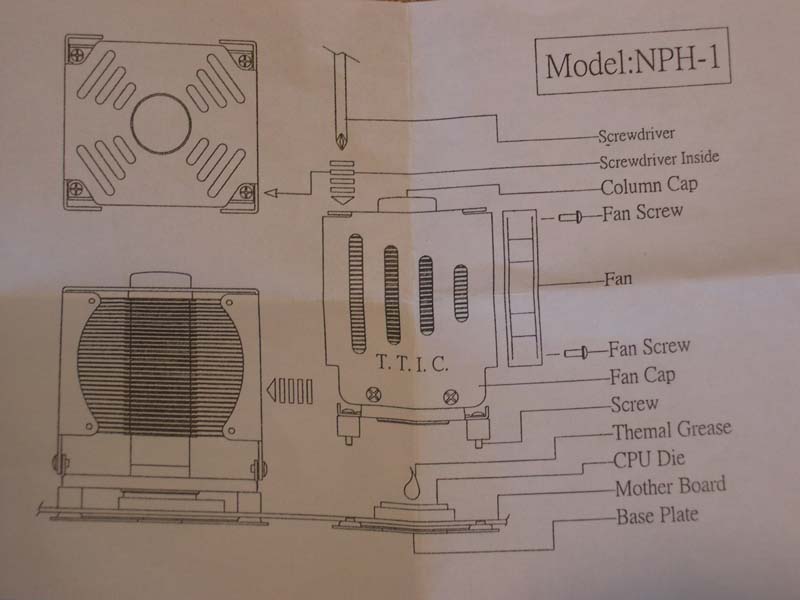
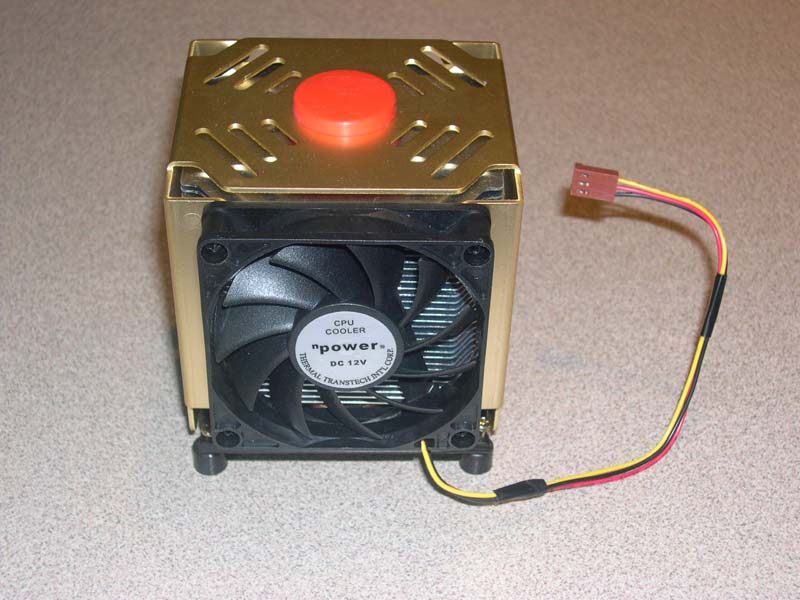
The TTIC arrived in a cardboard box that contained the heat sink, a small pack of thermal grease, an installation diagram and an Everflow 70mm fan.

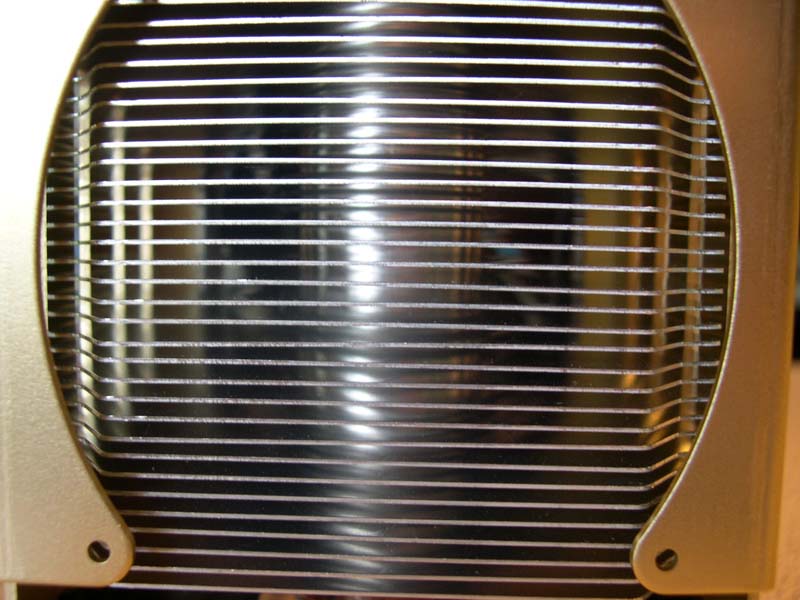
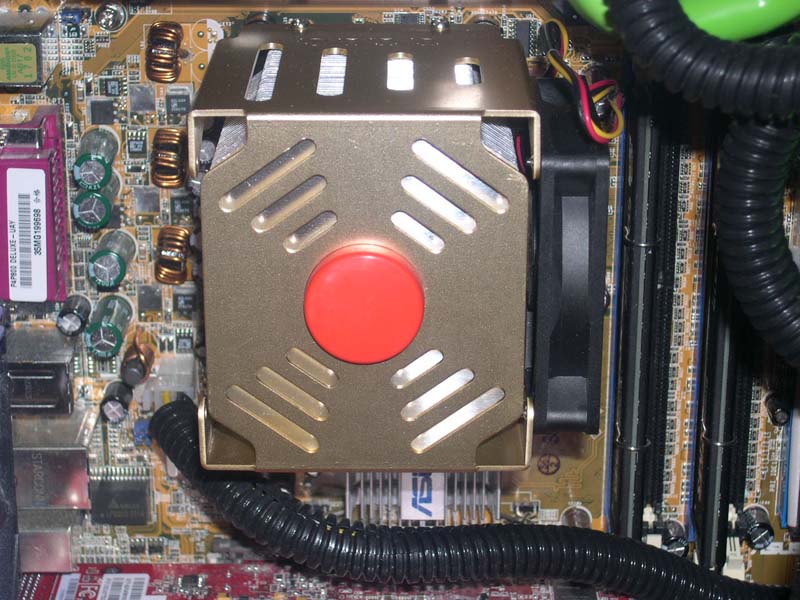
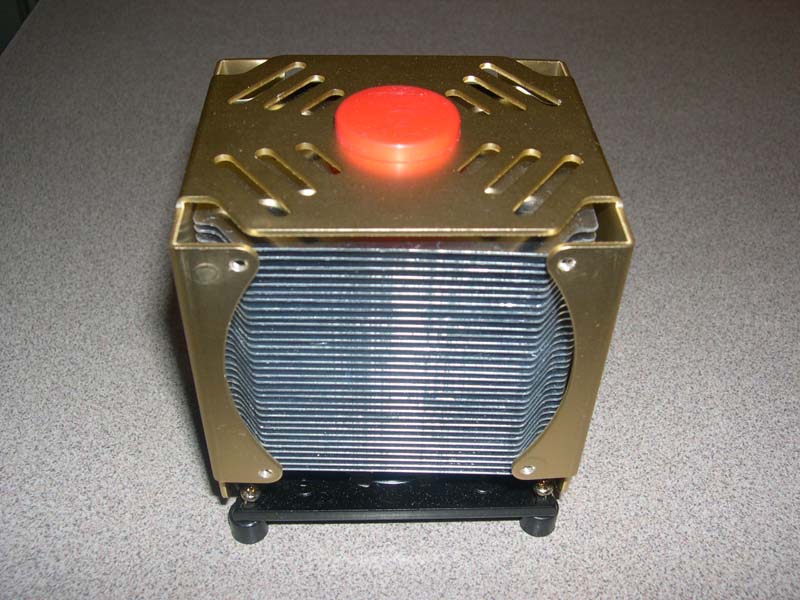
TTIC has a different way of utilizing heatpipe technology than most other heatsink manufacturers. Small, thinner heatpipes is the common design. Instead, TTIC chose to have one extra large heatpipe that runs directly through the center of the fins. There is a cage surrounding the fins but it doesn’t look like it has a useful purpose other than looks and easier installation.
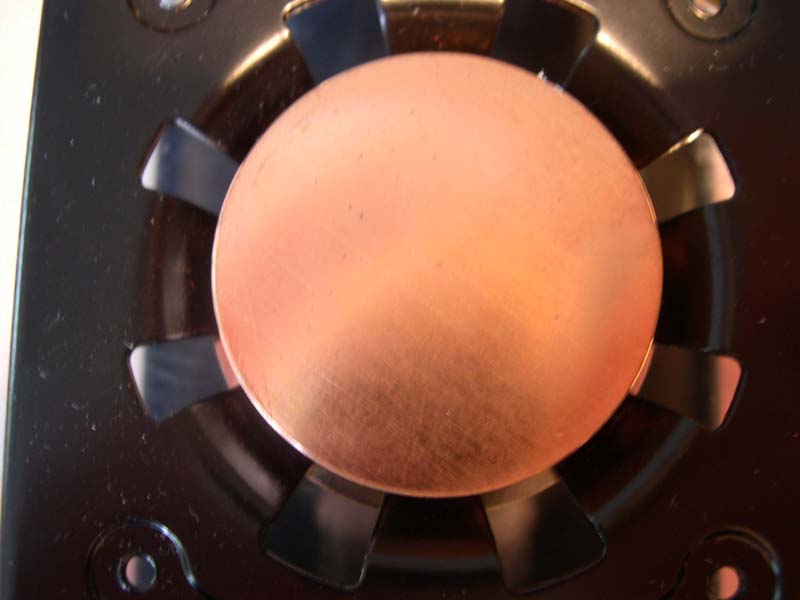
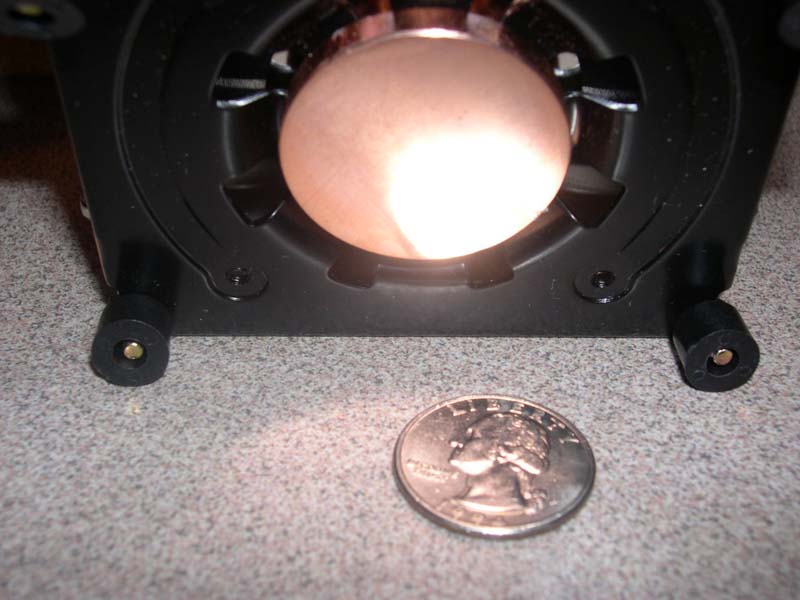
The copper base was not as shiny as I would have liked. It could use some lapping (sanding the copper to make it smooth). There was no sticker or removable layer to protect the base from being scratched or smudged. However, the TTIC NPH-2 we recently reviewed had a protective sticker so maybe TTIC forgot to put one on before it left the factory.
The Fan
The slim Everflow fan makes it fit easily on cramped motherboards. The fan is not incredibly quiet, it was a bit louder than my stock Intel HSF, but it isn’t a Delta screamer and there was no annoying high-pitched sounds.
Fan specifications:
- 70 * 70 * 15 (mm)
- 3600 RPM
- 31.5 CFM
- 31 dBA
- One Ball One Sleeve Bearing
- 3 Pin Molex power
Test Setup and Results
Test Setup and Method:
I used the thermal grease that TTIC included in the box. Unfortunately I do not have a thermal probe to get accurate temperatures so I had to use a software program (Motherboard Monitor) to read the sensors off my motherboard. I promise I will get a thermal probe before my next review.
Test system specifications:
- Intel Pentium 4 2.4C @ 3.0Ghz (1.6 VCore)
- Asus P4P800 Deluxe
- 2 x 256MB Corsair XMS3200
- ATI 9800 Pro 128mb
- Chieftec Dragon Case
- Channel Well 420w PSU
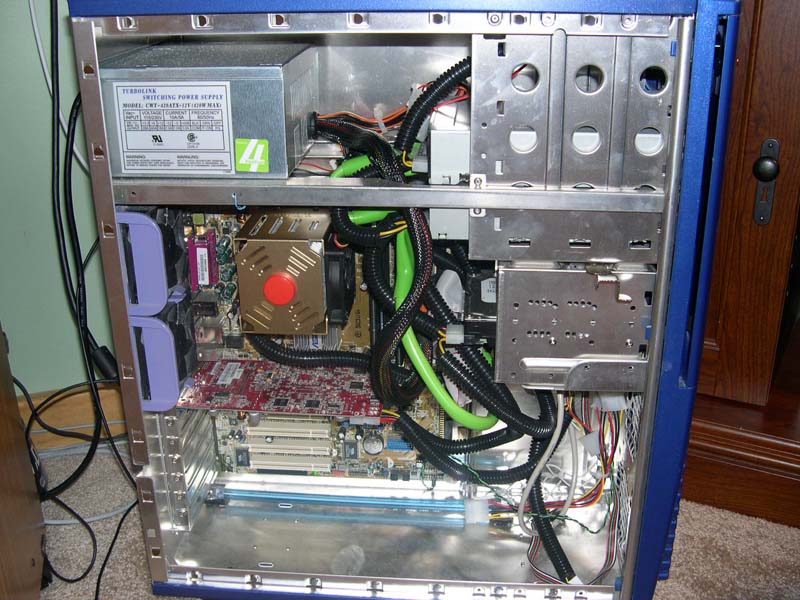
The testing process involves 30 minutes of idling at desktop. The CPU was stressed using Prime95. I used the maximum heat option and ran torture test for 30 minutes.
Since I wasn’t able to measure the temperatures with an accurate probe I will be pitting the NPH-1 against the stock Intel HSF. Ambient temps ranged from 56 to 59 degrees Celsius (74 to 77 degrees Fahrenheit).
Results:
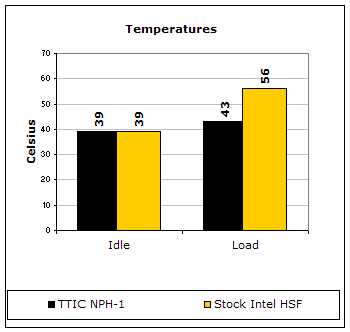
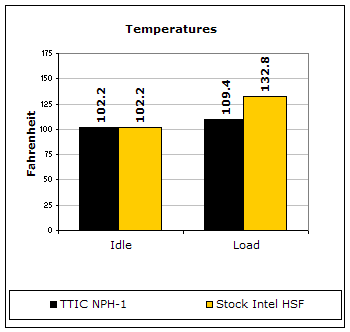
The TTIC NPH-1 definitely bests the stock Intel heatsink. An 11 degree difference at load is very good. The large heatpipe no doubt helps a lot.
Conclusion and Thoughts
Installation wasn’t difficult but it wasn’t a piece of cake either. It requires removal of the motherboard. The heatsink then screws into a backplate that is placed under the motherboard, this of course requires a screwdriver. The installation procedure also requires the removal of the P4 retention module, it’s not hard if you know how but it’s fairly easy to break if you don’t do it correctly (I would know). The way it’s mounted does provide for good contact though. It’s almost impossible to mess up unless you don’t tighten the screws.
Unfortunately no product is perfect. This heatsink only allows for a non-standard 70mm fan. I don’t understand why TTIC designed it for 70mm fans but hopefully it will be fixed in a later revision of it’s product line. It might sound like a personal preference but I don’t like the bright colored cap on top of the heatpipe, it doesn’t compliment my case at all. If the color was less exotic it would look much better. The copper base was not as shiny as other heatsinks that I have used. I blame this partially on a missing protective sticker.
This heatsink accomplishes what it was made to do, offer performance at a low price. I don’t know if I could recommend it to the hardcore overclocker but for someone who needs a cheap solution to cool those hot Pentium 4’s and extend their lifespan this product is ideal.
Pros:
- Large Heatpipe
- Fairly Quiet
- Decent performance
- Good contact with CPU
Cons:
- Copper base was not shiny
- Installation diagram isn’t detailed enough for some users
- Requires remove of motherboard and retention module for installation
- Fan selection limited to non-standard 70mm
We would like to thank Sidewinder for providing us the sample. If you have any questions or comments, feel free to hit us up in the forums. You can also check out more of our latest reviews on the front page.