

Thermaltake Big Typhoon
Introduction
When it comes to cooling products, everyone’s probably heard of Thermaltake. Since 1999, Thermaltake has been manufacturing cases and cooling products. I’ve never really used a Thermaltake product before, so I can’t really say much about their past coolers. As companies began to implement heatpipes, Thermaltake did the same with their new line of coolers. Today we have the Thermaltake Big Typhoon up for review. Let’s go ahead and take a look at how this thing performs.
Thermaltake Big Typhoon
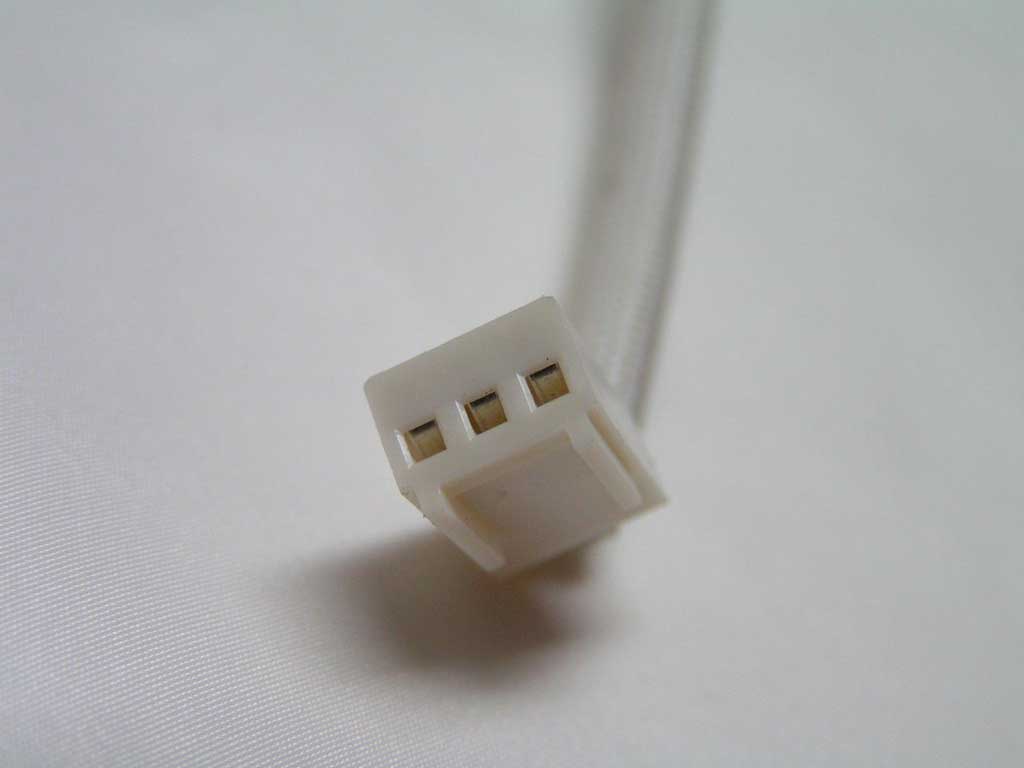
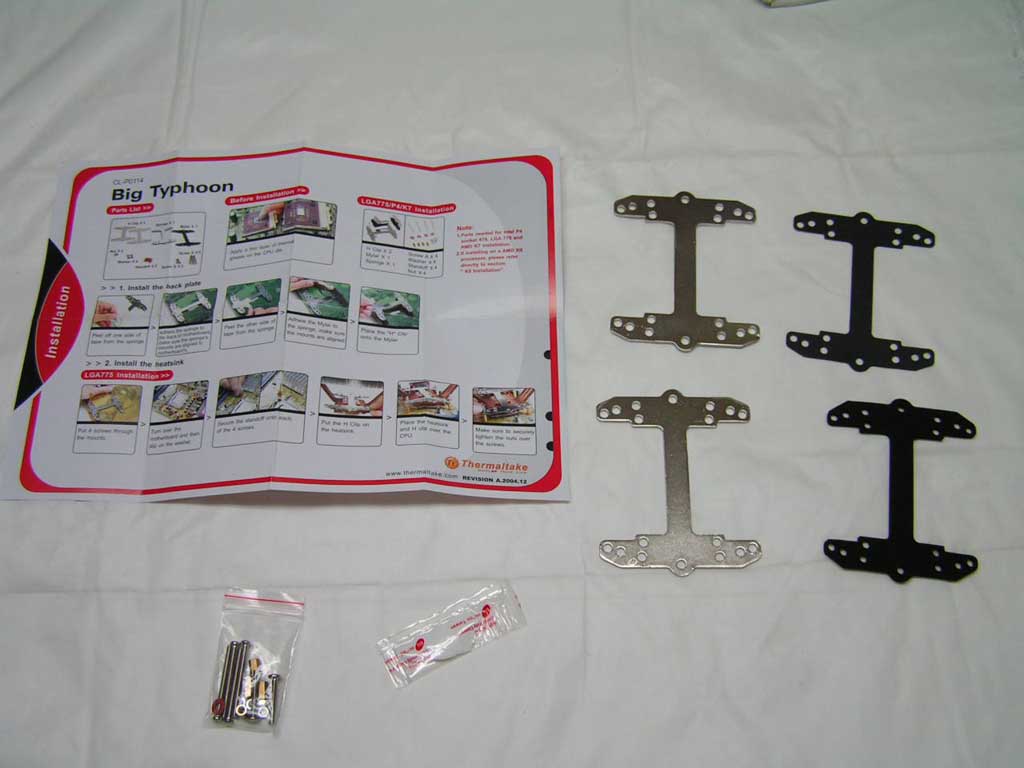
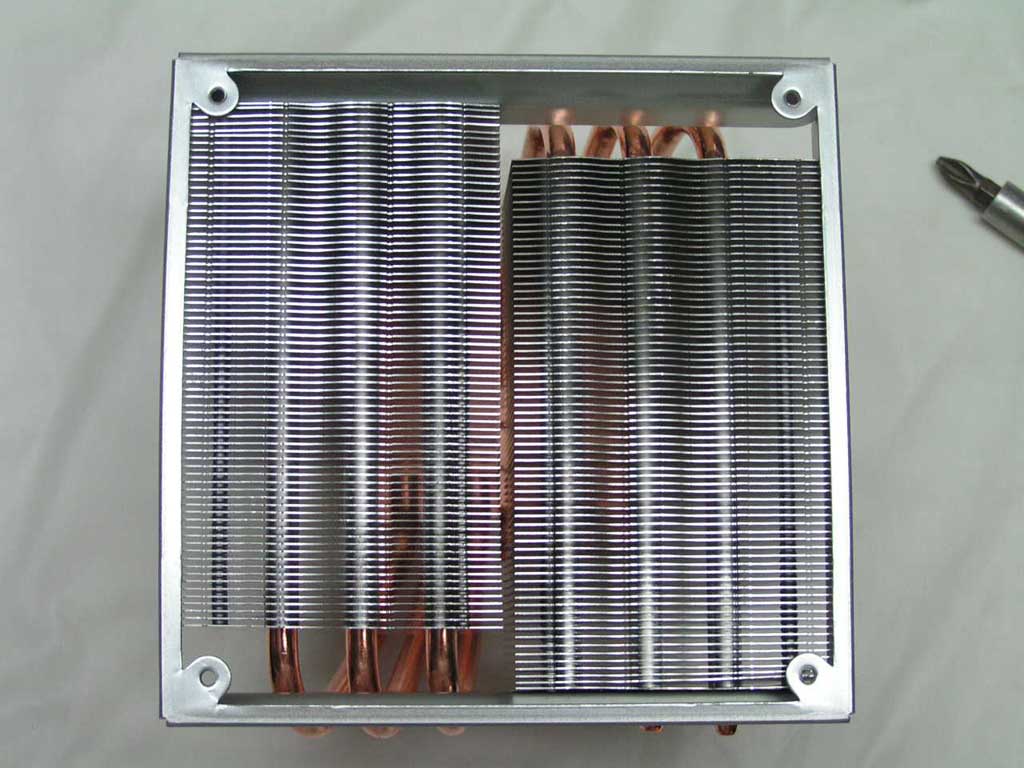
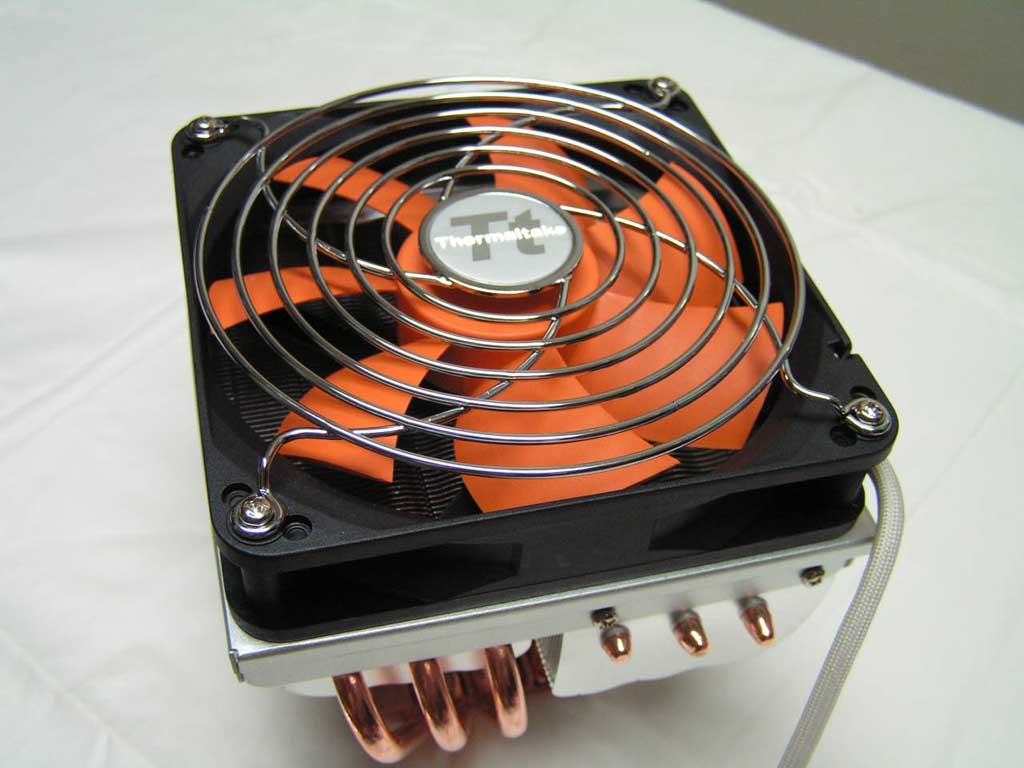
The Thermaltake Big Typhoon isn’t like any ordinary cooler. It offers a total of six copper heatpipes with aluminum fins attached to the top. It makes good use of a 120mm fan, but with heatpipes, the temperatures won’t be affected much by the fan’s RPM. The fan provided by Thermaltake is a 120mm fan, rated at 1300 RPM and pushing 54.4 CFM. The fan uses a 3-pin connector, but no adapter was provided. The Big Typhoon was designed for low noise operation and is rated at 16 dBA. This cooler is compatible with any CPU socket. The packaging was simple. When I opened up the box, the first thing I noticed was a block of Styrofoam to protect the empty space between the aluminum fins and the base of the heatsink. All the mini-components, such as brackets, instruction booklet, thermal paste and screws, were in the component box.
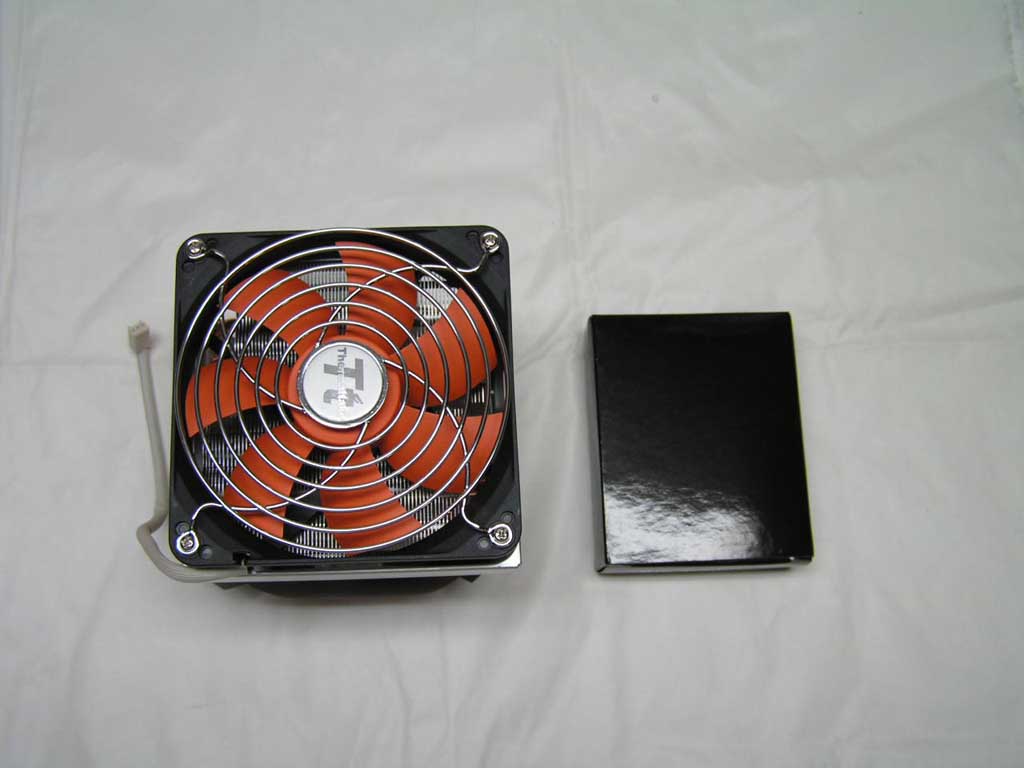
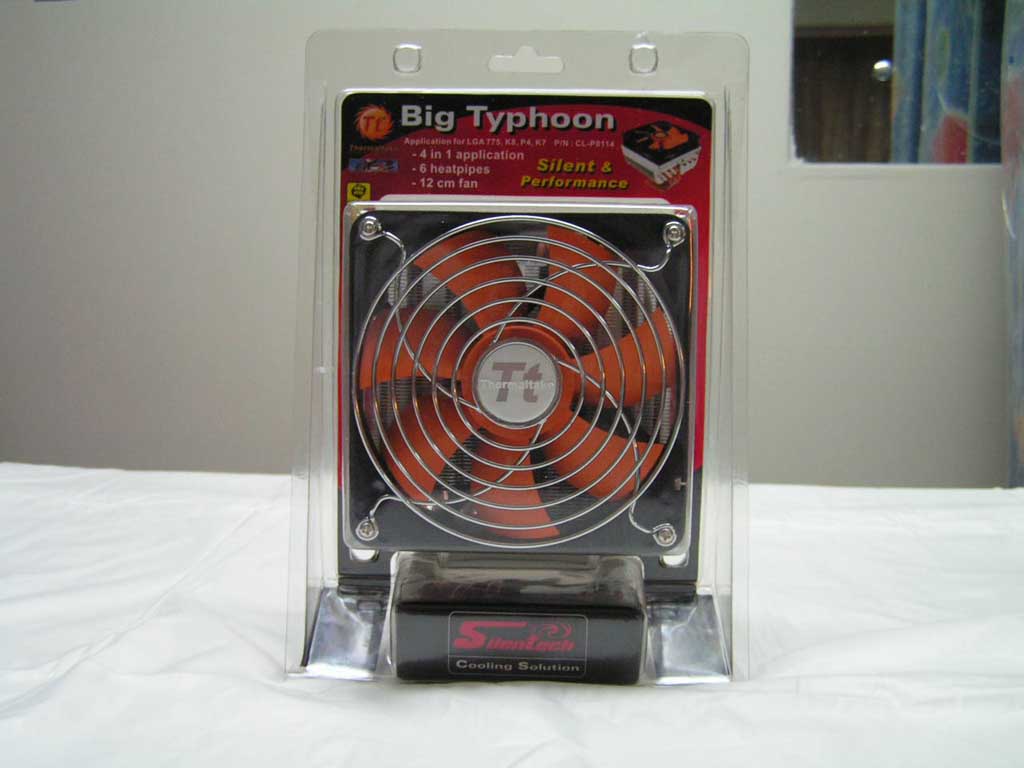
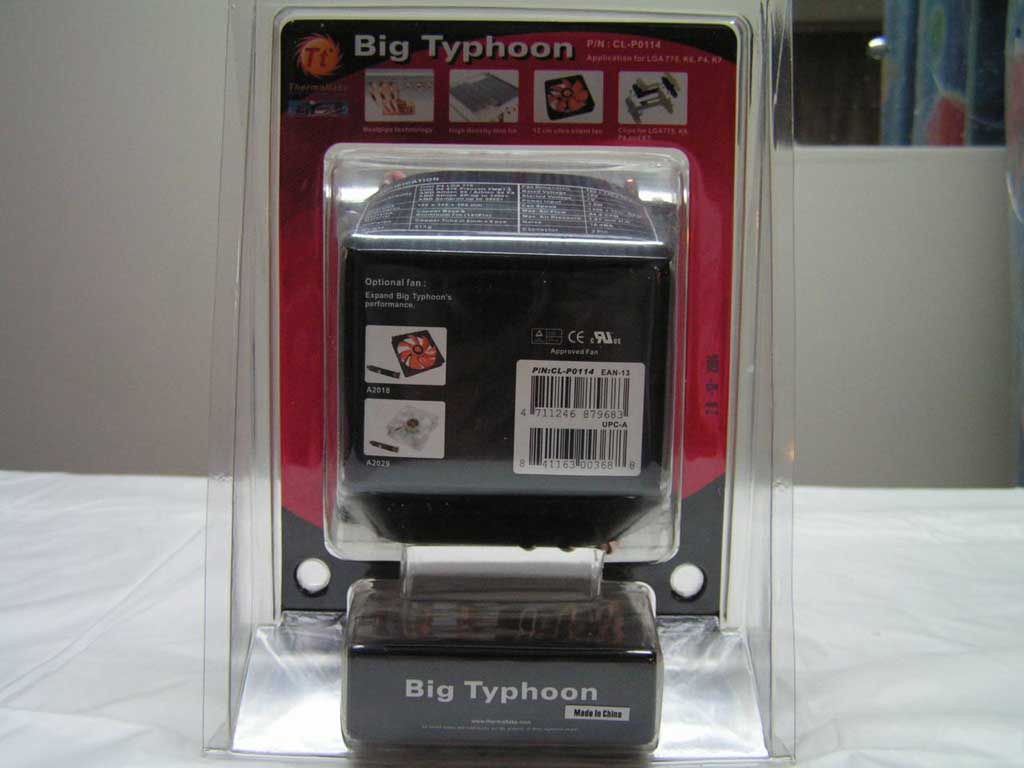
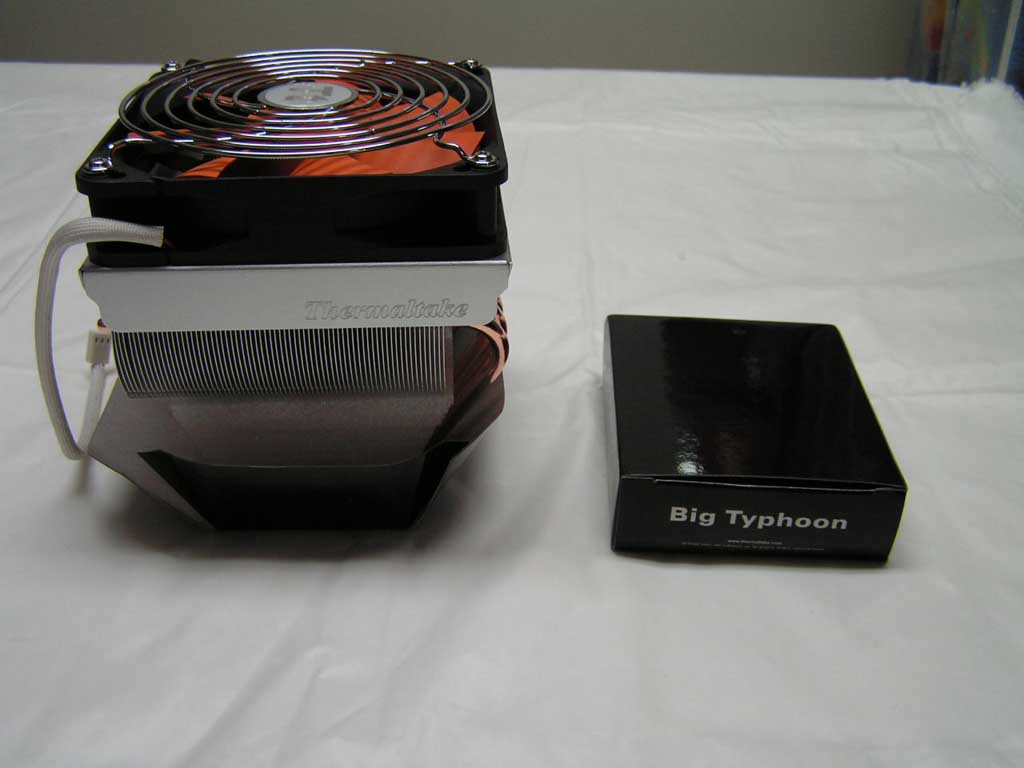
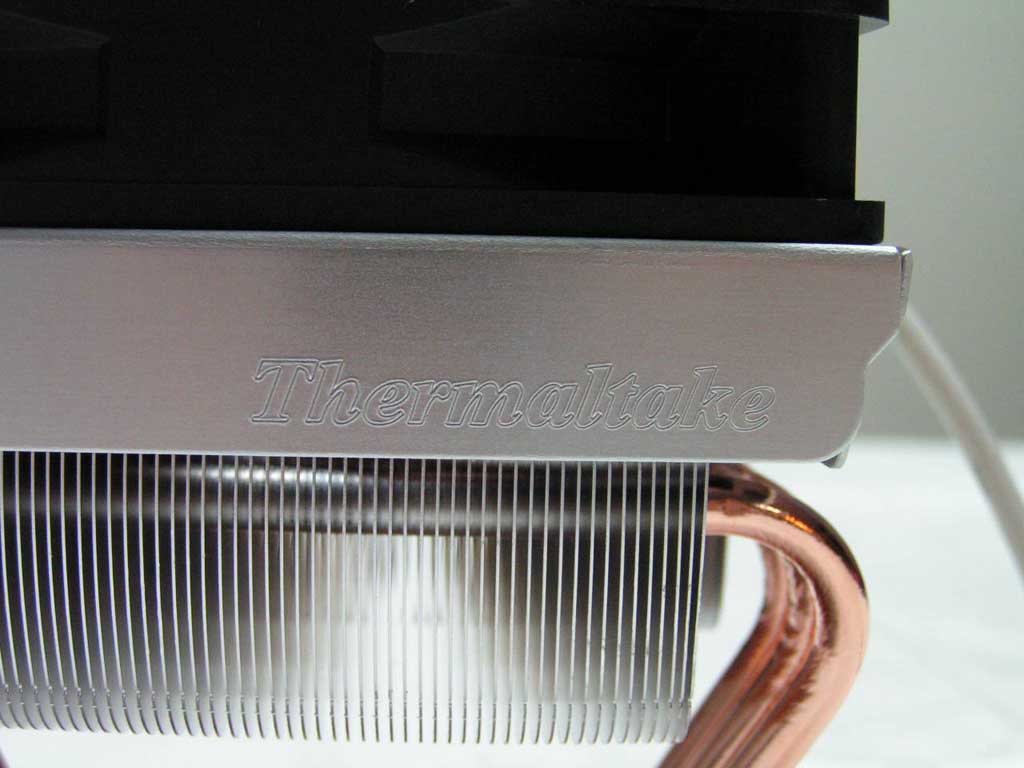
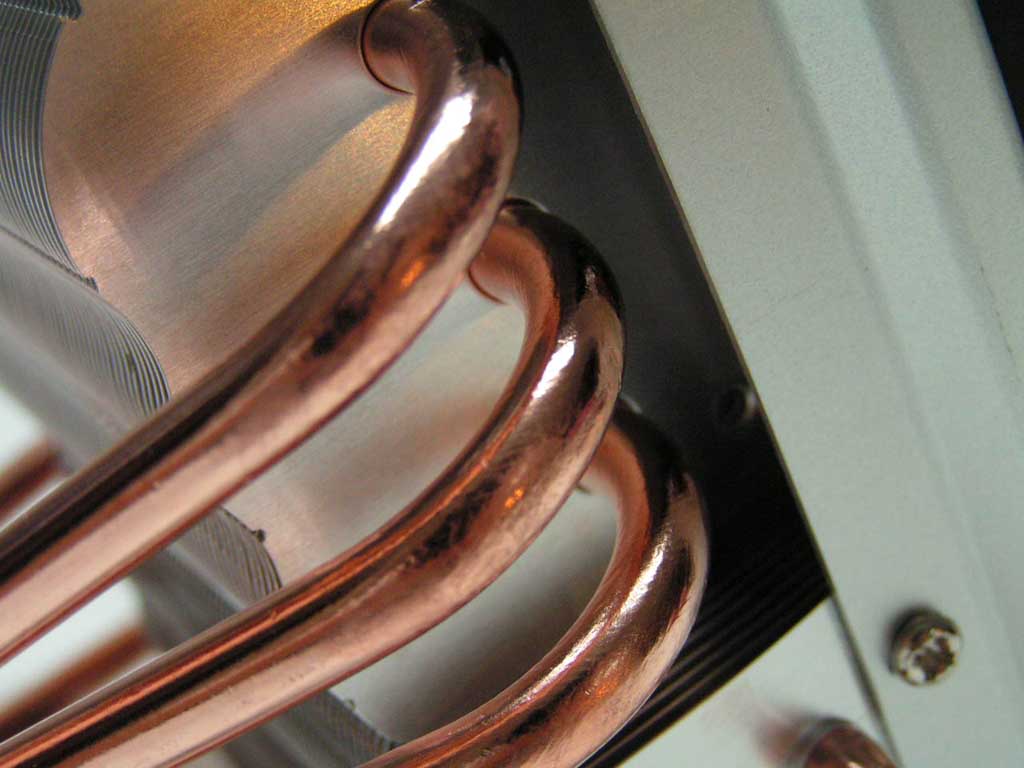
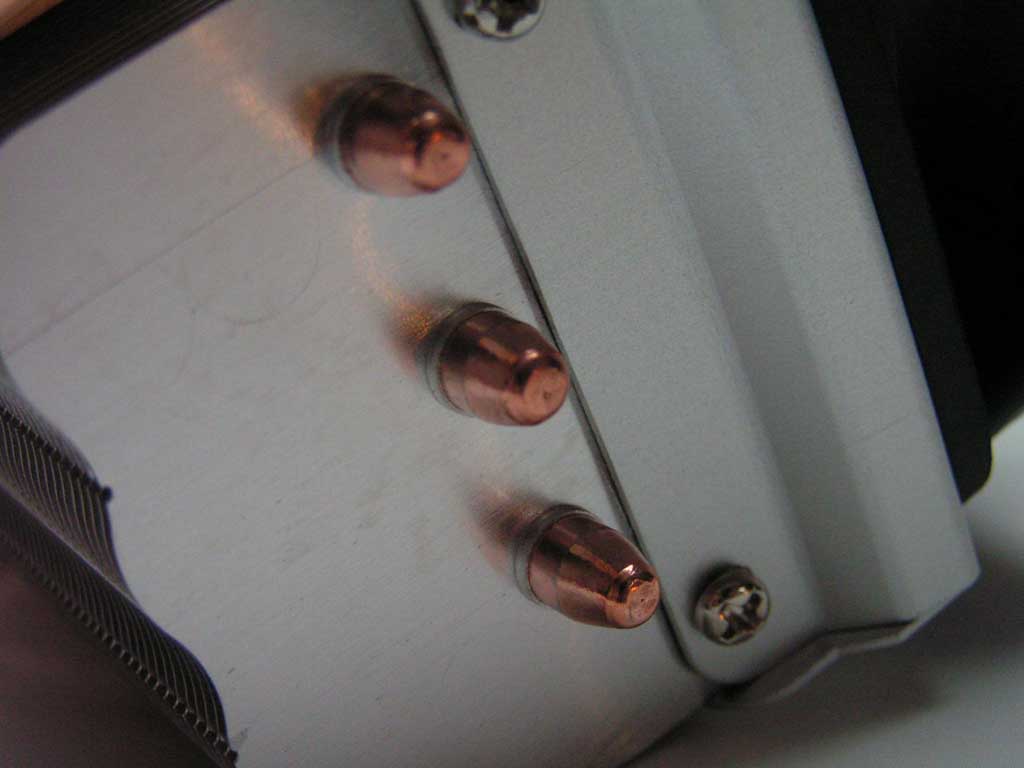
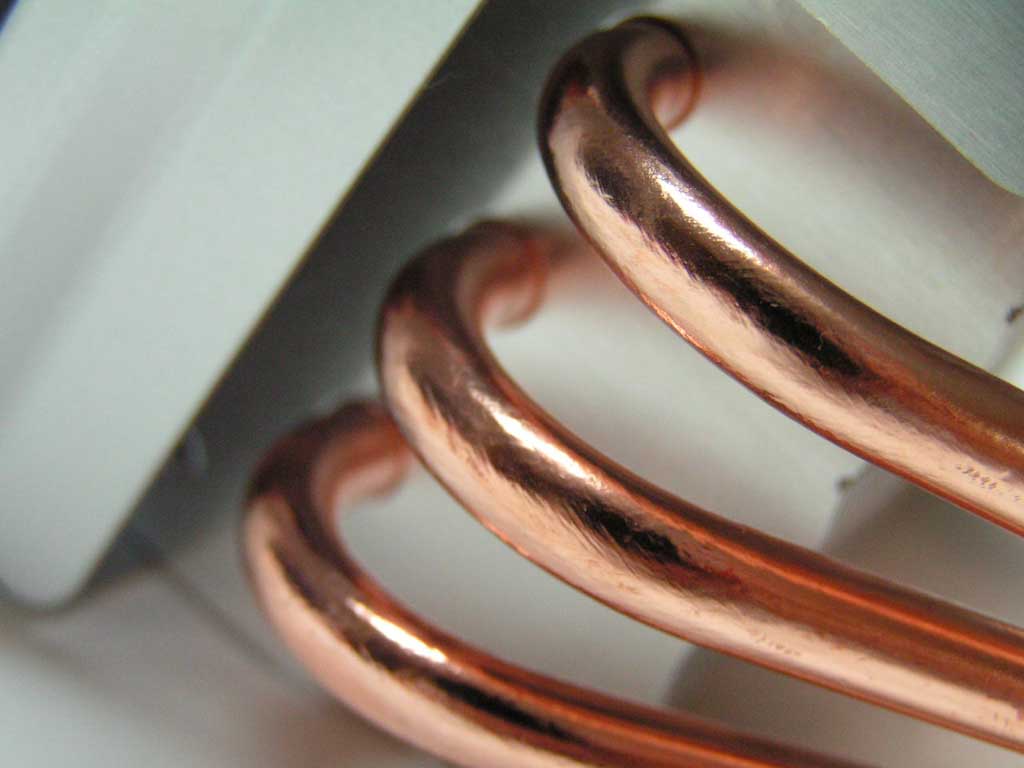
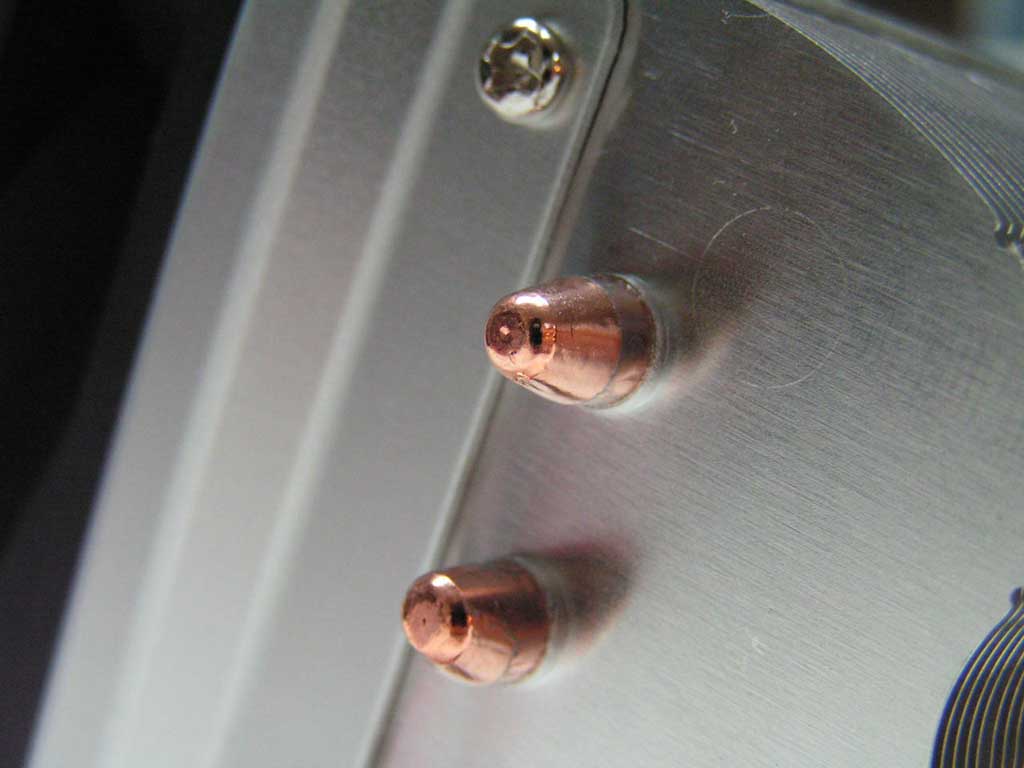
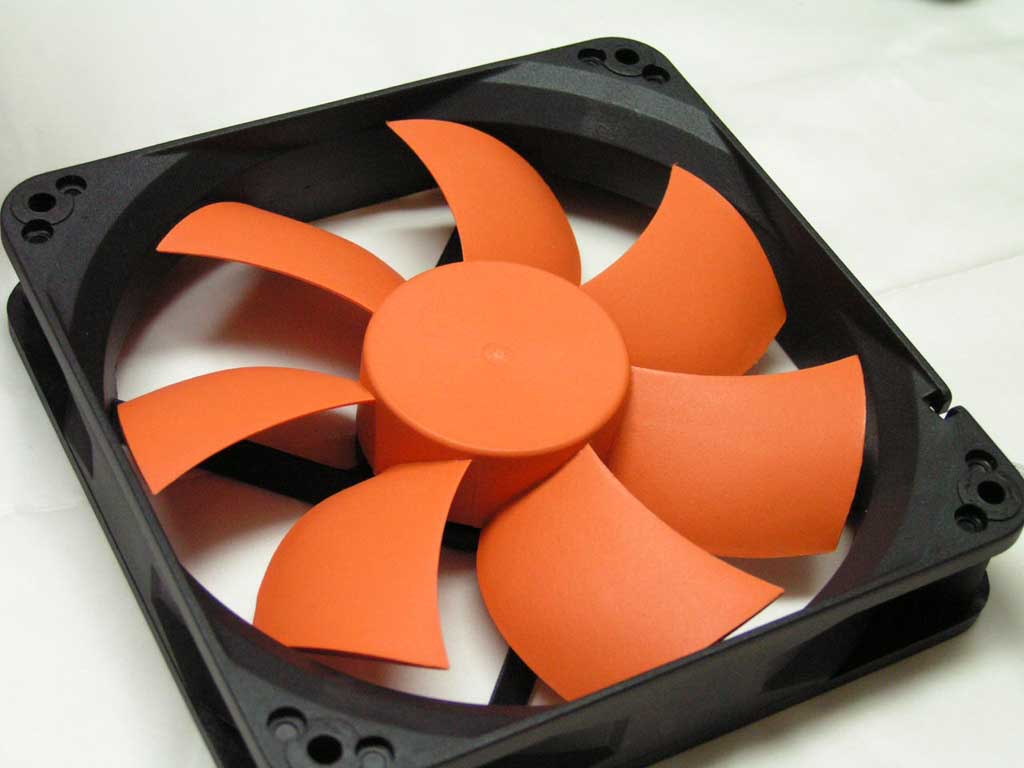
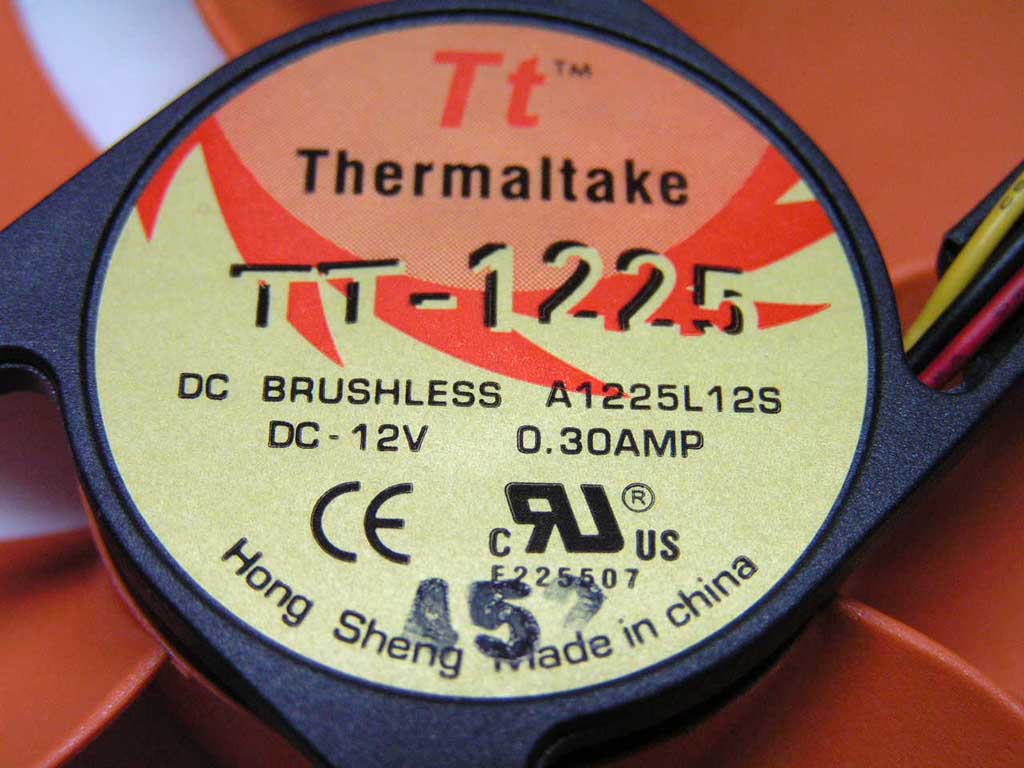
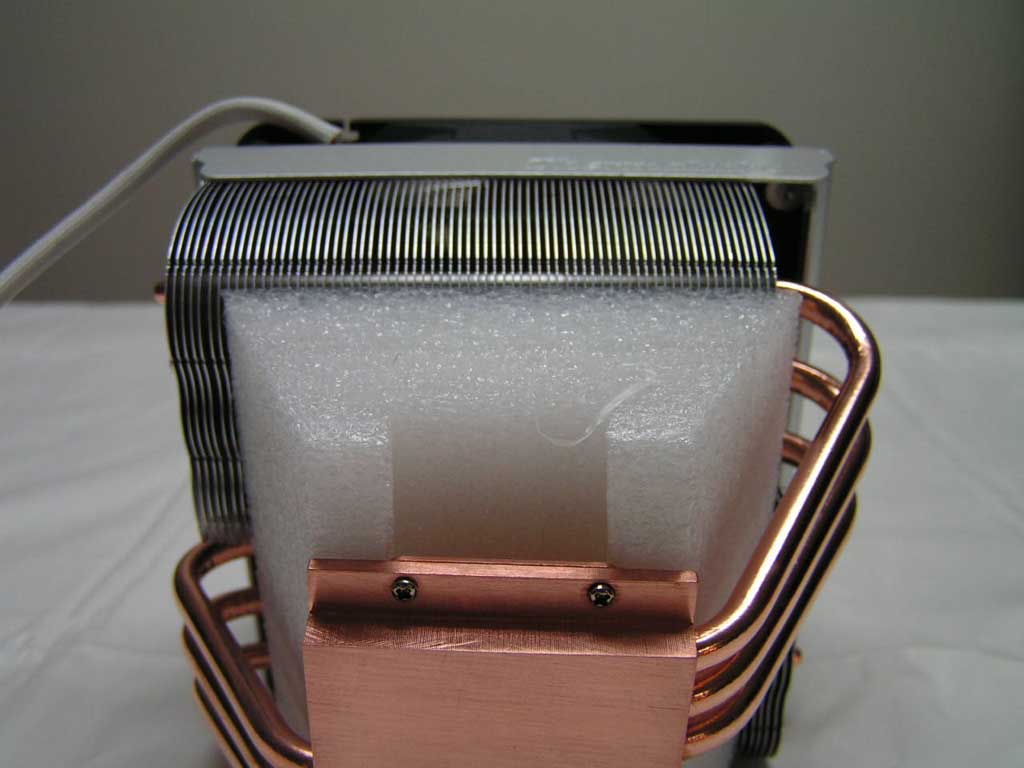
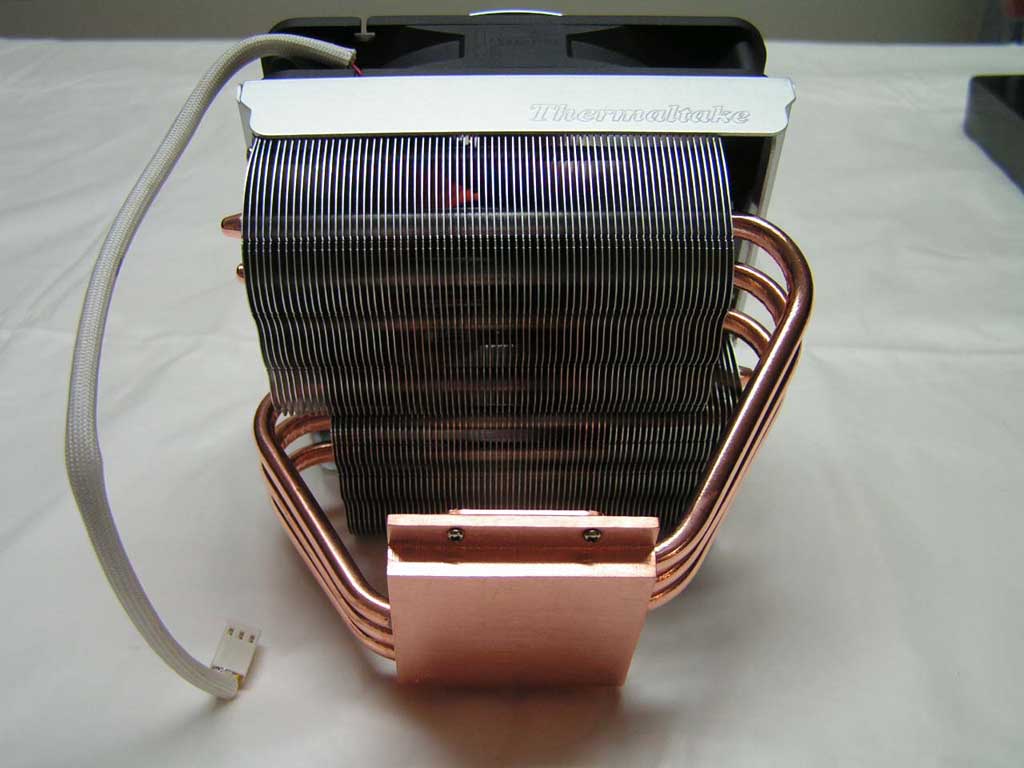
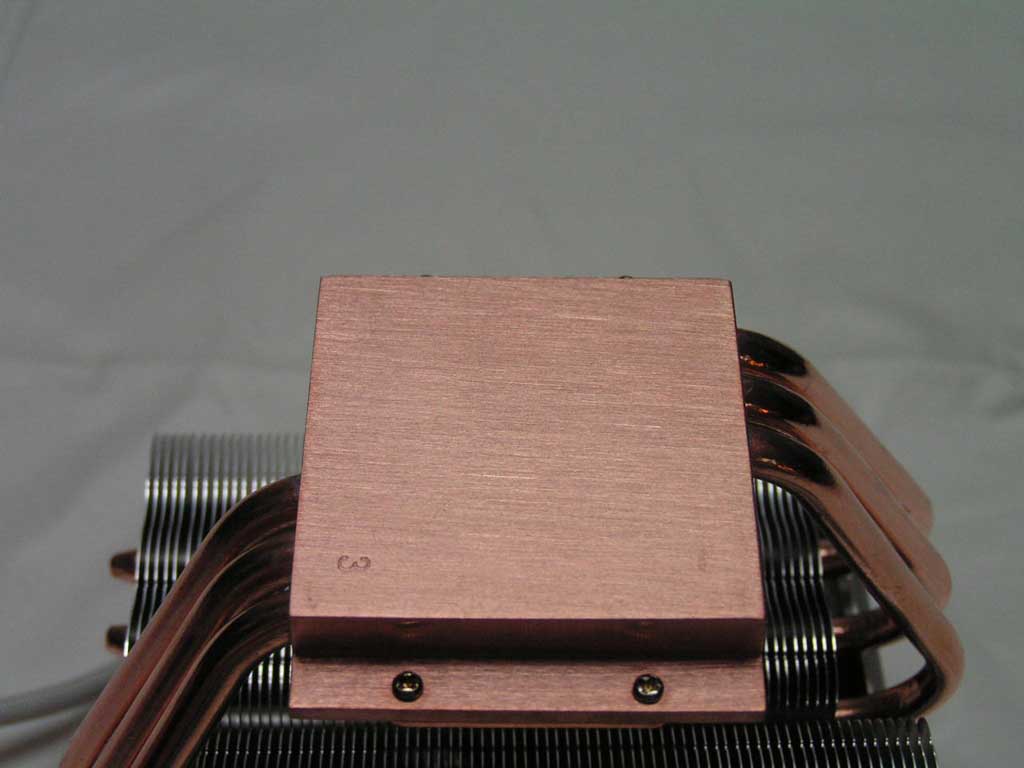
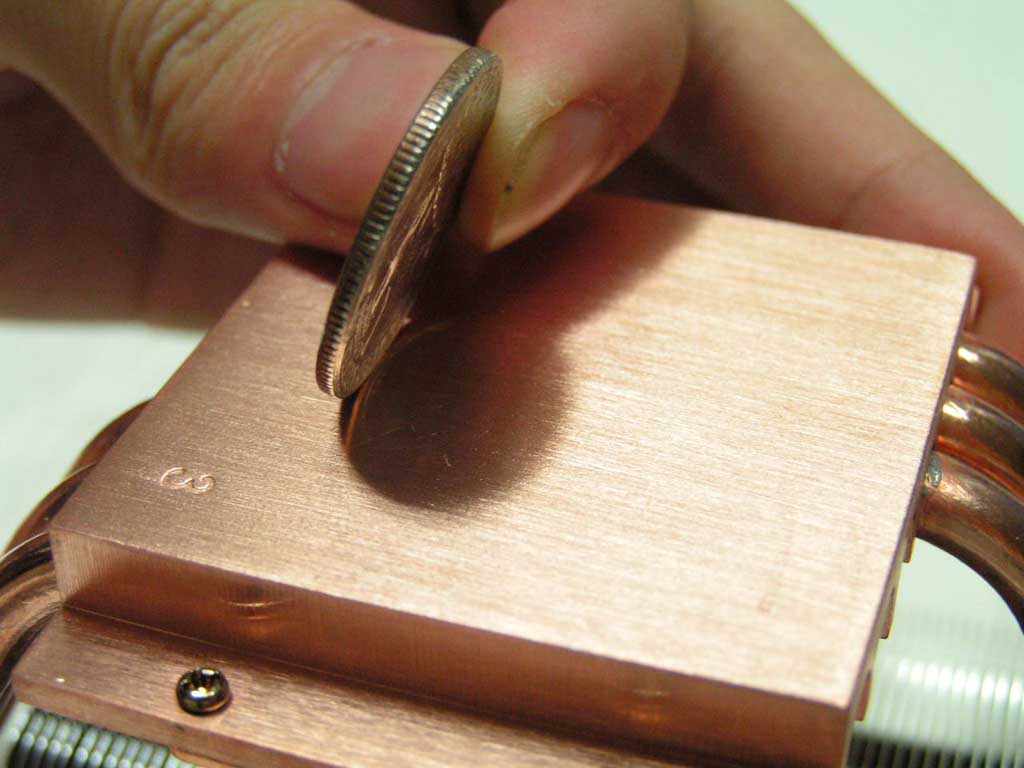
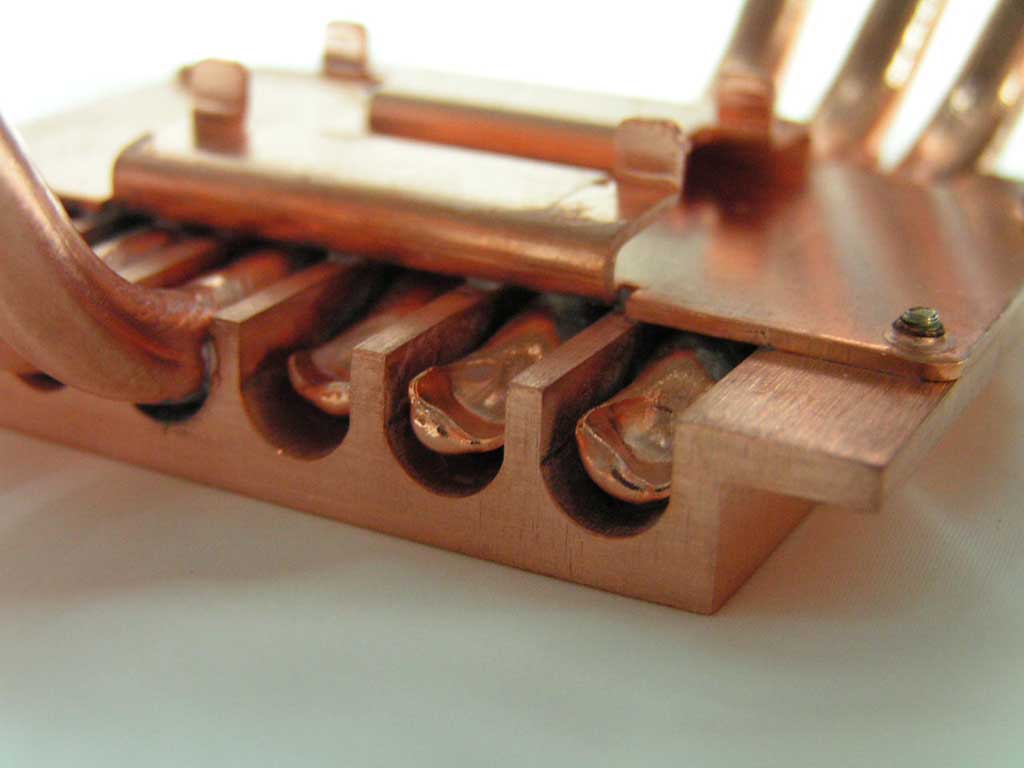
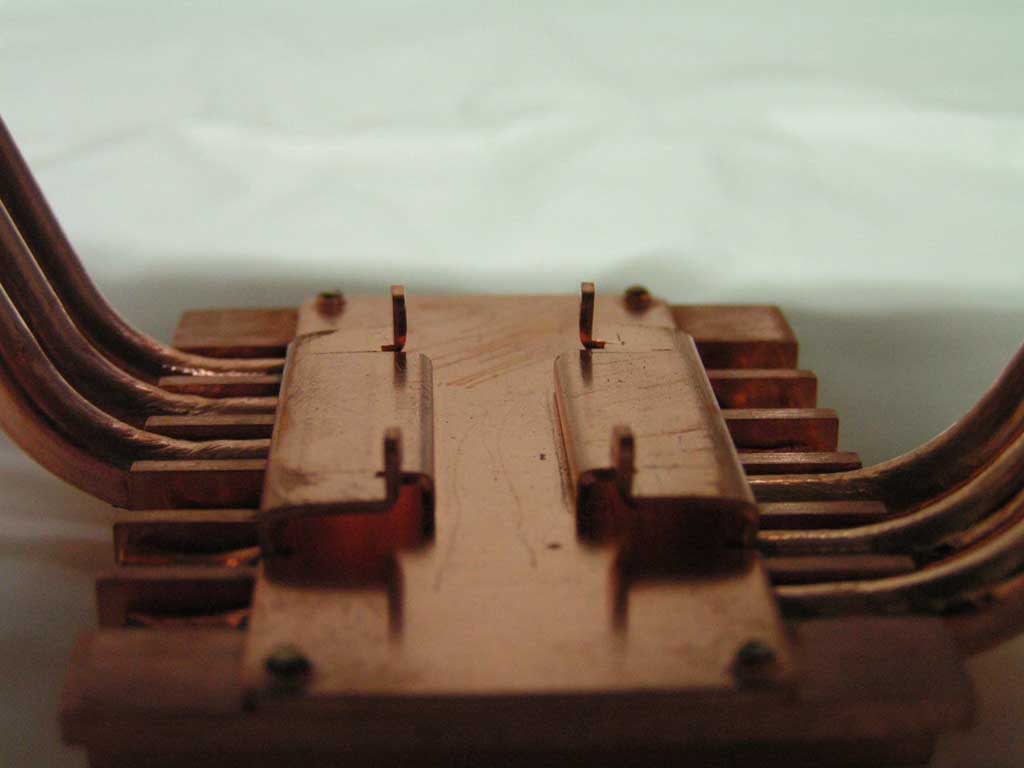
The base of the heatsink wasn’t reflective, but was flat and sanded down very well. A little Arctic Silver will fix this easily. As you can see, the base is completely copper. The area in the middle is for mounting.

Specifications and Installation
Specifications:
|
Installation:
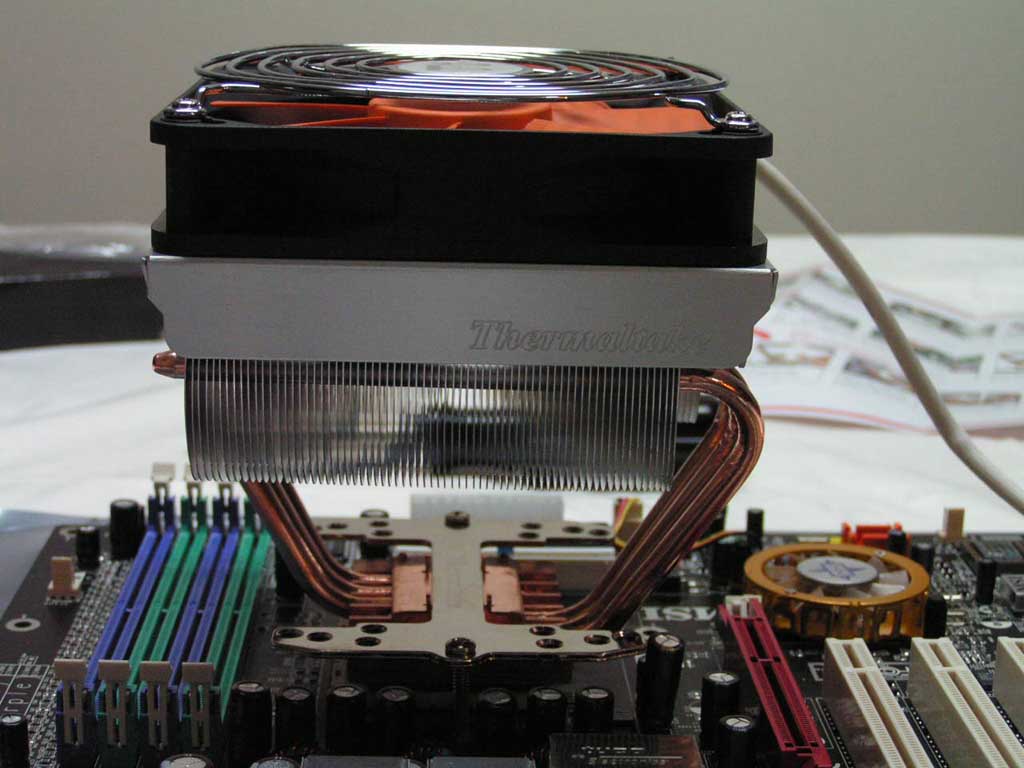
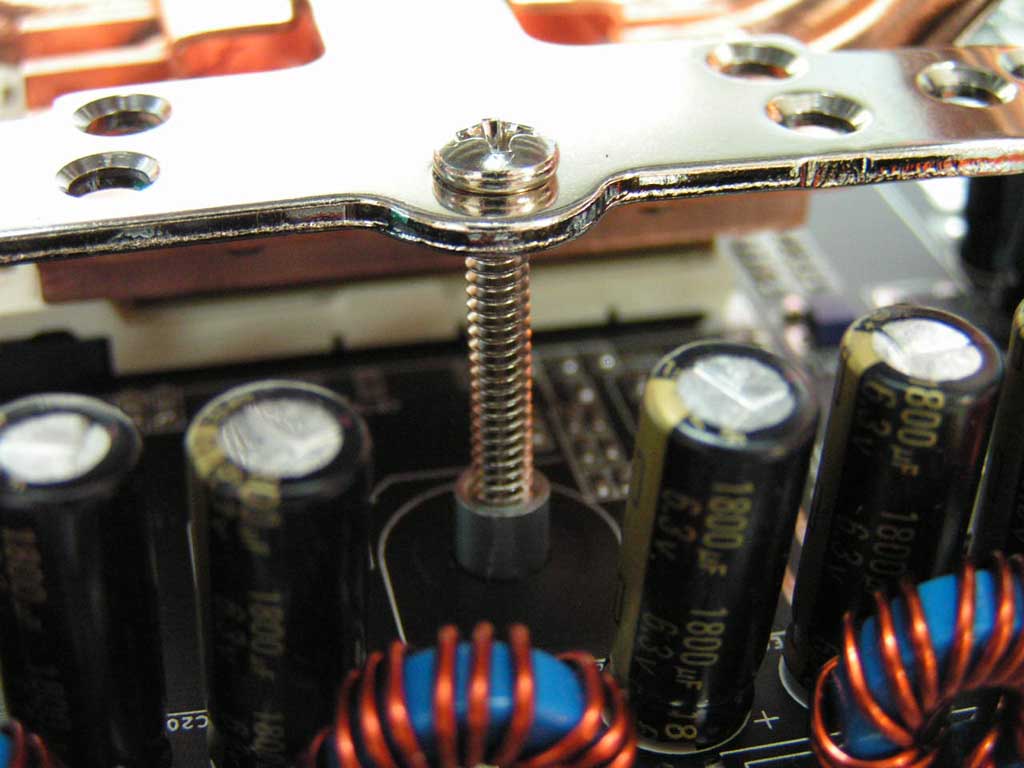
Installation was a tad difficult for my system. When I initially mounted the heatsink onto the chip, there was no problem. When I proceeded to put my AGP card, I had a hard time pushing it in. When I finally got it in the slot, the card bent downwards by three of the copper heatpipes. I was worried about leaving it that way, but I had no choice. Given the location of the CPU socket and the video card slots on other motherboards, I would expect the installation to go much more smoothly. Finally, I went and plugged in the fan.
Test Setup and Results
Test Setup and Method:
Because heatpipes rely on the fins on top to be cooled, as long as the fins are removing heat, a strong fan does not have to be used. I will be comparing this heatsink to the AMD Athlon64 stock heatsink as a basis for relative temperatures. I kept the ambient temperature at 23.5°C (+/- 0.1°C). Arctic Silver 5 thermal paste was used during the entire testing process. A temperature probe was placed on the side of the AMD64 chip’s heatspreader to measure CPU temperature. Two instances of CPU Burn-in at high priority are used to create maximum load on the CPU. The purpose of this test is to see the results a home end user would obtain. No scientific testing will be conducted.
Test System Specifications:
- AMD Athlon64 3000+ Winchester (9 x 280HTT = 2.52GHZ @ 1.65v)
- MSI K8N Neo2 Platinum
- Kingston Value Ram PC3200 (1 x 512MB)
- Leadtek Geforce FX5950 Ultra Winfast A380
- TTGI 450W Power Supply
Fan Specifications:
- Thermaltake 120mm Fan
- 120 x 120 x 25 (mm)
- 54.4 CFM
- 1300 (+/-10%) RPM
- 16.0 dBA
Test Procedures:
- Idling at desktop for 45 minutes
- Full load with two (2) instances of CPU Burn-in at high priority for 45 minutes
Results:
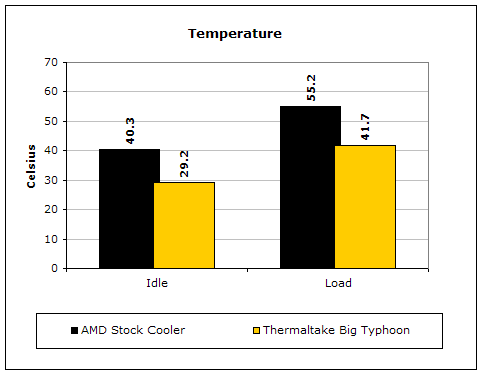
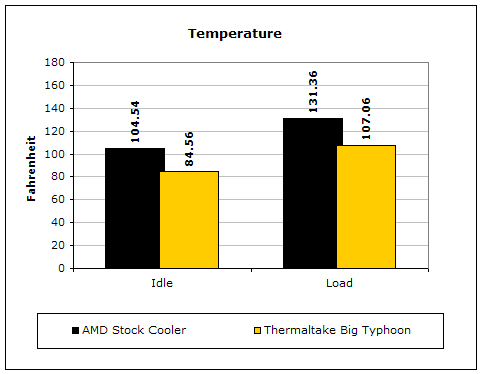
The Big Typhoon is a great upgrade from the stock AMD Athlon64 heatsink.
Conclusion and Thoughts
Thermaltake has taken me by surprise with this heatsink. All this cooling was achieved with a low performance fan. If you’re looking to have a silent system, this would be one of the first heatsinks you should consider. However, the compatibility issue still remains. The position of some CPU sockets may be too close to the AGP slot. Yet, this heatsink packs performance with near silence, earning InsaneTek’s Recommended award. I personally have never enjoyed my surround sound more.
John’s Addition:
I was able to get my hands on the Thermaltake Big Typhoon and experienced the same great performance on my test bench. The heatsink was able to keep the screaming hot LGA775 3.6GHZ under 45°C on full load, a feat I’ve yet to see until now. Thermaltake wins with the Big Typhoon, in terms of performance, but I have to mention some issues about installation. Patrick had no problems installing the heatsink on the K8 platform because it was straightforward and very easy to do. Installation for the LGA775, Socket 478, and Socket A platforms however, was much more different. The main frustration was the tightening of screws with the included washers. The whole assembly is tightened down with the washers. With the small size of these washers, the task was rather hard. Installation is one of the most important features in a heatsink and the method should be as user friendly as possible. If Thermaltake improves their installation methods, they’ll have no troubles stepping up to the high end cooling competition.
Pros:
- Excellent performance
- Light weight
- Utilizes a 120mm fan with only 1300 RPM at 54.4 CFM
- Fan is silent
- 6 heatpipes
- Large aluminum fins
- Copper base
Cons:
- Compatibility issues with some motherboards

We would like to thank Thermaltake for providing us the sample. If you have any questions or comments, feel free to hit us up in the forums. You can also check out more of our latest reviews on the front page.