

Thermalright XP-90
Introduction
Thermalright has been busy coming up with great quality heatsinks at an affordable price. They listen to their customers and come up with excellent cooling solutions. First, they beef up the NB-1, resulting in the all copper NB-1C. Then, they blow up their heatpipe heatsink to accommodate large 120mm fans. The XP-120 reviewed recently was amazing. The heatsink was massive and provided excellent cooling with quiet operation, something extremely difficult to do. Yet, everything has its downfalls. The XP-120 does not fit all motherboards. The large heatpipes and fins get in the way of capacitors on some motherboards. The XP-120 also comes with a rather steep price tag. The massive heatsink comes in at a retail price of $49.95. It’s true that the performance is worth the money, but there is also the risk of having compatibility problems. On that note, the XP-90 steps in.
Thermalright XP-90
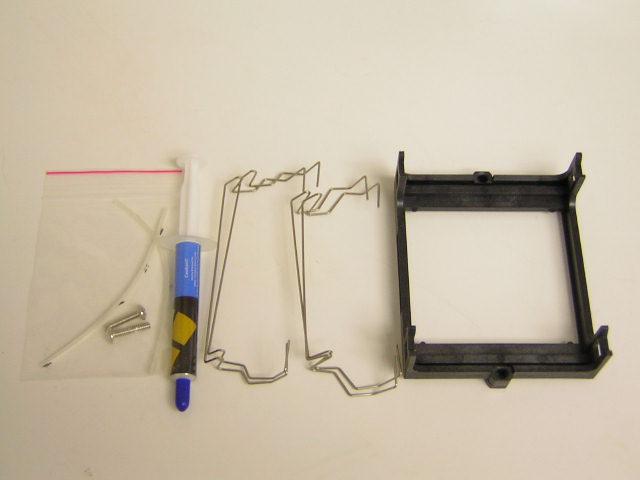
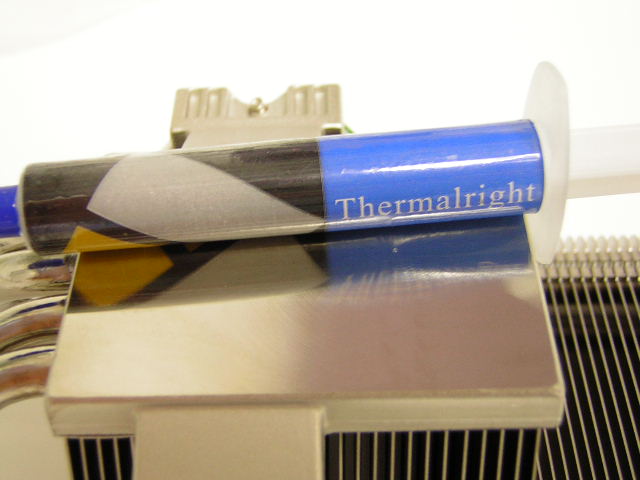
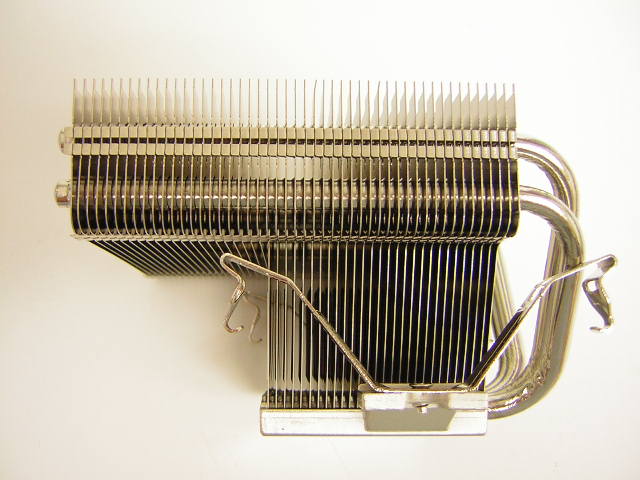
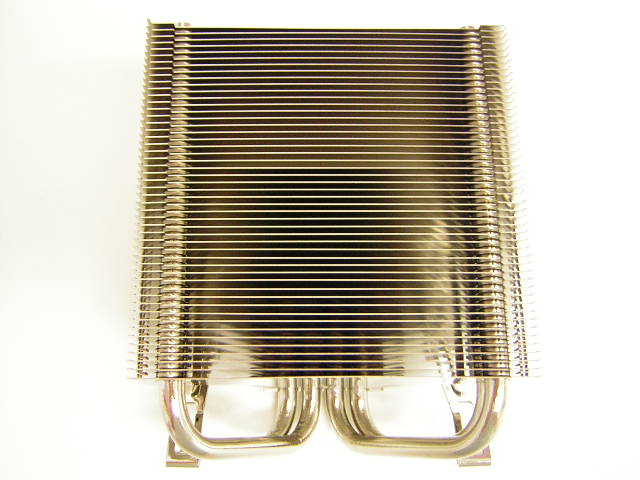
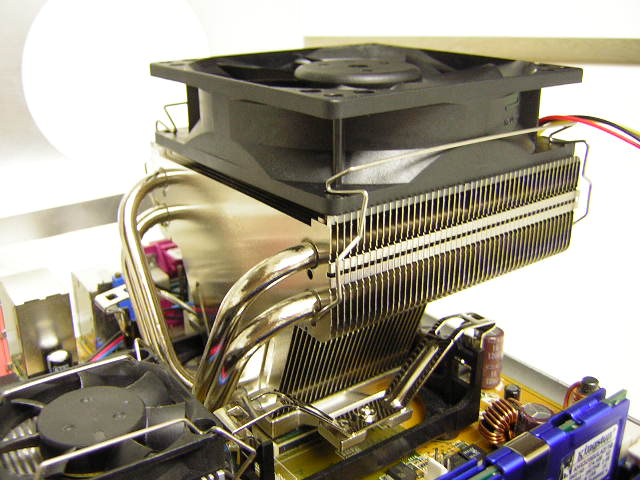
The XP-90 is designed to utilize a 92mm fan. While it’s not ideal, 92mm fans can still push out a lot of air and maintain silence. The size of the heatsink is massive. I have yet to lay my eyes on the XP-120, so this XP-90 is the largest heatsink I’ve seen so far. It has one less heatpipe than the bigger brother, and because of that, it is free of compatibility issues. That’s right, this heatsink has ZERO compatibility issues. It fits ALL motherboards. The package comes with a tube of thermal grease, two strips of cushion pads, 92mm fan clips, 80mm fan clips, and the K8 bracket with two screws. This heatsink is designed to be compatible with Socket 478 motherboards. With the use of the custom K8 bracket, the heatsink can be mounted on Socket 754/939/940 motherboards.

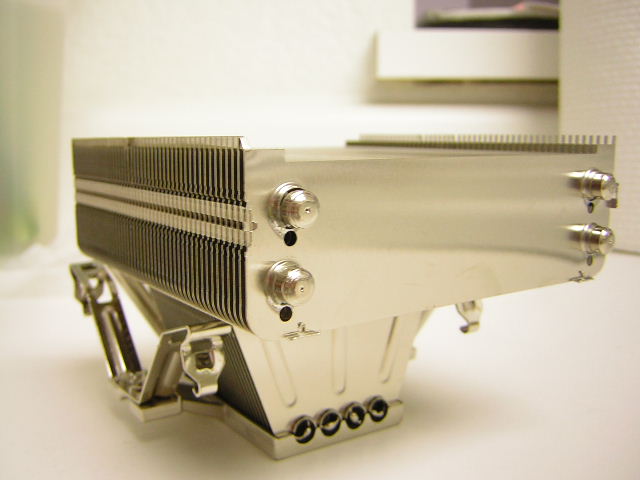
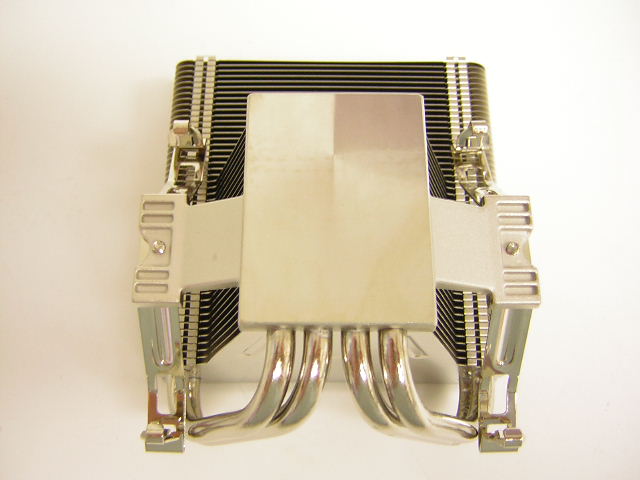
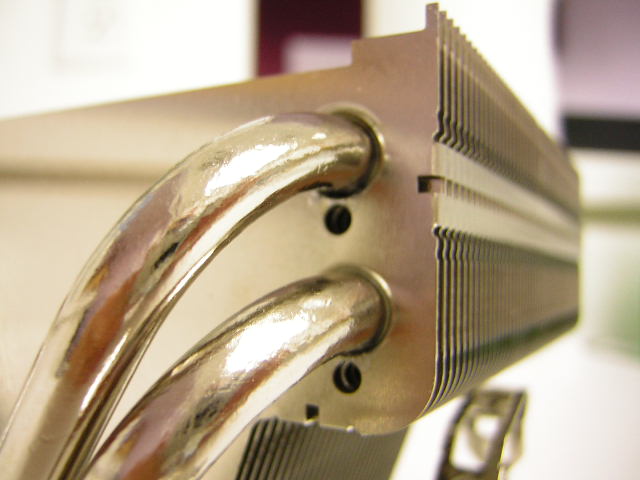
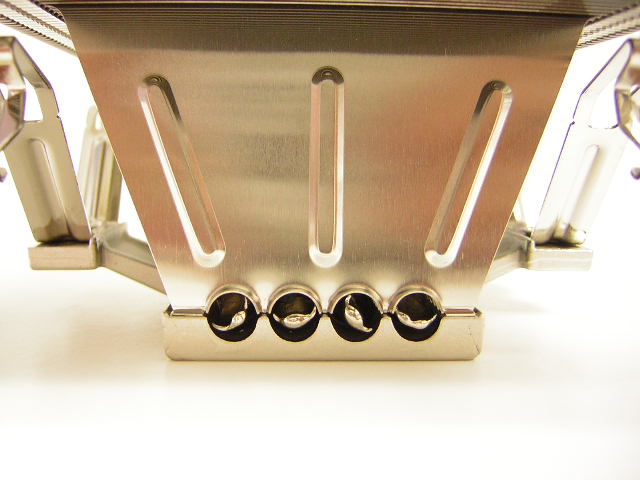
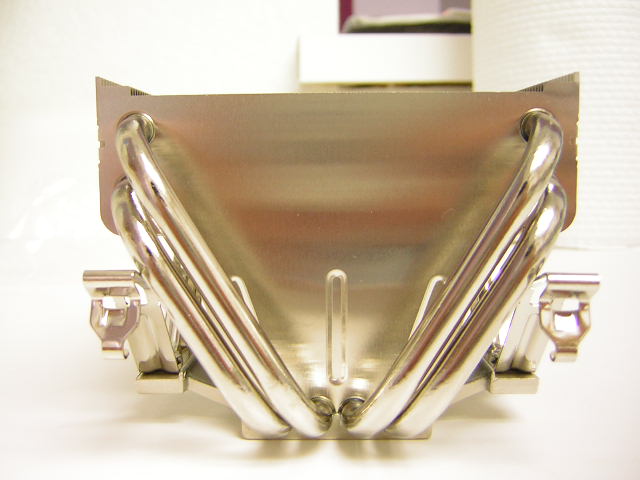
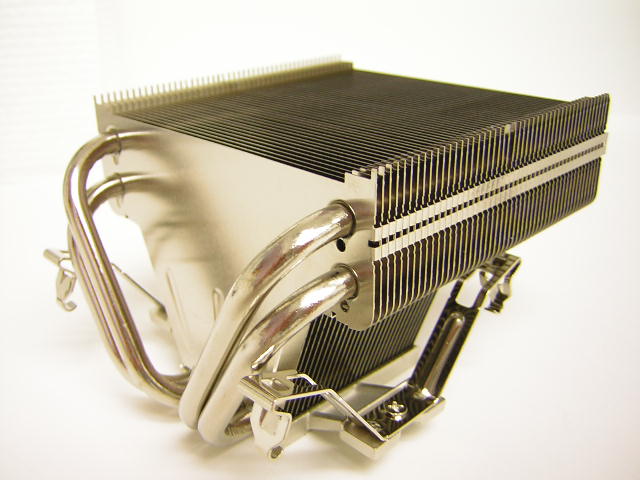
The XP-90 has four heatpipes to help dissipate heat throughout the aluminum fins. The nickel plated copper base is well lapped and has a nice mirror finish. It provided excellent contact for my CPU. The heatpipes are soldered to the aluminum fins and the fins are soldered to the base.
Specifications and Installation
Specifications:
Dimension: L116 x W96 x H75 (mm) Fin only, without fan
Weight: 360g (heatsink only)
When compared to the heavy 590g of the SP-94, this thing is a lightweight feather. The XP-90 is only 10g lighter than the bigger XP-120. I was hoping for a larger decrease in weight. Yet with such a lightweight heatsink, you won’t have to worry about it falling out of the socket and crashing through your hardware.
Installation:
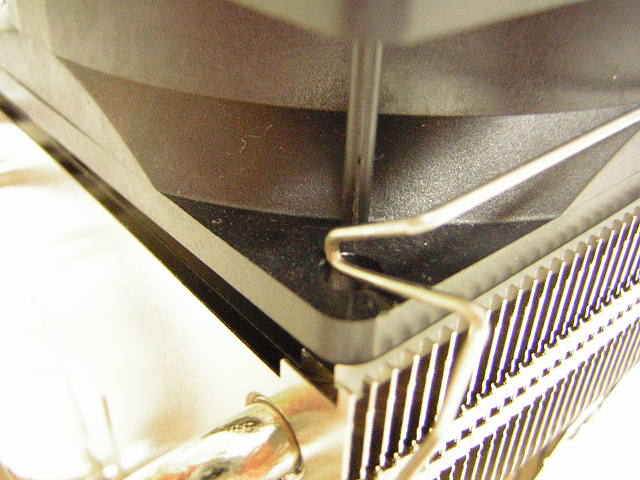
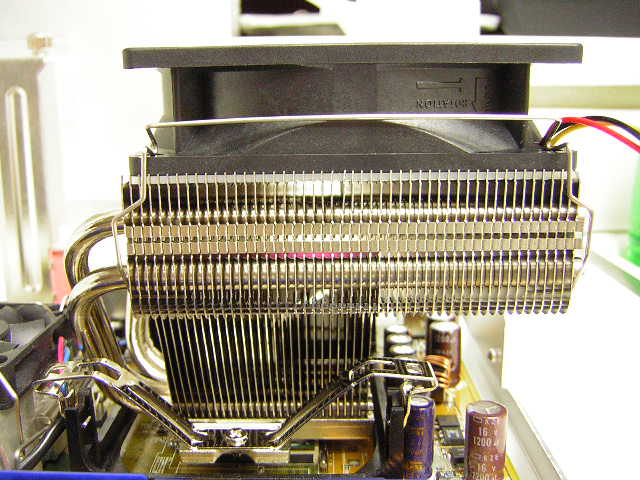
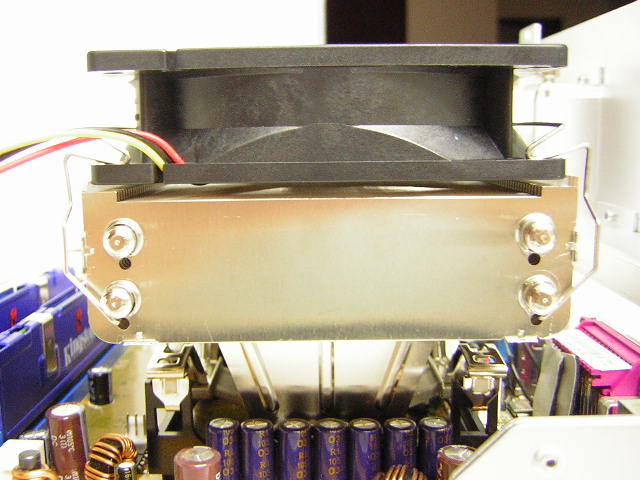
Installing the heatsink was a little more difficult than what I would’ve liked. The method requires the clips on the opposite side of the heatpipes to be hooked first. This caused the heatsink to tilt on one side. Since the clips were rather tight, I had to apply a lot of pressure to the unhooked end in order for the heatsink to install. It’s a good thing that Pentium 4 and Athlon64 CPUs come with an integrated heatspreader to help distribute the applied pressure. If it was the core alone, the core could easily be damaged. After it’s installed, the heatsink sits very tightly. Before installing the fan, the fan cushion strips should be applied first. The cushion strips are not required but they do help absorb vibrations while preventing the fan from rubbing against the aluminum fins. Simply sit the fan on top of the cushion strips and then hook on the fan clips. The clips hook onto the bottom of the fan, and allows the use of a fan grill. Enthusiasts with fans that do not allow the clips to hook can find this rather annoying. A good example would be those fans with aluminum casing. Those fans don’t have the bottom open for the clips to hook on to.
Test Setup and Results
Test Setup and Method:
Thermalright does not include a fan with the heatsink package. This is left free for enthusiasts to choose, whether it’s silence or performance. The recommended fan is the Panaflo 92mm Medium Speed fan. The fan I will be using for testing purposes will be the Panaflo 92mm Ultra High Speed fan for some serious overclocking. I will not be comparing the heatsink to the XP-120, because the XP-120 is designed to excel with a 120mm fan. The XP-90 is designed to work with 92mm fans, so comparing the two won’t be a fair comparison. But based on common sense alone, the XP-120 will have better performance due to the larger size. In this review, I will be comparing the XP-90 to the SP-94. The SP-94 is the all copper heatpipe heatsink that started it all. It is considered to be the best aircooling heatsink when paired with a high CFM fan. The SP-94 is a dwarf when compared to the XP-90. Although the SP-94 is smaller and looks like it would perform better when paired with an 80mm fan, Thermalright recommends the use of a 92mm fan.
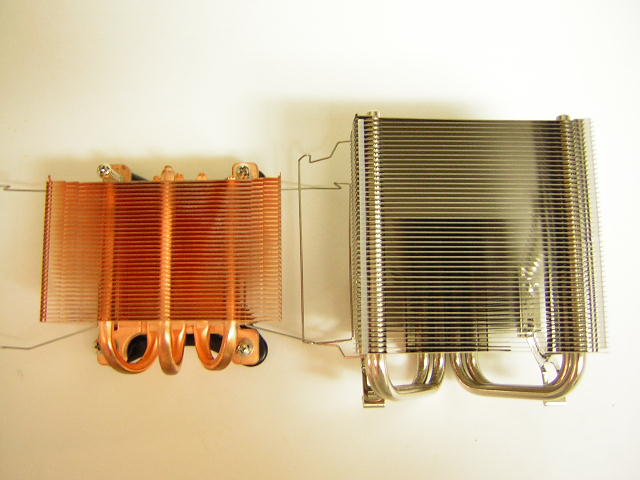
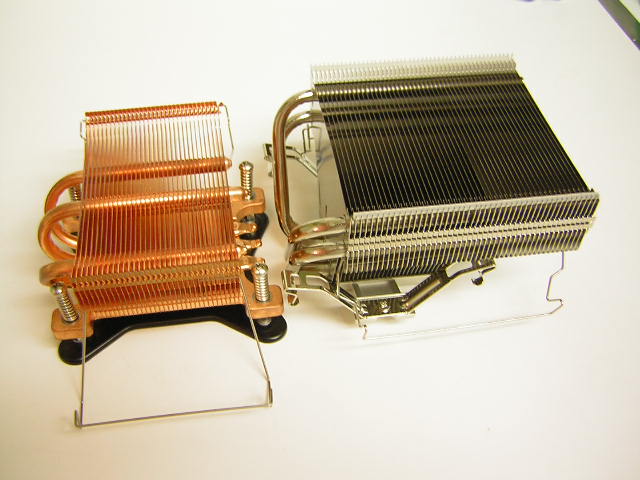
Ambient temperature was kept at a consistent 22°C. Arctic Silver Ceramique thermal paste was used during the entire testing process. A temperature probe was placed next to the Intel heatspreaders to measure CPU temperature. Two instances of CPU Burn-in are used to create maximum load on the CPU. It makes the CPU work at 100%. The purpose of this test is to see the results a home end user would obtain. There is no scientific testing conducted, simply because I do not have the proper equipment.
Test System Specifications:
- Intel Pentium 4 2.4C (12 x 290FSB = 3.48GHZ @ 1.728v at idle/1.7v at load)
- Asus P4C800-E (with droop mod)
- Kingston HyperX PC3200UL
- Gigabyte Radeon X800 Pro
- OCZ 420W PowerStream
Fan Specifications:
- Panaflo 92mm Ultra High Speed
- 92 x 92 x 25 (mm)
- 68.8 CFM
- 3450 RPM
- 43.0 dBA
Test Procedures:
- Idling at desktop for 30 minutes
- Full load with CPU Burn-in for 60 minutes
Results:
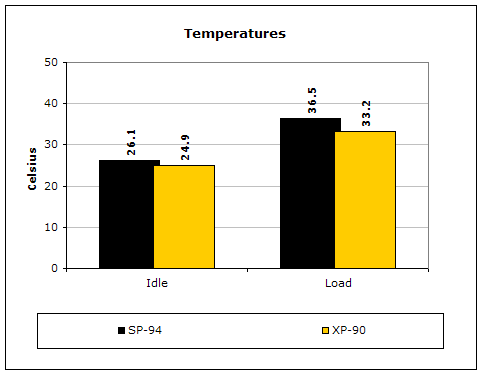
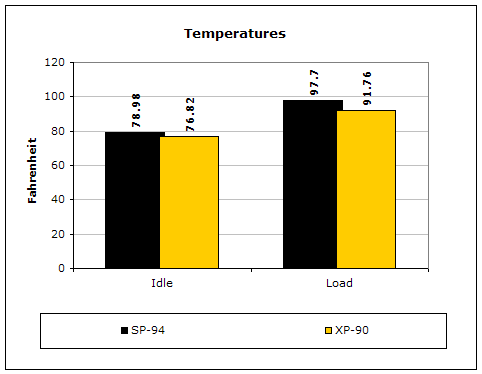
The XP-90 indeed performs better than the predecessor SP-94. The extra heatpipe and the use of multiple aluminum fins allowed for better cooling performance.
Conclusion and Thoughts
There is only one thing to say about the XP-90. It is absolutely amazing. This heatsink is top notch and a must have without hesitation. The cooling was superb and allowed for the use of 92mm fans to lower noise without sacrificing CFM. The heatsink can be installed on ALL Socket 478/754/939/940 motherboards without issue, a problem the XP-120 often faces. The price is also amazing. This heatsink can be had for under $40 at Sidewinder. They also have a variety of 92mm fans for you to choose from. However, one area of caution is installation. It takes quite a bit of force to install the heatsink. It is definitely a good thing that CPUs today come with integrated heat spreaders. Those thinking about removing the IHS should think again. Without the IHS, the cores can easily be crushed during installation.
In conclusion, go out and get this heatsink. It performs extremely well and doesn’t put a big dent in your wallet. It has no compatibility issues whatsoever.
Pros:
- Excellent performance
- Extremely light weight
- Excellent price/performance ratio
- Uses large 92mm fans to reduce noise without CFM loss
- 4 heatpipes
- Large aluminum fins
- Nickel plated copper base
- Has NO compatibility issues
- Compatible with all Socket 478/754/939/940 motherboards
- Safe for lanbox systems
Cons:
- Installation requires a lot of pressure
- Not recommended for CPUs without IHS

We would like to thank Sidewinder for providing us the sample. If you have any questions or comments, feel free to hit us up in the forums. You can also check out more of our latest reviews on the front page.