

Swiftech MCX6400-V
Introduction
Swiftech is one of the many familiar names in the computer cooling industry. They are one of the few companies that actually manufacturer excellent cooling solutions. Swiftech might also be the first to deviate from the traditional use of fins with the use of pins, right along with Alpha Novatech. To this day, I still have no clue who invented it first. They both came out around the same time. With that spectacular design, Swiftech has improved their products bit by bit as the years progressed, producing a better performing heatsink with each new release. Ever since the use of heatpipes, Swiftech has lost the crown. Heatpipe technology is on another level of performance, something that the traditional fin/pin based heatsinks cannot compete against. Unfortunately, due to the nature of their design, Swiftech cannot implement the use of heatpipe technology on their heatsinks. They can only search for better ways to improve what they have. With that, the V series of heatsinks was introduced. The new look resembles the process of a blooming flower. The old MCX heatsinks had pins fitted tightly next to each other and often trapped air and dust. The new bent pins opened up paths for airflow and allowed Swiftech to achieve better performance. To this day, Swiftech continues to follow the new design.
When AMD announced their K8 CPUs, everyone, including myself, searched long and hard for better thermal solutions. Swiftech was quick with their release of the MCX64-V and MCX6400-V. The MCX64-V was aimed for the mainstream enthusiast. It met AMD’s thermal and weight specifications and provided great cooling over the stock cooler. The MCX6400-V was released for the enthusiasts. It features much more pins and a thicker copper base. It has been quite some time since the release of the MCX6400-V. Today, we see whether it is still a viable choice for enthusiasts.
Swiftech MCX6400-V
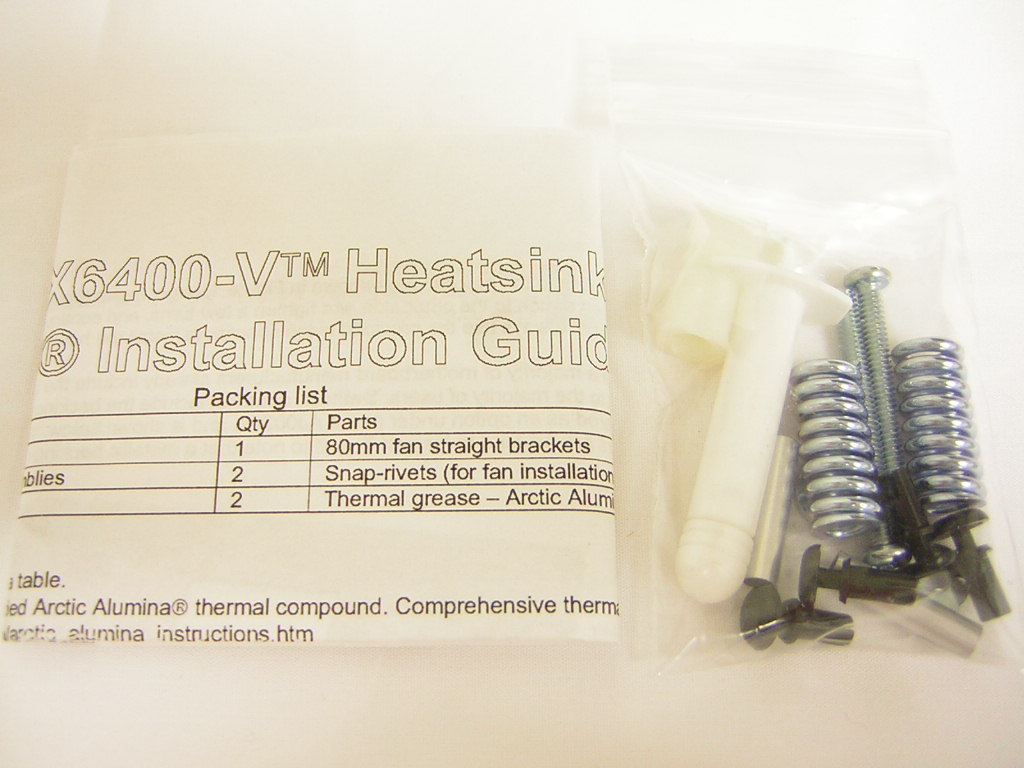
Swiftech is well known for their simple bland packaging. They focus on keeping the heatsink safe and sound rather than flashy looks. The heatsink comes well protected inside the cardboard box, with Styrofoam padding surround the base, sides, and top of the heatsink. Included in the box is an instructions manual, a small tube of Arctic Alumina thermal grease, and installation accessories. Although not the best available, it’s nice to see the inclusion of Arctic Alumina over the typical white silicone thermal paste. A little better is nonetheless better.
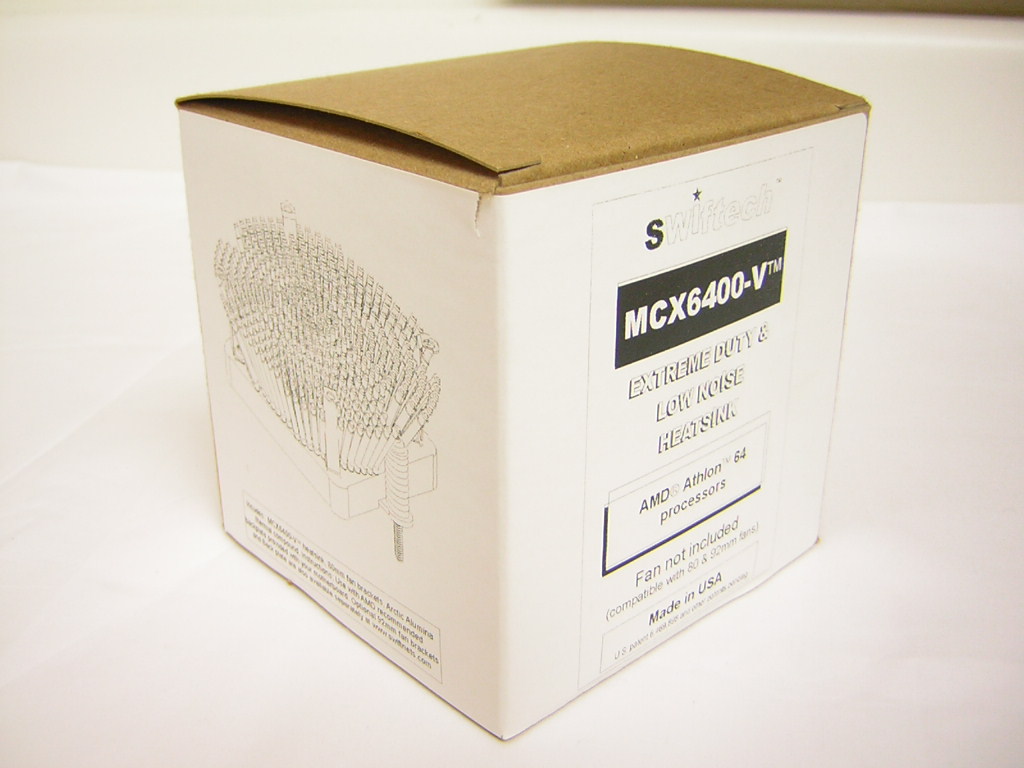
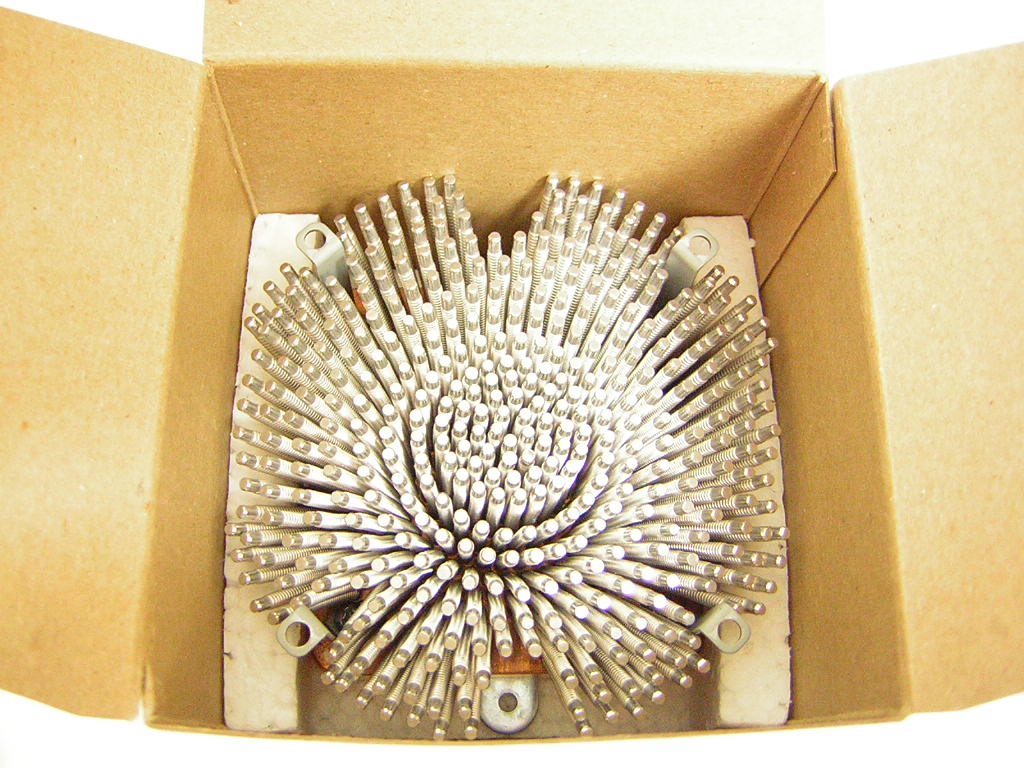
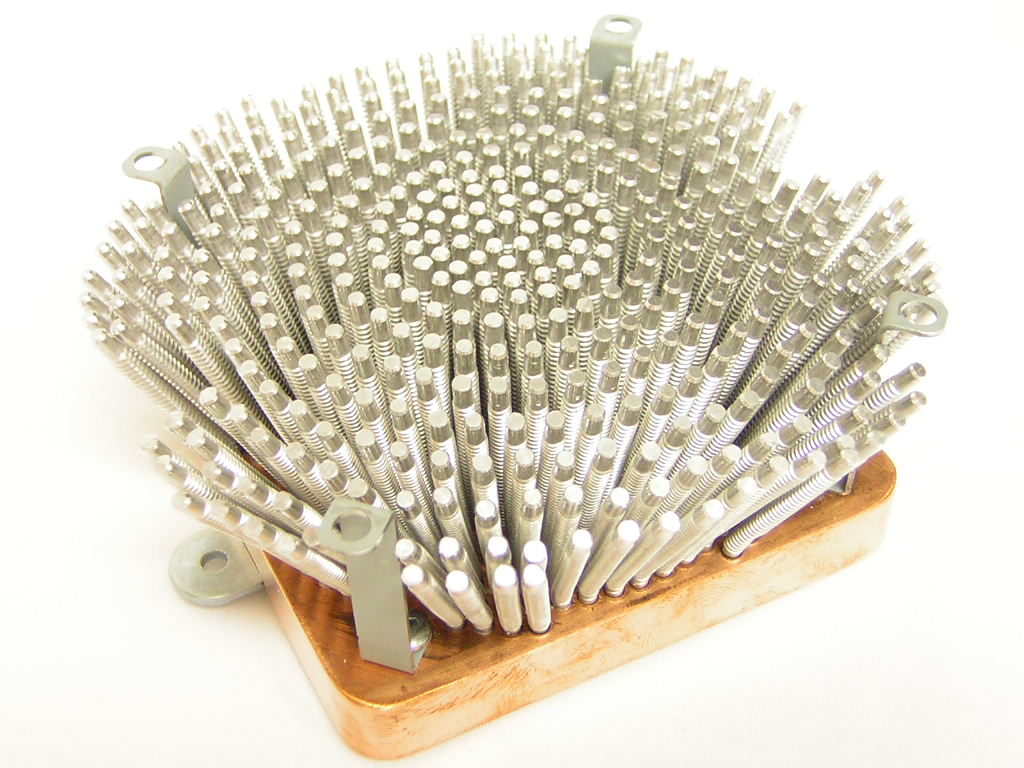
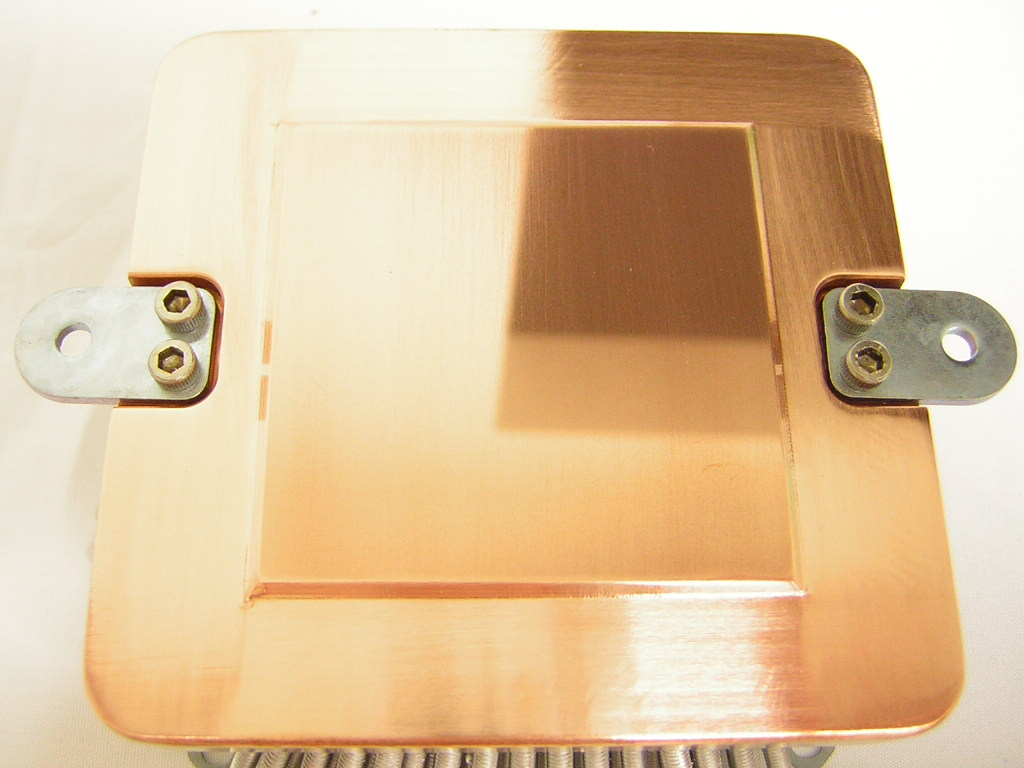
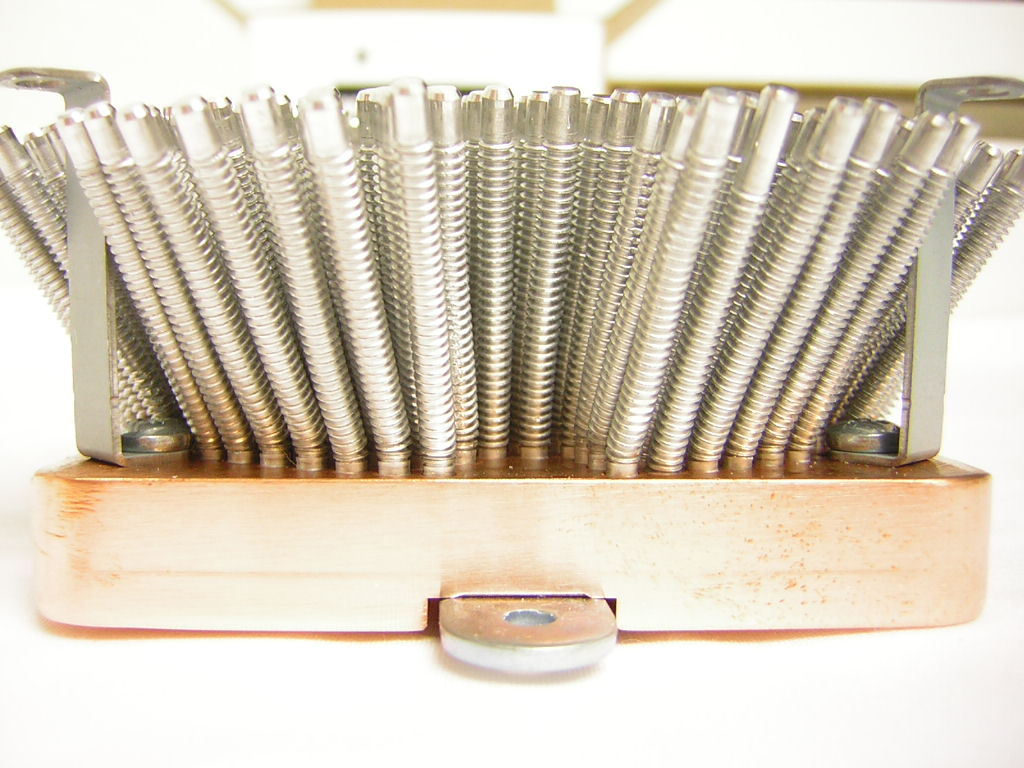
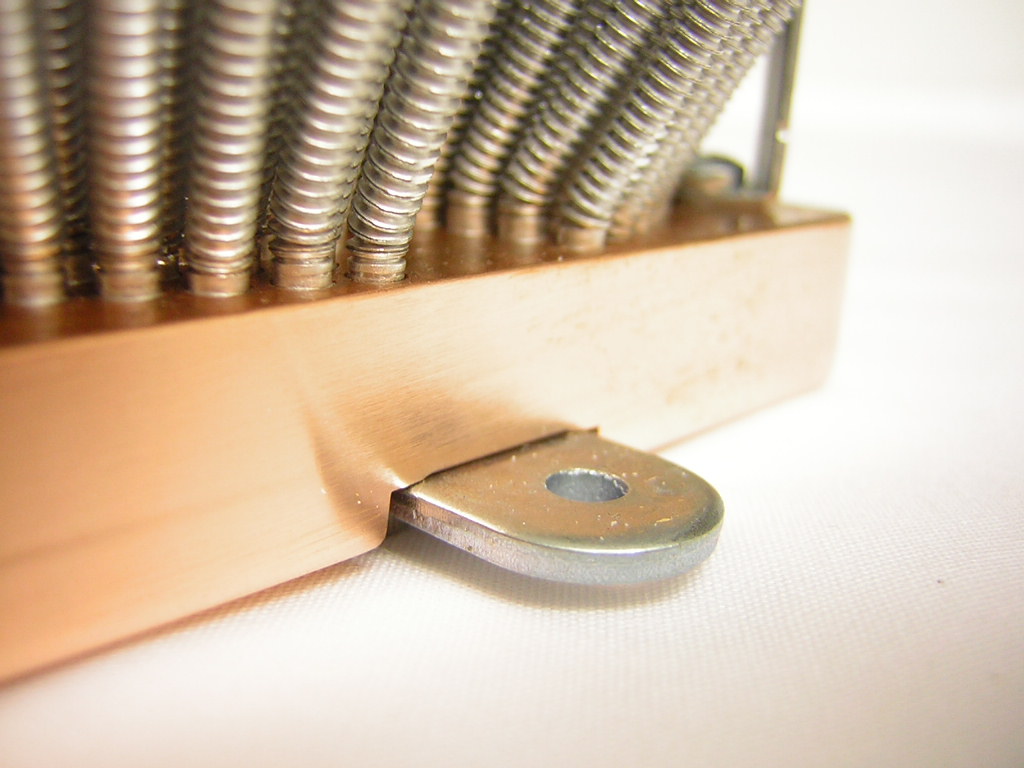
The MCX6400-V ships without a fan to allow enthusiasts the flexibility to customize the cooling to their needs. The heatsink features a whopping 405 aluminum helicoid pins bent at different angles. This helps increase airflow and reduce overall noise levels. The lower the air turbulence, the lower the noise. The base is a half inch of pure copper and machine lapped to 0.0003”. The lapping job is of extremely high quality. As we all know, the flatter the base, the better contact it provides with the CPU. The base doesn’t have to be all shiny, just as long as it’s flat; In this case, it was both shiny and flat.
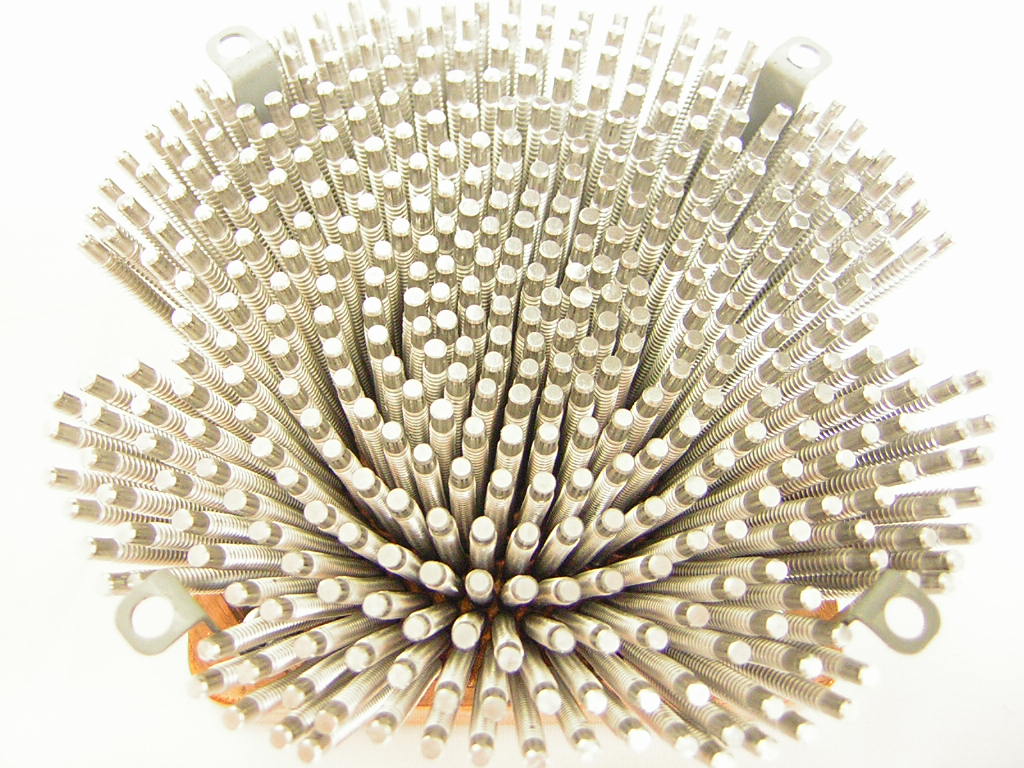
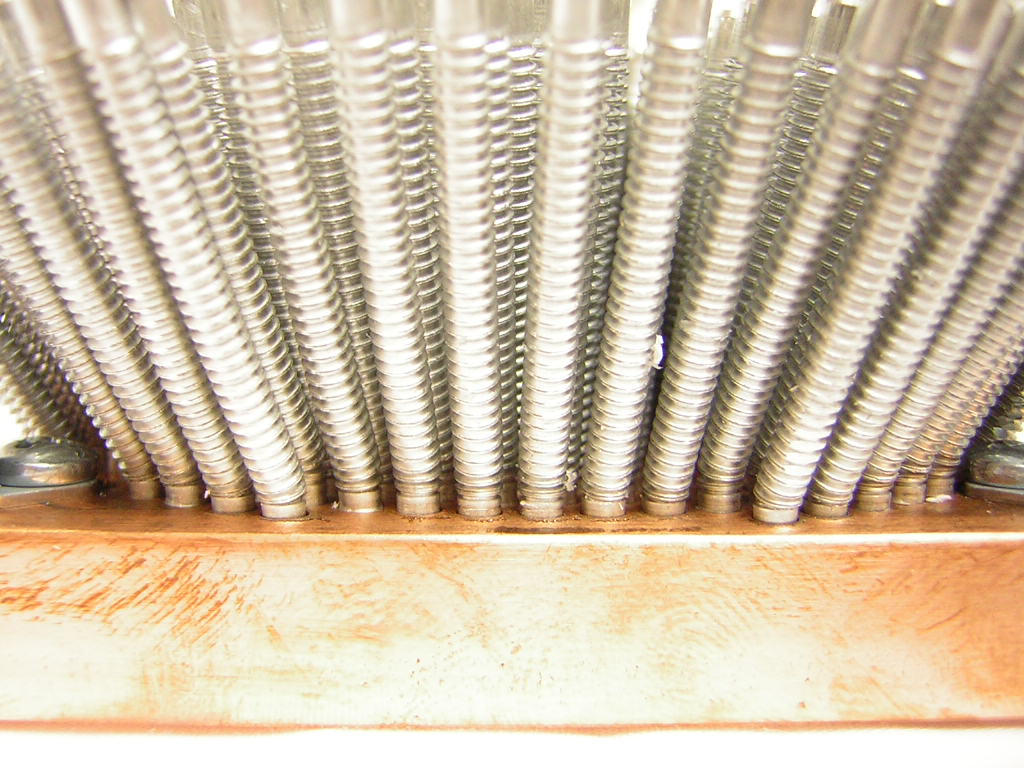
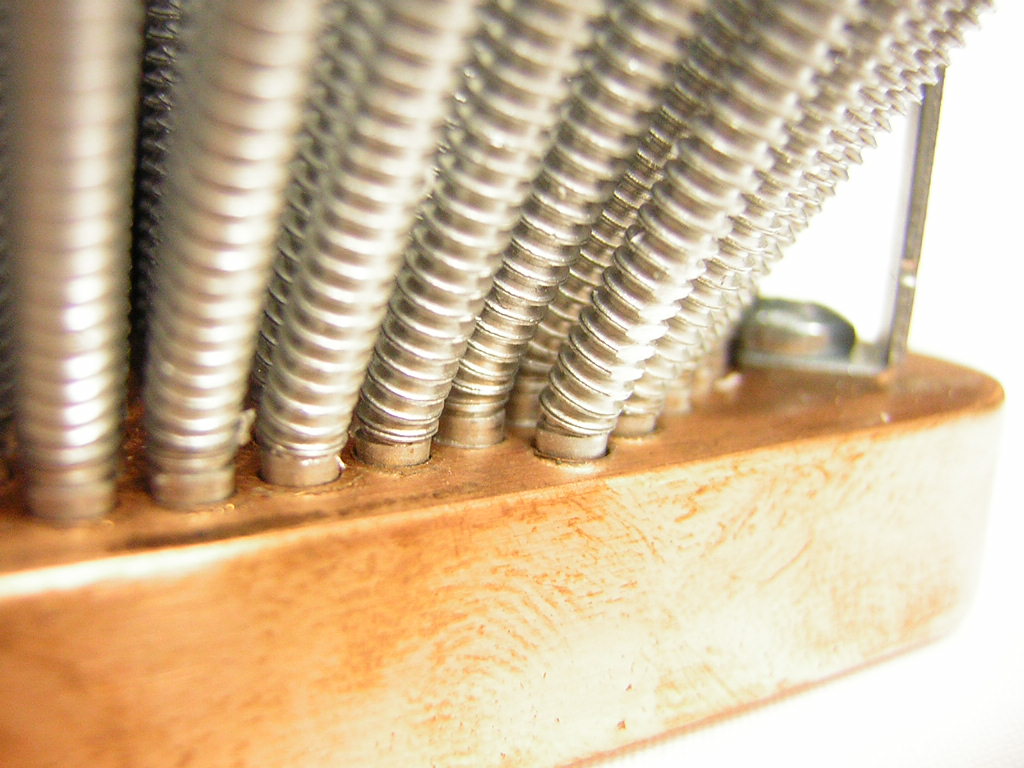
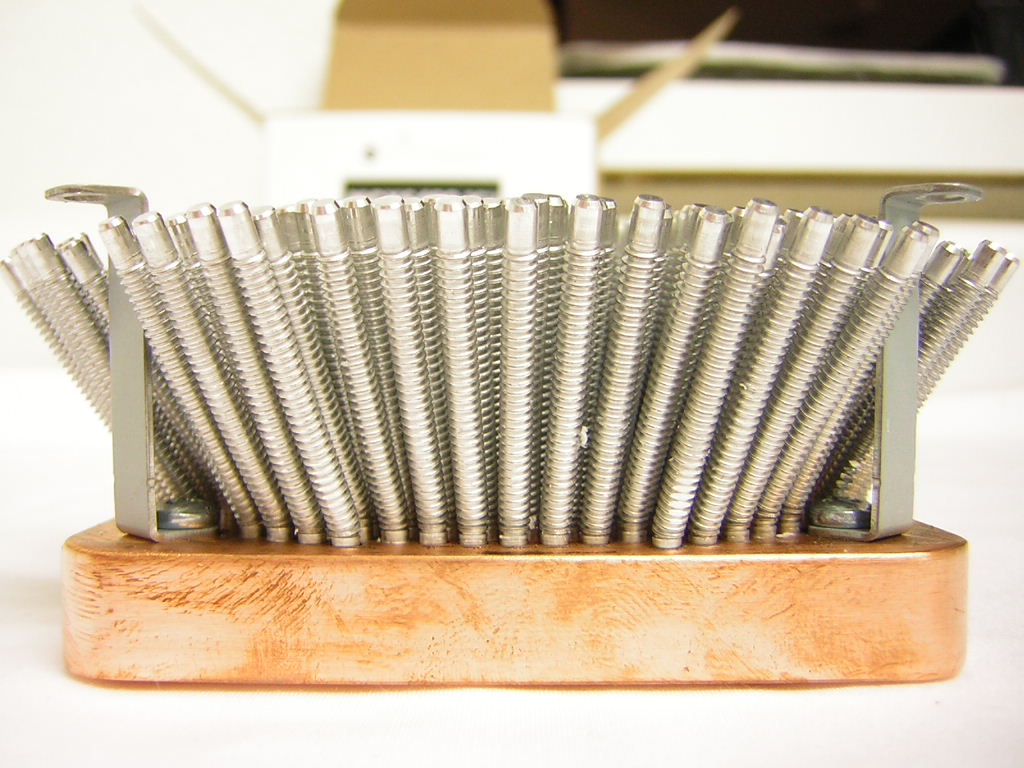

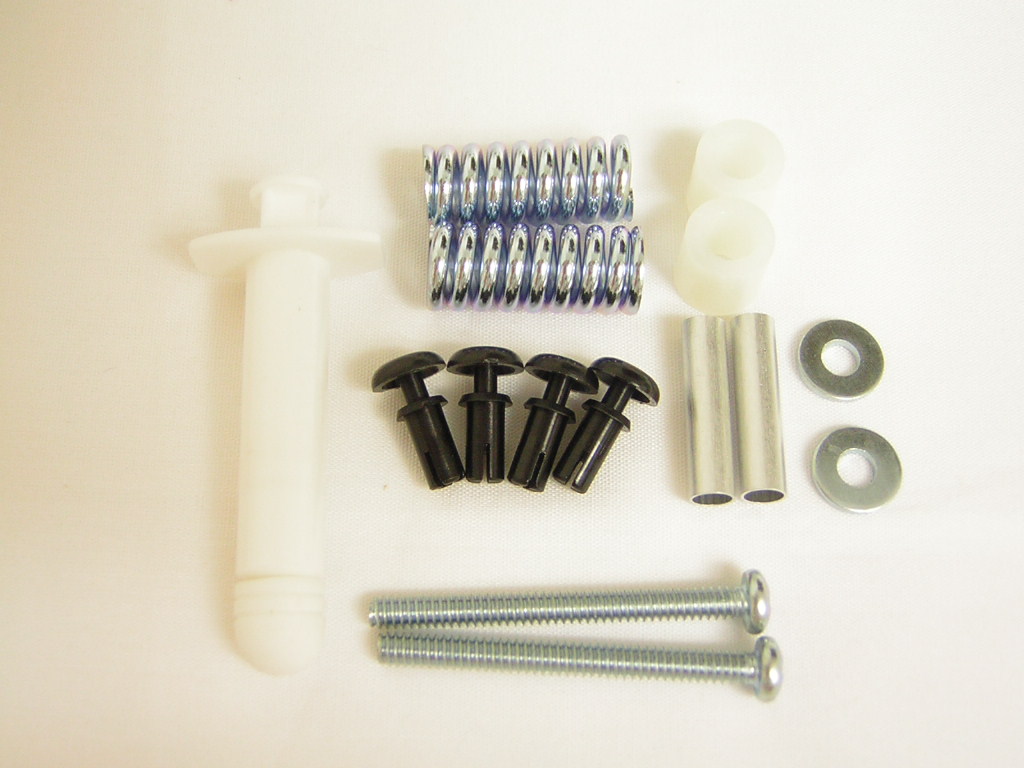
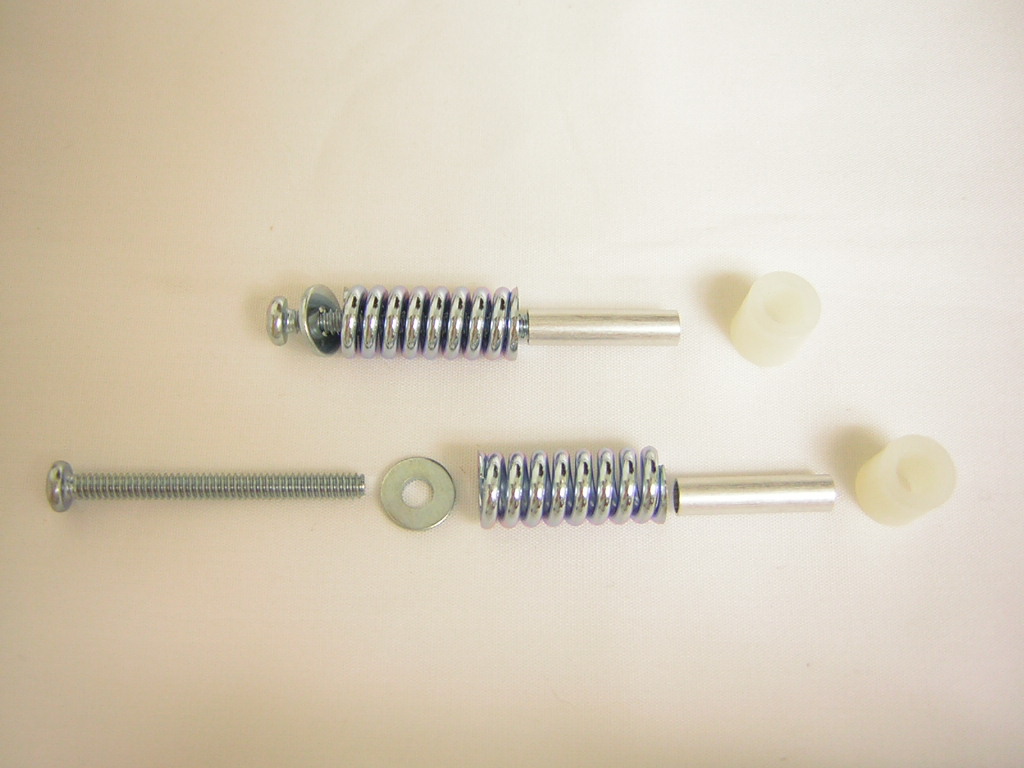
Swiftech’s methods of installation has always been one of my favorites. They focus on the easiest and safest installation methods possible. The older MCX heatsinks used the spring and screw combination to provide the perfect pressure for contact , in addition to fastening the heatsink to the motherboard through the motherboard holes. Many complained about the method due to the motherboard removal requirement. Honestly, it doesn’t even take that long for installation. It’s just a matter of 5 minutes if you know what you’re doing. Regardless, Swiftech opted to use clips for installation because of the complaints. The MCX462-V was the only heatsink with clips I did not like. The entire weight of the heatsink supported only by the clips and the motherboard socket was not something that eased my mind. The MCX478-V’s clips were pretty good and provided security when installed to the motherboard bracket. With the MCX64-V and MCX6400-V heatsinks, installation takes advantage of the AMD motherboard socket retention frame. The MCX6400-V uses the backplate of the retention frame and utilizes the spring loaded screws to provide perfect pressure. Included is also a tension limiter to prevent users from over-tightening the screws. The fan installs with the use of push pins, and eliminates the tedious turns of a screwdriver. While the push pins make installing fans a breeze, removal is a bit of a hassle. I’ve grown accustomed to the removal of push pins and know the tricks, but beginning users will probably have a bit of a hard time fiddling with the little plastic pieces.
Specifications and Installation
Specifications:
- CNC machined, C110 copper base, flatness better than 0.0003”, micro surface finish 8 or better
- 405 Helicoid Pins made of High Thermal Conductivity Aluminum Alloy, press fitted into base
- Weight: 26.4 oz (750g)
Installation:
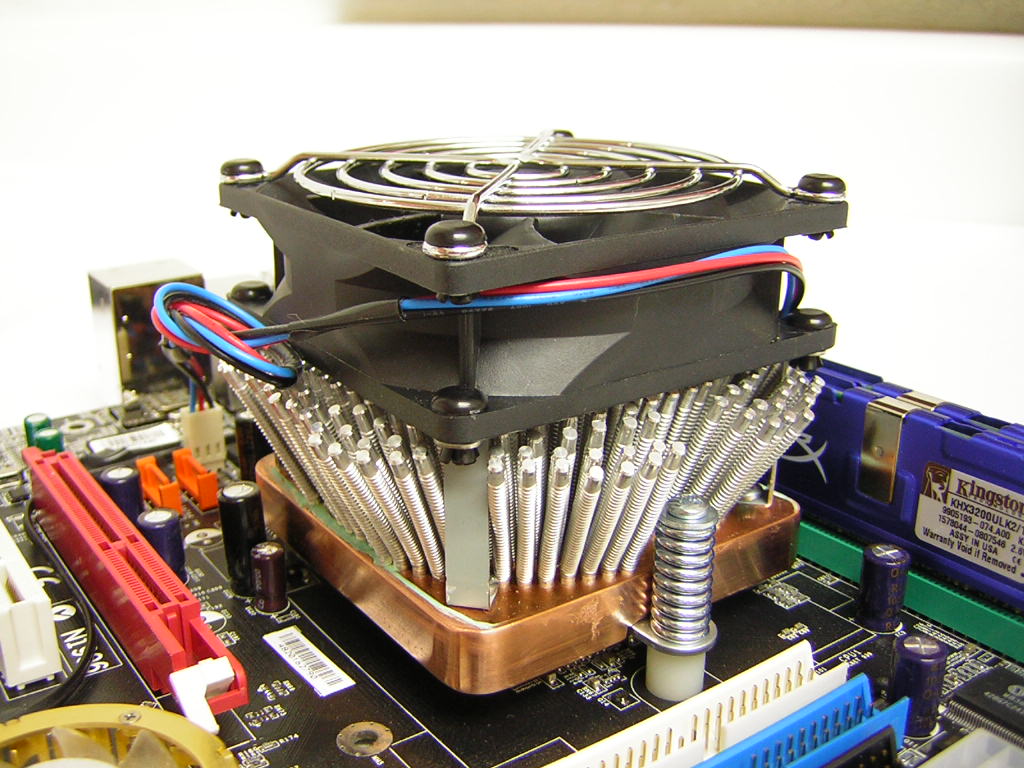
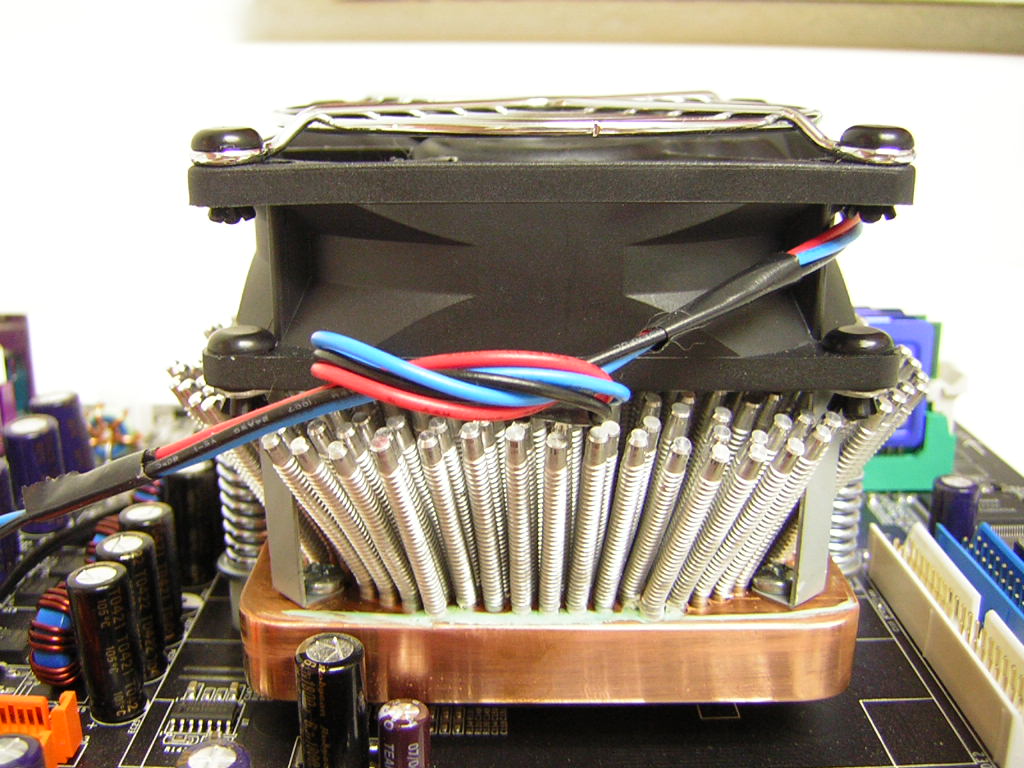
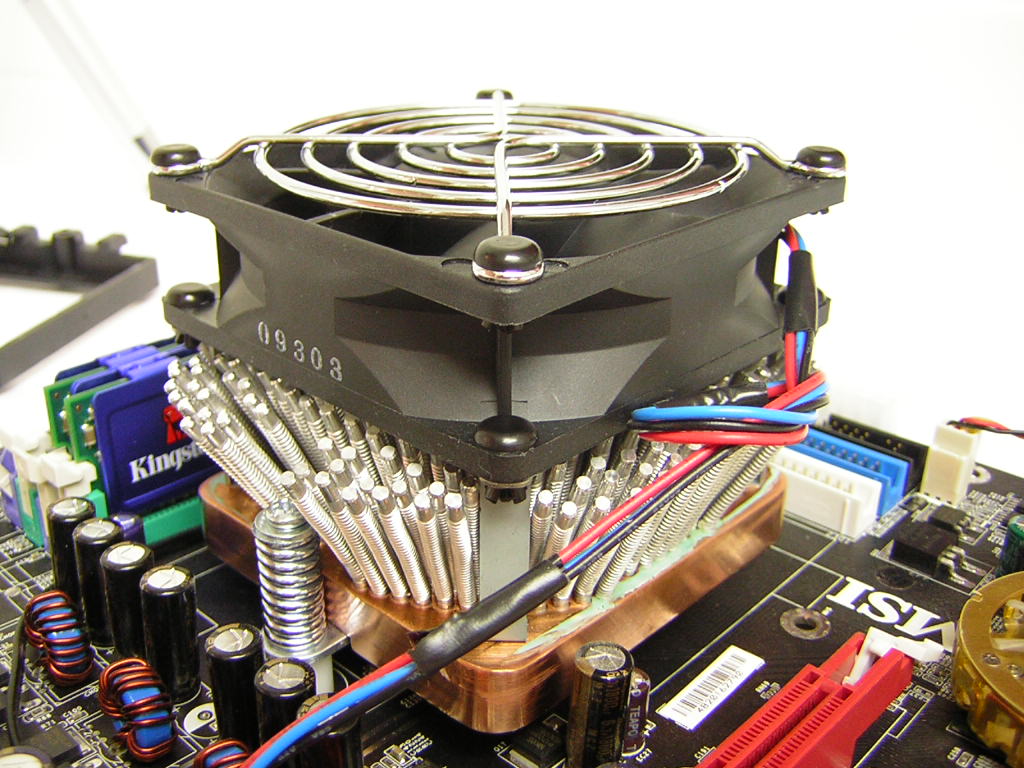
Installing the heatsink was very easy. Simply remove the front side of the motherboard bracket and use the backplate. Place the heatsink on the CPU and align the holes for the screws, and screw it on. That’s it. It’s as simple as that. Note that the green crusty mark did not come with the heatsink. I was using copper polish to wipe off my fingerprints and forgot to clean it off. It stayed on the heatsink and dried up.
Test Setup and Results
Test Setup and Method:
Many of you will want to see the performance differences between the MCX6400-V and the Thermalright XP-90, but it is not a fair comparison. There are various reasons for why it wouldn’t be a fair comparison. First, the XP-90 is based on heatpipe technology, which is far superior to the traditional pin/fin based design. Secondly, the choice of fan size for optimal performance is not the same. The Swiftech labs have tested and proven that the Swiftech MCX heatsinks perform better with 80mm fans. Using larger fans will create a larger dead spot in the center. The Thermalright XP-90 is optimized with 92mm fans, and using an 80mm fan is pointless. It’s like building a monster truck using a Scion engine. For these reasons, I will be comparing the Swiftech MCX6400-V against the MCX64-V.
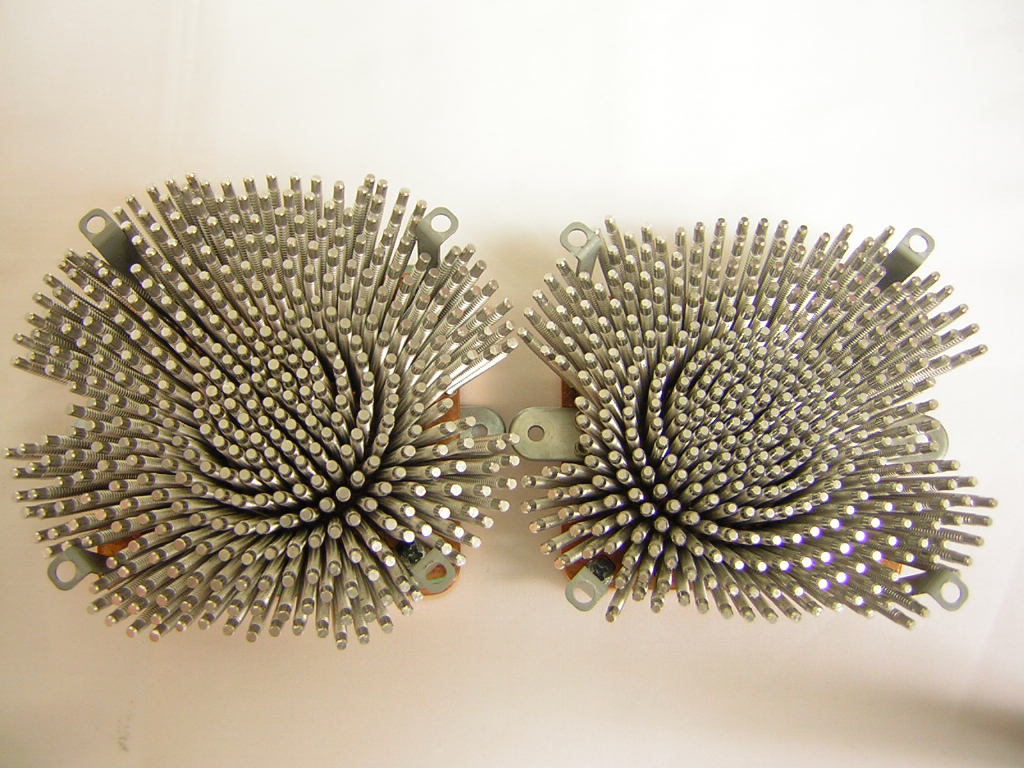
I’m sure that you can tell which is which just by looking at the picture above. The MCX6400-V has much more pins than the smaller brother and should definitely perform better. But the question is, just how much better?
Ambient temperature was kept at a consistent 22°C. Arctic Silver Ceramique thermal paste was used during the entire testing process. A temperature probe was placed next to the Intel heatspreaders to measure CPU temperature. An instance of CPU Burn-in was used to create maximum load on the CPU. The purpose of this test was to determine the results a home end user would obtain. There was no scientific testing conducted, simply because I do not have the proper equipment.
Test System Specifications:
- AMD Athlon64 3000+ 90nm Winchester (8 x 300HTT = 2.4GHZ @ 1.7v at idle/1.72v at load)
- MSI K8N Neo2 Platinum
- Kingston HyperX PC3200UL
- Gigabyte X800 Pro
Fan Specifications:
- Delta Electronics
- 80 x 80 x 25 (mm)
- 31.4 CFM
- 2700 RPM
- 28.0 dBA
Test Procedures:
- Idling at desktop for 30 minutes
- Full load with CPU Burn-in for 60 minutes
Results:
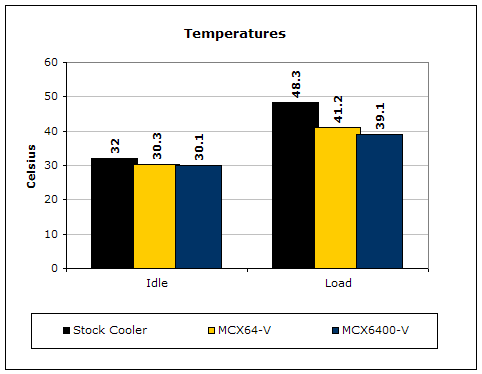
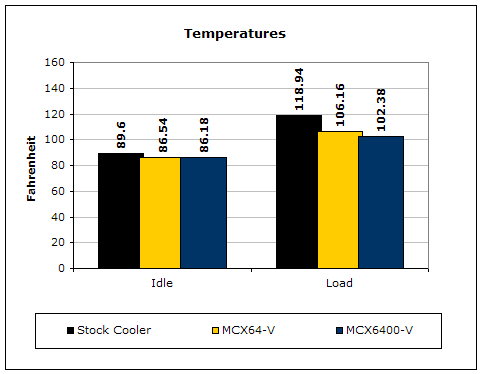
The MCX6400-V did indeed provide better performance over its little brother. It cooled 2 degrees better while using the same fan. However, it is fascinating that under full load, I was only getting temps of around 40°C with very low noise levels. The A64 Winchesters are simply amazing CPUs. The extra pins and thicker copper base provide better cooling performance and should keep extreme aircooling enthusiasts happy.
Conclusion and Thoughts
Swiftech has done it again and continues to do so with their MCX6400-V. The performance of the heatsink is outstanding. The heatsink looks great, installs easily, and keeps my overclocked CPU operating at low temperatures. It is true that the heatpipe induced Thermalright heatsinks will perform better and most likely cost less, but those are much harder to install. It really comes down to the enthusiast preference of whether they want good performance with easy installation or excellent performance with rigid installation. I’ve always been a fan of Swiftech and you should know what my choice would be. If heatpipes were not used, the Swiftech MCX6400-V could have been the best performing aircooling heatsink available. And because of that, the Swiftech earns my recommendation for it’s great looks, ease of installation, and great performance.
Pros:
- Copper aluminum combination
- Thick copper base
- Bent aluminum pins for maximum airflow
- Easy fan installation
- No compatibility issues with motherboards
- Great cooling performance
- Secure and easy installation
Cons:
- Expensive, when compared to solutions from leading competitors
- Heavy, even when installation provides security

We would like to thank Swiftech for providing us the sample. If you have any questions or comments, feel free to hit us up in the forums. You can also check out more of our latest reviews on the front page.