

SNT-Systems Waterblocks
Introduction
With the increasing amount of heat that current and future processors dissipate, traditional air cooling may not be enough to handle our need for outrageous overclocks anymore. To alleviate this problem, the use of watercooling has taken the overclockers’ community by storm. U.S. based companies such as Dangerden, Dtek, and Swiftech are releasing products that even non-enthusiasts would consider putting into their system. Sony and Apple have also decided to integrate watercooling into their new systems. Watercooling has been known to keep temperatures down while also suppressing noise to a minimum level.
Here in the U.S., watercoolers typically use 1/2” ID (the size of the tubing). This has been known to provide the best performance because it allows for more water flow. However, on the other side of the globe, German engineers utilize 3/8” ID tubing and even 1/4” ID tubing. Yet they have achieved excellent overclocks while using smaller tubing and low flow pumps. Normally, to obtain any of this German watercooling gear, you would need to import it directly from Germany. This would cause a U.S. buyer to incur increased shipping fees, waiting time, and customs fees. However, SNT-systems, a U.S. distributor of German watercooling gear from companies such as Aquacomputer and Alphacool, provides a variety of German products at a reasonable price (much lower than how much you would pay to have these products imported). Today, we will be looking at the Aquacomputer Twinplex GPU and Twinplex Northbridge waterblocks as well as the Alphacool Athlon 64 Nexxos Pro waterblocks.
The Waterblocks
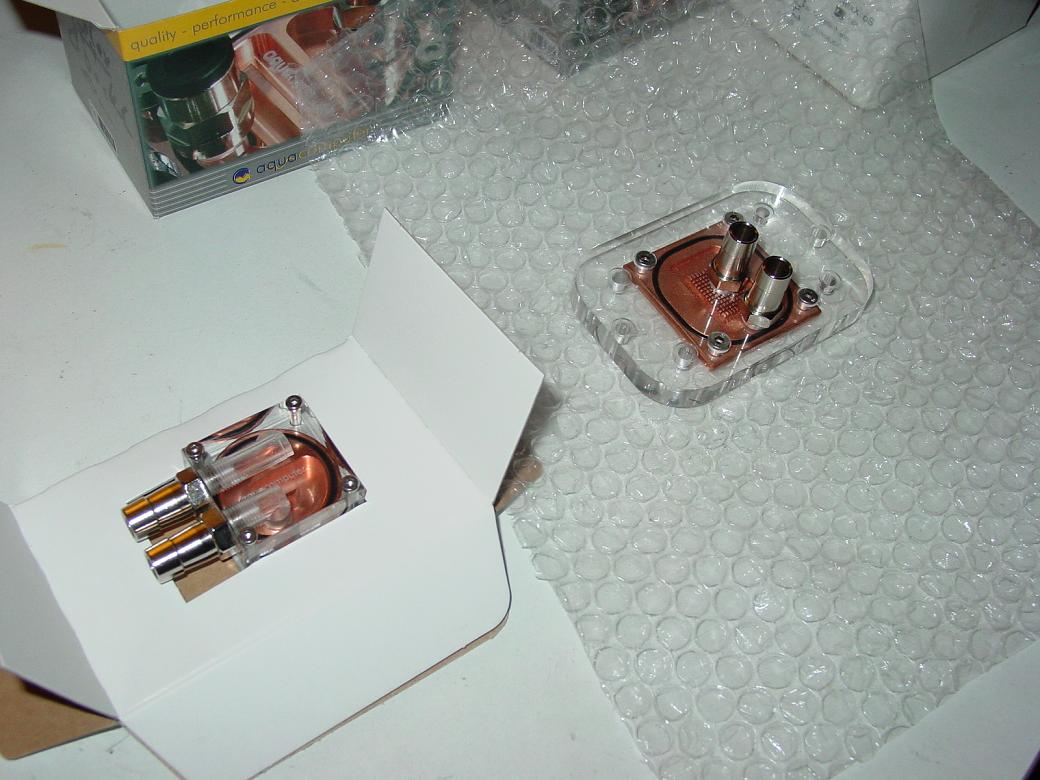
The Aquacomputer Twinplex blocks were packaged nicely in a highly decorated box. The Alphacool Nexxos Pro block utilized a more conventional white box. Both boxes contained good protection, with the Aquacomputer blocks using a piece of cardboard that held the waterblocks snugly within the middle of the box and the Alphacool blocks using a large piece of bubblewrap. All waterblocks came with mounting hardware, but only the Alphacool Nexxos came with detailed instructions.
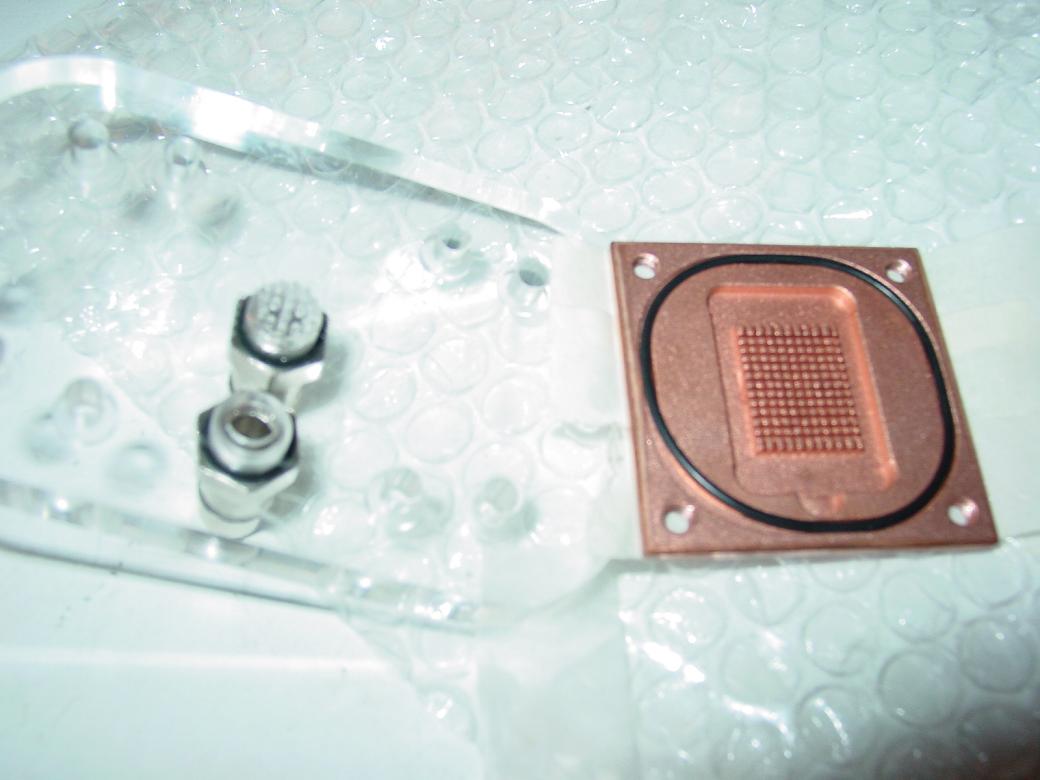
Unlike U.S. waterblocks, both the Alphacool and Aquacomputer blocks have 3/8” OD nickel-plated barbs as opposed to the usual 1/2” OD barbs that we are so accustomed to using. We will see later how the use of smaller barbs and tubing affect performance in comparison to air cooling. The blocks are made of copper which retains heat more effectively and is less prone to corrosion than other commonly used metals for cooling, such as aluminum. The circular black rubber piece within each waterblock is called the o-ring which provides a watertight seal between the copper plate and the Plexiglass. The Plexiglass tops are supposed to be break proof as specified within the product details in the site.
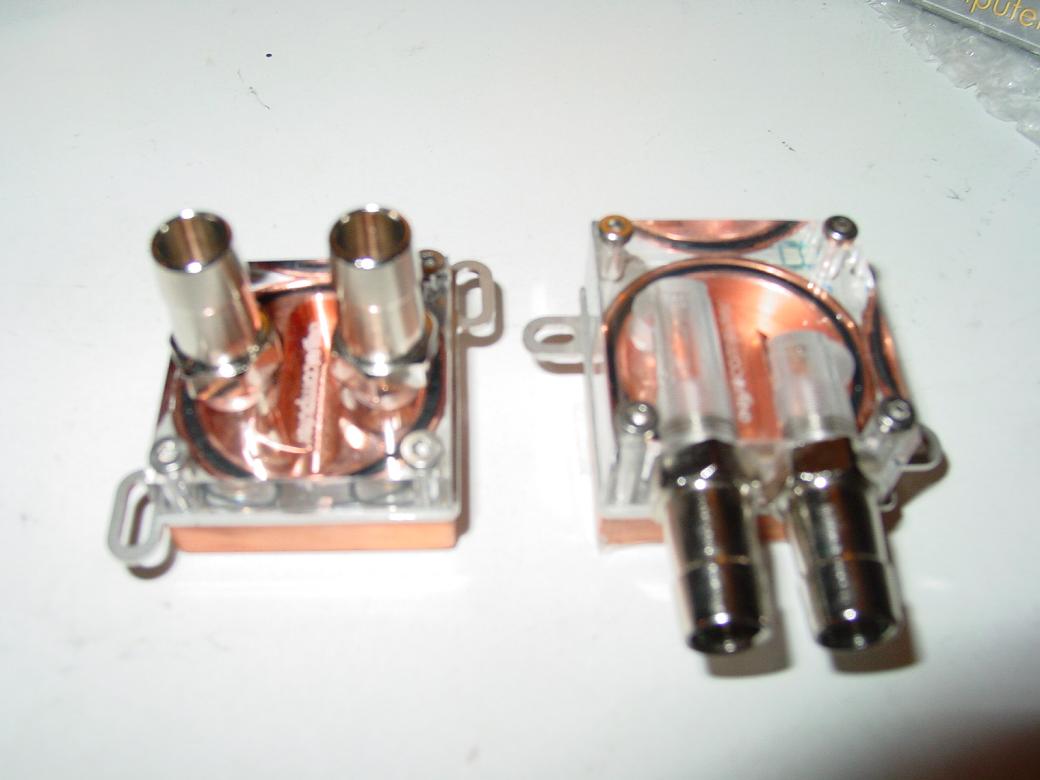
Looking at the Twinplex blocks, notice how both are exactly the same style of blocks, except for the different mounting screens and barb placement. This is convenient because SNT-systems sells different mounting screens to switch between a Northbridge setup and a GPU setup. The path for water is a typical maze design that many of us are accustomed to seeing, especially with the Maze product line of Dangerden. To disassemble these blocks only a hex key is needed. This provides easy access for switching screens as well as a much cleaner look compared to screws. The bottom of the blocks are machine lapped to about 600 grit. This gives it a slight mirror finish, although not as good as a Swiftech lapping or even a Polarflo “super finish.” Nonetheless, it should be sufficient enough for a Northbridge or graphics card.
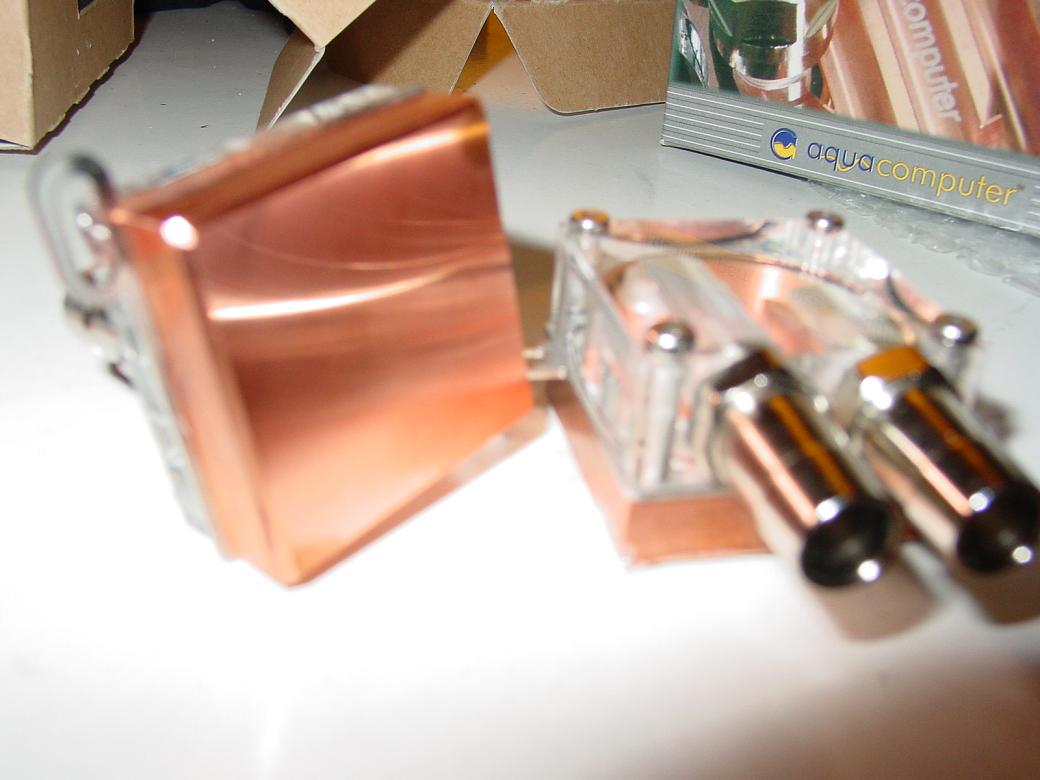
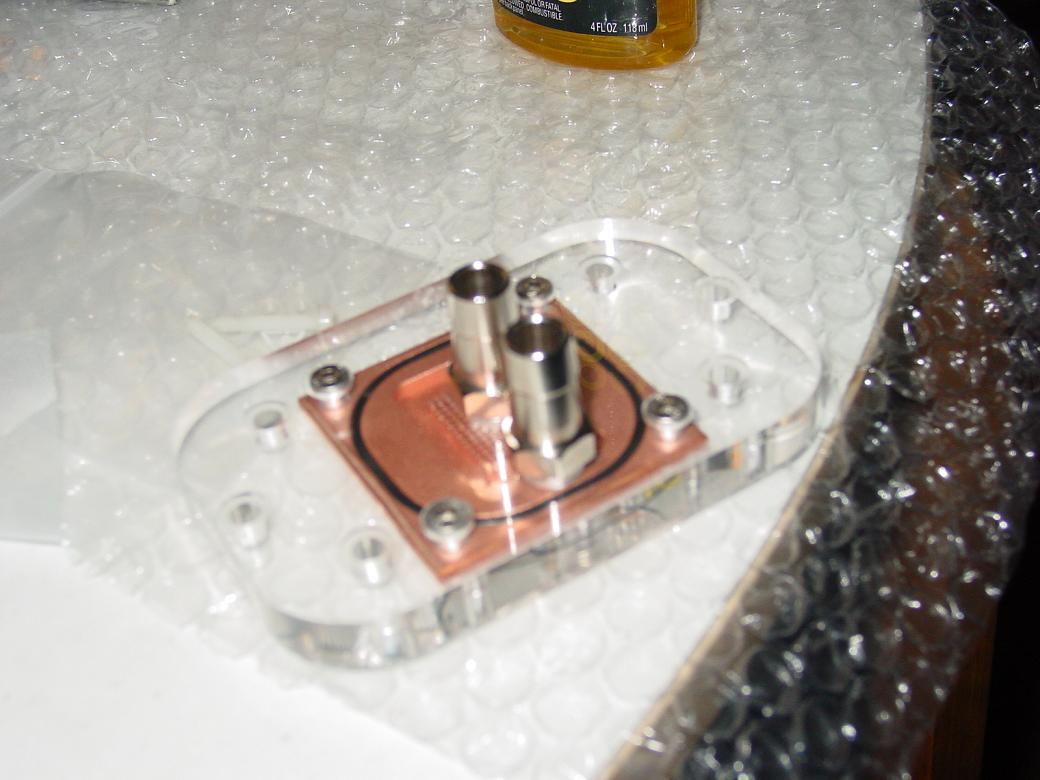
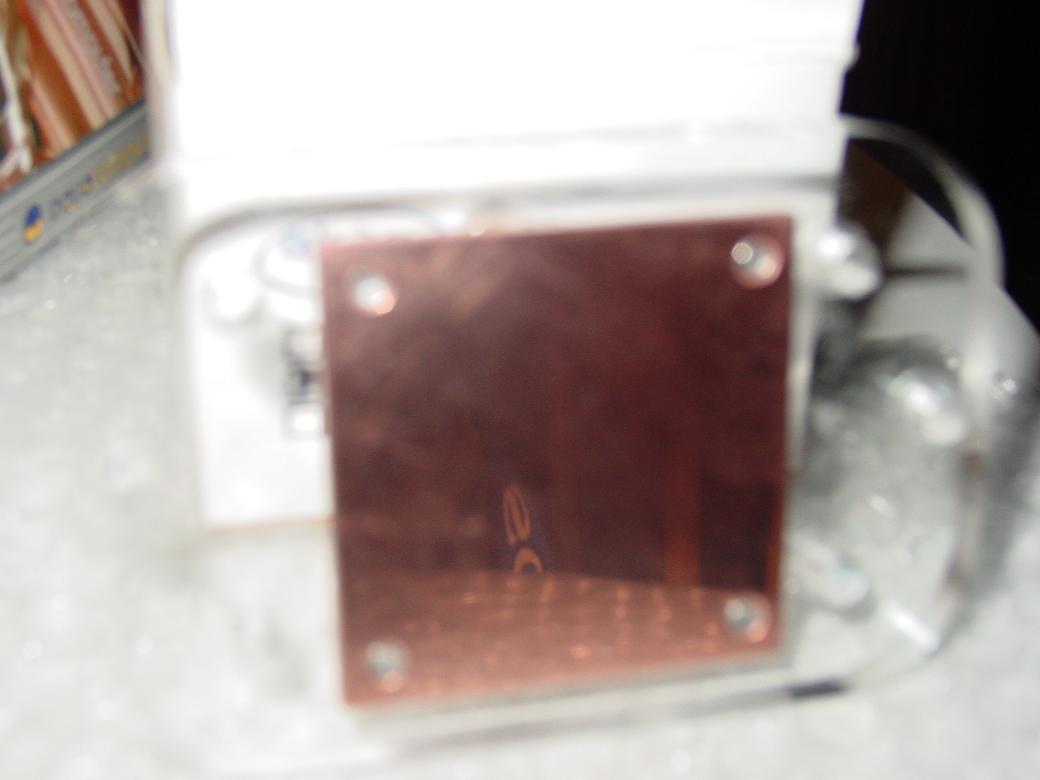
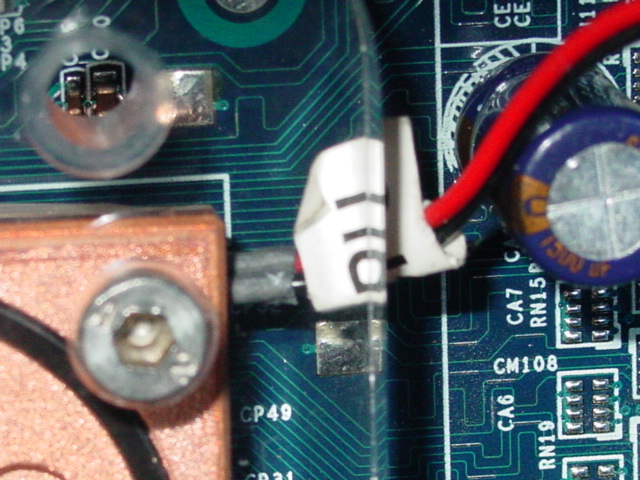
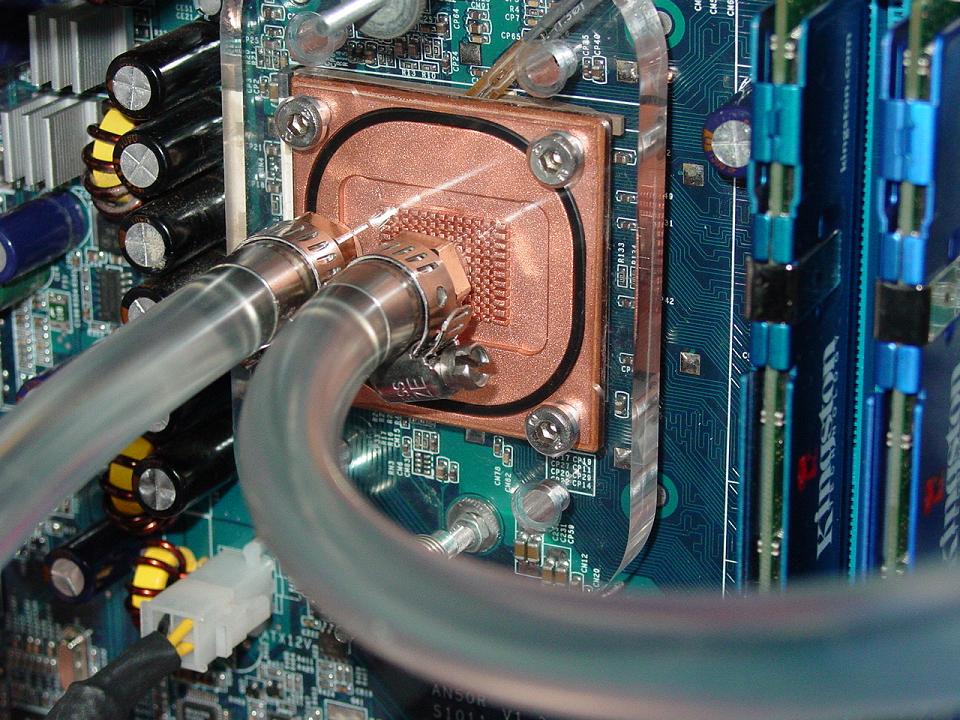
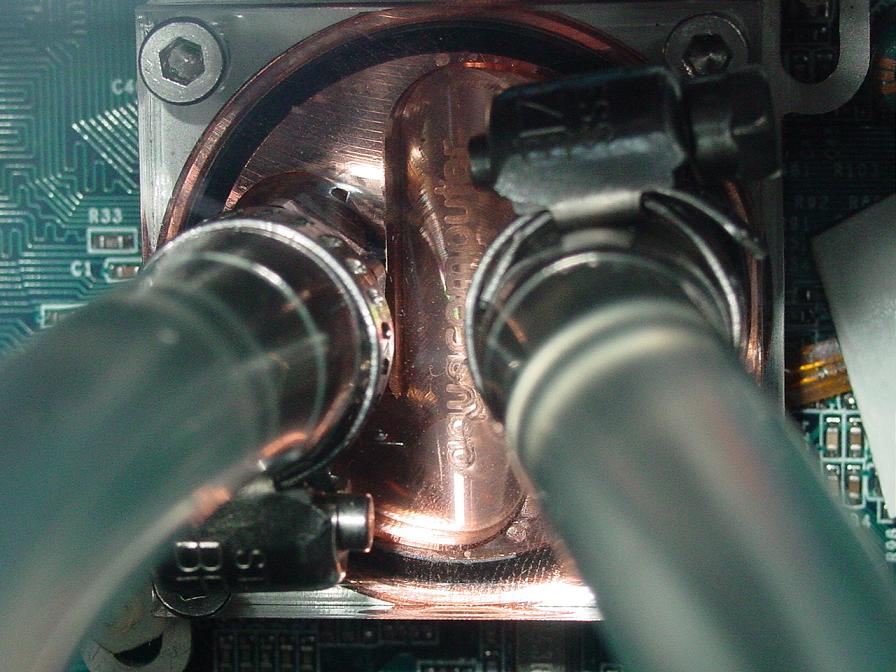
Similarly, the Alphacool Nexxos Pro utilizes an o-ring for a watertight seal as well as hex screws to fasten the top onto the copper plate. The actual water path is a bit more complex than the Twinplex’s maze design. It looks to be a finely milled micro channel design where the inlet barb is placed directly over the channels while the outlet barb is placed around the channels. Taking off the top reveals holes within the inlet barb which provides a “jet” stream of the water into the channels similar to that of a shower nozzle. This design is efficient because the water is hitting the channels with a higher velocity and is also directed at where the actual die of a CPU would be. However, some processors, such as Athlon64s and Pentium 4s, have a heatspreader already on the die which negates this block’s purpose as a direct-die cooling waterblock. Whether or not this design will negatively effect the Athlon64 used today remains to be seen, for now. The bottom of the actual waterblock is finished to an above 2000 grit for a mirror finish that rivals even PolarFlo’s “super finish.” Although the picture is very blurry, you can see the reflection of my Sony Digital camera, which shows how reflective the mirror finish is. The copper plate itself is also very thin and no more than 3 mm. Common U.S. blocks are thick in material and are quite heavy in comparison. I don’t think anyone has to worry about this block falling off. Overall, this block is very impressive.
Test Setup and Method
- Athlon 64 3200+ Clawhammer (220 x 10 at 1.6v)
- Kingston HyperX PC3500 2x512MB (7-3-3-2 at 2.8v)
- Shuttle AN50R v1.3
- Sapphire VIVO X800 Pro (525/550)
- Lian-Li PC70
- Fortron 530
- All cooling used a thin layer of Arctic Silver 5
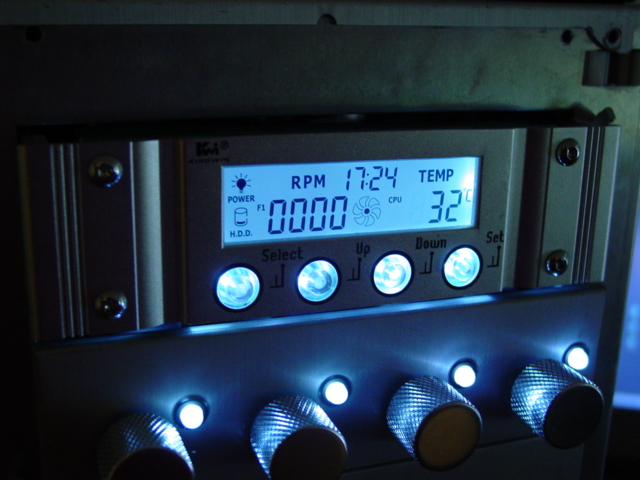
The Athlon64 3200+ need not be run at 1.6v, but for testing purpose, I set it that high. All testing is within an open case with all side panels off as well as all fans off (besides the CPU fan and the radiator fans. Testing was done using a temperature probe from a Kingwin Thermal control center. The temperature probes were placed right next to the heatspreader of the Athlon64 and right next to the Northbridge Nforce chip. The GPU temps were taken using the Overdrive tab on the AT control panel, which seems pretty accurate, as the results will show. To test for ambient temps I placed a thermal probe all the way across the room so that there was minimal temperature effect from the computer. For comparative analysis, I also used motherboard monitor to test for CPU temperature.
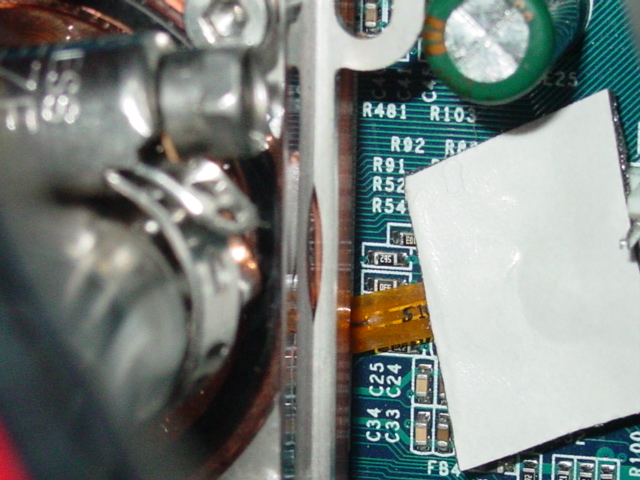
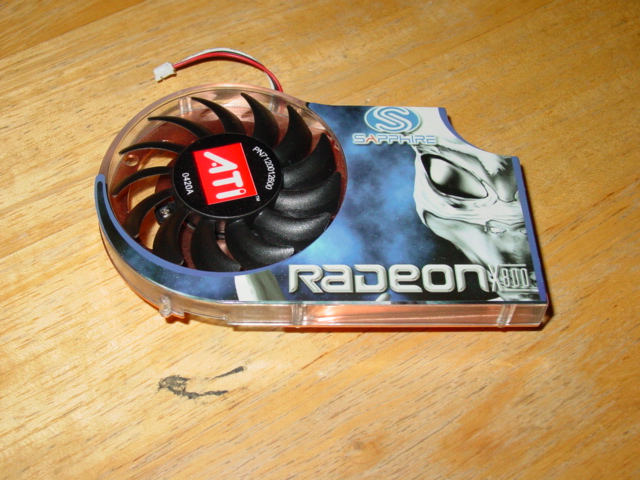
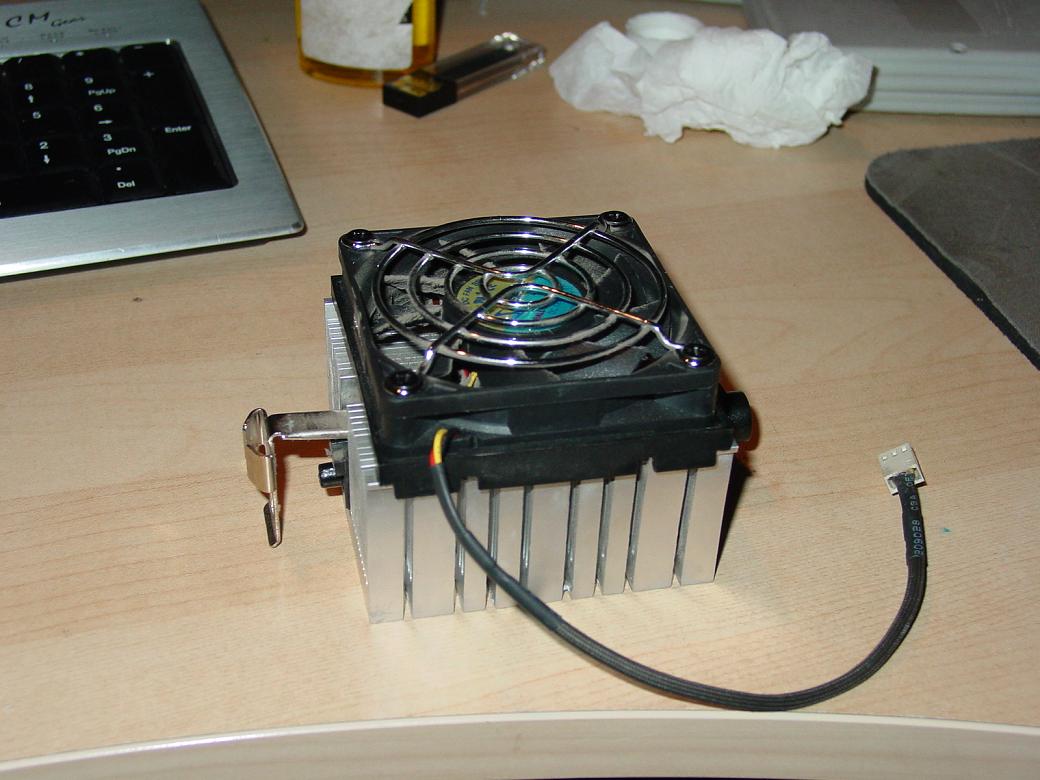
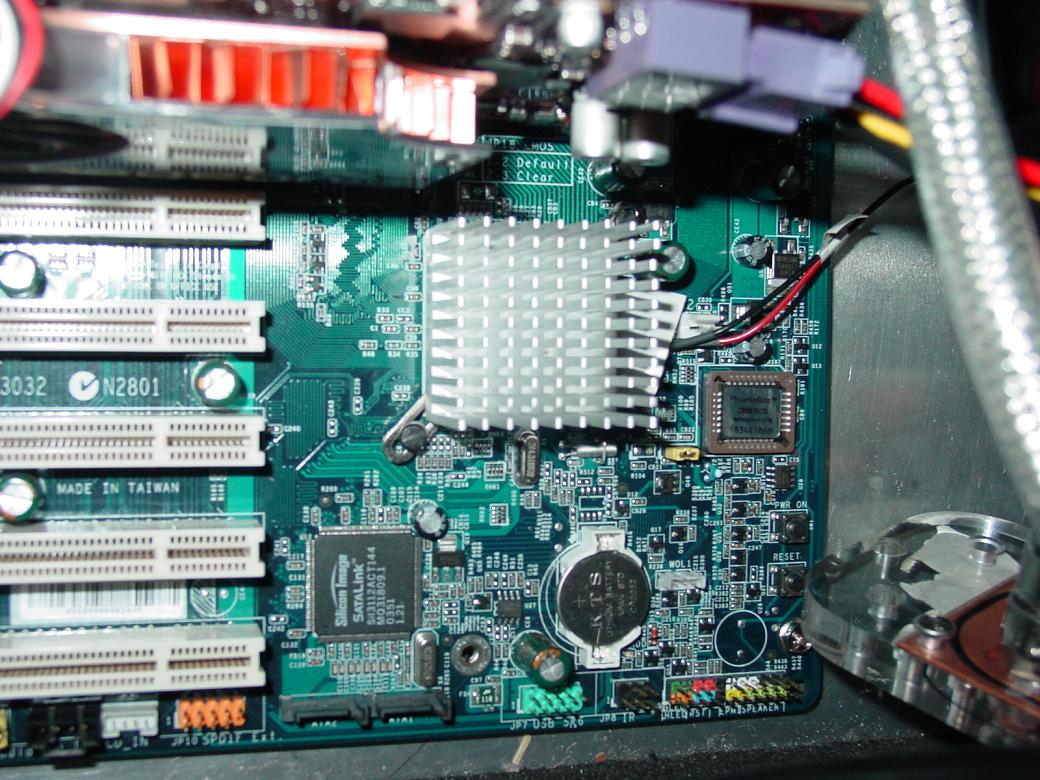
For air cooling, I used a Speeze all-aluminum Athlon64 cooler which, from past tests, outperformed the Athlon64 retail heatsink by about 1 degrees Celsius. For the Northbridge heatsink I replaced the stock Shuttle AN50R Northbridge heatsink with a much larger Zalman Passive NB heatsink. Finally, the GPU was cooled using ATI’s all copper X800 pro stock heatsink.
Watercooling Specifications:
- 77 Bonneville radiator (fits 2 120 mm fans) w/ custom Aluminum shroud
- Eheim 1048 (1/2” barb inlet, 3/8” outlet)
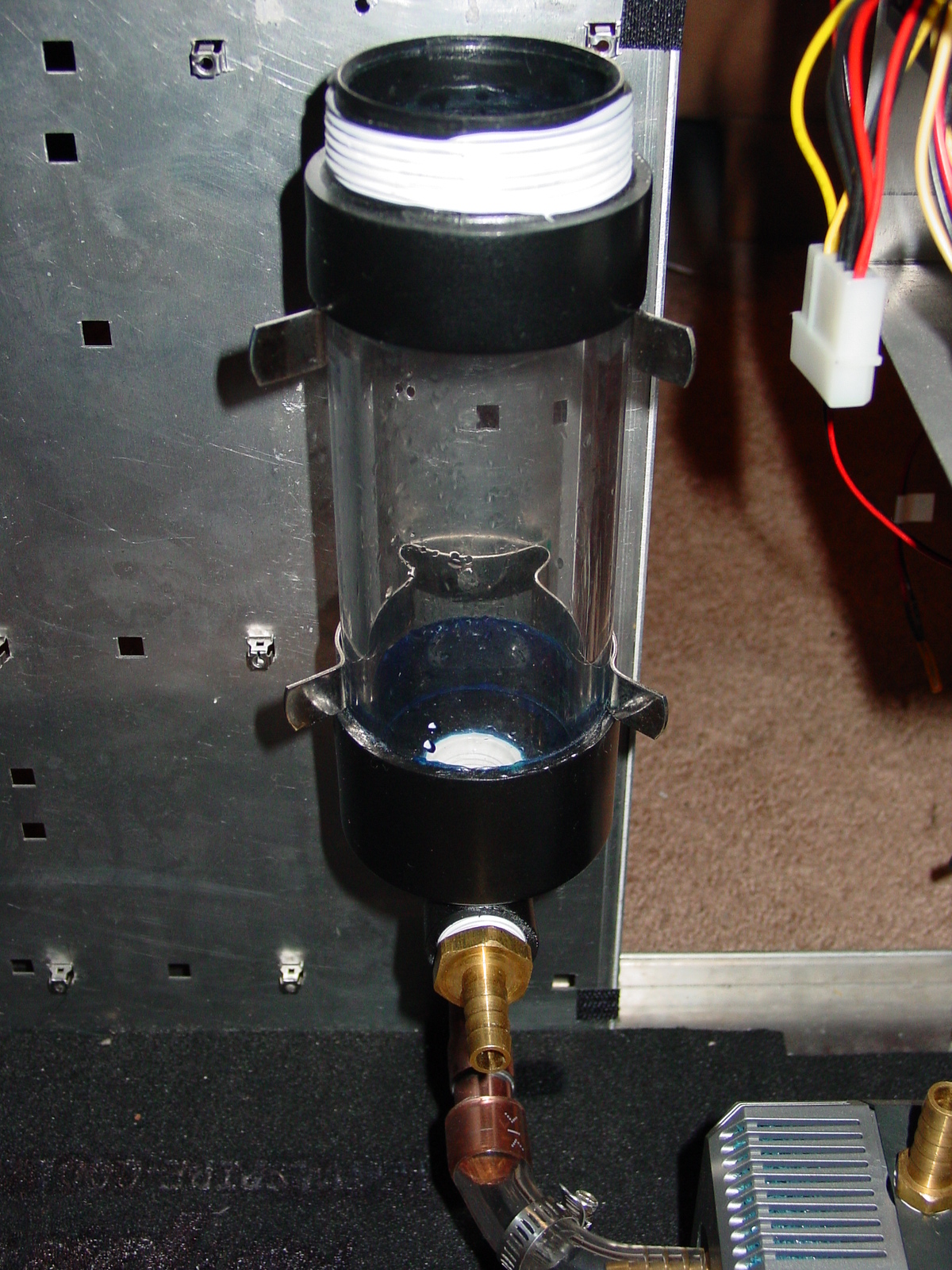
- Custom (2” OD Plexi) reservoir.. courtesy of Turbokeu’s design here.
- MasterKleer Tubing 3/8” ID, 1/2” OD, 1/16” wall from McMaster
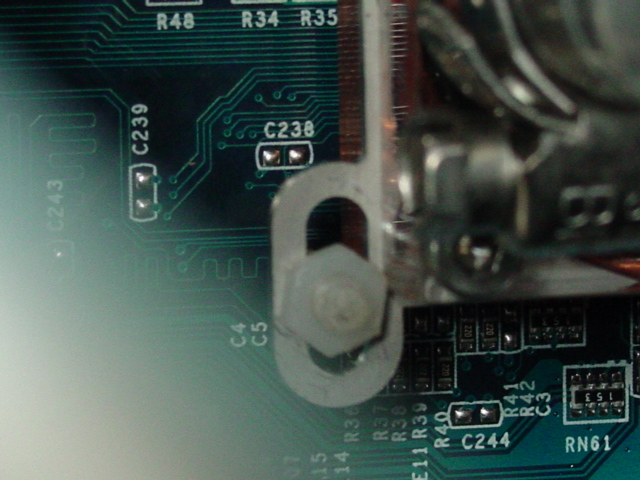
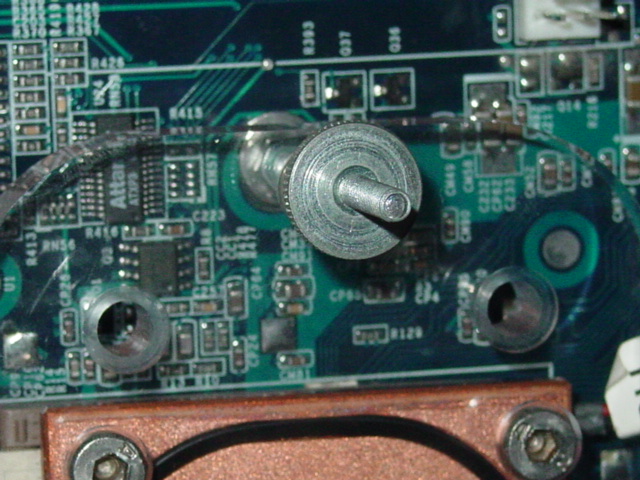
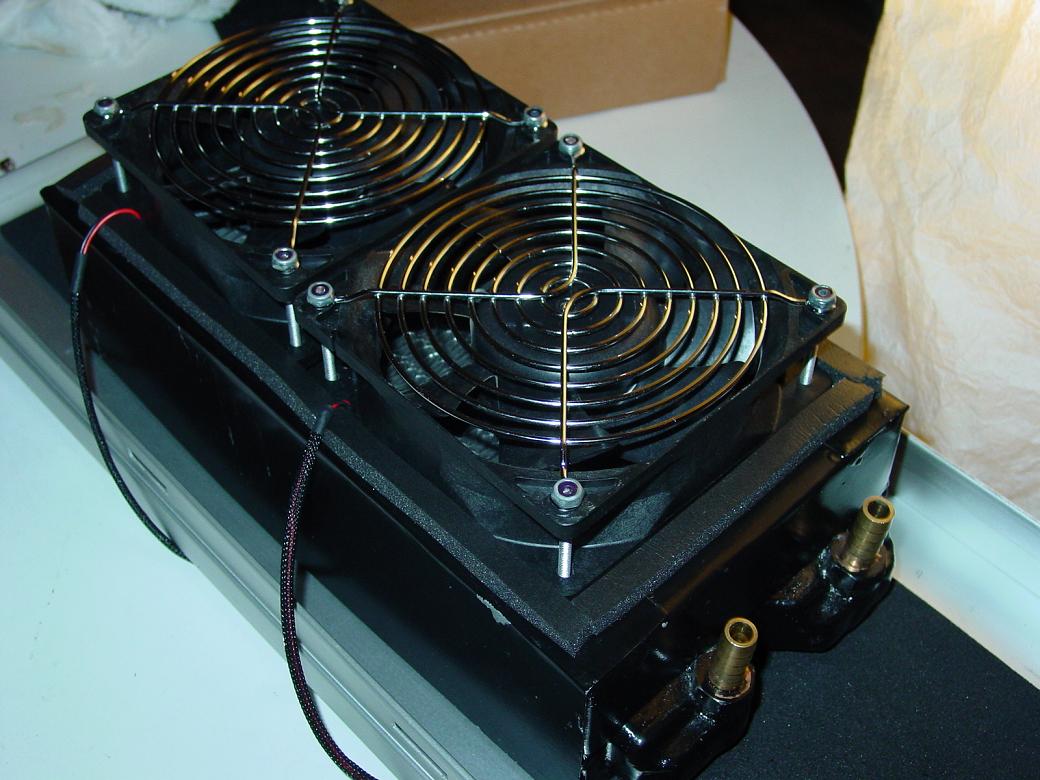
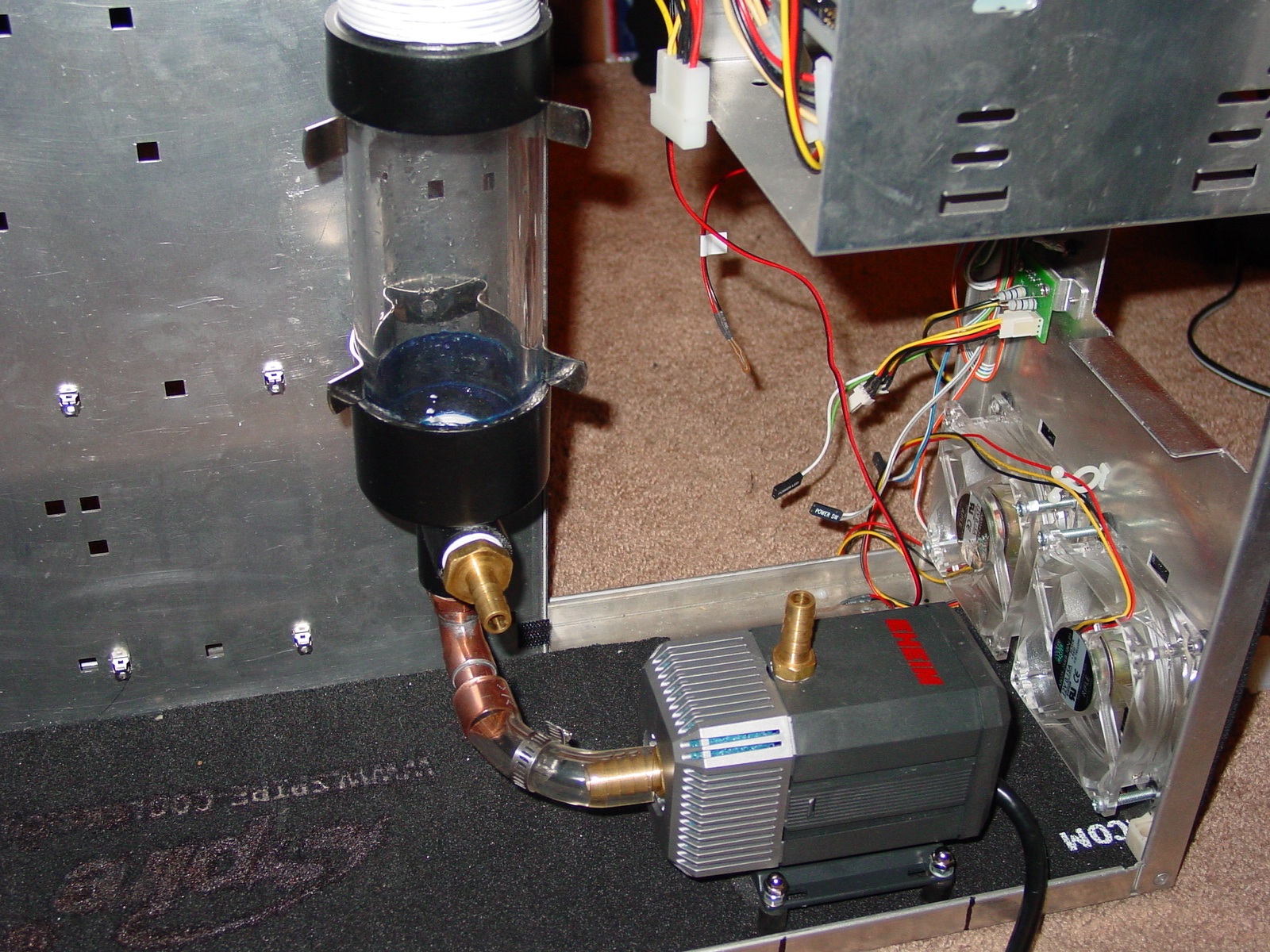
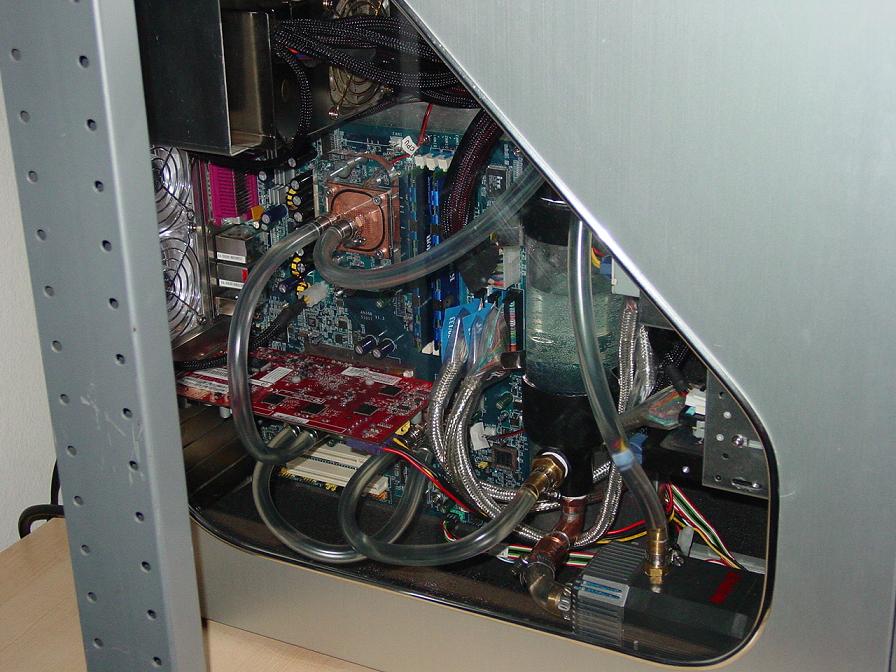
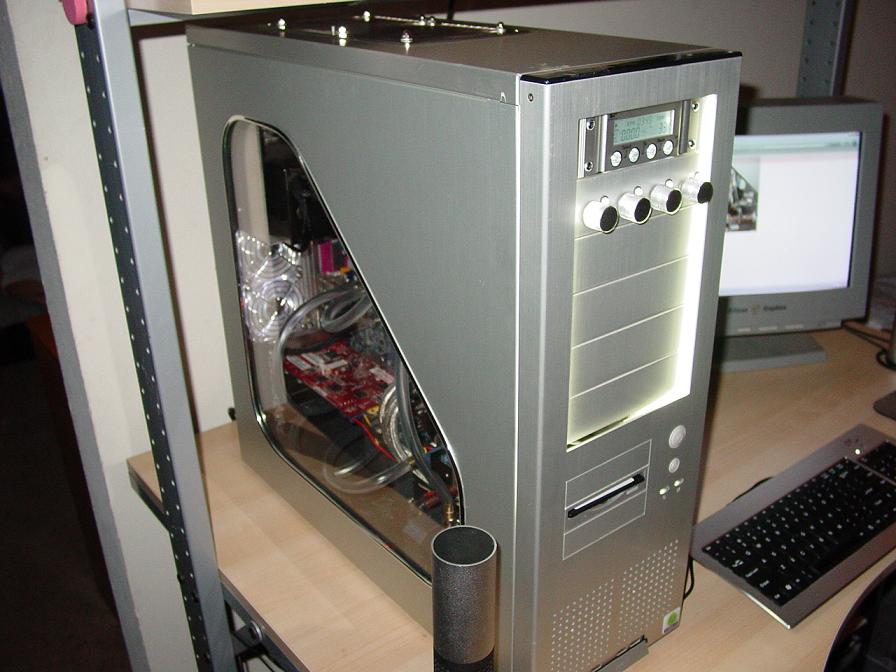
The radiator was mounted on top of the case with the fans pushing air outside of the case. Most people use a pull-method, but I opted for this method because I wanted the fans as deep inside the case as possible so noise would be minimal. The fans are 2x120mm Panaflo FBA12G12M fans that were only run at a low 7v using a custom rheobus that I bought from PCMods before they were bought out by FrozenCPU. The Eheim was placed at the bottom of the case and secured with rubber mounting standoffs. I also used a 1/2” inlet because I did not want the inlet to be restricted with a 3/8” inlet. The reservoir is a custom air trap that involves a T at the bottom of the Plexiglass tube. This effectively removes bubbles within only a 5 minute time span while also making filling and bleeding easy. The Twinplex blocks were mounted using plastic nuts and screws (chosen because they would not damage the GPU and motherboard PCBs.) Finally, the Nexxos Pro was mounted using nuts and bolts fastened to the motherboard. It was then easily tightened using the provided thumbscrews. One thing to note however: the threading of the screws of these products are entirely different than U.S. threading. I attempted to force the screw into the backplate of the Shuttle, but I noticed the threading was different.
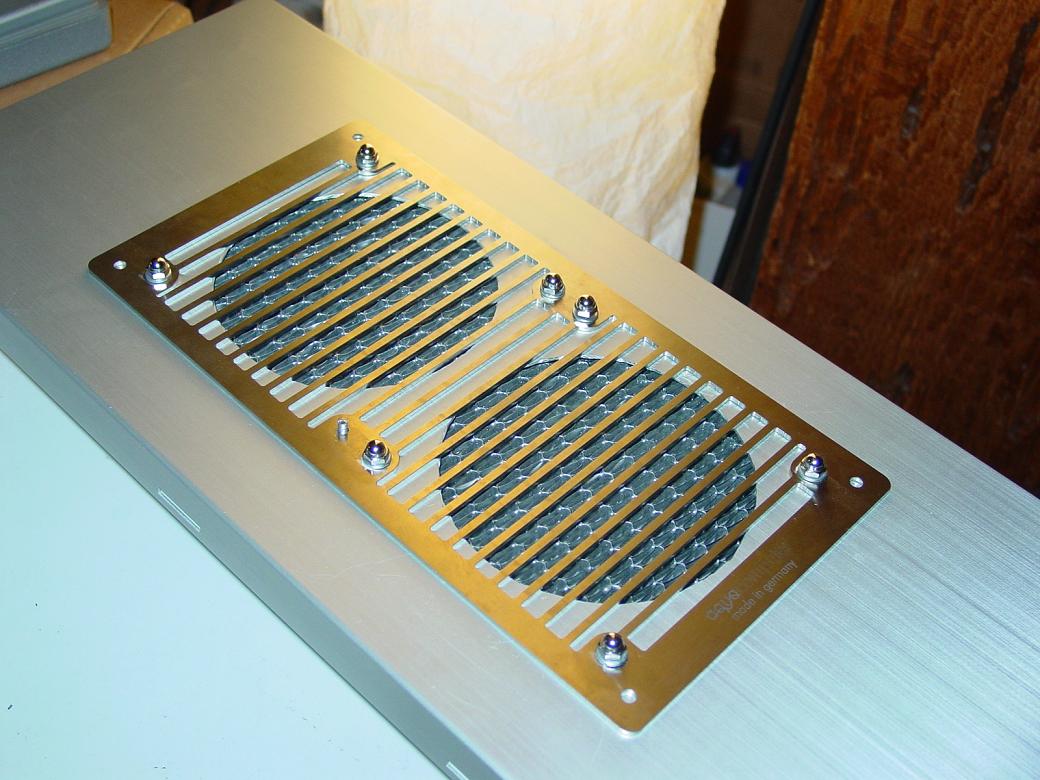
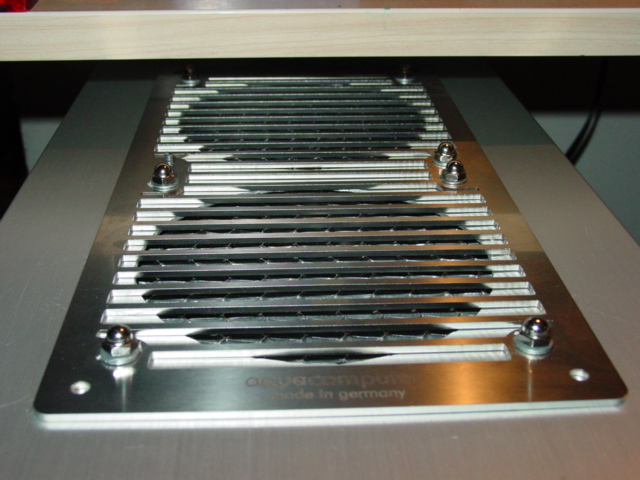
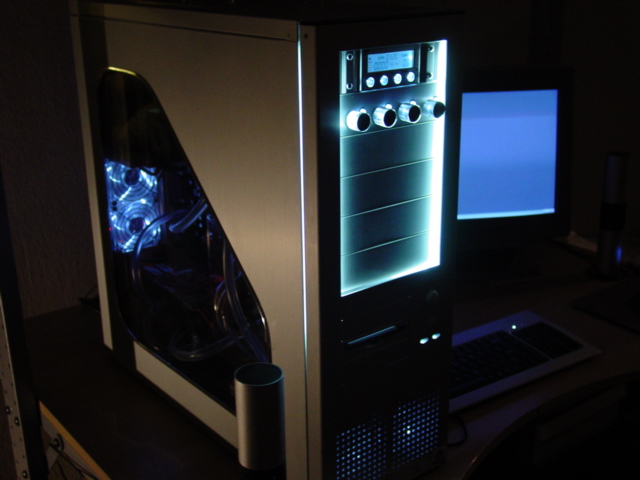
One thing I want to add; I purchased an Aquacomputer grill and, although I didn’t need to include it in today’s review, it is just too nice not to. The grill is made of brushed aluminum that matched the look of the Lian-Li Perfectly. It Line up real nicely with my radiator, although it would have matched even more perfectly with an Airplex Evo 240 radiator.
Programs:
- CPU and Northbridge: Prime 95’s torture test for 40 minutes
- GPU: 4 complete loops of 3d mark 2003
Results
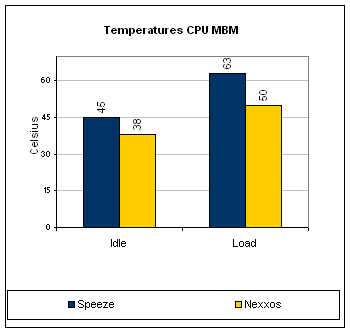
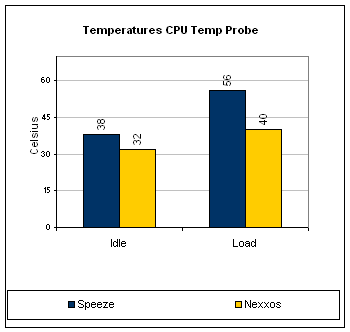
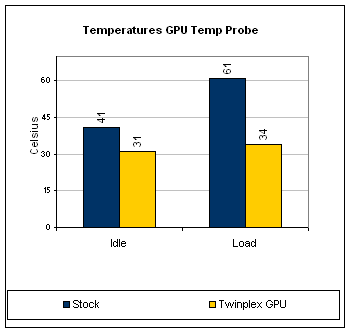
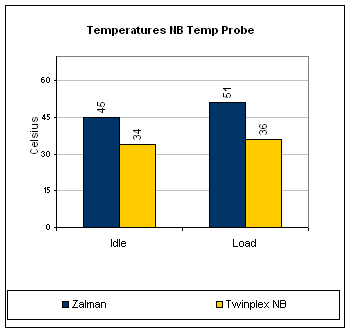
The results are rather impressive. With a near silent Eheim 1048, smaller tubing, and these German-made waterblocks, the temperatures in comparison to air cooling are amazing. The differences between MBM and the temperature probe are perhaps due to the heatspreader on the Athlon64. The motherboard probably is taking actual diode temps underneath the processor which is why the temps are so much higher than the temp probe. Nonetheless, both show a huge decrease in temps with the Alphacool Nexxos Pro. Even more impressive is the lower delta change. With air cooling you can get temps that increase almost 20 degrees C. With the Nexxos Pro, temperatures increase less than 10 degrees C. The GPU temperatures are even more amazing. I would have never known that the stock heatsink, being all copper with a large fan, would have produced such high load temperatures. Temps increased 20 degrees C from idle to load with stock cooling but only 3 degrees C with watercooling. This was too good to be true, so I decided to remount the stock heatsink thinking I did something wrong. I then remounted the Twinplex GPU block and temps were exactly the same. Lastly, the NB temps were lowered also, although not as drastically as the GPU and CPU.
Conclusion and Thoughts
I am overly impressed with these products. If you take a look at this German website here you’ll see that the Nexxos Pro is placed 3rd while our no.1 performing block, the Cascade, (if you are lucky enough to get one in the U.S.) is placed at number 11. However, it is possible that these German systems only use small tubing as well as small sized barbs for testing. Placing a 3/8” barb on a Cascade is like putting a Ferrari engine in a civic. Which leads me to believe that while these blocks are amazing, typical U.S. watercooling systems will probably outperform these blocks. With that in mind, if performance is your goal, than these blocks are not for you. Another thing that can draw people’s attention away from these products are the price. Equivalent blocks can be purchased for more than 20 dollars less. But that doesn’t mean these blocks are not worth it. German engineering has provided these blocks with a look different from anything offered in the U.S.. In comparison to U.S. blocks, they are much smaller, weigh less, need smaller sized tubing, and therefore do not take away from the computer itself. Moreover, judging from the temperature results, the performance is amazing with such a low flow pump.
One thing that is interesting to note is where I purchased these blocks from. Initially, I was hesitant to move to a German 3/8” system, but somehow I found myself going back to the site every so often, even though I already possessed an awesome watercooling rig (TDX, MCP600, and FusionHL). I used their “Live Help” option and have been talking to them to this day. They (Dan and Brian) are both the most helpful guys and will be quick to answer your questions (even late at night, which is when they’re up mostly since they have to deal on German time). Their reseller ratings are awesome and deservedly so. So if you have ever have any questions about these awesome waterblocks, or just are interested in moving on to a virtually silent and beautiful watercooling system, head over to www.SNT-systems.com.
Pros:
- Lightweight (much smaller and easier to handle than typical waterblocks)
- Excellent performance over conventional air cooling (doesn’t require a high flow pump for all three blocks)
- Utilizes smaller tubing (for easier routing and a less bulkier look)
- Easy to use mounting hardware
- Excellent lapping job
- Quiet
- Beautiful German engineered attention to detail
- Awesome customer service
Cons:
- Slightly expensive (about 20 dollars more than most waterblocks)
- Perhaps not as good performance over 1/2” systems
- Different threaded mounting hardware (if you lose a nut, you’re “screwed”, haha… no pun intended)
We would like to thank SNT-systems for providing us the sample. If you have any questions or comments, feel free to hit us up in the forums. You can also check out more of our latest reviews on the front page.