

Asetek VapoChill Micro
Introduction
Asetek has always focused on high end PC cooling rather than typical mainstream solutions. Their most extreme is the VapoChill that consists of a compressor that removes heat from the CPU. It is capable of bringing temperatures all the way down to sub-zero! Their second in line is the WaterChill, which is basically a watercooling setup. Their waterblocks are easy to mount and the entire kit is easy to assemble, although you do have to do some modifications to your case to mount the big radiator. What about the average Joe Overclocker who does not wish to step into such extreme worlds and are satisfied with aircooling? I am one of these enthusiasts who simply refuse to go the watercooling route. My main gripe is the level of maintenance and installation process. The simplest watercooling kit will definitely take more time to install than a traditional aircooling heatsink. Phase change is just another level. I see no practicality in it other than to obtain world record benchmarks. I would definitely love to own one, but running it 24/7 is just a big no-no for me. Fortunately for enthusiasts who think like I do, Asetek has introduced an aircooling heatsink that aims for easy installation and high performance.
VapoChill Micro
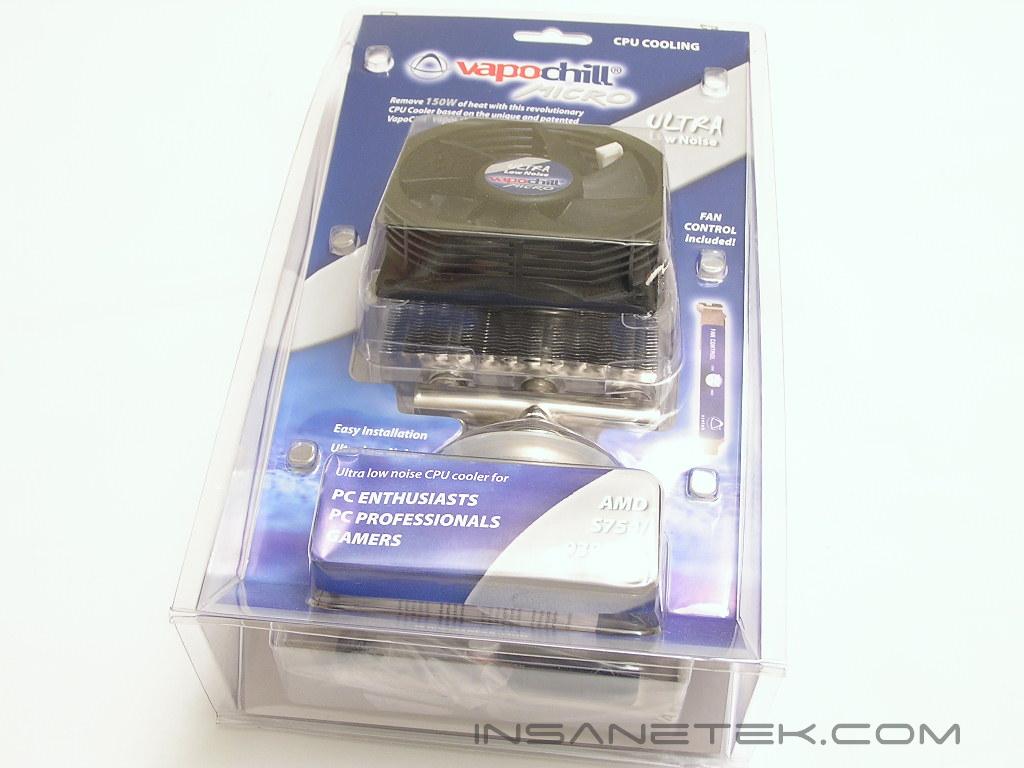
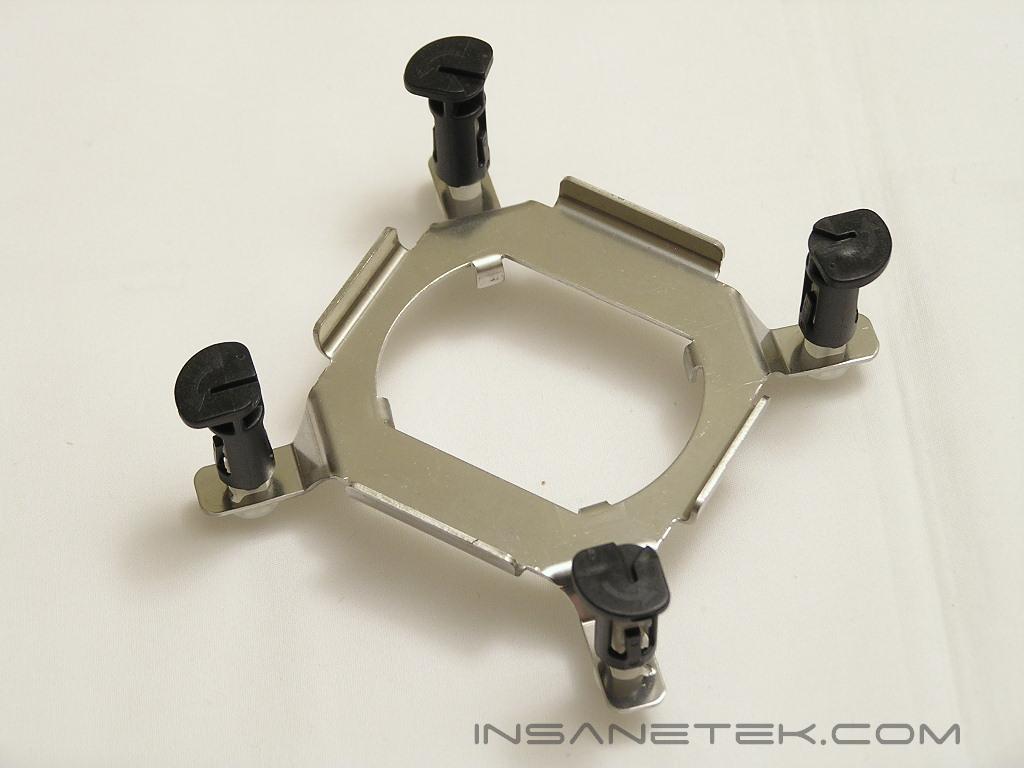
The VapoChill Micro comes well packaged in a clear plastic container. There are multiple versions of the VapoChill Micro available–Ultra Low, High-End, and Extreme Performance. Those differ with the included fan. Unfortunately, the VapoChill Micro does not come with all installation brackets or a universal retention mechanism. This means that enthusiasts will have to make a purchase corresponding to their system platform. It can be quite a nag if you ever decide to change up your system from an AMD to Intel or vice versa. You will be stuck without the installation bracket and be forced to make another purchase. With the three different types of fans and two major different platforms, that is a total of six different VapoChill Micros you can purchase. Make sure you get the one you really want and need. I was fortunate enough to receive both the LGA775 installation bracket and the K8 frame. For the Ultra Low Noise and Extreme Performance versions, fan controllers are included to allow enthusiasts to adjust to their best noise/performance ratio.
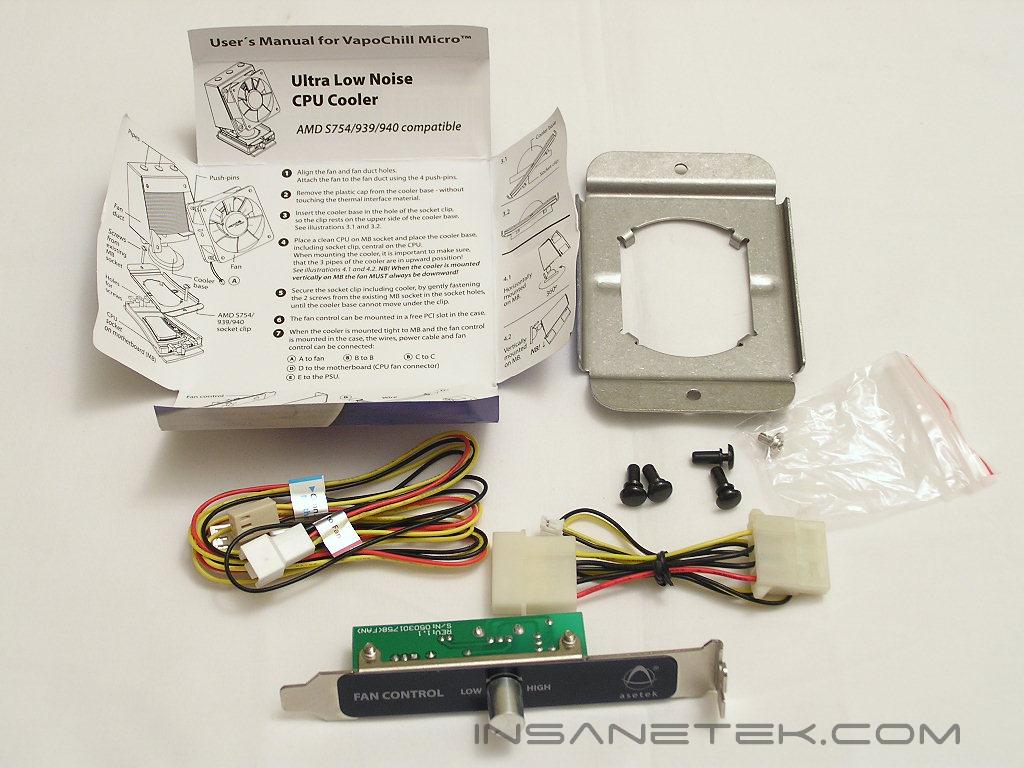
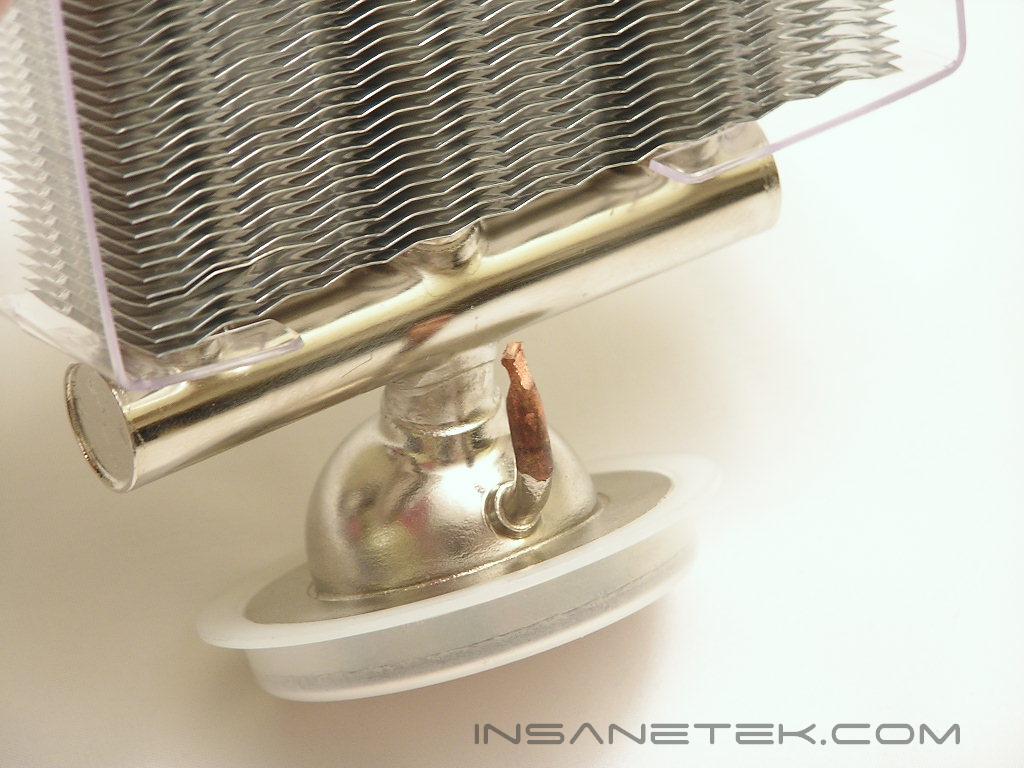
The VapoChill Micro is nothing like an ordinary heatsink. It resembles the popular heatpipe design, but it is not exactly a heatpipe. The technology behind the VapoChill Micro is that instead of a liquid filled heatpipe, the base and three large chambers are filled with gas and liquid. This is like Asetek’s VapoChill design, but in a much smaller and compact and simpler form. The way it works is that the base makes contact with the processor; the gas inside the base heats up and disperses through the chambers to the fins; and the fins are cooled by the attached fan. The VapoChill Micro is designed to be angled so that the airflow from the attached fan gets blown across the motherboard. This allows the motherboard to receive some cooling and possibly result with a better overclock. For those who have the DFI nForce4 motherboards, you can angle the heatsink and direct the airflow across your memory. The fan shroud of the VapoChill Micro is clear and wobbly. I wish Asetek would fix this as the fan shroud tends to move around a bit. This somewhat soft plastic does help dampen the vibration though.
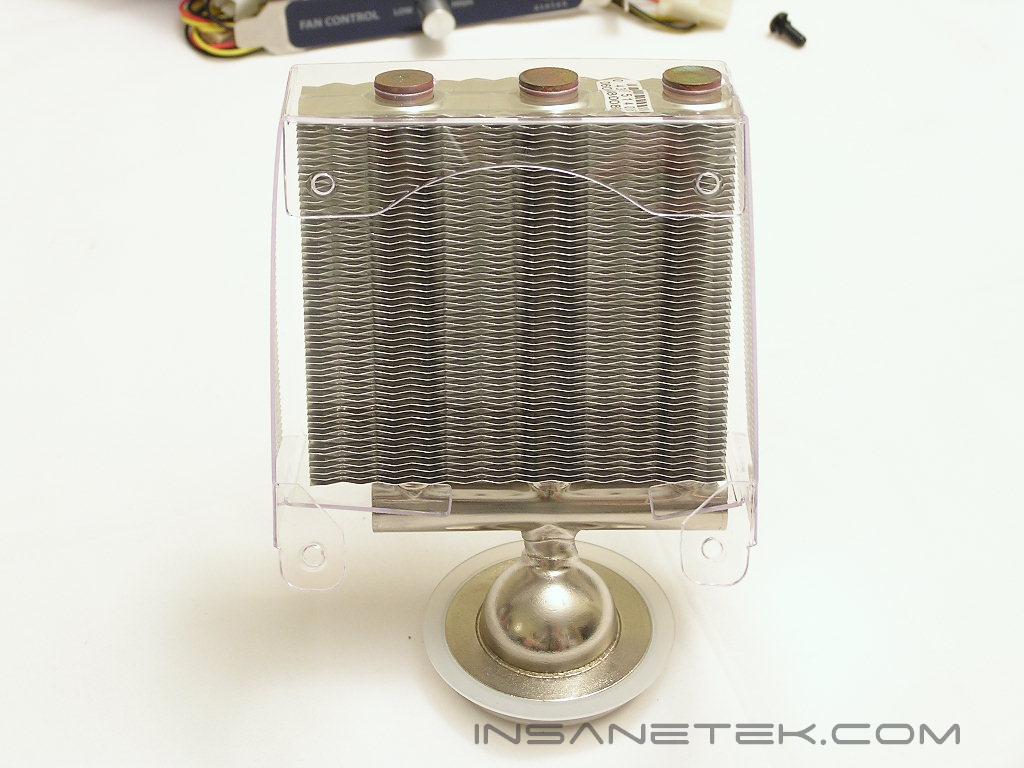
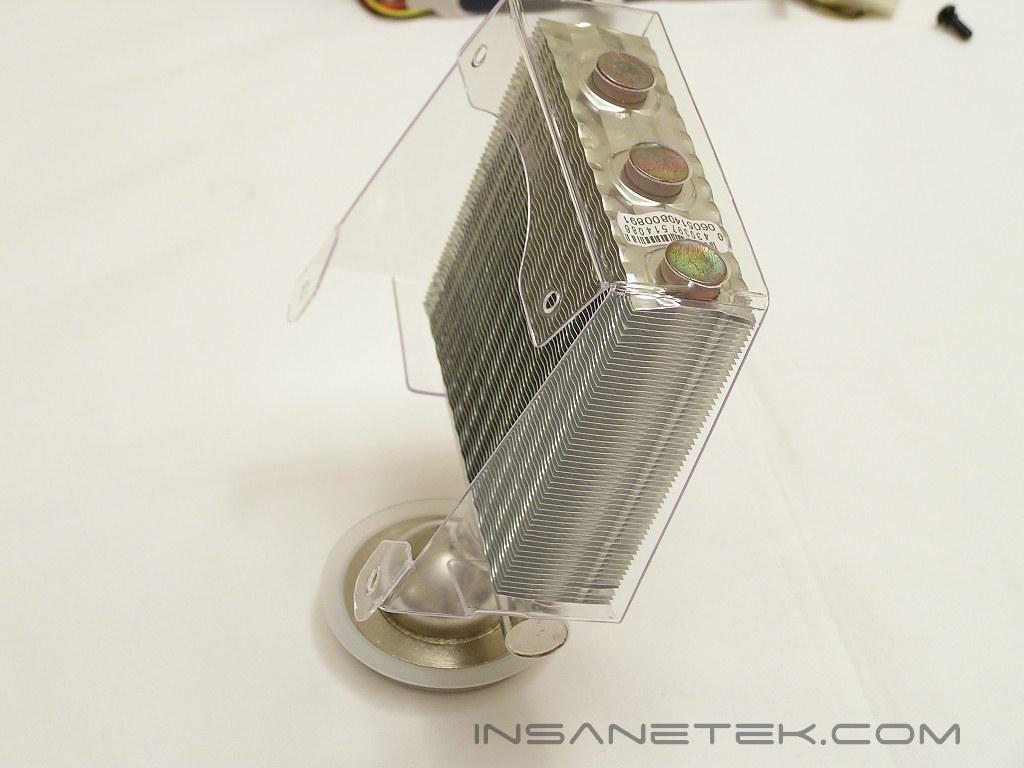
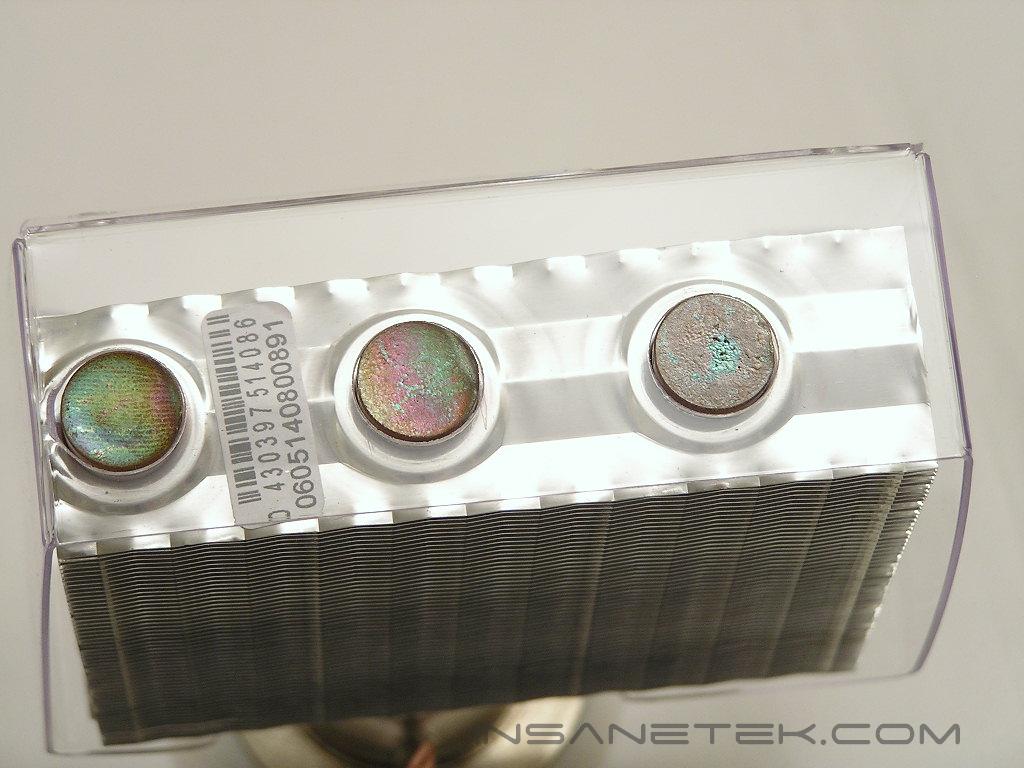
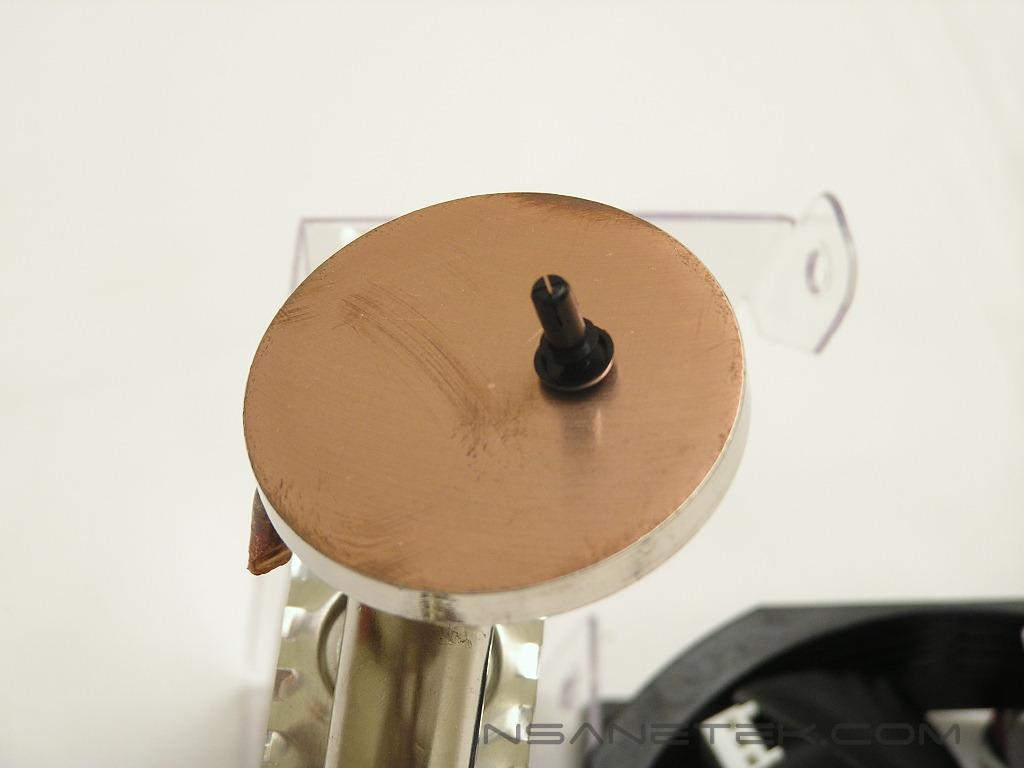
The base of the VapoChill Micro comes well protected with a plastic cover. This prevents the heatsink base from any scratches or tainted during moving. Unfortunately, the sample I received did not come with a clean polished base. Although that is not a major disappointment, it would be better to have a good clean base to work with. It looks like someone must have been careless and touched the base and left fingerprints during manufacturing. Nonetheless, the VapoChill Micro made perfect contact with the base throughout all testing.
The Fans
I received the Ultra Low Noise version of the VapoChill Micro, but quickly received the fan that comes with the Extreme Performance version. The Ultra Low Noise fan has openings on the sides to draw additional air without causing the fan blades to spin too fast and create more noise. The Extreme Performance fan looks like any other 92mm fan. The fans are installed on the fan shroud via four push-pins that are similar to the ones used in Swiftech heatsinks.
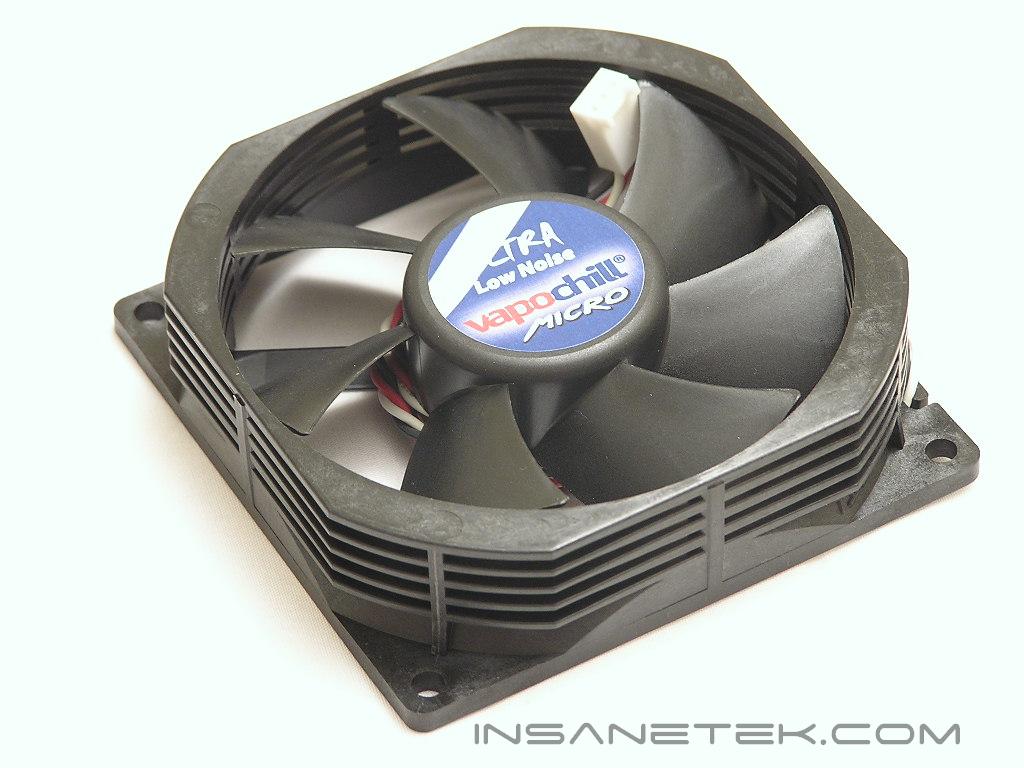
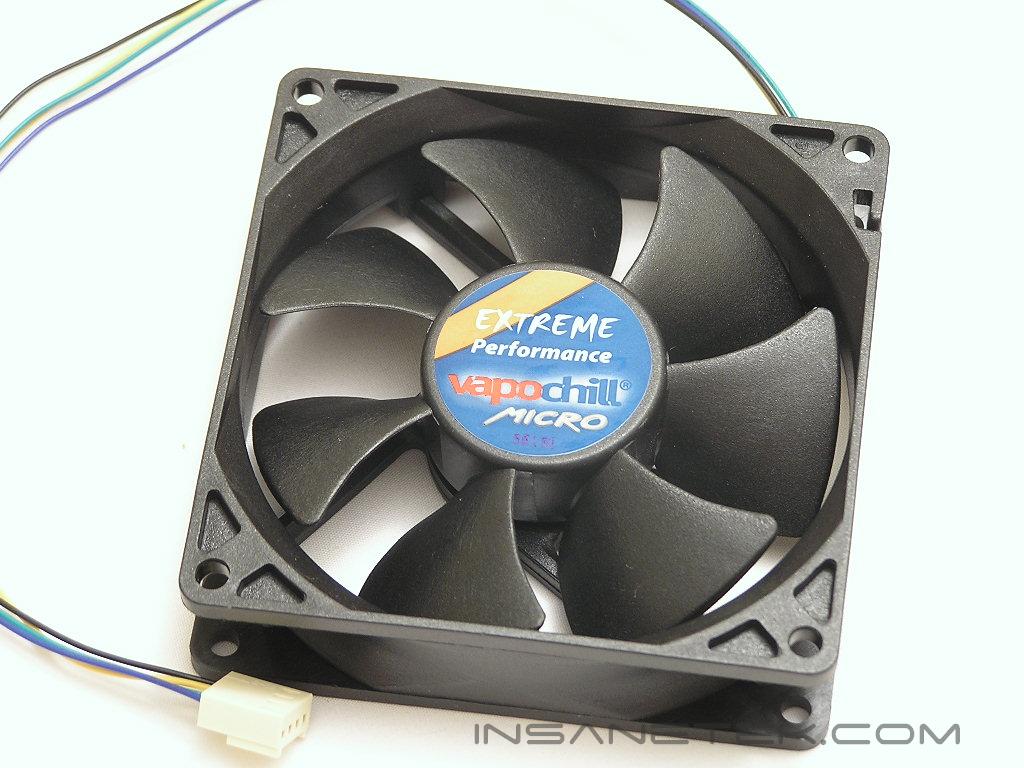
Ultra Low Noise:
- Manufactured by Panaflo
- Hydro wave bearing
- 2350 RPM
- 17.657 CFM
- Low setting: dBA not available (silent)
- High setting: <28 dBA
Wow. The fan specifications on the Ultra Low Noise is more than impressive. A stunning silent rating for the fan at the low setting. Even the fan on high setting doesn’t produce much sound
Extreme Performance:
- Sleeve bearing
- 3800 RPM
- 73.656 CFM
- Low setting: <28 dBA
- High setting: 39 dBA
Installation
Installing the VapoChill Micro was a cinch. Asetek has recorded the times required by various users to install the heatsink. It literally took a matter of seconds. Simply slide the LGA775 bracket frame over the base of the heatsink and sit it down on the CPU. The only part that took a bit longer was placing the heatsink to point perfectly in a single direction. Remember that when you install the cooler, the fan’s airflow should point upwards.
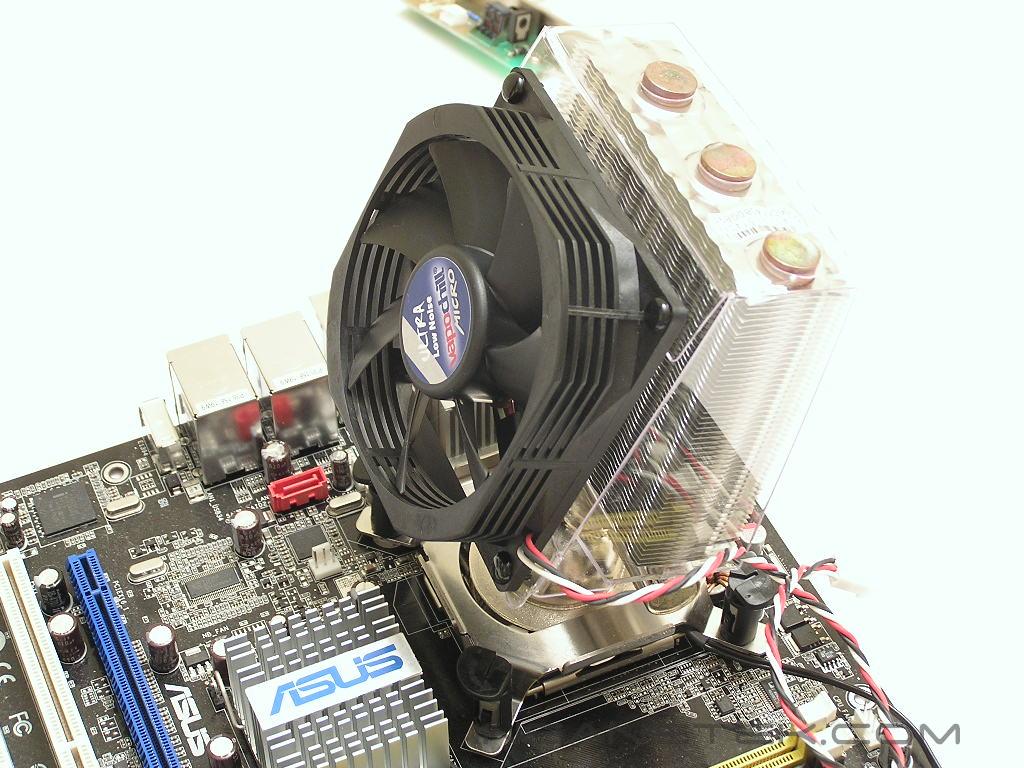
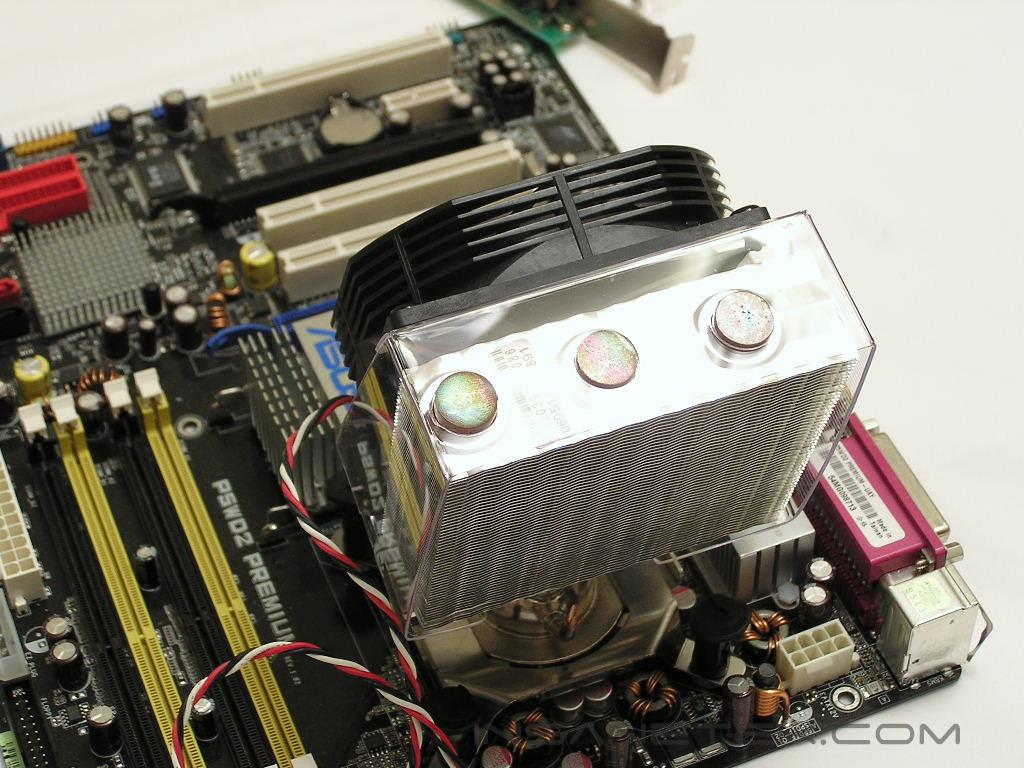
Test Setup and Results
Ambient temperature was kept at a consistent 20°C. Arctic Silver Ceramique thermal paste was used during the entire testing process. A temperature probe was placed next to the Intel heatspreader to measure CPU temperature. Two instances of CPU Burn-in were used to create maximum load on the CPU. The purpose of this test was to determine the results a home end user would obtain. There was no scientific testing conducted, simply because I do not have the proper equipment.
Test System Specifications:
- Intel Pentium D 840 (16 x 250FSB = 4GHz @ 1.4v)
- Asus P5WD2 Premium
- Corsair XMS2 PC2-8000UL
- ATI Radeon X800XT
- Thermaltake PurePower 680W
Competition:
- Arctic Cooling Freezer 7
Test Procedures:
- Idling at desktop for 30 minutes
- Full load with 2 instances of CPU Burn-in for 60 minutes
Results:
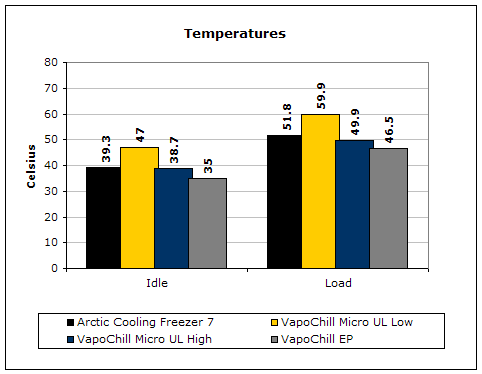
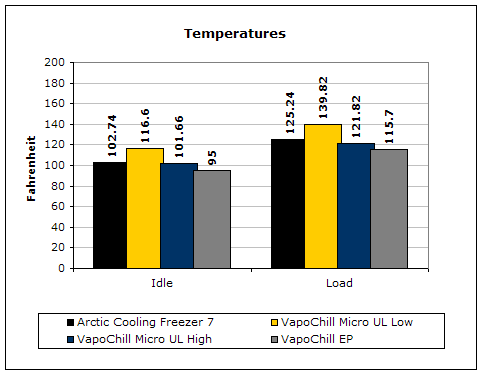
The Arctic Cooling Freezer 7 has always been my choice for the best performance/noise level cooler. It cools the toasty hot Prescott really well without the need of a high powered fan. The Asetek VapoChill Micro certainly put up excellent results. With the Ultra Low Noise fan on the Low setting, temperatures did rise quite high. That cannot be helped since the fan is pushing close to no air and emitting inaudible noise. With the fan set to High, results started to sparkle like a diamond. It trounced the Freezer 7 like no other. The noise level was not even that high either! The Extreme Performance fan is just nothing to compete with. The powerful fan dropped temperatures ridiculously low, but you do have to bear with the high pitch noise.
Conclusion and Thoughts
Asetek’s first attempt at an aircooling heatsink is definitely superb. The VapoChill Micro performed much better than I expected and produced very low noise. There are some quirks about the cooler though. The fan shroud can need a little help to be much more secure. It tends to move around a bit when I grab it from the top. My main gripe would be that the package does not come with all installation brackets. This requires the consumer to go out and settle on a choice and spend more money later on if the consumer ever changed the system platform. It is a bit tedious and money consuming. The majority of high end coolers out there that cost $50+ are bundled with universal installation accessories. This puts the VapoChill Micro at a slight disadvantage. That slight disadvantage is certainly no big deal when it comes to the cooling prowess of the VapoChill Micro. With the ability to use whichever fan you wish and the cooling power of up to 150W, the VapoChill Micro will be hard to beat.
Pros:
- Excellent performance
- Very low noise levels
- Installs within seconds
- Angled direction cools motherboard components
Cons:
- Fan shroud wiggles around
- Base was tainted with smudge
- Does not come with all installation brackets - specific versions for specific platforms
- Expensive

We would like to thank Asetek for providing us the sample. If you have any questions or comments, feel free to hit us up in the forums. You can also check out more of our latest reviews on the front page.