

Scythe Silent Box
Introduction
Scythe is a Japanese-based company that also has offices in the USA. They are dedicated to products that reduce noise level without performance loss. Complete silence within the computer has been a long time dream of many enthusiasts. Cooling efficiency may greatly increase, but the noise level is sometimes too annoying or loud to bear. Yet, not all noise comes from fans. Hard drives also contribute when they read and write information. With this in mind, Scythe has tried to eliminate the noise from the hard drive.
Nowadays, new hard drives spin at higher RPM’s, producing more heat and noise. The Scythe Silent Box is aimed at customers who want a noiseless solution for hard drives in their computers. Why does this specific HDD silencer stand out? The Silent Box offers compatibility with different sized hard drives, as well as the implementation of heatlane technology. Let’s see if the Silent Box successfully reduces noise level meanwhile if the temperature is at an acceptable level.
Silent Box and Installation
Packaging and Contents:
Here are some specifications taken from Scythe’s website.
Specifications
- Model Name: SBX-1000
- Manufacturer: Scythe Co., Ltd.
- Compatibility: 3.5” IDE HDD up to10,000 rpm
- Dimension: 144 x 211 x 41 mm
- Material: NBR (Nitrile Butadiene) & SBR (Styrene Butadiene) Rubber Case & Aluminum Cover
- Weight: 840g
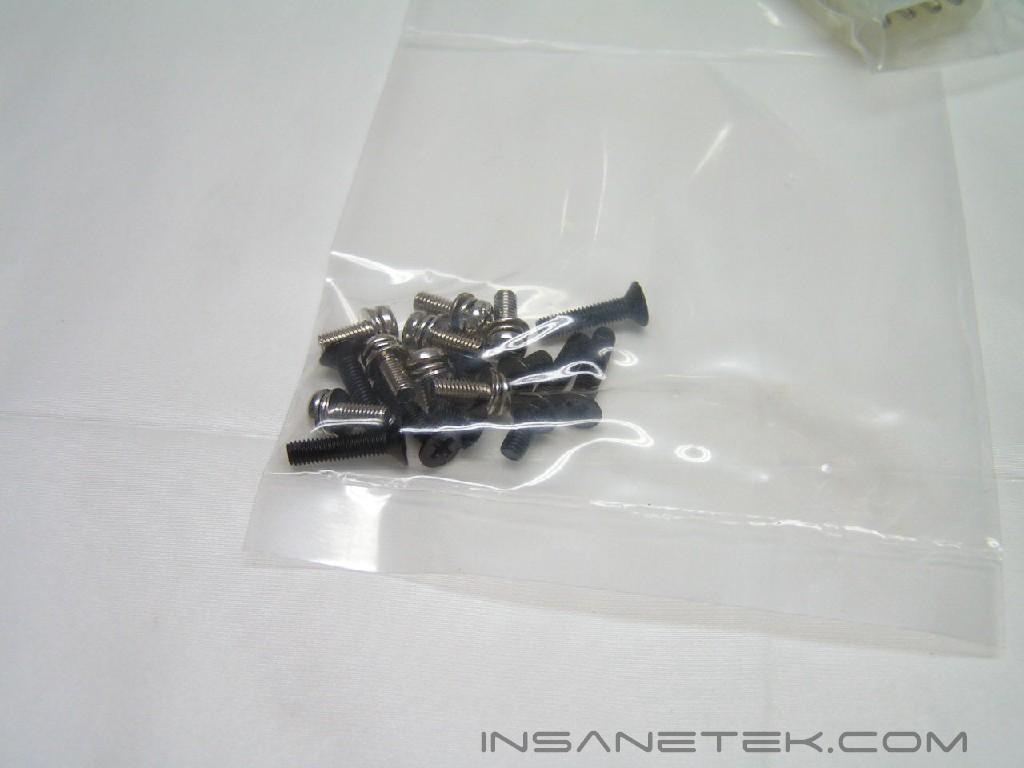
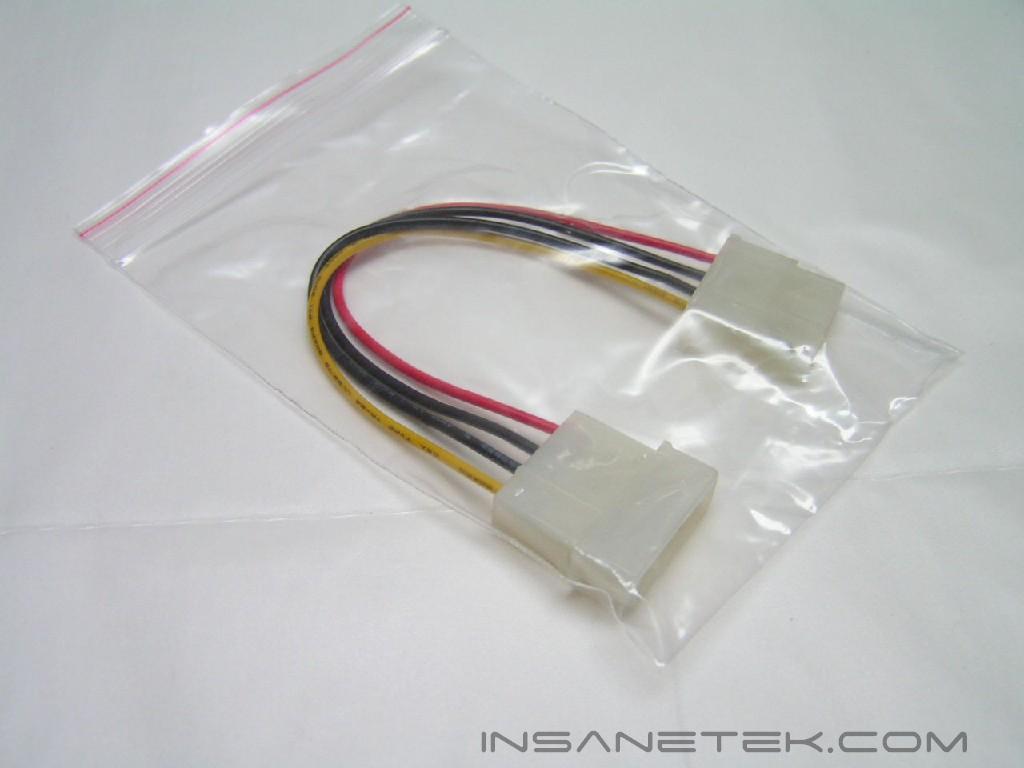
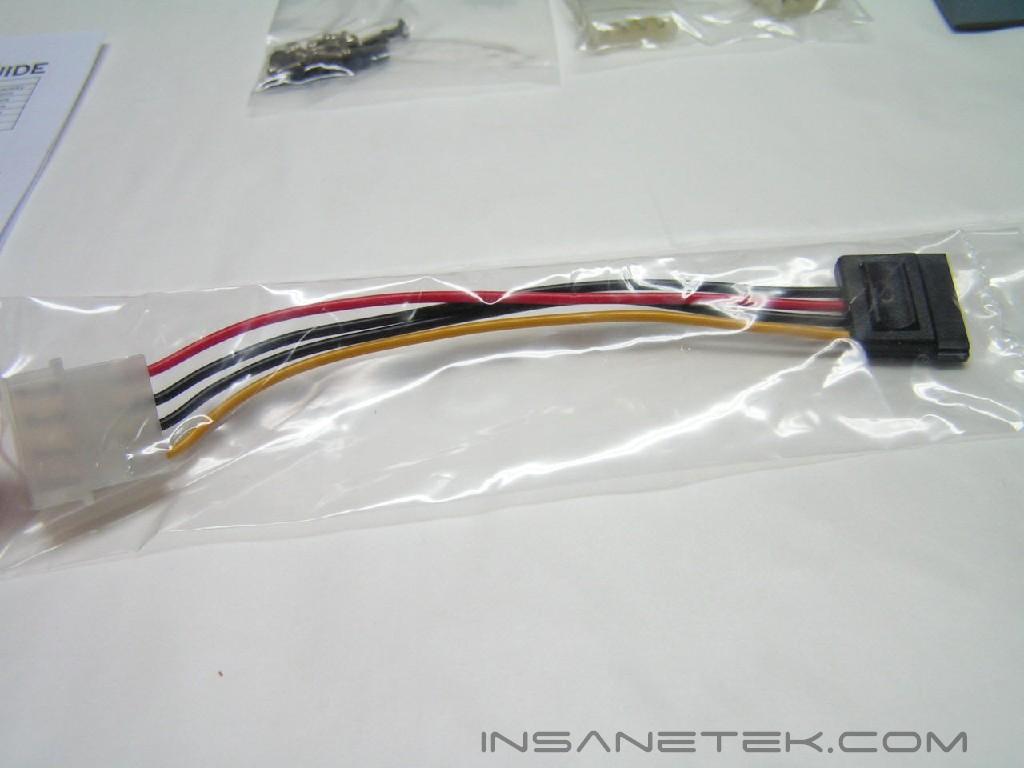
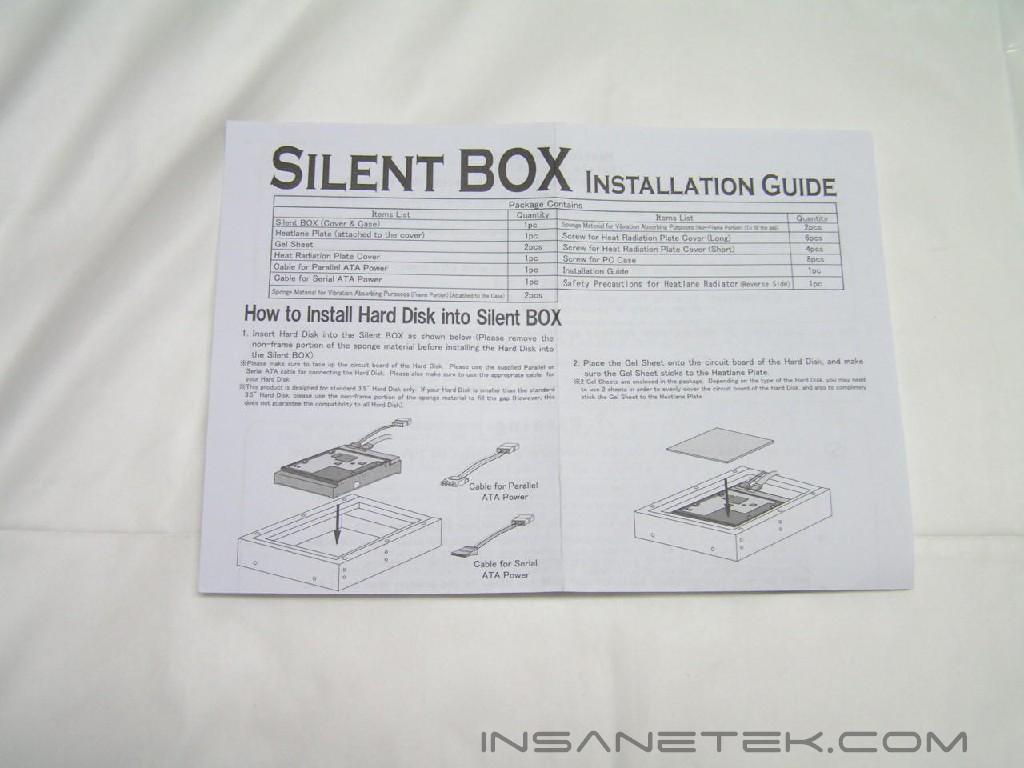
Scythe includes all the accessories you’ll need to install your 3.5” hard drive into the Silent Box: screws, gel pads, Molex extension cords, and the instructions manual. The instructions manual was extremely simplified so that anyone could install it within minutes of opening the package. There was a default four-holed Molex connector extension cord, as well as a SATA power transformer, for customers with SATA hard drives. Although the specifications state IDE hard drive only, SATA is supported.
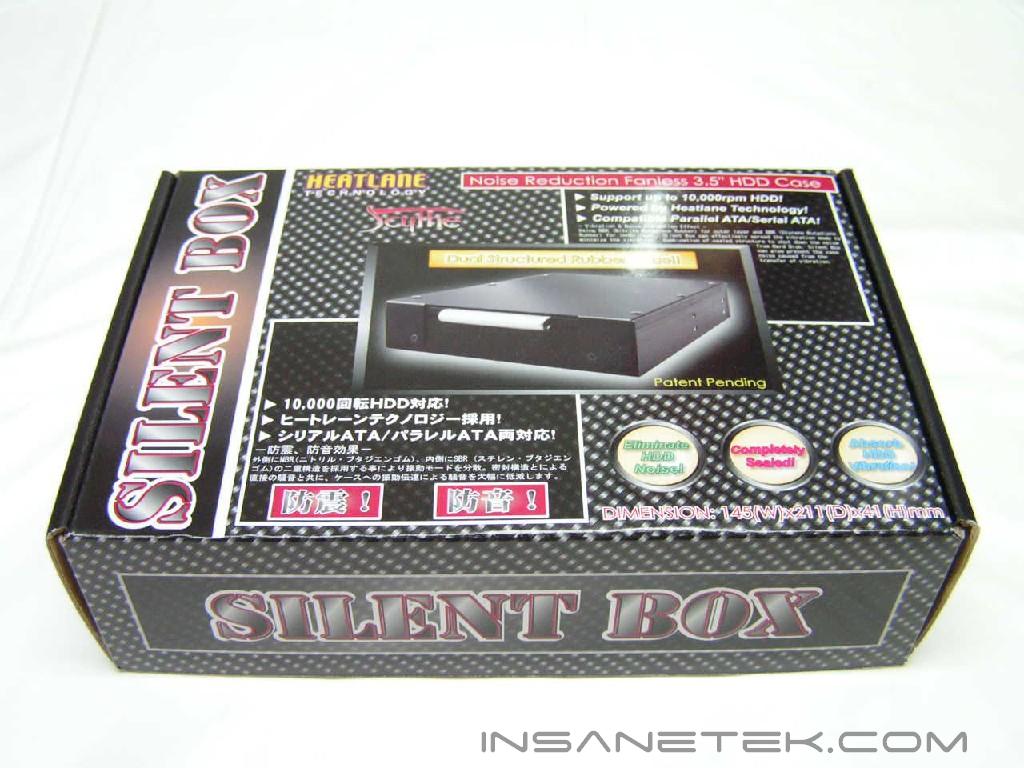
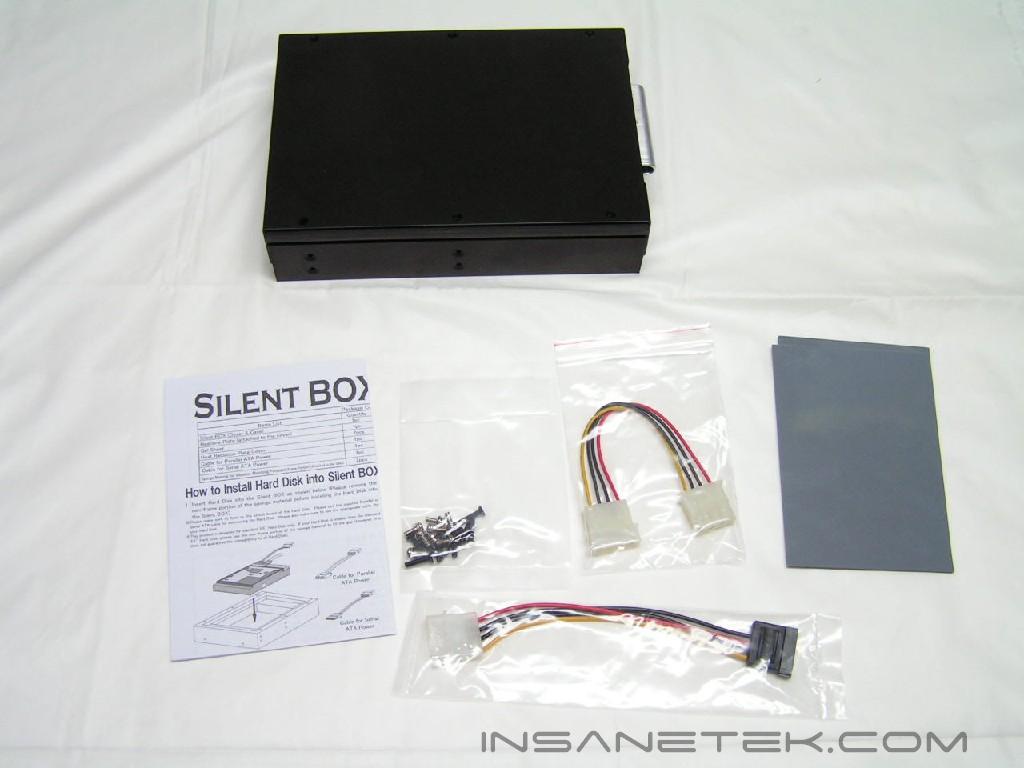
Silent Box (SBX-1000):
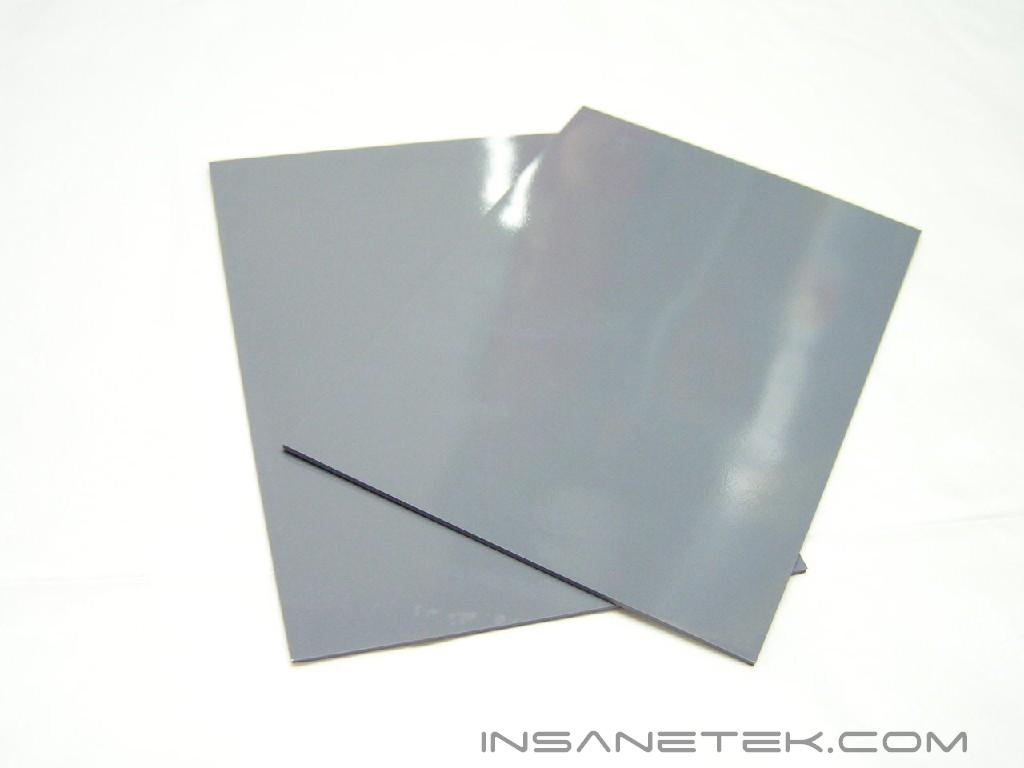
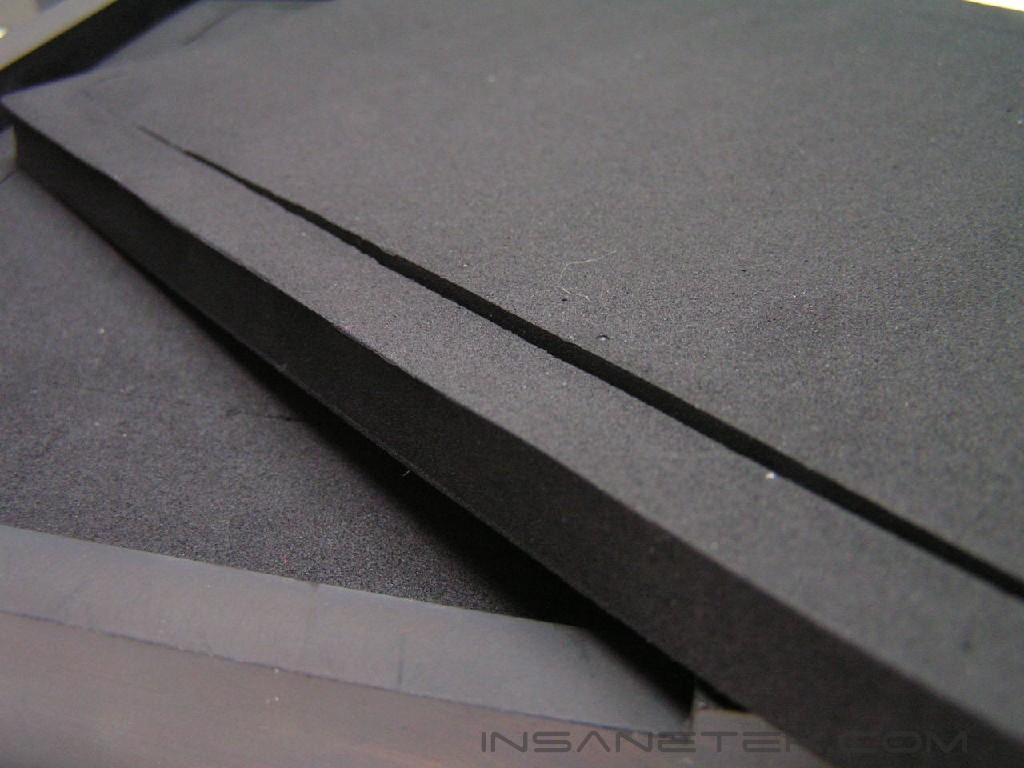
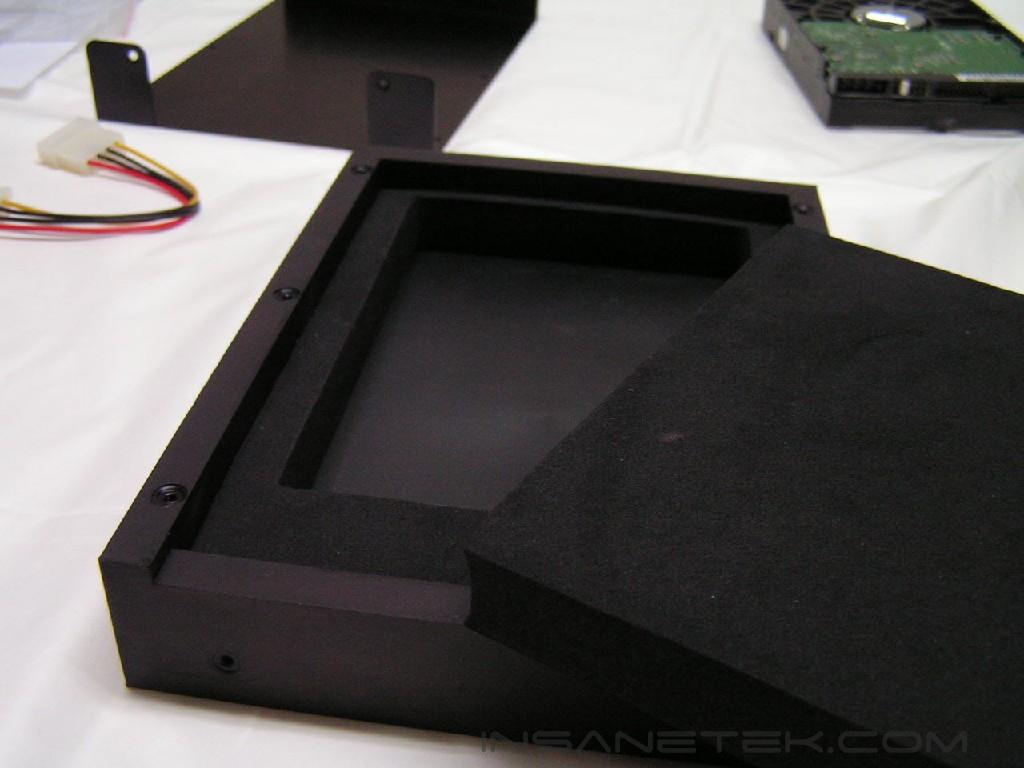
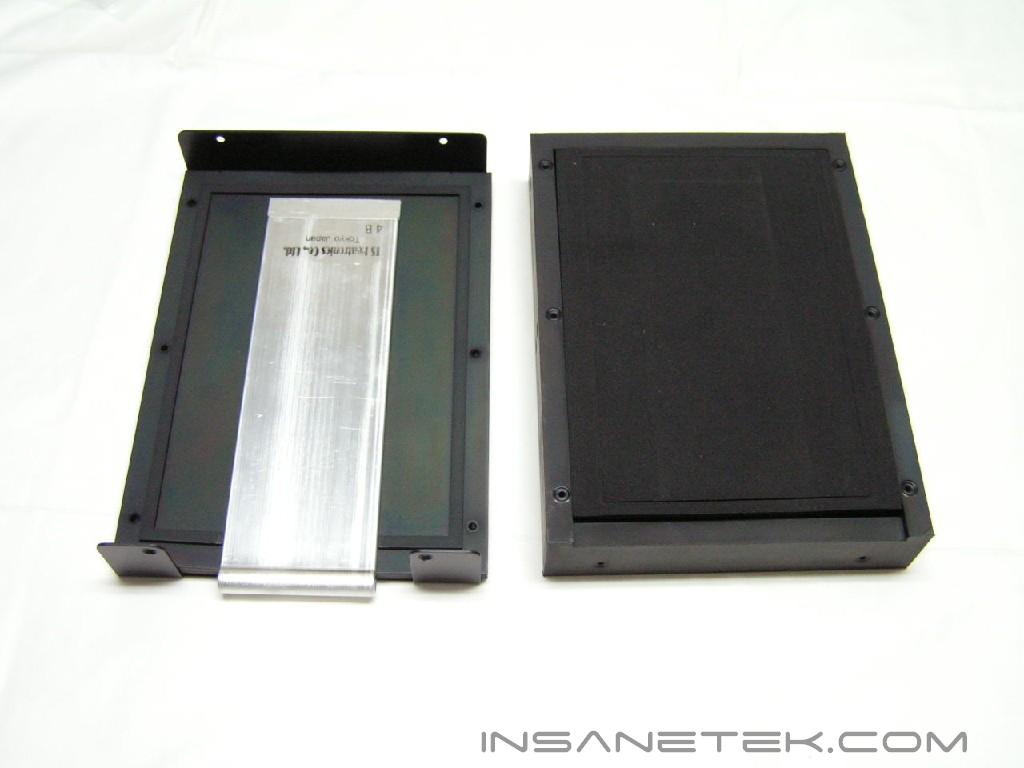
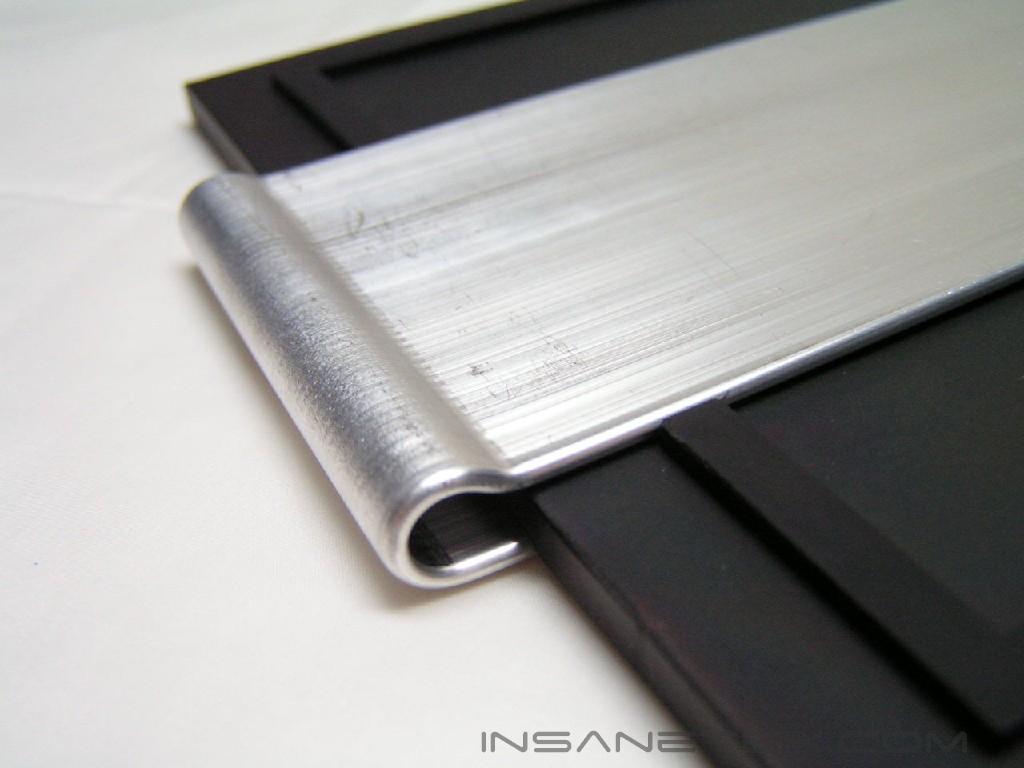
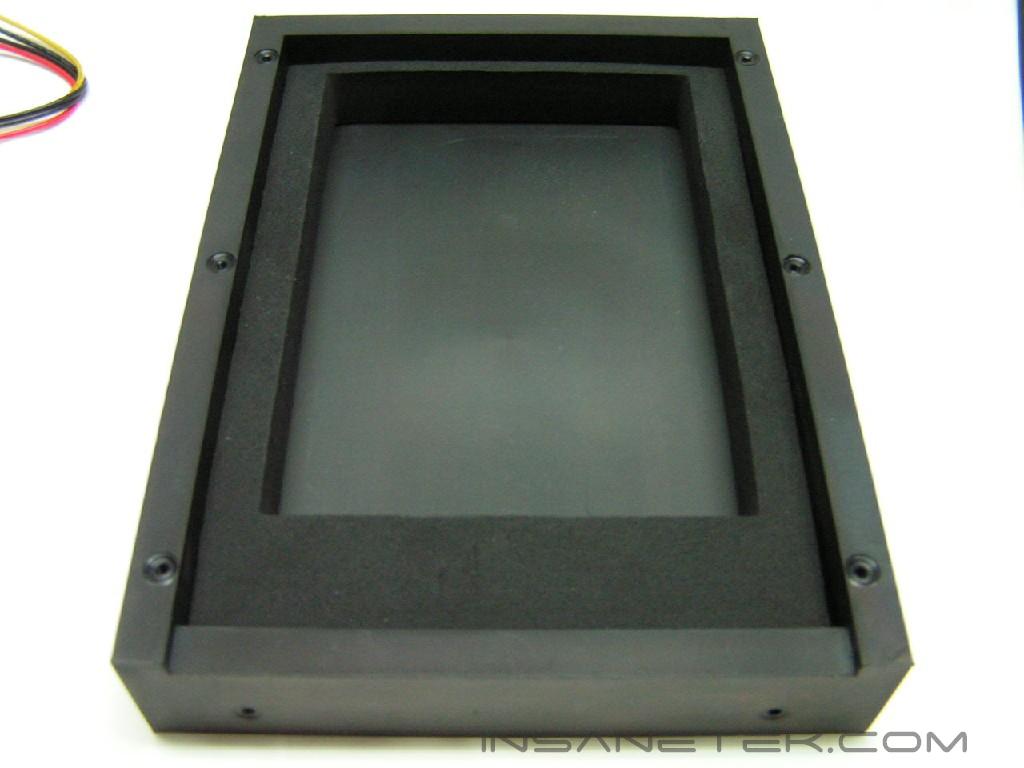
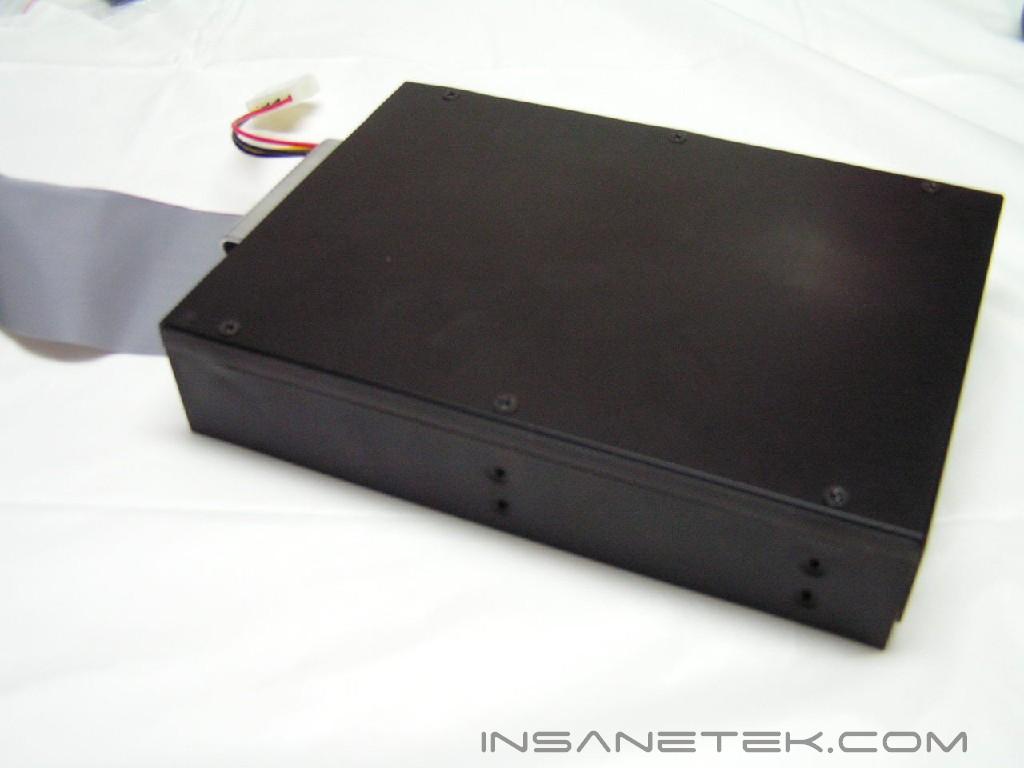
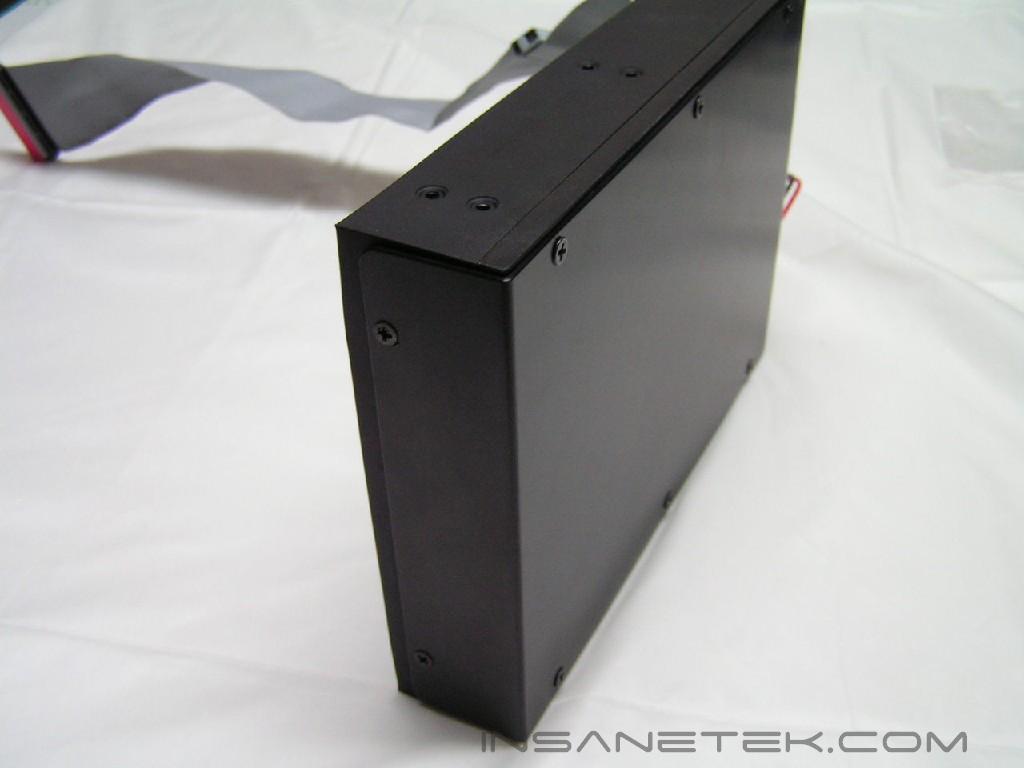
To my amazement, the Silent Box was mostly rubber, rather than plastic/aluminum. We all know that rubber melts when it is exposed to heat. According to Scythe’s website, two rubber types were used: Nitrile Butadiene and Styrene Butadiene. Nitrile Butadiene is known for it’s durability and strength against lengthy exposure to heat and various chemicals. The temperature range Nitrile Butadiene supports is -40°C to 165°C, depending on how well it is compounded together. Styrene Butadiene is well known for being used in shoes and car tires. It is also very durable, as it provides protection against many environmental factors. The Silent Box is simple and to the point. It holds the hard drive and removes heat in silence. It features Heatlane technology, which utilizes a set of gel pads provided in the packaging. The heatlane is laid on top of the gel pads, which are placed on top of the motor of the hard drive. Heat flows through the gel pads removed with the heatlane. The heat travels to the back of the hard drive and passively removed at the end. The theory sounds nice, but what about installation and performance?
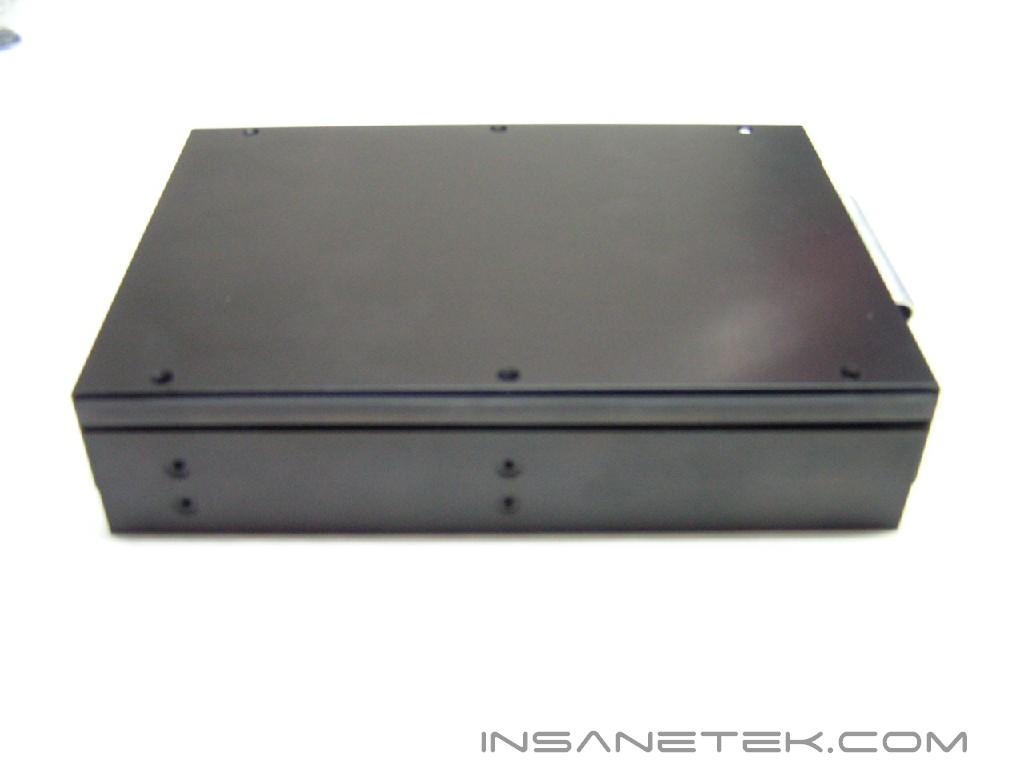
Installation:
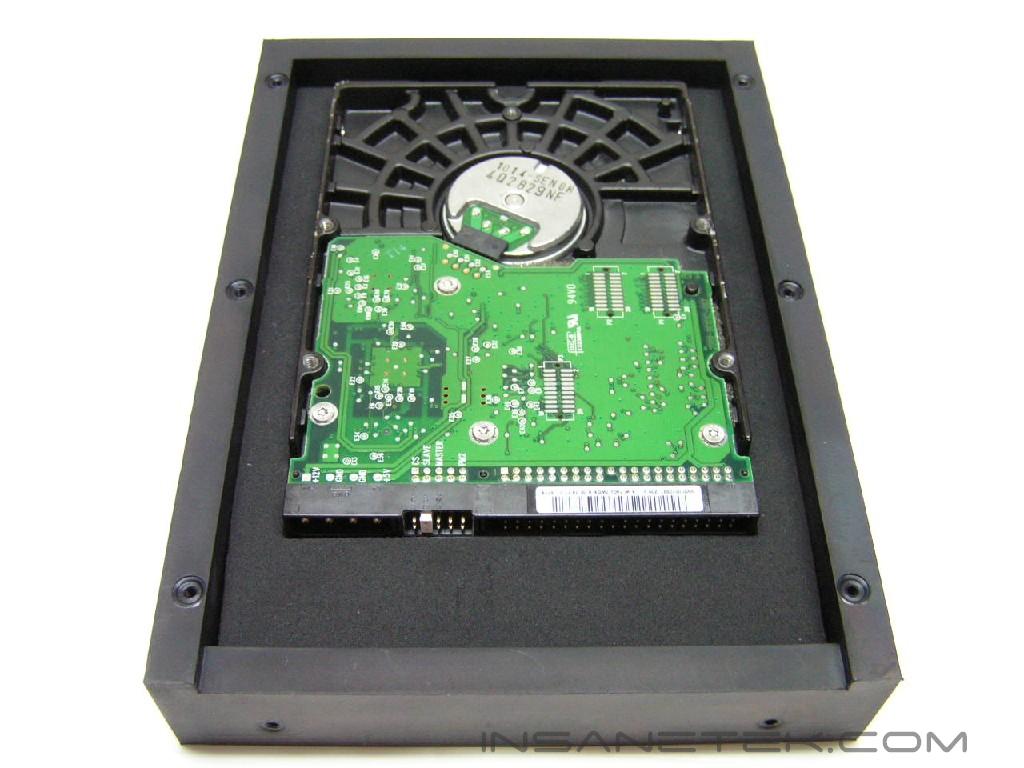
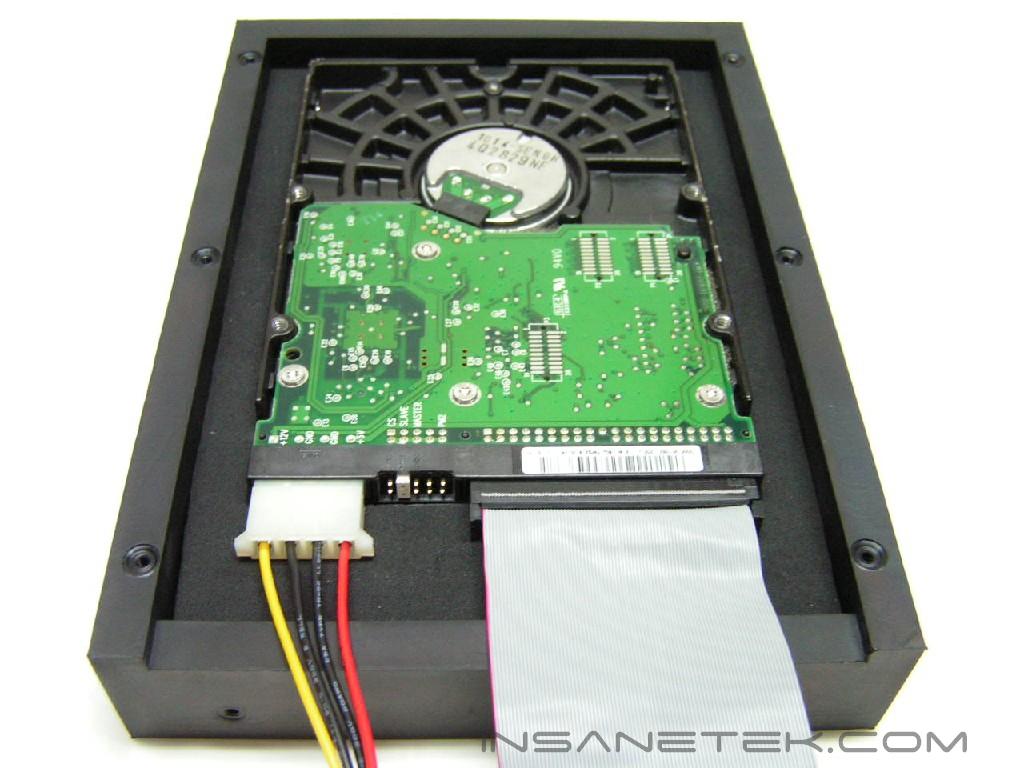
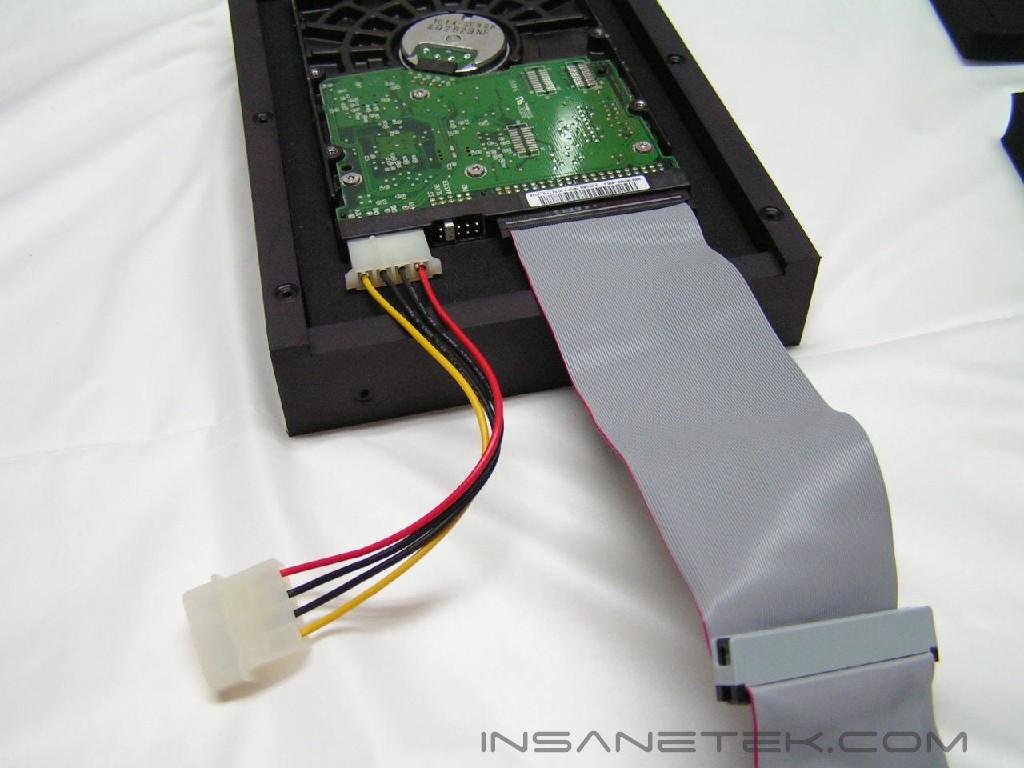
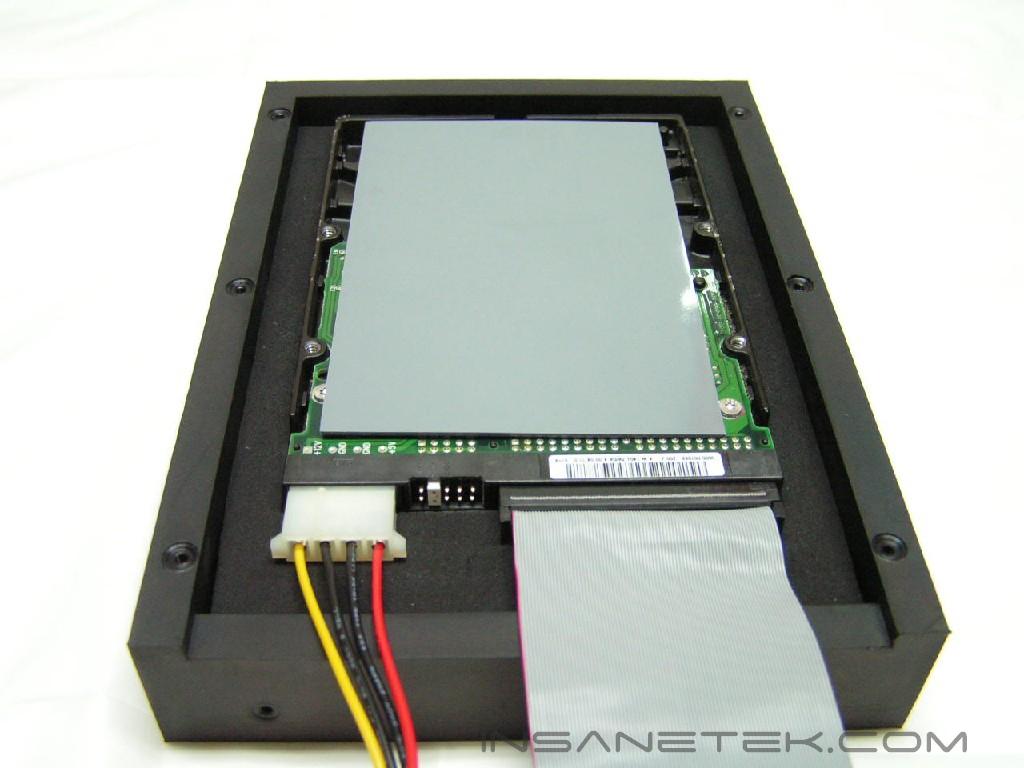
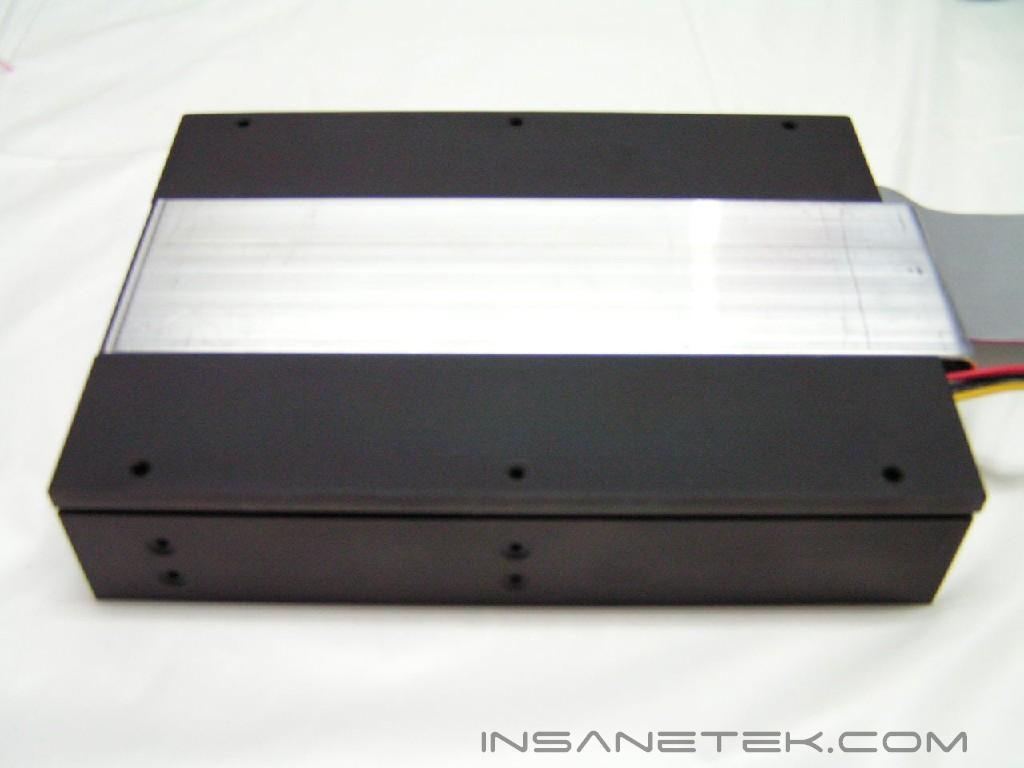
Overall, installation was very simple, but a part that made it slightly difficult. Following the instructions, you take out the template rubber of the hard drive that’s in the Silent Box. After taking it out, you place the hard drive in with the circuit board facing up. Place the IDE/SATA cable and the provided power Molex connector into the hard drive. Then place the gray-colored gel pads onto the hard drive. This acts as a space filler to reach the heatlane, as well as transferring heat. Lastly, place the heatlane over it and screw the lid shut. That was the hard part I encountered. Although the holes were already there, screwing the screws into the rubber was a bit difficult. Perhaps an addition of a plastic interior to the holes would be a better idea, but that’s just a minor detail. The Silent Box then fits into a 5.25” bay in your computer.
Test Setup and Results
Testing Setup:
- AMD Athlon 64 3000+
- MSI K8N Neo2 Platinum
- Western Digital IDE 80GB 7200 RPM
- Leadtek Geforce FX 5950 Winfast A380 Ultra
- TTGI SF-450TS 450W Power Supply
- 2 x 512MB PDC1G3200+XBLK
Just how much sound does the Silent Box reduce? How much heat will be produced in the Silent Box compared to a bare drive? The Silent Box will be tested for noise, since Scythe boasts about the use of two different high quality rubbers to reduce noise. I did not have the proper equipment available to measure the decibels, so there will be no scientific experiments conducted. All fans will be turned off to help reduce factors interfering with the HD noises. Temperatures are a side factor and should be considered when making a decision to purchase this product. Temperatures will be measured with a Compu-Nurse temperature probe attached to the lid of the hard drive. Ambient temperature will be kept at a constant 24.1°C. Heat is generated by copying 20GB worth of data from another hard drive.
Results:
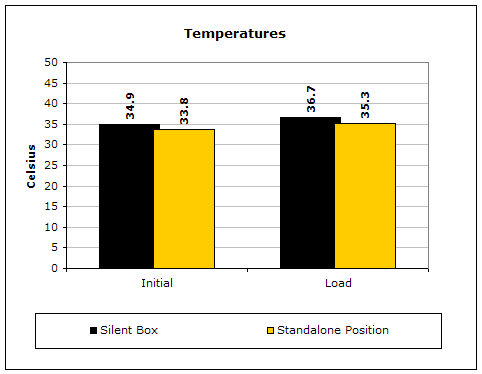
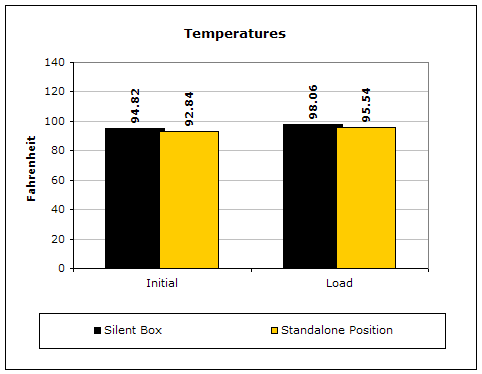
As the results show, there was a slight increase in temperature. Better temperature results with the use of a passively-cooled heatlane were unexpected. The noise level dropped significantly. The hum from the HD while it’s on was gone and the clicks during HD activity was barely noticeable.
Conclusion and Thoughts
Scythe has outdone itself with the Silent Box. The Silent Box is plain and simple. It decreased noise with cooling technology that provided temperatures just a hair away. Even though the temperatures were so close, the hardware might deteriorate faster with higher temperatures. Active cooling fans that can be installed on the hard drive only create more noise, while the Heatlane technology does not. The only downside about this product is mini-ATX case compatibility. Some of the small cases lack extra 5.25” bays. Perhaps those looking for a silent system should also think about purchasing a mid-tower case. Although a bit steep at $40.99, it is silent and that’s what it’s advertised to do. I personally like the idea of silence but if it means deteriorating my hardware, I’d stay away from it.
Pros:
- Reduced noise
- Supports SATA/IDE cables
- Provides a SATA power transformer
Cons:
- Small yet acceptable increase of temperature
- Price tag
We would like to thank Scythe for providing us the sample. If you have any questions or comments, feel free to hit us up in the forums. You can also check out more of our latest reviews on the front page.